When Water Meets Wood: Understanding the Reality of Hardwood Floor Water Damage
Hardwood floor water damage can turn your beautiful flooring investment into a homeowner’s nightmare in a matter of hours. Here’s what you need to know right away:
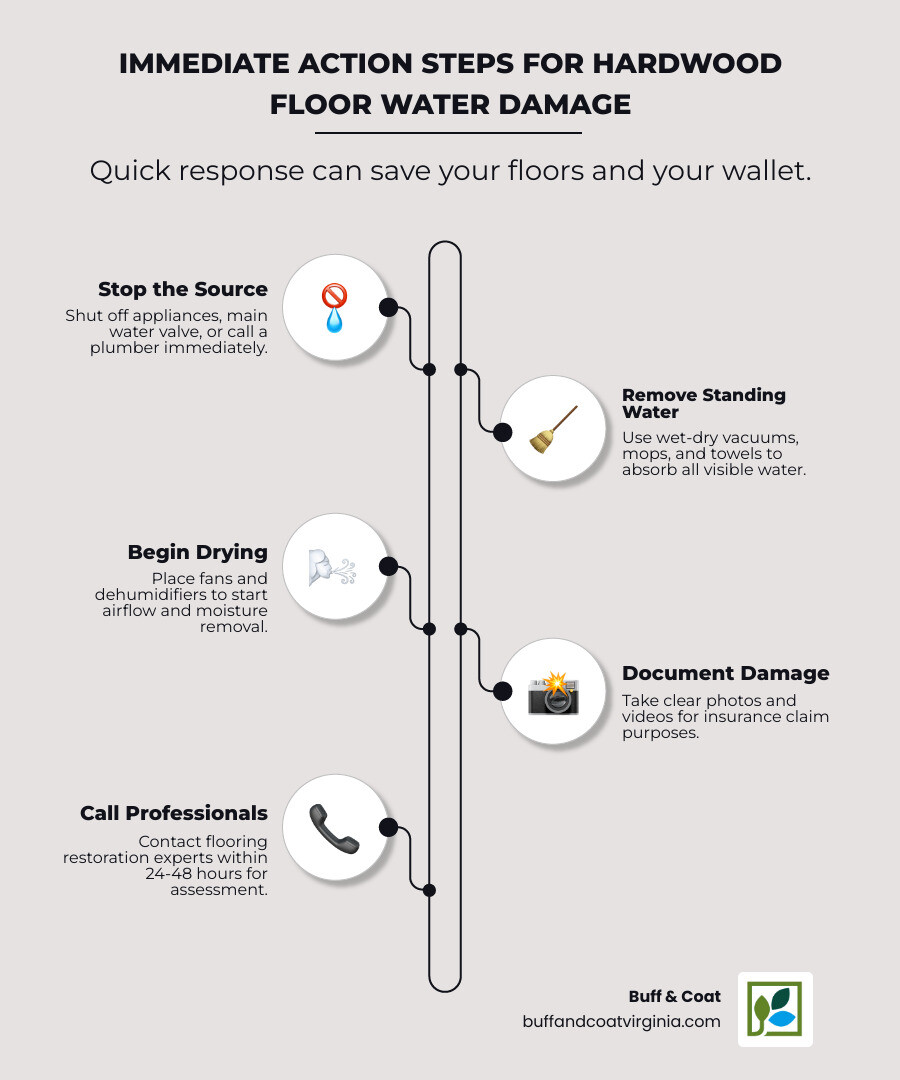
Immediate Action Steps:
- Stop the water source – Turn off appliances, shut water valves, or call a plumber
- Remove standing water – Use wet-dry vacuums, mops, and towels
- Start air circulation – Set up fans and dehumidifiers immediately
- Document the damage – Take photos for insurance purposes
- Call professionals – Get expert assessment within 24-48 hours
Signs of Water Damage:
- Cupping (board edges higher than center)
- Crowning (center higher than edges)
- Dark stains or discoloration
- Buckling or warping boards
- Musty odors indicating mold
Water is wood’s biggest enemy. Due to hardwood’s porous nature, moisture absorption begins immediately and can cause permanent damage within hours. The key difference between a minor repair and complete floor replacement often comes down to how quickly you act.
Whether it’s a burst pipe flooding your living room or a slow dishwasher leak you just found, understanding the extent of damage and taking proper steps can save both your floors and your wallet. Professional hardwood floor water damage repair can often salvage what seems like a total loss when addressed promptly and correctly.
I’m David Emmerling, and with over 20 years of experience in hardwood floor restoration, I’ve helped countless Richmond-area homeowners recover from hardwood floor water damage disasters. Through Buff & Coat, we’ve developed proven methods to assess, dry, and restore water-damaged floors using dustless techniques that minimize disruption to your home. If you’re facing a water damage emergency, don’t wait. Contact us today to schedule a free inspection and get a free estimate for your floor restoration.
Relevant articles related to hardwood floor water damage:
First Response: What to Do Immediately When You Find Water
When you find hardwood floor water damage spreading across your beautiful floors, don’t panic – but do move fast. Your immediate response in these crucial first moments can mean the difference between a minor repair and complete floor replacement. Think of it as emergency first aid for your floors, where every minute counts.
Stop the Source & Ensure Safety
Before you touch anything else, stop that water from flowing. Whether it’s a burst pipe under your kitchen sink, an overflowing dishwasher, or a toilet that’s decided to become a fountain, find the source and shut it down immediately.
For appliance leaks like dishwashers or refrigerators, locate the shut-off valve (usually behind or underneath the unit). If you can’t find it or the leak is from plumbing, don’t hesitate to shut off your main water valve – it’s better to be without water for a few hours than to lose your entire floor.
Safety comes first, always. Water and electricity are a deadly combination, so if water has reached electrical outlets, light switches, or appliances, turn off the circuit breakers to the affected area before stepping into the water. Grab some rubber boots and gloves if you have them, and keep kids and pets away from the flooded area.
Remove Standing Water and Wet Items
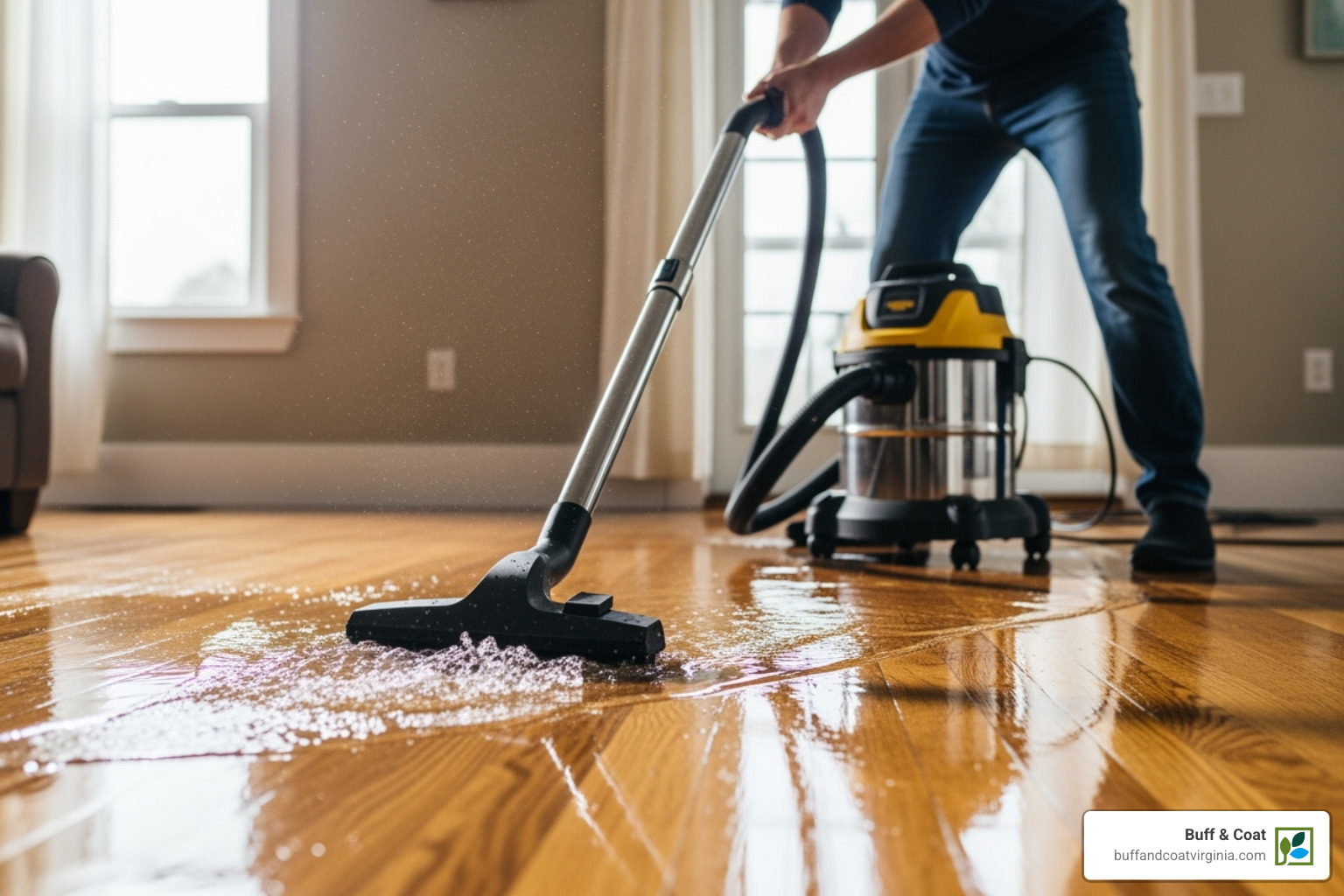
Once you’ve stopped the flood, it’s time to get that water out of there. A wet-dry vacuum is your best friend here – it can suck up large amounts of water quickly and efficiently. Don’t have one? Mops, towels, and even old bath towels will work, though you’ll be doing more wringing and less celebrating.
Pay special attention to the seams between floorboards where water loves to hide and cause the most damage. Get down on your hands and knees if you need to – those sneaky puddles in the cracks can cause cupping and warping if left behind.
Remove everything wet from the floor immediately. Area rugs act like giant sponges, trapping moisture against your wood and causing stains or rot. Furniture legs can leave permanent marks if left sitting in water, so move everything to a dry area. Even that stack of magazines that got splashed needs to go – wet items will keep releasing moisture back into your floors. For stubborn water that’s gotten under your flooring, check out this helpful guide on how to dry water that gets under wood flooring.
Begin the Drying Process
Here’s where patience meets urgency. Even after you’ve mopped up every visible drop, moisture is still hiding in your wood, and getting it out requires serious air circulation.
Set up fans to blow air across the floor surface – not just one fan in the corner, but multiple fans creating a wind tunnel effect if possible. Position dehumidifiers in the center of the affected area to pull moisture from the air. These machines work together like a tag team, with fans moving air and dehumidifiers capturing the moisture.
If it’s a dry day outside, opening windows can help, but skip this step if it’s humid or raining – you don’t want to invite more moisture to the party. The goal is creating an environment where your wood can release all that absorbed water naturally.
Avoid the temptation to speed things up with hair dryers or space heaters pointed directly at your floors. Rapid drying might sound good, but it can cause wood to crack, split, or warp even worse than the water damage itself. Think slow and steady – your floors will thank you later.
Assessing the Extent of Hardwood Floor Water Damage
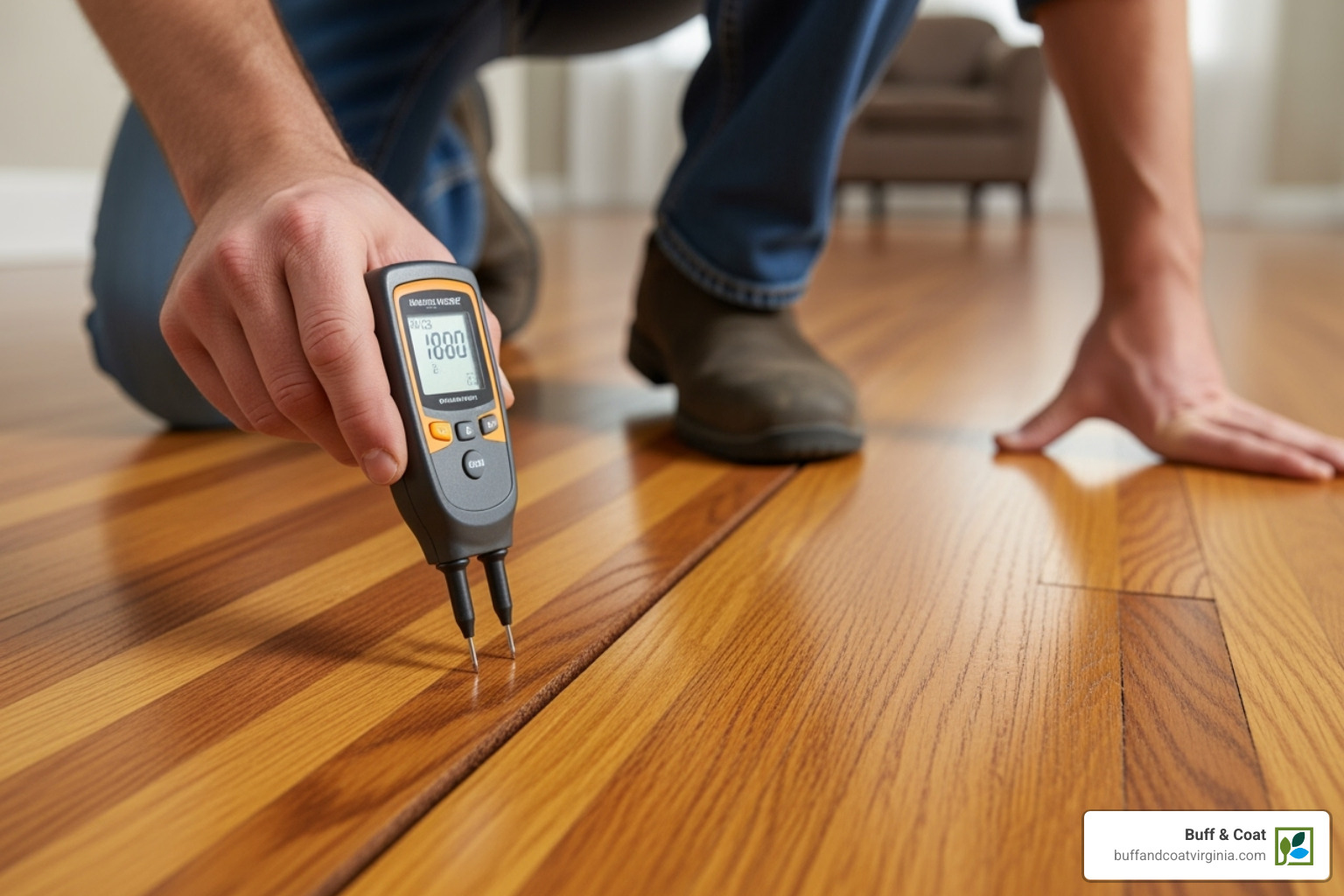
Once the initial crisis is managed and the drying process has begun, it’s time to play detective and assess the full extent of the hardwood floor water damage. This critical step will inform whether your floors can be repaired or if replacement is the unfortunate reality. Think of this assessment phase as gathering evidence – your floors will tell you their story if you know how to read the signs.
Professional floor sanding and refinishing services often begin with this exact type of damage assessment, as understanding the scope of water damage is crucial for determining the best restoration approach.
Common Signs of Water Damage on Hardwood Floors
Your hardwood floors will tell you they’re in distress if you know what to look for. Water damage rarely hides – it announces itself through various visual and physical changes that become more apparent as time passes.
Discoloration and staining are often the first visible signs. Dark water stains indicate deep moisture penetration and potential mold development, while white stains are usually surface-level and easier to address. These stains can appear immediately or develop over several days as the wood reacts to moisture.
Soft spots are another telltale sign – areas of the floor might feel spongy or give slightly when you walk on them. This indicates moisture has compromised the wood’s structural integrity or affected the subfloor beneath.
Cupping and crowning are perhaps the most common responses to water damage. You’ll also notice warping or buckling, where boards may twist, curl, or lift entirely from the subfloor. In severe cases, boards can lift by as much as 4-5 inches, creating dangerous tripping hazards.
Mold or mildew growth appears as visible fuzzy patches in black, green, or white colors, often accompanied by a persistent musty odor. This is particularly concerning as it poses serious health risks beyond just floor damage.
Finally, watch for lifted nails or loose boards and peeling or blistering finish. The expansion and contraction of wood due to moisture can cause nails to pop up, while the protective finish may bubble, peel, or delaminate when exposed to excessive moisture.
Understanding Cupping and Crowning
These two terms pop up constantly when discussing hardwood floor water damage, and understanding their difference is crucial for proper remediation. Both represent the wood’s natural response to uneven moisture distribution.
Cupping occurs when the bottom of wood boards absorb more moisture than the top surface. This causes the edges to swell and rise while the center dips, creating a shallow “U” shape in each board. Cupping typically happens when moisture comes from underneath – think damp subfloors or leaks that seep through board seams.
Crowning is cupping’s evil twin. Here, the center of the board swells and rises while the edges remain lower, forming an inverted “U” shape. Crowning often results from improper drying techniques or – and this is important – from sanding a cupped floor before it has fully dried out.
Here’s where many well-meaning homeowners make a costly mistake: if you sand down the raised edges of a cupped floor while it’s still wet, you’re essentially removing wood from the high points. Once the board eventually dries and flattens out, the center will appear higher than the now-shortened edges, creating permanent crowning. This is exactly why patience and proper moisture testing are so important before any repair work begins.
The Three Categories of Water: Why It Matters
Not all water damage is created equal, and this isn’t just about severity – it’s about safety. The source of the water determines its contamination level, which dictates both cleanup procedures and whether your floors can be saved at all.
Category 1 (Clean Water) comes from sanitary sources like broken supply lines, sink overflows, or appliance malfunctions. This water poses no immediate health risks, and floors affected by clean water have the best chance of successful restoration. Most insurance companies and restoration professionals are optimistic about saving floors damaged by clean water.
Category 2 (Grey Water) contains some contamination that could cause illness if consumed. Think washing machine overflows, toilet overflows without feces, or dishwasher backups. Grey water requires more careful handling and may limit restoration options, especially if the water has been standing for more than 48 hours.
Category 3 (Black Water) is heavily contaminated and poses serious health risks. This includes sewage backups, flooding from rivers or streams, and any water that has been stagnant for extended periods. When black water affects hardwood floors, replacement is almost always mandatory – no amount of cleaning or refinishing can make these floors safe again.
The contamination level also affects insurance coverage, with many policies covering clean water damage but excluding sewage-related incidents. Understanding these categories helps you set realistic expectations and make informed decisions about restoration versus replacement.
How Quickly Does Water Damage Occur?
Time is not on your side when dealing with hardwood floor water damage. Understanding the timeline of damage helps explain why immediate action is so critical.
Surface damage begins within minutes. Water starts penetrating the wood’s finish and seeping into the grain almost immediately upon contact. What might look like a simple spill on the surface is already beginning its journey into your floor’s structure.
Absorption and swelling accelerate within the first few hours. Wood can absorb a surprising amount of water relative to its size, and as it does, dimensional changes begin. Boards start expanding, and the first signs of cupping or crowning may appear.
The 24-48 hour mark is crucial for mold growth risk. Once mold takes hold, you’re dealing with both structural damage and health hazards. This is why professional restoration companies emphasize the importance of beginning the drying process within the first day.
Fiber saturation point occurs when wood reaches 28-30% moisture content. At this point, the wood has absorbed as much water as it possibly can, and additional moisture simply sits on the surface or runs off. Reaching fiber saturation doesn’t necessarily mean your floors are ruined, but it does mean extensive drying time and potential for permanent dimensional changes.
The key takeaway? Every hour matters. What starts as a manageable cleanup can quickly escalate into a full replacement project if not addressed promptly and properly. For more detailed information about professional assessment techniques, Hardwood Floors Magazine offers excellent insights into industry standards for water damage evaluation.