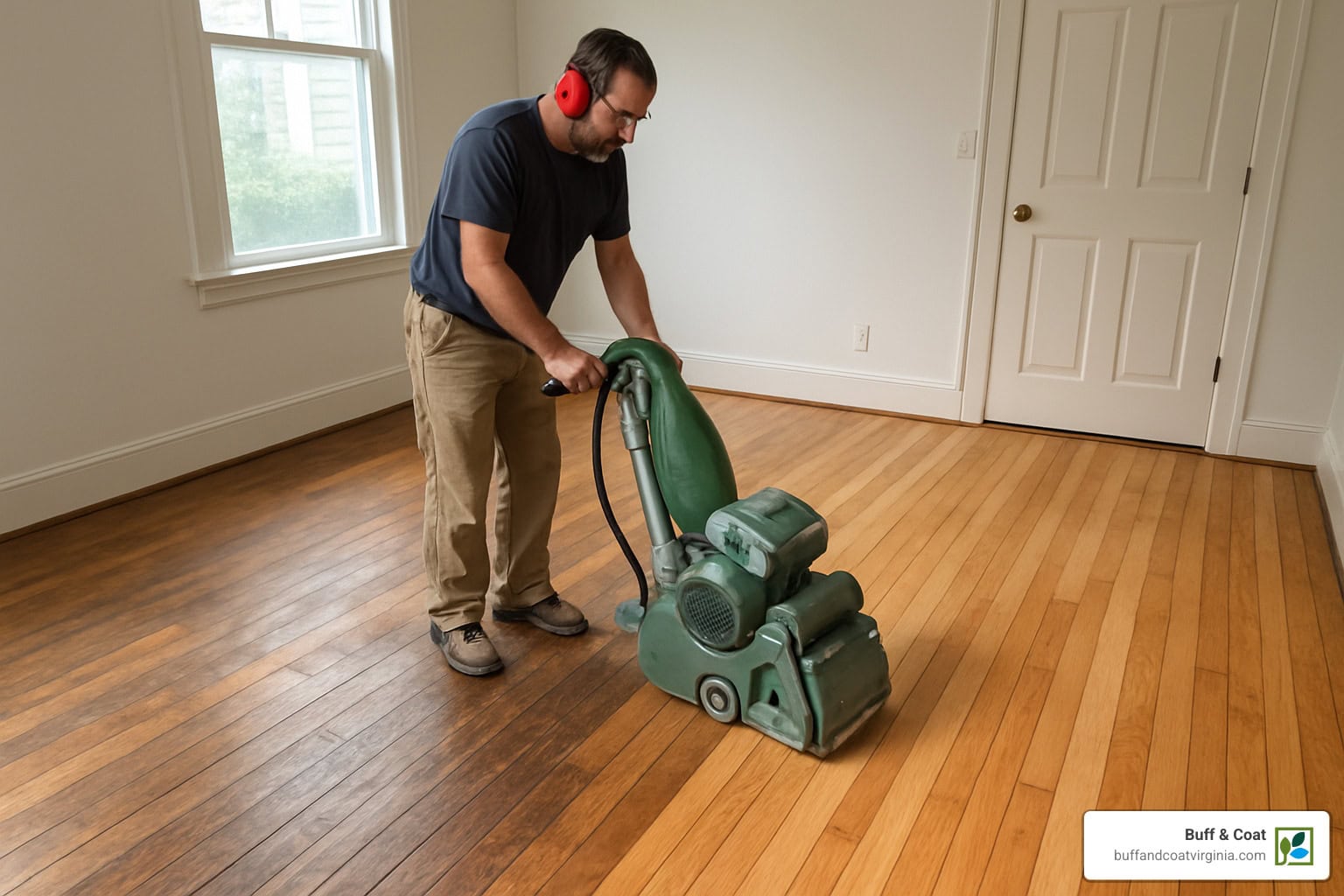
Why Floor Restoration Could Save You Thousands
Floor restoration brings worn, damaged, or outdated floors back to life through comprehensive repair, refinishing, and protective coating processes. Here’s what you need to know:
What Floor Restoration Includes:
- Deep cleaning and damage assessment
- Structural repairs (loose boards, gaps, water damage)
- Surface preparation through sanding or screening
- Stain application for color improvement or change
- Multiple protective finish coats
- Final polishing and sealing
Key Benefits:
- Cost savings: $7.50-$16 per sq ft vs. $8-$15+ for replacement
- Time efficient: 3-5 days vs. weeks for full replacement
- Preserves original wood: Maintains historic or sentimental value
- Increases home value: Professional restoration can boost property appeal
Best For: Hardwood floors with deep scratches, water stains, dullness, minor structural issues, or outdated finishes that still have solid underlying wood.
Your floors endure constant foot traffic, furniture movement, and daily wear that gradually strips away their beauty. Over time, even the highest-quality hardwood develops scratches, loses its protective finish, and can suffer water damage or pet stains. The good news? Most floor problems that look devastating are actually repairable through proper restoration techniques.
Many homeowners assume they need complete floor replacement when restoration could deliver better results at half the cost. The key is understanding when restoration makes sense, what the process involves, and how to choose between DIY approaches and professional services.
I’m David Emmerling, President and Owner of Buff & Coat Hardwood Floor Refinishing, with over 20 years of experience in floor restoration throughout the Richmond area. My company has perfected dustless restoration techniques that complete most projects in a single day while delivering results that rival traditional multi-week refinishing jobs.
Floor Restoration 101: What It Is and Why It Matters
Think of floor restoration as giving your floors a complete makeover, not just a fresh coat of paint. While many people use “refinishing” and “restoration” interchangeably, there’s actually a big difference that could save you thousands of dollars.
Refinishing is like getting a really good facial – it focuses on making the surface look beautiful again. Floor restoration, on the other hand, is more like reconstructive surgery. We dig deeper to fix structural problems, replace damaged boards, and address issues that could cause bigger headaches down the road.
The beauty of restoration is that it preserves what makes your floors special. Whether you have original hardwood planks from the 1920s or hand-scraped bamboo that’s seen better days, restoration maintains that character while giving you decades more life. Plus, you can completely change the color through staining – imagine changing those dated golden oak floors into rich espresso or trendy gray tones.
Different flooring types respond beautifully to restoration. Hardwood is the obvious choice, but tile floors can be restored through deep cleaning and resealing, laminate can sometimes be refreshed (though replacement is often better), and eco-friendly options like cork and bamboo restore wonderfully with the right techniques.
From a sustainability standpoint, restoration wins hands down. You’re reusing existing materials instead of sending them to landfills, and the process has a much smaller carbon footprint than manufacturing and installing new floors. Plus, there’s something deeply satisfying about preserving the historic value of original floors that have stories to tell.
What Exactly Is Floor Restoration?
Floor restoration starts with detective work. We examine everything from your subfloor to the finish, looking for problems that might not be obvious on the surface. That squeaky spot near the kitchen? Could be loose subflooring. Those dark stains around the water bowl? Might need board replacement, not just sanding.
The process scope can vary dramatically depending on what we find. Sometimes we’re doing structural fixes like reinforcing loose boards or addressing moisture damage that caused cupping. Other times, we’re focused on finish renewal and bringing back that gorgeous natural wood grain.
Color changes are absolutely possible and often the most exciting part for homeowners. We can take honey-colored oak and transform it into rich walnut tones, or lighten dark floors to create that popular Scandinavian look. The key is having enough wood thickness to handle the sanding process.
Floor Restoration vs. Refinishing vs. Resurfacing
Here’s where things get interesting, and understanding these differences can save you serious money.
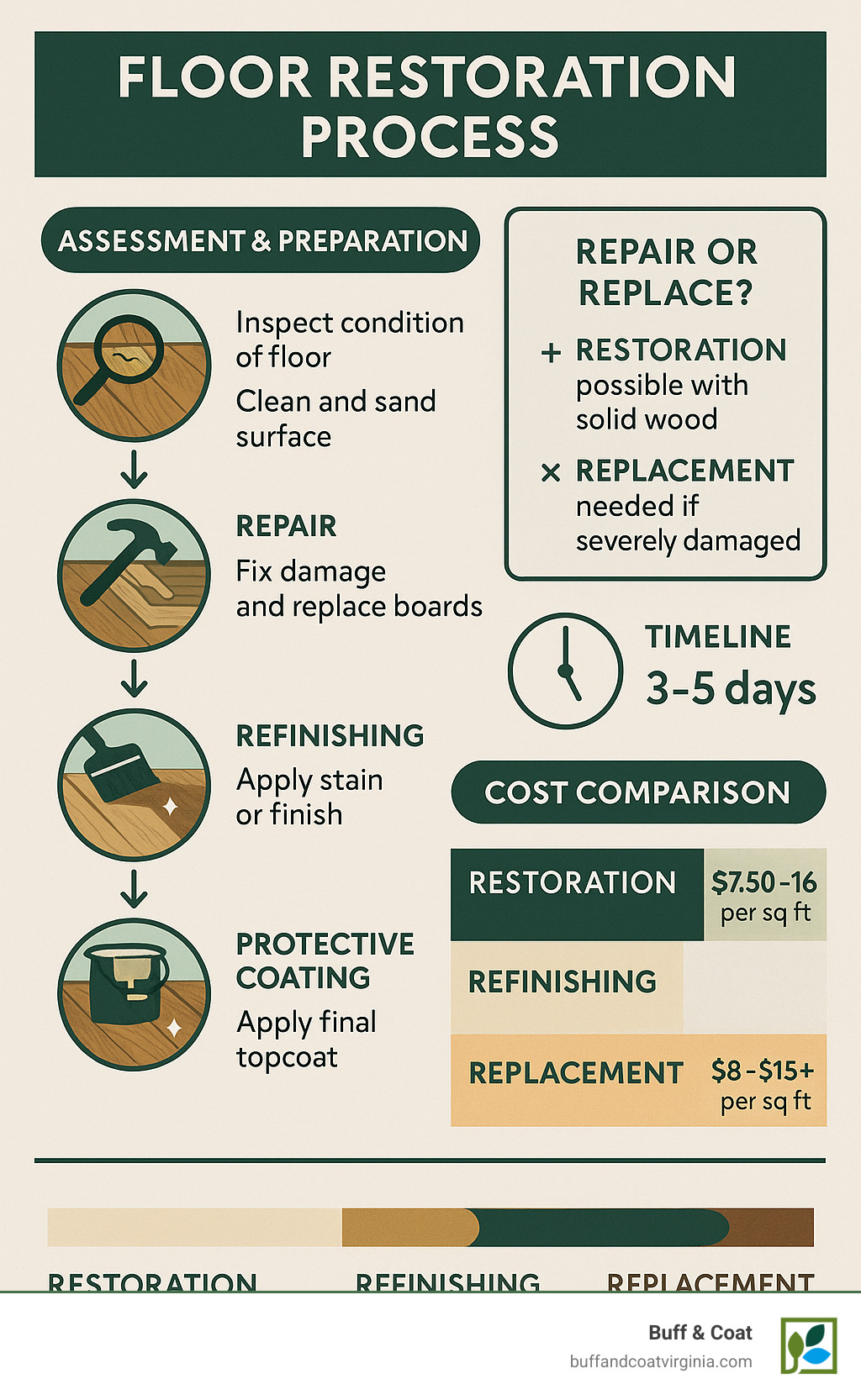
Refinishing is the most straightforward option. We sand off the old finish, apply new stain if you want a color change, and add protective topcoats. The depth of work stays at the surface level, labor requirements are moderate, and you’ll have your floors back in 3-5 days. Materials are relatively basic – sandpaper, stain, and polyurethane. Results are excellent for surface-level problems, and durability typically lasts 7-10 years with proper care.
Restoration goes much deeper. We might spend days just on repairs before we even think about sanding. Labor requirements are significantly higher because we’re essentially rebuilding parts of your floor. Materials can include replacement boards, subfloor reinforcement, specialized adhesives, and premium finishes. The results are more comprehensive and longer-lasting, with durability often extending 15-20 years or more.
Resurfacing is the most intensive option, involving removing and grinding existing boards before reinforcing the entire floor system. It’s almost like a partial replacement and requires the most labor and materials. The results are stunning, but you’re looking at durability similar to new floors because, well, much of it is new.
| Approach | Timeline | Cost Range | Best For |
|---|---|---|---|
| Refinishing | 3-5 days | $3,423-$3,733 avg | Surface wear, minor scratches |
| Restoration | Up to 2 weeks | $7.50-$16/sq ft | Deep damage, structural issues |
| Replacement | 2-4 weeks | $8-$15+/sq ft | Irreparable damage, complete redesign |
The cost-savings of restoration become clear when you consider that replacement often runs $8-$15+ per square foot, while restoration typically falls in the $7.50-$16 range. You’re getting better results for less money, and you’re preserving the original character that makes your floors unique.
When to Choose Floor Restoration Over Other Options
Deciding between floor restoration, refinishing, and replacement doesn’t have to feel overwhelming. After two decades of helping Richmond homeowners make this choice, I’ve learned that most floors tell their own story about what they need. The trick is knowing how to listen.
Your floors are trying to communicate with you every day. That creaky spot by the kitchen? Those water rings from last year’s holiday party? The dull patches where your kids practice their dance moves? These aren’t just cosmetic issues – they’re signals that help determine whether restoration is your best path forward.
Assessing Floor Condition
The simplest test costs nothing and takes thirty seconds. Drop a few water droplets on your floor in an inconspicuous corner. If the water soaks in immediately, your protective finish is worn through and needs attention. If it beads up like it’s on a freshly waxed car, your finish might just need a good cleaning and some TLC.
But let’s dig deeper. Walk slowly across each room and listen for subfloor squeaks – they often indicate loose boards or structural issues that restoration can address. Look closely at your wood’s thickness too. Most hardwood floors start life thick enough to handle up to 10 refinishing cycles over their lifetime, so unless you’re dealing with ultra-thin planks, you’ve got options.
Here’s where a moisture meter becomes your best friend. Readings above 12% usually mean there’s an underlying moisture problem that needs fixing before any restoration work begins. Don’t skip this step – moisture issues that go unaddressed will sabotage even the most beautiful restoration job.
Common Problems Floor Restoration Solves
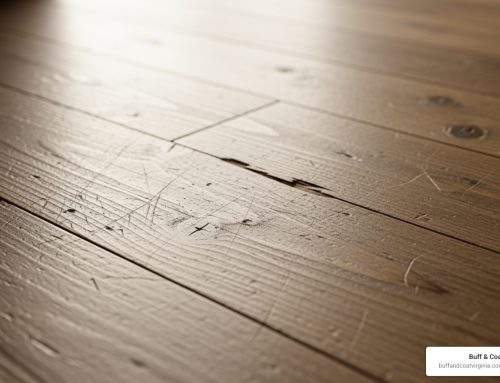
In my years serving Richmond, Glen Allen, and Midlothian, I’ve seen floors that looked absolutely hopeless transform into showstoppers. Deep scratches and dents from furniture moves or enthusiastic pets? We fill, sand, and blend them until they disappear completely.
Water damage tells a more complex story, but it’s rarely the end of the world. Those white rings, cupping boards, and mysterious dark stains often respond beautifully to targeted restoration. According to HomeAdvisor wood repair cost data, fixing water-damaged hardwood typically runs $7.50 to $16.00 per square foot – a fraction of replacement costs.
Pet stains and odors require special attention, but they’re absolutely fixable. Our restoration process includes odor-blocking primers and sealers that don’t just cover up the problem – they eliminate it permanently. I’ve restored floors where previous owners swore the pet odors were impossible to remove, and the results speak for themselves.
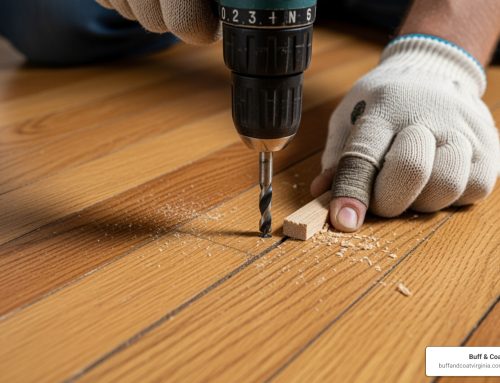
Structural gaps, loose boards, and minor squeaks are actually perfect candidates for restoration. These issues often develop gradually as houses settle and wood naturally expands and contracts. Addressing them during restoration prevents bigger problems down the road.
Cost, Time & Outcome Breakdown
Let’s talk numbers, because I know that’s what keeps most homeowners up at night. Minor floor repairs typically cost $185 to $491 according to industry data, while comprehensive floor restoration projects range from $7.50 to $16.00 per square foot. Compare that to full replacement at $8 to $15+ per square foot, and the math starts looking pretty attractive.
But time matters too. Here’s what a typical restoration timeline looks like: Assessment and preparation takes about a day, followed by 1-2 days for structural repairs. Sanding and surface prep adds another 1-2 days, with staining (if you’re changing colors) requiring an additional day. Finish application spans 2-3 days to allow proper drying between coats, plus 24-48 hours of final curing before you can move furniture back.
The return on investment makes restoration even more appealing. Professional restoration typically increases home value by more than the project cost while extending your floors’ lifespan by 10-15 years. That’s not just saving money – that’s making money while getting floors you’ll love for decades to come.
Step-by-Step Floor Restoration Process & Pro Tools
Our restoration process combines traditional craftsmanship with modern dust-free technology. Each project begins with comprehensive evaluation to identify all issues before work begins, preventing surprises and ensuring complete satisfaction.
Pro Equipment & Materials Checklist
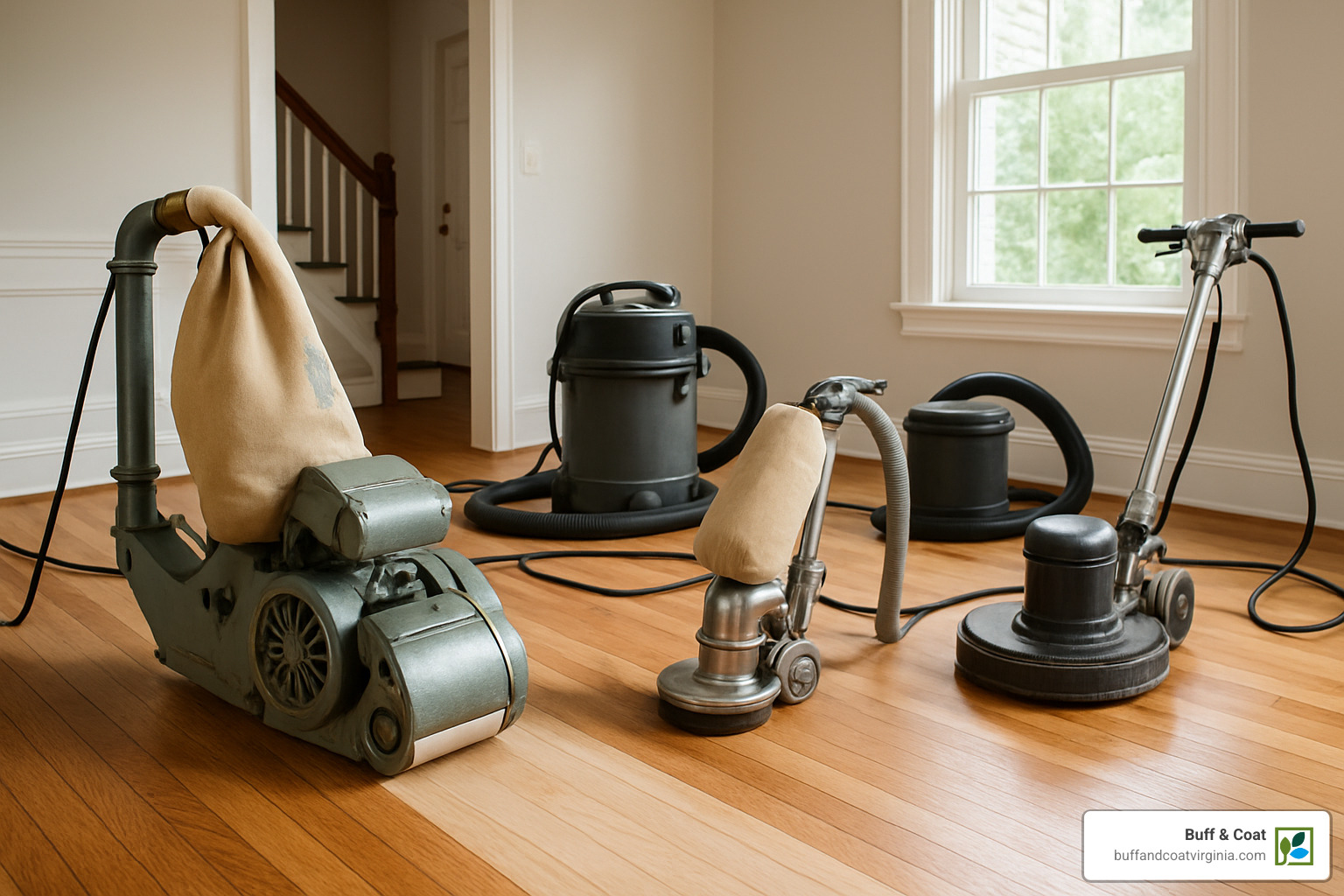
Professional restoration requires specialized equipment that most homeowners don’t own:
Essential Power Tools:
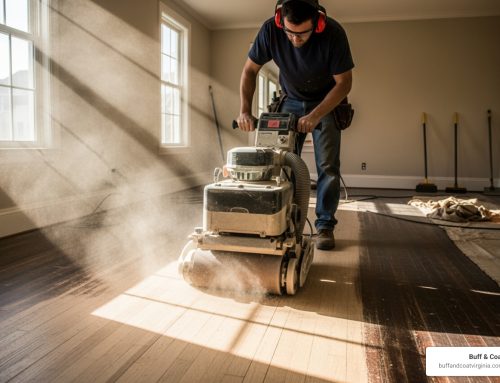
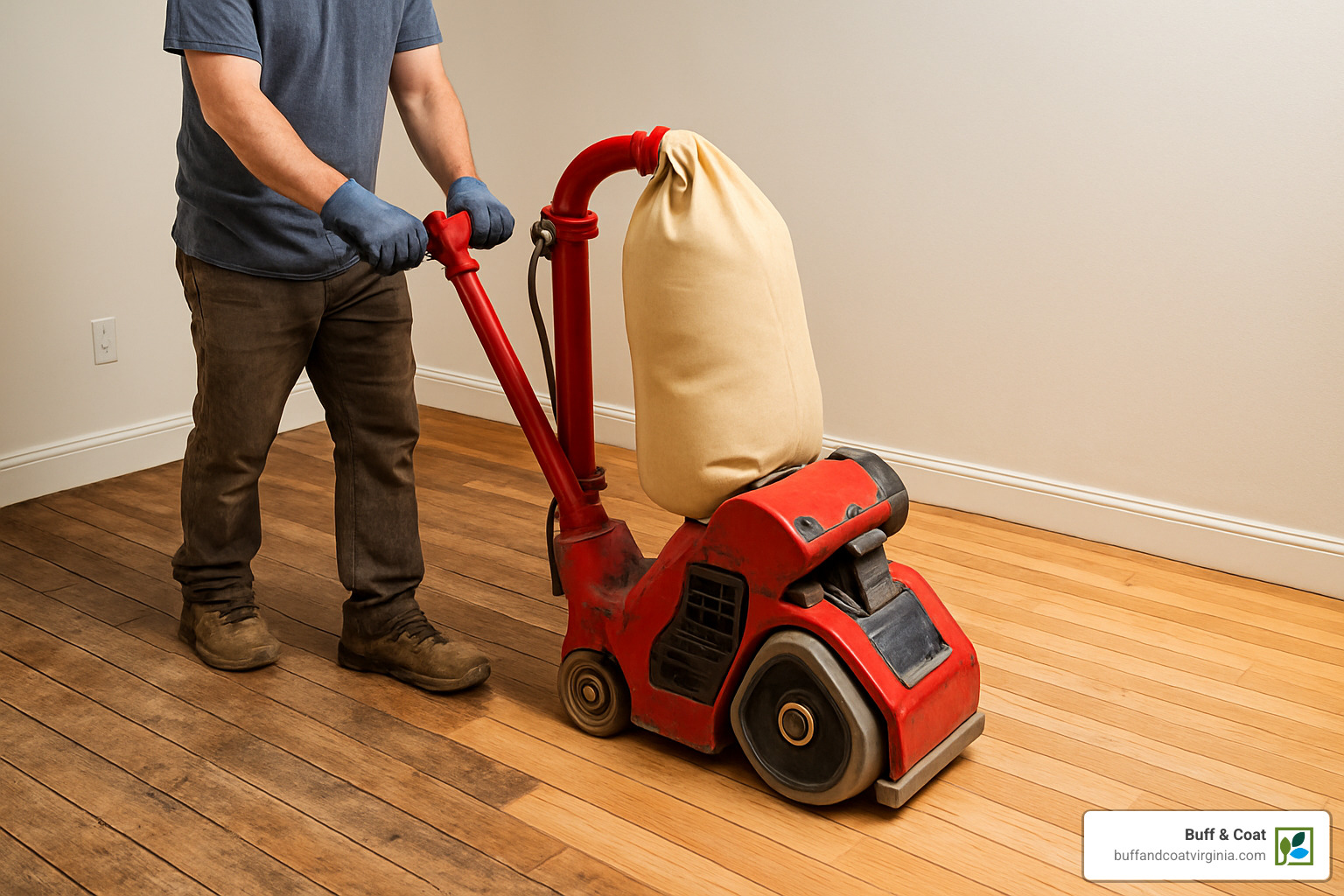
- Drum sander for aggressive material removal
- Floor edger for corners and tight spaces
- Random orbital sander for fine finishing work
- Floor buffer with various screening pads
- HEPA-filtered vacuum system for dust control
Finishing Materials:
- Commercial-grade water-based polyurethane
- Zero-VOC stains in various colors
- Wood filler and repair compounds
- Tack cloths and application tools
- Multiple grit sandpaper (36-40, 60, 100, 120)
Our dust-free system uses advanced filtration that captures 99% of particles, allowing families to remain in their homes during restoration. This technology, combined with our proprietary wet process, completes most projects in a single day.
Timeline: What to Expect
Day 1 – Assessment and Preparation:
We perform humidity testing, identify repair needs, and prepare the space. All furniture is moved and the area is sealed to contain any dust.
Day 2 – Repairs and Surface Prep:
Structural repairs are completed first, followed by our proprietary wet process that prepares surfaces without traditional sanding dust.
Day 3-4 – Detailing and Finishing:
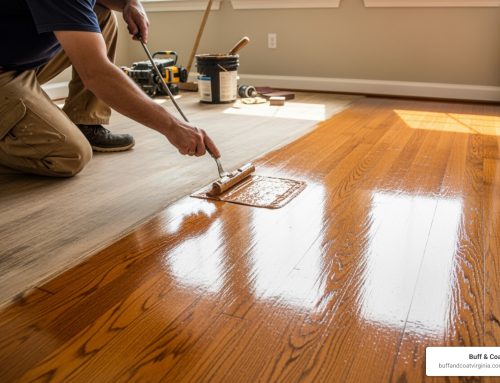
Color application (if desired), sealing, and final finish coats. Our commercial-grade sealers provide superior protection and durability.
Day 5 – Final Inspection:
Quality control check and furniture replacement. Most floors are ready for normal use within 24 hours.
DIY vs Hiring a Professional
While some homeowners attempt restoration themselves, the complexity and specialized equipment requirements make professional service the better choice for most situations. Consider these factors:
DIY Challenges:
- Equipment rental costs often approach professional service pricing
- Risk of irreversible damage from improper sanding
- Safety concerns with dust exposure and chemical finishes
- Time investment of 1-2 weeks for inexperienced workers
Professional Advantages:
- Warranty protection (we offer five-year warranties)
- Proper safety equipment and procedures
- Experience with problem-solving unexpected issues
- Access to commercial-grade materials not available to consumers
For homeowners interested in learning more about professional hardwood floor repair contractors, we provide detailed information about what to look for when hiring restoration professionals.
Sustainability & Healthy-Home Options in Floor Restoration
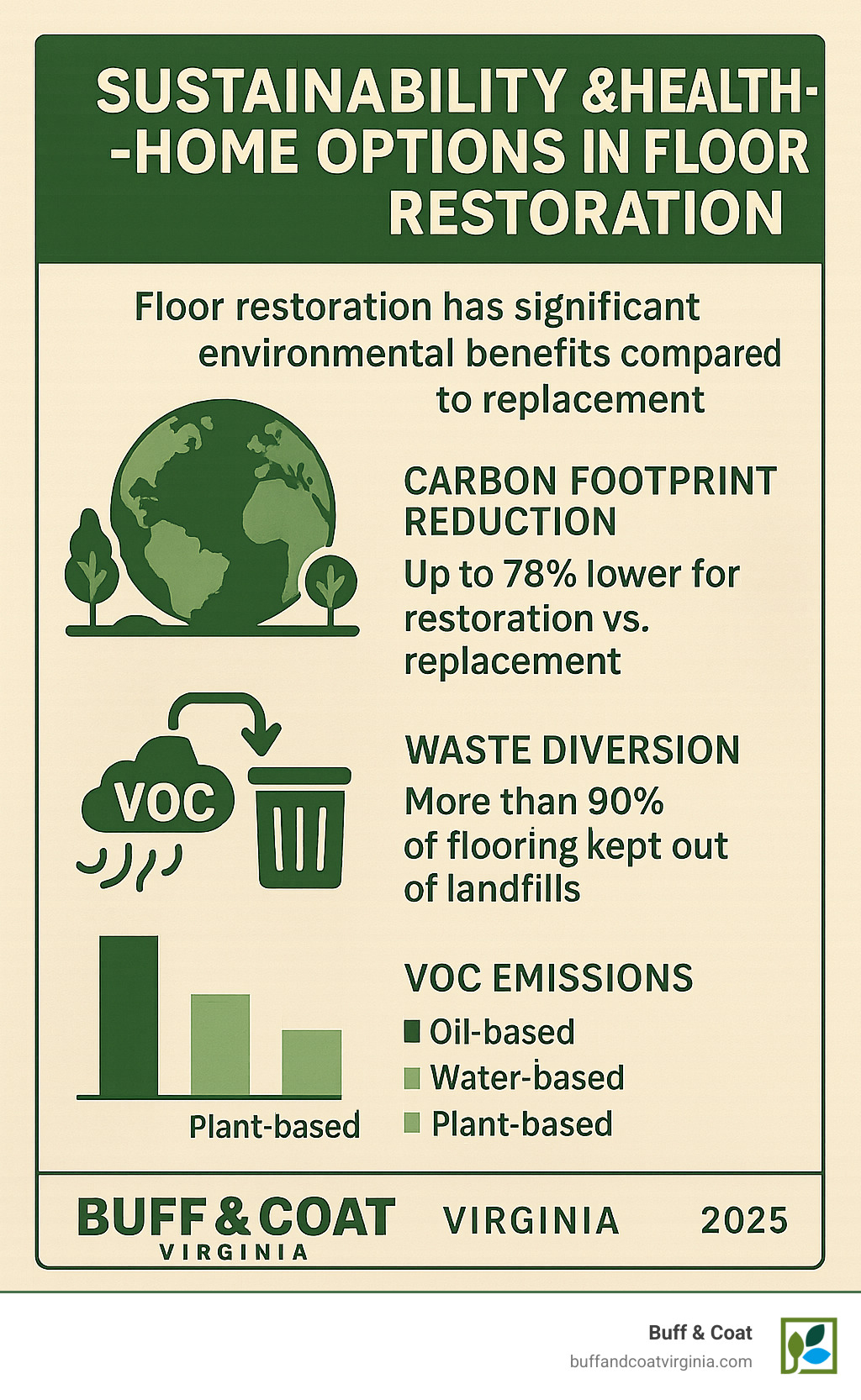
Floor restoration represents one of the most environmentally responsible choices homeowners can make. Rather than sending thousands of board feet to landfills, restoration preserves existing materials while reducing demand for new lumber harvesting.
Eco-Friendly Products & Techniques
Modern restoration accepts environmental responsibility without compromising performance. Water-based finishes have largely replaced solvent-based products, reducing volatile organic compound (VOC) emissions by up to 90%. These finishes cure faster, have minimal odor, and provide excellent durability.
Our dust-free system uses M-class filters that not only protect indoor air quality but also allow material recovery and recycling. The captured wood dust can be composted or used for other projects rather than contributing to waste streams.
Plant-based oil finishes offer another sustainable option, particularly for historic restorations where authenticity matters. These finishes penetrate wood fibers naturally and can be renewed indefinitely without sanding.
How Floor Restoration Protects Historic & Sentimental Floors
Many of our Richmond-area clients have floors with significant historical or sentimental value. Original heart pine floors from the 1800s, chestnut planks from demolished barns, or floors installed by previous generations deserve preservation rather than replacement.
Restoration allows us to maintain original wood while addressing modern performance requirements. Museum-quality techniques can preserve tool marks, patina, and character while providing contemporary durability and protection.
We’ve successfully restored floors in historic Richmond homes, maintaining architectural authenticity while meeting current building codes and family lifestyle needs.
Post-Restoration Care & Maintenance
Your floor restoration investment deserves protection through proper maintenance. The good news? Keeping restored floors beautiful requires less effort than you might think. With the right approach, your floors can maintain their stunning appearance for decades.
Think of maintenance as insurance for your investment. Just like you wouldn’t skip oil changes on a new car, consistent floor care prevents small issues from becoming expensive problems down the road.
Routine Maintenance Checklist
Daily habits make the biggest difference. Start each day by dust mopping or vacuuming with a soft brush attachment. This simple step removes the gritty particles that cause scratches when people walk across your floors. Clean spills immediately using pH-neutral cleaners – water and most liquids won’t damage properly finished floors if you address them quickly.
Weekly care keeps things fresh. Damp mop using manufacturer-approved cleaners (never use vinegar, oil soaps, or wax-based products on polyurethane finishes). Check your HVAC filters monthly and replace them regularly – clean filters reduce the dust that settles on your floors.
Monthly attention prevents problems. Apply felt pads to furniture legs and replace them when they wear thin. Monitor humidity levels, keeping them between 30-50% relative humidity year-round. Wood expands and contracts with moisture changes, so consistent humidity prevents gaps and cupping.
Annual inspections help you stay ahead of wear patterns. Walk through your home looking for areas where the finish might be thinning, especially near doorways and in front of sinks. Early detection means simple solutions instead of major repairs.
When to Re-Buff & Coat
Here’s where our expertise really shines. Our signature buff and coat process can refresh your floors between major restorations, extending their life significantly.
Watch for these telltale signs: Your floors start losing their sheen in high-traffic areas first. You might notice the finish looks dull despite regular cleaning, or minor surface scratches become more visible. Traffic lanes – those paths everyone walks repeatedly – often show wear before other areas.
The beauty of buff and coat is its simplicity. We lightly screen the existing finish, clean thoroughly, then apply a fresh protective coat. Most projects complete in a single day, and the cost is a fraction of full restoration.
Our five-year warranties give you confidence in both the initial restoration and ongoing maintenance services. We’ve perfected this process over 20 years of serving Richmond-area families, and we stand behind every project.
Regular buff and coat maintenance typically extends the time between major restorations from 7-10 years to 15-20 years. That’s substantial savings over your floors’ lifetime, plus the convenience of minimal disruption to your daily routine.
Frequently Asked Questions about Floor Restoration
How long will a typical floor restoration take?
Here’s what most homeowners want to know first: floor restoration timelines vary quite a bit depending on what your floors actually need. If we’re talking about a straightforward refinishing job, you’re looking at 3-5 days from start to finish. But if your floors need serious help – structural repairs, board replacement, or extensive water damage fixes – we’re talking closer to two weeks.
The good news? Our dust-free process actually speeds things up compared to old-school methods. There’s no massive cleanup afterward, no dust settling on everything for days, and no need to deep-clean your entire house when we’re done.
What affects your timeline? Your floor’s current condition makes the biggest difference. A 1,200 square foot living area with minor wear will move much faster than the same space with pet damage, loose boards, and deep scratches. The number of finish coats you want matters too – some clients prefer just two coats for a quick refresh, while others want the full three-coat treatment for maximum durability.
Weather plays a role as well. High humidity slows drying times, while good air circulation and moderate temperatures help finishes cure faster. We always factor in Richmond’s climate when planning your project timeline.
Can floor restoration change my floor’s color entirely?
This is one of my favorite questions because the answer usually surprises people: absolutely yes! Staining during restoration can completely transform your floors’ appearance. I’ve taken boring builder-grade oak from bland beige to rich chocolate brown, and red oak from orange-toned to sophisticated gray.
The magic happens during the restoration process when we’ve prepared the wood surface perfectly for stain absorption. You can go dramatically darker with most wood species – light oak to espresso, natural maple to walnut tones, or pine to rich mahogany colors.
Going lighter is trickier but not impossible. Moving from dark to light usually requires wood bleaching, which adds time and cost to your project. Some wood species also have strong natural tannins that resist lightening treatments.
Here’s what I always tell clients: bring us photos of floors you love, and we’ll test stain samples in an inconspicuous area. Every piece of wood accepts stain differently, so testing prevents disappointment and ensures you get exactly the look you’re dreaming of.
Is the process safe for kids, pets, and allergy sufferers?
Safety is honestly why we invested in dust-free restoration technology in the first place. Traditional floor sanding creates clouds of fine particles that settle everywhere, trigger allergies, and make homes unlivable for days. Our advanced filtration system captures 99% of dust particles, making the process dramatically safer for sensitive family members.
Most families stay in their homes during our restoration work. The dust-free system means no particles floating through your HVAC system, no gritty residue on furniture, and no respiratory irritation from airborne wood dust.
Water-based finishes are another safety advantage. Unlike old-fashioned oil-based products that off-gas harsh chemicals for weeks, modern water-based finishes have minimal odor and cure quickly. Scientific research shows these products significantly improve indoor air quality compared to traditional restoration methods.
The only time we recommend staying elsewhere is during finish application and the first 24-48 hours of curing. Kids and pets can safely return once finishes have fully cured, usually within 2-3 days. We’ll give you specific timing based on your project’s finish schedule and current weather conditions.
For allergy sufferers, our process is actually therapeutic – we’re removing years of embedded dust, pet dander, and allergens that regular cleaning can’t reach, then sealing the wood surface to prevent future accumulation.
Conclusion
Floor restoration transforms worn, damaged floors into stunning centerpieces that add real value to your home. Instead of tearing out perfectly good hardwood and sending it to a landfill, restoration preserves what you already have while giving you the fresh, beautiful floors you want.
Think about it – your floors have character and stories that new materials simply can’t match. That original heart pine from the 1940s or those oak planks your grandfather installed deserve a second chance, not a trip to the dumpster.
At Buff & Coat, we’ve spent over 20 years perfecting our dust-free restoration process. While other companies leave your home looking like a construction zone for weeks, our signature buff-and-coat technique gets most projects done in a single day. You wake up to beautiful floors without the hassle, mess, or endless disruption.
Our expert craftsmen have restored hundreds of floors throughout Richmond, Glen Allen, and Midlothian. We’ve seen floors that looked absolutely hopeless come back to life with the right care and attention. Water damage, pet stains, deep scratches – we’ve handled it all, and we back every project with comprehensive warranties because we stand behind our work.
Here’s what makes restoration the smart choice: you’ll save thousands compared to replacement, help the environment by reusing existing materials, and get results that often look better than brand new floors. Plus, you’re preserving the unique character that makes your home special.
We offer free in-home assessments because we believe you deserve to understand all your options before making any decisions. No pressure, no sales pitch – just honest advice from people who genuinely love what they do. Check out our service area page to see if we cover your neighborhood, or give us a call to set up your consultation.
Your floors have plenty of life left in them. They just need someone who knows how to bring out their best. Let us show you what’s possible when traditional craftsmanship meets modern innovation – you might be amazed at what’s hiding under all that wear and tear.