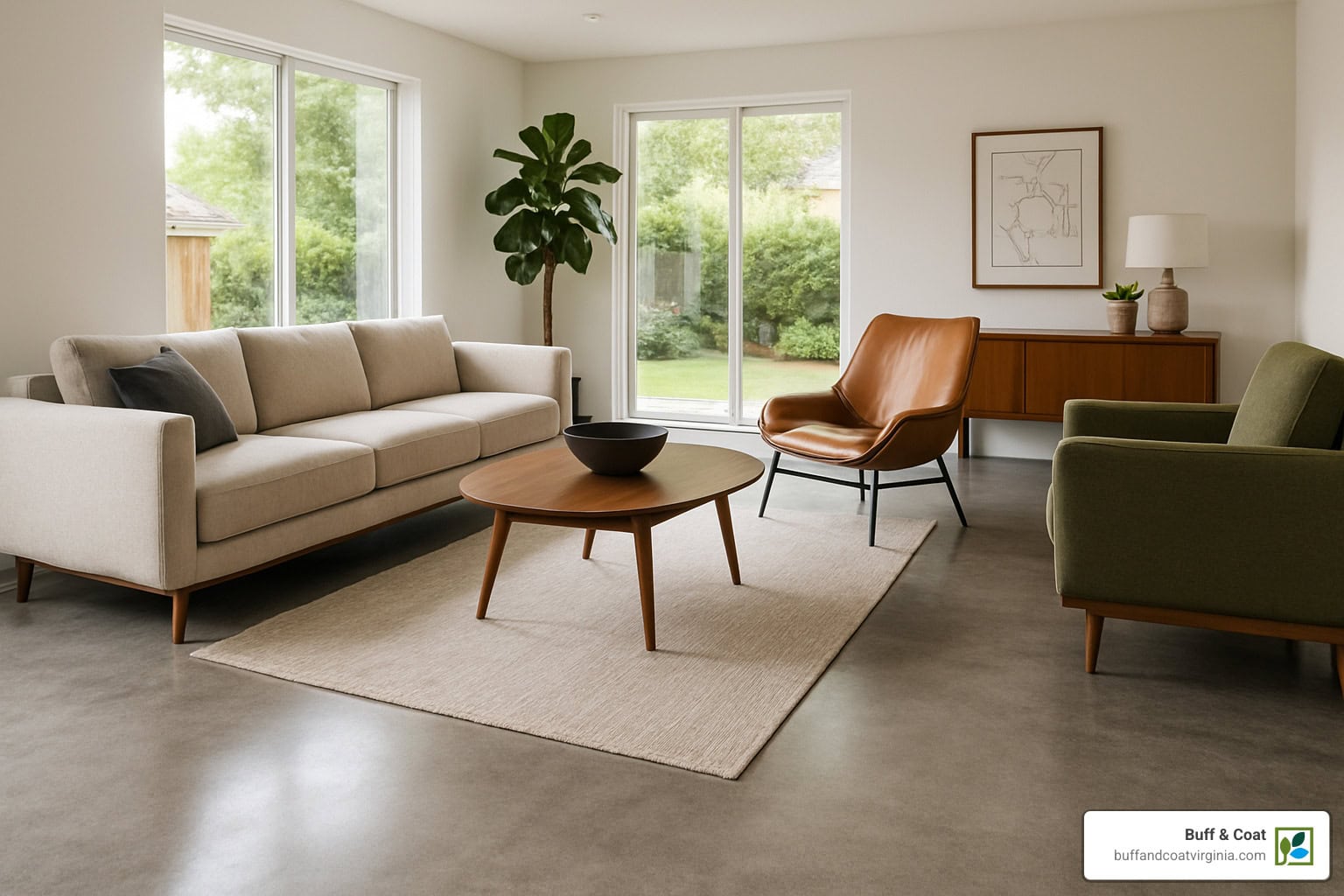
Why Concrete Residential Flooring Is Taking Richmond Homes by Storm
Concrete residential flooring has evolved from warehouse floors to high-end home design. Here’s what you need to know:
Key Benefits:
• Durability – Can last decades with proper maintenance
• Cost-effective – $2-$30 per square foot installed
• Low maintenance – Simple sweeping and occasional resealing
• Design flexibility – Stains, dyes, and polishing create custom looks
• Pet-friendly – Scratch and stain resistant surface
Common Concerns:
• Hard and cold underfoot (solved with radiant heating or area rugs)
• Potential for hairline cracks over time
• Professional installation recommended for best results
When homeowners first see polished concrete floors, they often have a “love-at-first-sight reaction followed by skepticism about concrete’s practicality,” according to industry research. This reaction makes perfect sense – concrete offers the strength of a highway with the potential beauty of marble, but questions about comfort and livability are natural.
Modern finishing techniques have transformed concrete from industrial material to luxury flooring option. You can achieve looks ranging from smooth minimalist to richly stained surfaces that mimic natural stone. The thermal mass properties even help regulate indoor temperatures, potentially reducing your energy bills.
As David Emmerling, founder of Buff and Coat Hardwood Floor Refinishing, I’ve seen how concrete residential flooring can complement traditional hardwood in creating stunning, durable home environments. While my expertise centers on hardwood restoration, I understand how different flooring materials work together to create the perfect home aesthetic.
Understanding Concrete Residential Flooring Basics
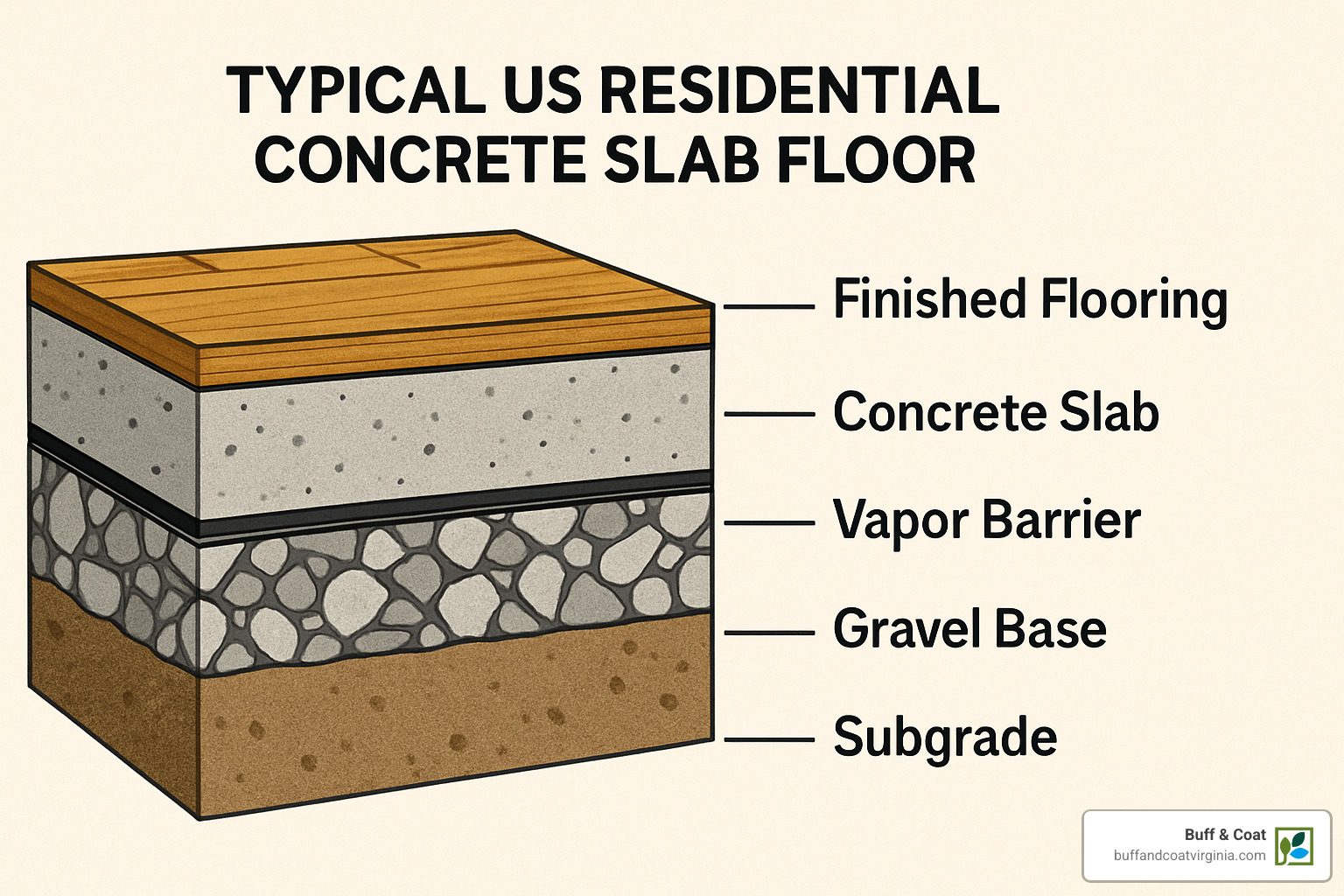
Think of concrete residential flooring as the ultimate makeover for what’s already under your feet. Most Richmond homes have concrete slabs hiding beneath carpet, tile, or hardwood—and these slabs can become stunning finished floors with the right treatment.
The beauty lies in the simplicity: instead of adding another layer of flooring material, you’re changing the structural foundation itself into the final surface. This approach creates incredible strength and eliminates the common problem of floors that separate from their subfloor over time.
Understanding the anatomy of your concrete slab helps explain why this flooring option works so well. The concrete provides best structural strength, while modern finishing techniques add beauty and comfort. Whether you’re dealing with an on-grade installation (slab poured directly on the ground) or a lifted slab (liftd above a basement or crawl space), the same principles apply.
The embodied carbon in concrete—the environmental impact from manufacturing—actually becomes an advantage when you use existing slabs as finished floors. You’re maximizing the use of materials already in place rather than adding new flooring with its own environmental footprint.
What makes concrete residential flooring unique?
Concrete residential flooring represents a complete shift in thinking about what a floor can be. Rather than treating concrete as just a base for “real” flooring, you’re embracing the slab-as-finish concept that’s revolutionizing home design.
This approach differs dramatically from traditional flooring materials. While tile, vinyl, and even hardwood sit on top of your subfloor, polished concrete is the subfloor and finished surface combined. This fundamental difference explains why concrete floors feel so solid underfoot—there’s no hollow sound or flex because you’re walking directly on the structural foundation.
The finish types available today would surprise homeowners who remember concrete as purely industrial. Polished finishes reveal the natural beauty of aggregate stone within the concrete, creating surfaces that rival expensive terrazzo. Acid stains penetrate deep into the concrete to create rich, earth-tone colors with natural variation that can’t be replicated with surface treatments.
Decorative overlays offer another exciting option, especially for slabs with surface imperfections. These thin applications can create textures that mimic natural stone, wood, or even fabric patterns. The hardness factor that makes concrete so durable also means these decorative treatments won’t wear through under normal residential use.
Basic finish costs start surprisingly low—often less than quality hardwood—making this an accessible option for budget-conscious homeowners who don’t want to compromise on style or durability.
How long does a concrete floor really last?
Here’s where concrete residential flooring truly outshines traditional options: a properly finished concrete floor can outlast multiple generations of other flooring materials. We’re talking about decades of service life with minimal maintenance requirements.
The scratch resistance comes from concrete’s inherent hardness. While hardwood shows every pet claw and high heel mark, concrete shrugs off this daily abuse without a trace. Stain resilience depends on proper sealing, but sealed concrete resists everything from red wine to motor oil better than most flooring options.
The reseal schedule represents the main maintenance requirement—typically every one to three years depending on traffic patterns and the specific sealer used. This simple process refreshes the protective layer and maintains the floor’s appearance, much like how we recommend regular maintenance for hardwood floors to preserve their beauty.
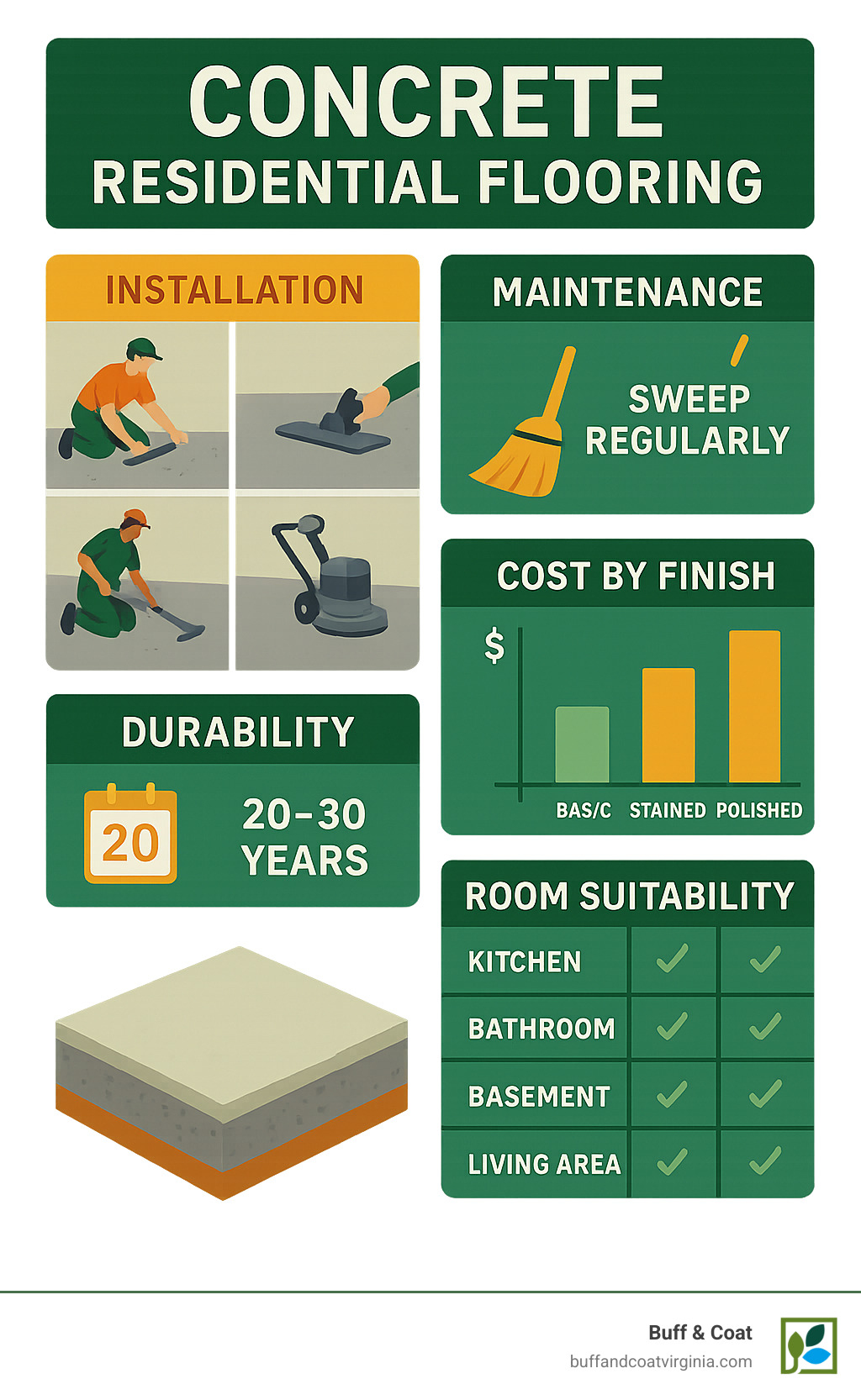
Industry durability statistics consistently show concrete floors lasting 20-30 years with basic care, compared to 3-15 years for most other residential flooring materials. This longevity makes the initial investment surprisingly economical when calculated over the floor’s lifetime, similar to how quality hardwood becomes cost-effective through its ability to be refinished multiple times.
For Richmond homeowners considering flooring options, this durability factor becomes especially important given our climate’s humidity variations and temperature swings that can stress other flooring materials over time.
| Flooring Type | Average Lifespan | Maintenance Frequency | Refinishing Options |
|---|---|---|---|
| Concrete (polished) | 20-30 years | Reseal every 1-3 years | Multiple refinishing possible |
| Hardwood | 25-100 years | Annual cleaning, refinish every 7-10 years | Multiple refinishing possible |
| Laminate | 10-15 years | Regular cleaning | Not refinishable |
| Vinyl | 5-10 years | Regular cleaning | Not refinishable |
| Carpet | 3-7 years | Regular cleaning, professional annually | Not refinishable |
Weighing the Pros, Cons & Real Costs
Let’s be honest about concrete residential flooring—it’s not the perfect solution for every home or family. But understanding both the genuine advantages and real limitations helps you make the right choice for your Richmond home.
The durability factor alone makes many homeowners fall in love with concrete floors. We’re talking about a surface that can handle decades of daily life without showing significant wear. Scratch and stain resistance means your floors won’t suffer from pet claws, spilled wine, or furniture being moved around. One local homeowner laughed as she told us her Great Dane could “run indoor marathons” without leaving a single mark on her polished concrete.
Design flexibility might surprise you if you’re still picturing gray industrial floors. Modern concrete finishes can mimic marble, create rich earth tones through acid staining, or even achieve metallic shimmer effects. The color and texture possibilities are virtually unlimited, letting you create a truly custom look that fits your style.
From a practical standpoint, low maintenance makes concrete appealing to busy families. Daily care involves simple sweeping and occasional damp mopping with neutral cleaners. No waxing schedules, no refinishing projects, no complicated care routines. The seamless surface eliminates grout lines where dirt loves to hide.
For families dealing with allergies, concrete floors create a healthier indoor environment because they don’t absorb odors, harbor dust mites, or provide hiding spots for allergens. The surface stays genuinely clean with basic maintenance.
The thermal mass benefits offer unexpected energy savings. Concrete naturally absorbs heat during the day and releases it slowly, helping regulate indoor temperatures and potentially reducing HVAC costs.
Common concerns & myths debunked
Now for the reality check. Concrete floors are hard and cold underfoot—there’s no sugar-coating this fact. Standing for long periods can be tiring, and the surface feels chilly in winter. However, radiant heating systems installed beneath the concrete solve the temperature issue, while area rugs and cushioned mats provide comfort in work areas.
Potential cracking concerns many homeowners, and hairline cracks can develop over time due to settling or temperature changes. While these rarely affect structural integrity, they can impact appearance. Proper installation with control joints and quality concrete mix minimizes this risk.
The “concrete floors are slippery” myth persists despite evidence showing polished concrete typically offers better traction than waxed linoleum or wet tile. Adding non-slip additives to sealers creates excellent grip for safety-critical areas.
Some homeowners worry about sound and echo issues, but concrete’s acoustic properties aren’t dramatically different from tile or hardwood. Area rugs and soft furnishings easily manage any echo concerns.
Moisture and mold fears often surface during planning discussions. Properly installed concrete floors include vapor barriers and drainage systems that actually prevent moisture problems. The sealed surface resists mold growth better than organic materials, following CDC mold safety guidance for healthy indoor environments.
What will concrete residential flooring cost me?
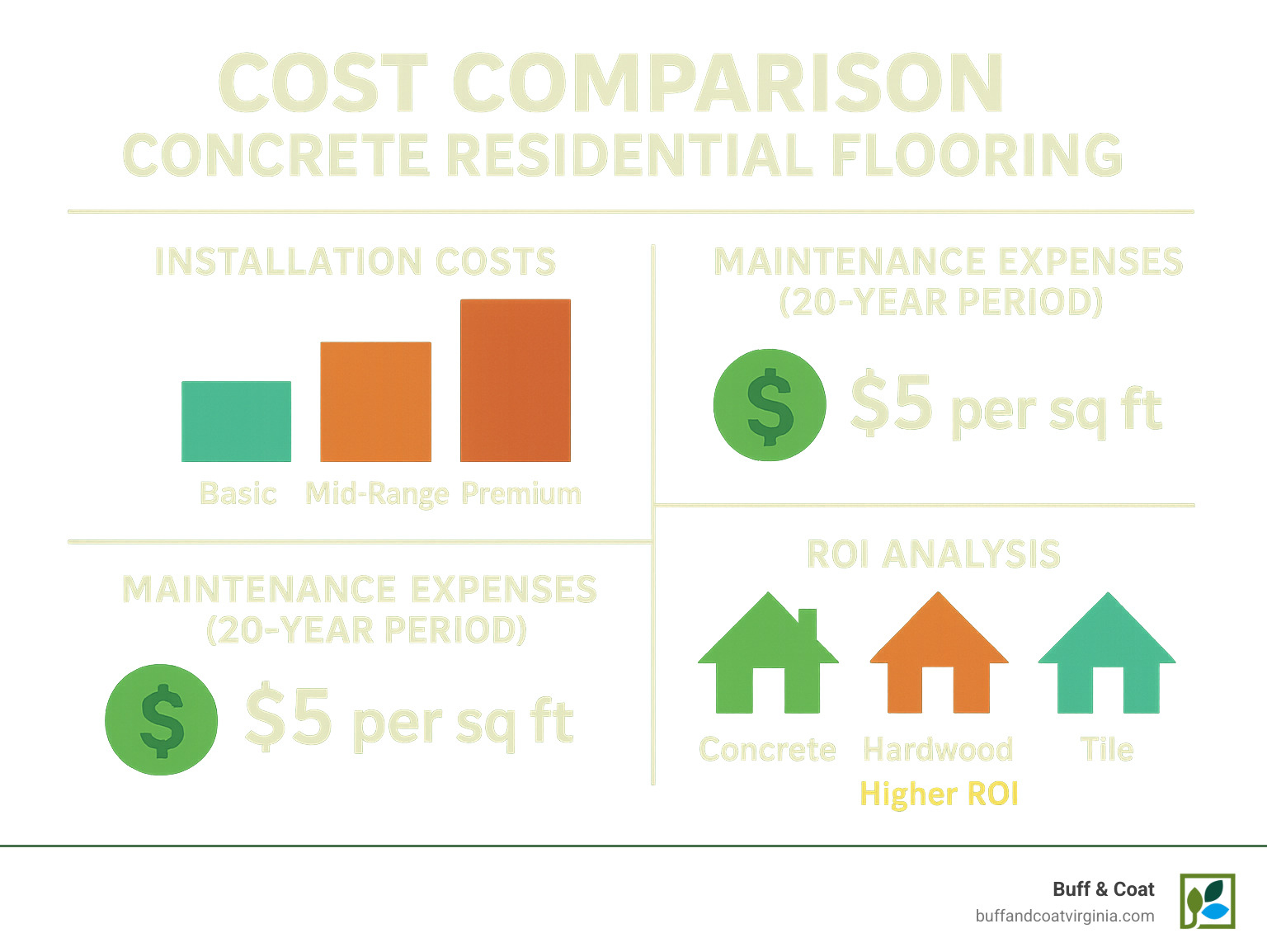
Concrete residential flooring pricing varies dramatically based on finish complexity and your specific goals. Richmond-area homeowners typically see three distinct pricing tiers.
Basic installations running $2-$6 per square foot involve simple grinding and sealing of existing slabs with minimal decorative elements. This approach works well for basements, garages, or utility areas where function matters more than aesthetics.
Mid-range projects costing $7-$14 per square foot include polishing with decorative elements like acid staining or basic saw-cut patterns. This level suits most living spaces and offers good value for the durability and appearance achieved.
High-end installations ranging from $15-$30+ per square foot feature complex staining patterns, metallic effects, intricate designs, or artistic treatments. These premium finishes rival luxury hardwood or natural stone in both appearance and cost.
Labor represents 60-70% of total project costs, making professional installation crucial for quality results. While DIY concrete staining might seem cost-effective, mistakes in surface preparation or sealing often cost more to fix than hiring professionals initially.
The long-term value becomes clear when you consider that quality concrete floors can last 20-30 years with basic maintenance, while other flooring materials typically need replacement every 5-15 years. Scientific research on concrete’s carbon footprint also shows environmental benefits that add to the overall value proposition.
Design, Comfort & Safety Options
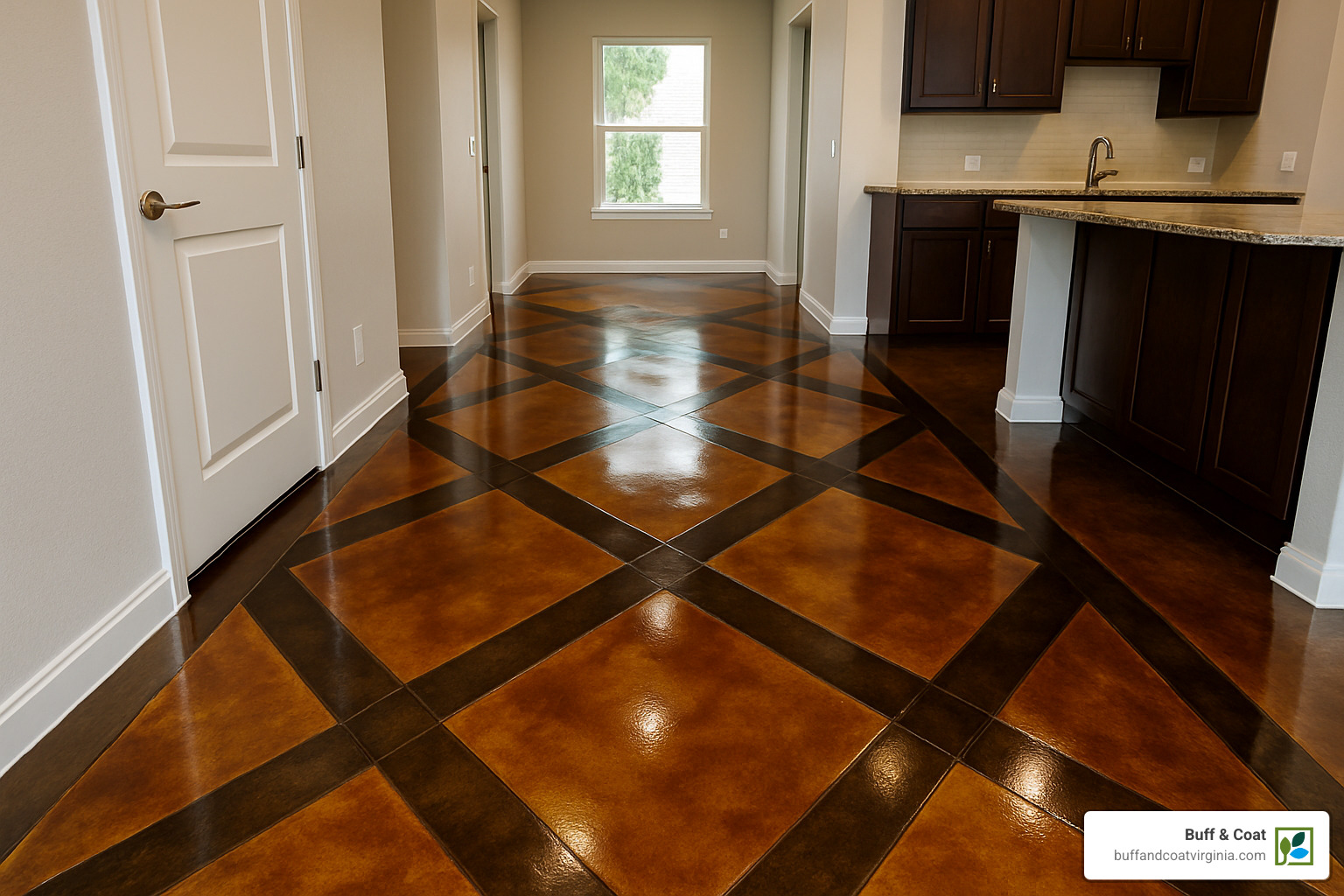
When most people think of concrete floors, they picture cold gray warehouse surfaces. The reality of modern concrete residential flooring couldn’t be more different. Today’s finishing techniques create stunning surfaces that can make guests wonder if they’re looking at polished marble, natural stone, or even exotic hardwood.
The change happens through careful attention to three key elements: color, texture, and protective finishes. Each choice dramatically impacts both the visual appeal and practical performance of your floors.
Designing with concrete residential flooring
The color possibilities with concrete residential flooring extend far beyond basic gray. Integral pigments mixed directly into the concrete create consistent, fade-resistant base colors throughout the entire slab thickness. These work beautifully for subtle earth tones and modern neutrals.
For more dramatic effects, acid stains produce rich, variegated surfaces with natural mottling that mimics aged leather or weathered stone. The chemical reaction between the acid and concrete minerals creates unique patterns that can’t be replicated—each floor becomes truly one-of-a-kind.
Water-based dyes offer the broadest color palette, from vibrant blues and greens to warm reds and purples. Unlike stains, dyes provide more uniform coverage, making them perfect for contemporary spaces that demand consistent color.
The newest trend involves metallic epoxy treatments that create stunning three-dimensional effects. These finishes can mimic flowing water, molten metal, or cosmic swirls, adding drama to any space.
Surface texture plays an equally important role in the final appearance. Polishing levels range from 400-grit for subtle matte finishes to 3000-grit for mirror-like surfaces that reflect light beautifully. Stamped patterns can convincingly mimic natural stone, brick, or even wood grain textures.
Saw-cut patterns serve both practical and aesthetic purposes, dividing large areas into manageable sections while preventing random cracking. These cuts can follow geometric patterns, create borders, or establish visual zones within open floor plans.
Comfort underfoot & indoor health
Let’s address the elephant in the room: concrete floors can feel cold and hard. But modern solutions have largely solved these comfort concerns while actually improving indoor health.
Radiant heating systems transform concrete from cold to cozy. When heating cables or tubes are embedded during installation, the concrete’s thermal mass becomes an advantage, distributing warmth evenly throughout the room. Many homeowners find radiant-heated concrete floors more comfortable than traditional forced-air heating.
Even without radiant heat, concrete’s thermal mass properties help stabilize indoor temperatures naturally. The material absorbs excess heat during warm periods and releases it when temperatures drop, potentially reducing your energy bills year-round.
Strategic placement of area rugs addresses both comfort and acoustics. Unlike wall-to-wall carpeting that can harbor allergens, removable rugs provide softness underfoot while maintaining the health benefits of hard surfaces. You can easily clean or replace rugs as needed.
Speaking of health benefits, concrete residential flooring creates genuinely healthier indoor environments. The non-porous sealed surface doesn’t harbor dust mites, pet dander, or mold spores. Zero-VOC sealers maintain excellent indoor air quality without off-gassing harmful chemicals.
For pet owners, concrete floors offer best advantages. Dogs and cats can’t scratch the surface, accidents clean up easily, and odors don’t absorb into the flooring material.
Easy cleaning & maintenance routine
Here’s where concrete residential flooring truly shines in daily life. The maintenance routine is refreshingly simple compared to other flooring types.
Daily cleaning involves basic sweeping or vacuuming to remove debris, followed by damp mopping with neutral pH cleaners. Avoid acidic products like vinegar or alkaline cleaners that can damage protective sealers over time.
Spill response couldn’t be easier on properly sealed concrete. Most liquids wipe up immediately without staining. For stubborn marks, a blue utility pad with neutral cleaner usually handles the problem without damaging the surface.
Periodic resealing represents the most important maintenance task. Depending on traffic levels, concrete floors need fresh sealer every 1-3 years. High-traffic areas like kitchens might need annual attention, while bedrooms can go three years between treatments.
The resealing process involves cleaning the floor thoroughly, then applying a new protective coat. Professional application ensures even coverage and proper curing, extending the life of your decorative finishes.
Non-slip maintenance involves adding texture additives to sealers in areas where traction matters most. Bathrooms, entryways, and outdoor transition areas benefit from these safety improvements.
Minor scratches in the sealer layer can often be buffed out with fine polishing compounds. Significant damage requires professional refinishing, but this rarely occurs with proper care and quality installation.
While my expertise at Buff and Coat focuses on hardwood floor refinishing and restoration, I appreciate how concrete and wood floors can complement each other in creating beautiful, low-maintenance homes throughout the Richmond area.
Where & How to Install Concrete Floors in Your Home
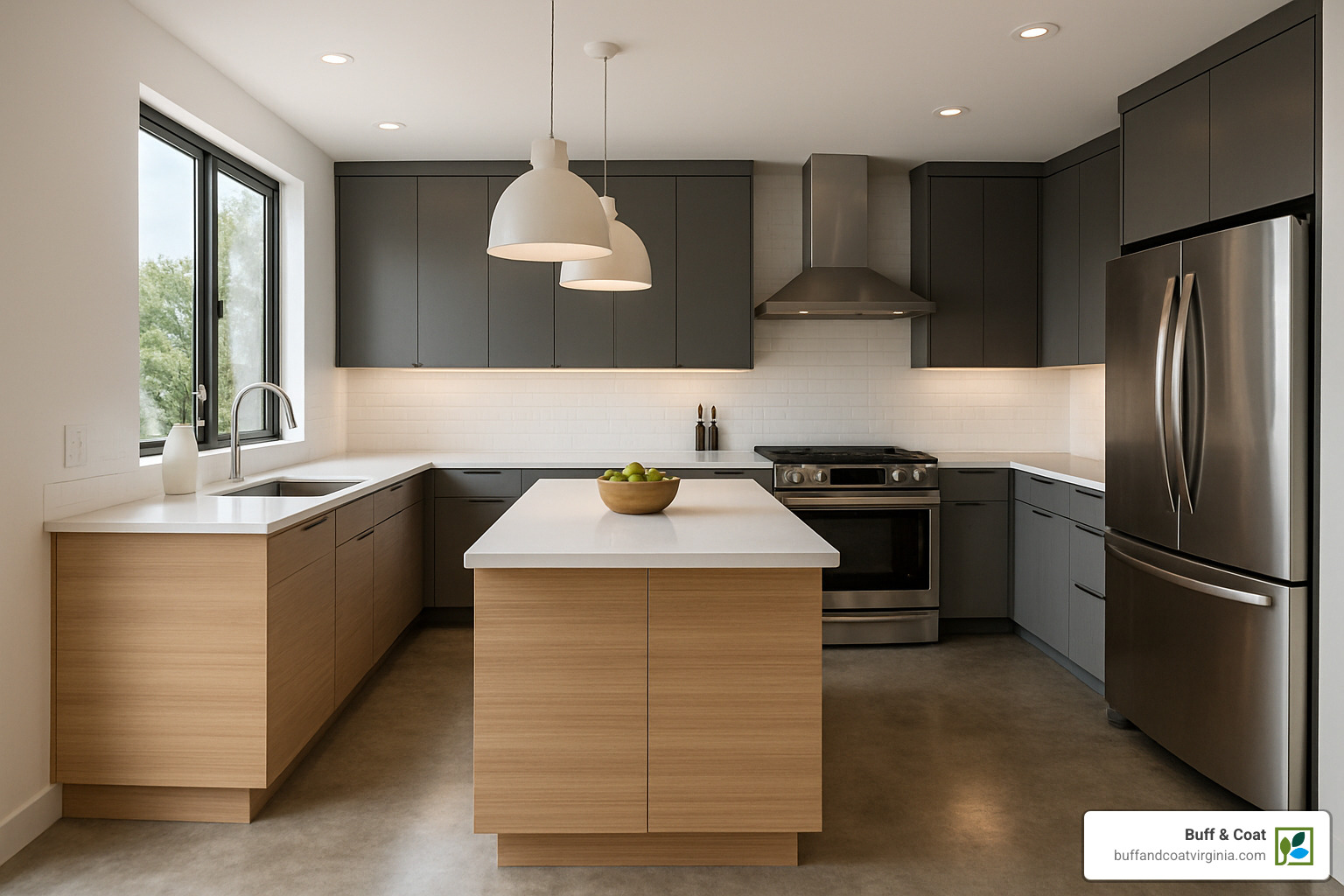
Concrete residential flooring works beautifully throughout your home, though some rooms welcome it more naturally than others. Think of concrete as the chameleon of flooring materials—it adapts to different spaces while maintaining its core strengths of durability and easy maintenance.
Room-by-room suitability
Your kitchen might be concrete’s perfect home. Between spilled marinara sauce, dropped utensils, and daily cooking chaos, kitchens demand tough flooring. Concrete laughs off these challenges while its seamless surface eliminates those pesky grout lines where crumbs love to hide. Plus, when you’re hosting dinner parties, you won’t worry about high heels or chair legs leaving permanent reminders.
Bathrooms present an interesting case. Many homeowners assume concrete can’t handle moisture, but properly installed systems with vapor barriers actually outperform many traditional materials. The sealed surface resists mold and mildew naturally, and adding slip-resistant additives keeps everyone safe during morning routines.
Basements represent concrete’s most obvious application since you’re likely working with existing concrete slabs anyway. Instead of covering that structural element with carpet that might get musty or tiles that could crack, polishing and staining transforms your basement into attractive living space without adding height or creating moisture traps.
Living areas showcase concrete’s design versatility, especially in open floor plans where seamless flow matters. The material particularly complements contemporary and industrial architectural styles, though creative staining can warm up traditional spaces too.
Even bedrooms can work with concrete, particularly when paired with radiant heating systems and strategically placed area rugs. The hypoallergenic properties benefit family members with allergies or asthma, creating cleaner sleeping environments.
Garages and utility rooms let concrete flex its industrial muscles. Oil changes, workshop projects, and heavy equipment won’t faze properly finished concrete surfaces. It’s like having a floor that actually gets better looking with character marks.
Going over existing floors or upstairs
Installing concrete residential flooring upstairs requires more finesse than ground-level applications. Microtoppings—ultra-thin concrete overlays just a few millimeters thick—can transform existing tile, vinyl, or even hardwood without adding significant weight to your home’s structure.
These lightweight solutions open possibilities for second-story installations, though you’ll want a structural engineer’s approval for any substantial concrete work above ground level. Think of it as getting a professional opinion before making major changes—better safe than sorry when it comes to your home’s structural integrity.
Sound transmission becomes crucial in multi-story applications. Concrete’s hardness can create noise issues for rooms below, but sound-dampening mats under overlays help minimize impact noise. It’s like adding a whisper-quiet layer between floors.
Planning transitions between concrete and other flooring materials requires careful attention to detail. Whether you use transition strips, create subtle level changes, or design gradual material shifts, the goal is maintaining visual flow throughout your home.
DIY vs hiring a pro—when to call in experts
While YouTube makes everything look doable, concrete residential flooring often rewards professional installation with decades of beautiful performance. The surface preparation stage alone requires specialized grinding equipment and experience—mistakes here affect everything that follows.
Polishing presents another challenge for DIY enthusiasts. Achieving consistent sheen levels across large areas demands professional-grade equipment and years of practice. We’ve seen well-intentioned homeowners create visible swirl marks or uneven surfaces that cost more to fix than professional installation would have cost initially.
Staining and sealing might seem straightforward, but acid staining requires careful neutralization and proper sealer application. Professional installers carry insurance and warranties that protect your investment—something you can’t get from DIY projects.
Complex designs like stamped patterns, metallic effects, or intricate saw-cuts definitely call for artistic skill and specialized tools. It’s like the difference between painting a room and creating a mural—both involve paint, but the expertise required is vastly different.
At Buff and Coat, we understand how different flooring materials work together in comprehensive home renovations. While our expertise centers on hardwood refinishing and installation, we know how important it is to plan flooring transitions properly. Our floor installation services include consultation on creating cohesive flooring designs throughout your Richmond home.
Getting professional estimates helps you understand the full scope of work, even if you’re considering DIY approaches. We offer free estimates to help Richmond homeowners make informed flooring decisions that will serve them well for decades to come.
Frequently Asked Questions about Concrete Residential Flooring
When Richmond homeowners first consider concrete residential flooring, they often have the same three concerns. Let me address these questions with the honest answers you need to make an informed decision.
Are concrete floors safe and slip-resistant?
This question comes up in nearly every consultation, and I understand why. The mental image of slippery warehouse floors makes safety a legitimate concern, especially for families with young children or elderly relatives.
The truth is that properly finished concrete residential flooring actually provides excellent traction under normal conditions. The slip resistance depends entirely on the sealer and finishing techniques used during installation. Professional contractors can add non-slip additives directly into the sealer for areas that might get wet, like bathrooms or mudrooms.
Here’s what might surprise you: polished concrete often offers better grip than many traditional flooring materials. I’ve seen homeowners slip more frequently on freshly waxed linoleum or wet ceramic tile than on properly finished concrete floors.
The beauty of concrete is that slip resistance can be customized during installation. If you’re particularly concerned about safety, your contractor can adjust the texture and sealer formulation to meet your specific needs without sacrificing the aesthetic appeal.
Will cracks ruin the look of my floor?
This fear keeps many homeowners awake at night after they’ve committed to concrete flooring. Let me put your mind at ease with some realistic expectations.
Concrete naturally develops some hairline cracks over time—this isn’t a defect or installation failure, it’s simply how the material behaves as your house settles and temperatures change. Modern installation techniques minimize cracking through proper joint placement and surface preparation, but some minor movement is inevitable in any concrete surface.
Here’s the interesting part: many homeowners actually grow to love these subtle imperfections as part of concrete’s authentic character. The slight variations and natural aging give the floor a lived-in warmth that perfectly manufactured materials can’t replicate.
If you prefer pristine surfaces without any character marks, decorative overlays can hide existing cracks and create smooth new surfaces. Strategic placement of control joints can also direct any future cracking to less visible areas, like along walls or under furniture.
The key is working with experienced contractors who understand how to minimize problematic cracking while embracing the natural beauty of the material.
Can I install concrete residential flooring upstairs?
This question reflects smart thinking about structural limitations. The short answer is yes, but it requires careful planning and professional evaluation.
Traditional concrete weighs roughly 150 pounds per cubic foot, which exceeds most residential floor load ratings designed for wood flooring. However, lightweight concrete overlays offer an excellent solution for upper-level installations.
These specialized mixes, typically 2-4 inches thick, can often be installed over existing wood subfloors with proper reinforcement. Lightweight aggregates reduce the weight concern while maintaining the durability and aesthetic appeal you want from concrete flooring.
The critical step is having a qualified structural engineer evaluate your specific situation. Every house is different, and what works in one home might not be appropriate for another. This professional assessment protects both your investment and your family’s safety.
At Buff and Coat, while our expertise centers on hardwood floor refinishing and installation, we understand how different flooring materials work together in comprehensive home renovations. We often collaborate with concrete specialists to help Richmond homeowners achieve their complete flooring vision. If you’re considering mixing concrete and hardwood elements in your home, we’d be happy to provide a free estimate and consultation on how these materials can complement each other beautifully.
Conclusion
Concrete residential flooring has earned its place in Richmond homes through genuine performance benefits, not just trendy aesthetics. After weighing all the factors—from durability and design flexibility to comfort considerations and long-term costs—many homeowners find concrete offers exactly what they’ve been searching for in a flooring solution.
The decision really comes down to understanding your priorities. If you’re tired of replacing damaged floors every few years, dealing with pet scratches on hardwood, or scrubbing grout lines in tile, concrete’s virtually indestructible surface and seamless appearance solve these frustrations permanently. The material’s natural thermal mass properties can even help reduce your energy bills while creating healthier indoor air quality for family members with allergies.
Yes, concrete feels different underfoot than traditional materials. But with radiant heating options, strategic area rug placement, and modern finishing techniques that rival the beauty of natural stone, most homeowners quickly adapt to—and then love—their concrete floors.
The investment makes sense financially too. While upfront costs range from $2 to $30 per square foot depending on finish complexity, you’re essentially buying a floor that can outlast multiple generations of other flooring materials. When you factor in the elimination of replacement costs over 20-30 years, concrete often proves more economical than cheaper alternatives.
At Buff and Coat, we understand that creating the perfect home often means combining different flooring materials strategically. While our expertise centers on hardwood floor refinishing and restoration, we’ve seen how concrete residential flooring can beautifully complement restored hardwood in open floor plans or serve as the perfect foundation for area rugs that define living spaces.
The key to success with any major flooring decision lies in professional guidance. Understanding how concrete installation affects your home’s structure, learning about maintenance requirements, and seeing how different finish options look in your specific lighting conditions—these insights come from experienced professionals who’ve completed hundreds of installations.
For Richmond homeowners ready to explore their options, we offer honest consultations about how different flooring materials work together in comprehensive home renovations. Our Richmond flooring experts provide free estimates and straightforward advice about whether concrete fits your lifestyle and design goals.
Ready to find what concrete residential flooring could do for your home? Call today to schedule your free estimate and learn how the right flooring choices can transform your Richmond home into the durable, beautiful space you’ve always wanted.