
Wood Floors in Ashcake, VA
Hardwood That Looks Right and Lasts Longer
Hardwood Flooring Company Serving Ashcake
You’re looking at your floors right now and seeing scratches, dull finish, maybe some water stains near the entry. It’s embarrassing when people come over. You’ve thought about replacing them, but the quotes you’re getting are anywhere from $8,000 to $15,000 for an average-sized home.
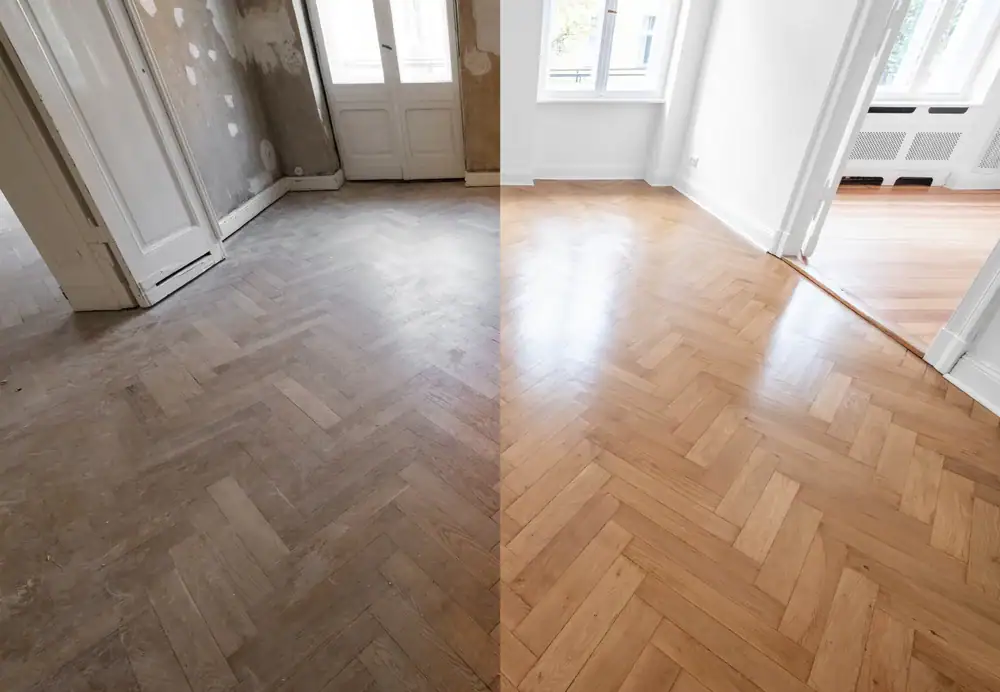
Here’s what most people don’t realize: refinishing costs about half that. Sometimes less. And if your floors just need a refresh—not a full sand-down—a buff and coat runs even cheaper, often starting around $1.50 per square foot.
The difference isn’t just financial. Refinishing keeps your original hardwood intact. That matters in homes around Ashcake where solid hardwood flooring was installed decades ago—back when they used better wood. You’re not ripping out quality material just because the finish wore down.
Most jobs finish in a day. The process is 95% dust-free. You’re not dealing with a week of chaos or a layer of sawdust coating everything you own.
Wood Flooring Service in Ashcake, VA
We’ve been doing this for over 20 years across the Richmond metro area, including Ashcake and the surrounding Hanover County communities. That’s long enough to know what works in homes here—and what doesn’t.
Ashcake sits in an area where you’ve got a mix of older single-family homes with original hardwood and newer builds with engineered options. The median household income here is around $97,000, and about 80% of homes are detached single-family properties. People invest in their homes here. They’re not looking for shortcuts.
We’re not a retail showroom trying to upsell you on new product. We’re a wood floor refinishing and installation company that focuses on making your existing floors look better than they did when they were new—or installing new ones the right way if that’s actually what you need.
Wood Floor Installation and Refinishing Process
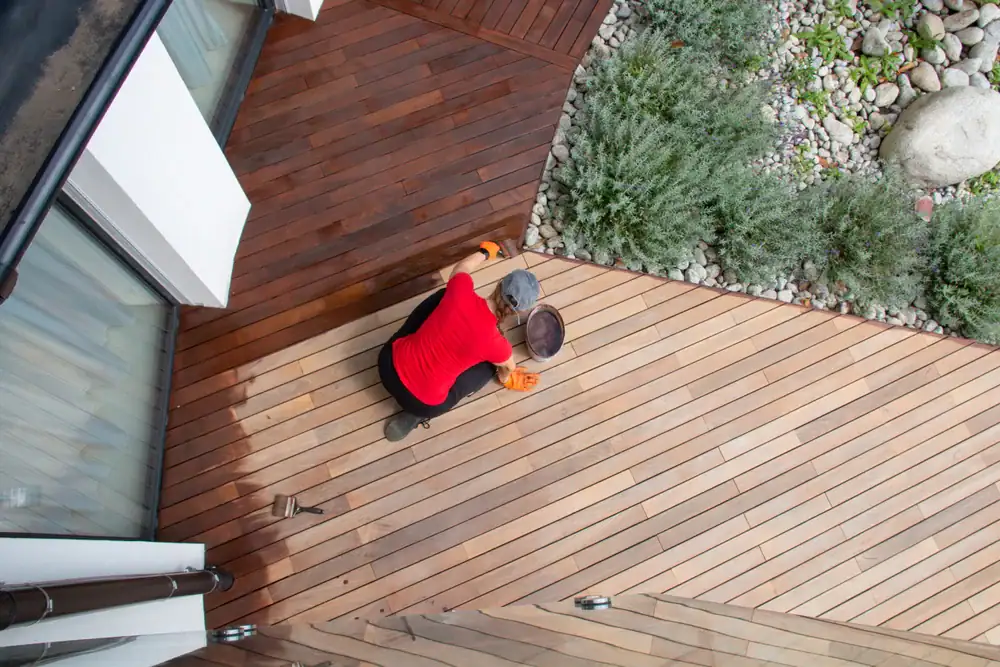
First, we look at your floors and tell you what they actually need. Not every floor needs a full refinish. Some just need a buff and coat—a process where we lightly scuff the existing finish, clean it thoroughly, and apply a fresh topcoat. That’s a same-day job in most cases.
If your floors need more work—deep scratches, stains that penetrated the finish, uneven wear—then we’re talking about a full refinish. We sand down to raw wood using dustless equipment, which captures about 95% of the dust at the source. Then we apply stain if you want to change the color, and finish with multiple coats of protective polyurethane.
For new wood floor installation, we start with the subfloor. It has to be level and dry, or you’ll have problems later. We install your choice of solid hardwood or engineered hardwood, depending on the room and your budget. Then we sand, stain, and finish it so it’s ready to live on.
You’re not guessing about timelines. Buff and coat is typically one day. Full refinishing is usually two to three days depending on square footage. New installation varies, but we’ll tell you upfront what to expect.
Hardwood Flooring Services in Ashcake, VA
You’re getting an honest assessment first. We’re not going to tell you that you need a full refinish if a buff and coat will solve your problem. That saves you money and time.
If you do need refinishing, you’re getting dustless sanding. That’s not marketing language—it’s a real difference. Traditional sanding sends fine dust into every corner of your home. Our equipment has built-in vacuum systems that catch it before it goes airborne.
In Ashcake and the wider Hanover County area, we’re seeing more requests for matte and low-sheen finishes. The high-gloss look from the ’90s is out. People want natural wood tones—honey oak, chestnut, warm browns—that don’t show every footprint or scratch. We can match that.
For new installations, you’re choosing between solid hardwood and engineered hardwood. Solid is exactly what it sounds like: a plank of real wood, top to bottom. It can be refinished multiple times over its life. Engineered hardwood has a real wood veneer on top of a plywood base. It’s more stable in areas with humidity swings and costs less, but you can only refinish it once or twice depending on the thickness of that top layer.
We handle both. We also handle repairs—replacing damaged boards, fixing gaps, addressing squeaks. If your floor has a problem, we’ve probably fixed it before.
How much does it cost to refinish hardwood floors in Ashcake?
Refinishing typically runs between $3 and $8 per square foot depending on the condition of your floors and the type of finish you choose. For an average 1,000-square-foot area, you’re looking at $3,000 to $6,000. That’s roughly half the cost of tearing out your floors and installing new ones, which usually starts around $8,000 and can easily hit $15,000.
A buff and coat—which is what you need if your floors are in decent shape but just look tired—starts at about $1.50 per square foot. That’s the most cost-effective option if your finish is worn but the wood underneath is still solid.
The price also depends on what kind of finish you want. Water-based polyurethane dries faster and has less odor, but it costs a bit more than oil-based. Oil-based gives you that warm amber tone and tends to be more durable in high-traffic areas. We’ll walk you through the differences so you’re choosing based on your actual needs, not just price.
What's the difference between refinishing and buff and coat?
Refinishing means sanding your floors down to bare wood and starting over. We remove the old finish completely, sand out scratches and stains, apply new stain if you want to change the color, and then seal it with fresh polyurethane. It’s the full reset. You’d do this when your floors have deep scratches, water damage, or the finish is so worn that the wood itself is getting damaged.
Buff and coat is a maintenance process. We’re not sanding down to raw wood—we’re just scuffing up the existing finish so a new topcoat will adhere properly. Then we clean everything and apply one or two fresh coats of polyurethane. It’s faster, cheaper, and way less invasive. Most buff and coat jobs are done in a day.
The key question is: how bad is the damage? If it’s in the finish layer only—surface scratches, dullness, minor scuffs—buff and coat will handle it. If the damage goes deeper into the actual wood, you need a full refinish. We’ll tell you which one makes sense when we look at your floors.
How long does the refinishing process take?
A buff and coat is usually a one-day job. We show up in the morning, prep and scuff the floors, apply the new finish, and you’re walking on them by the next day once the finish cures enough for light foot traffic.
Full refinishing takes longer—typically two to three days for most homes. Day one is sanding. Day two is staining (if you’re changing the color) and applying the first coat of finish. Day three is additional finish coats. Some finishes need 24 hours between coats, others dry faster. Water-based polyurethane dries quicker than oil-based, so if you’re in a hurry, that’s the route to go.
You’ll need to stay off the floors while the finish cures. Light foot traffic is usually fine after 24 hours, but we recommend waiting at least three days before moving furniture back. Full cure—where the finish reaches maximum hardness—takes about a week for water-based and up to a month for oil-based. That doesn’t mean you can’t use the floors, just that you should be a little careful during that time.
Can all hardwood floors be refinished?
Solid hardwood can be refinished multiple times—usually somewhere between four and ten times depending on the thickness of the boards. If you’ve got 3/4-inch solid oak or maple, you’re in good shape. Each refinish removes about 1/32 of an inch of wood, so there’s plenty of material to work with.
Engineered hardwood is trickier. It has a thin layer of real wood on top of a plywood base. If that top layer is thick enough—usually at least 3mm—you can refinish it once, maybe twice. Thinner wear layers can’t handle it. We measure before we start so you know what’s possible.
Some floors are too damaged to refinish. If the boards are cupped, warped, or have gaps wider than a quarter-inch, refinishing won’t fix the underlying problem. In those cases, you’re looking at repairs first—replacing damaged boards, addressing moisture issues, fixing the subfloor—and then refinishing. We’ll tell you if that’s the situation. There’s no point in refinishing a floor that’s going to keep causing problems.
Is dustless sanding really dustless?
It’s about 95% dust-free, not 100%. The equipment has a vacuum system built into the sander that pulls dust directly into a containment unit before it gets into the air. You’ll see a little bit of fine dust around the edges of the room or in corners, but it’s nothing like traditional sanding.
Traditional sanding creates a cloud of fine dust that settles on everything—furniture, countertops, inside cabinets, on top of door frames. It gets into your HVAC system. You’re cleaning for days afterward. Dustless sanding eliminates most of that. You might need to wipe down surfaces in the room we’re working in, but the rest of your house stays clean.
The difference matters if you’re living in the house during the job, which most people are. You’re not dealing with dust in your lungs or on your belongings. It’s also better for us—we’re not breathing it in all day. The equipment costs more and requires more maintenance, but it’s worth it for the result.
Should I refinish or replace my hardwood floors?
If your floors are solid hardwood and the boards are in decent structural shape, refinishing almost always makes more sense. You’re saving money—usually half the cost of replacement—and you’re keeping the original wood, which is often better quality than what you’d install new today.
Replacement makes sense in a few situations. If your floors are engineered hardwood with a thin wear layer that’s already been refinished, you can’t do it again. If the boards are severely damaged—warped, rotted, or so worn that there’s not enough material left to sand—you’re better off replacing them. If you’re dealing with a subfloor problem or major structural issues, sometimes it’s easier to start over.
Around Ashcake, a lot of the older homes have original solid hardwood that’s 60, 70, even 80 years old. That wood is dense, tight-grained, and worth keeping. Refinishing brings it back to life for a fraction of what you’d spend on new floors. We’ve refinished floors that looked completely trashed—deep scratches, water stains, finish worn down to bare wood in the traffic paths—and they came out looking better than new installations.
Other Services we provide in Ashcake