
Wood Floor Installers in Hunton, VA
Hardwood Floors Installed Right the First Time
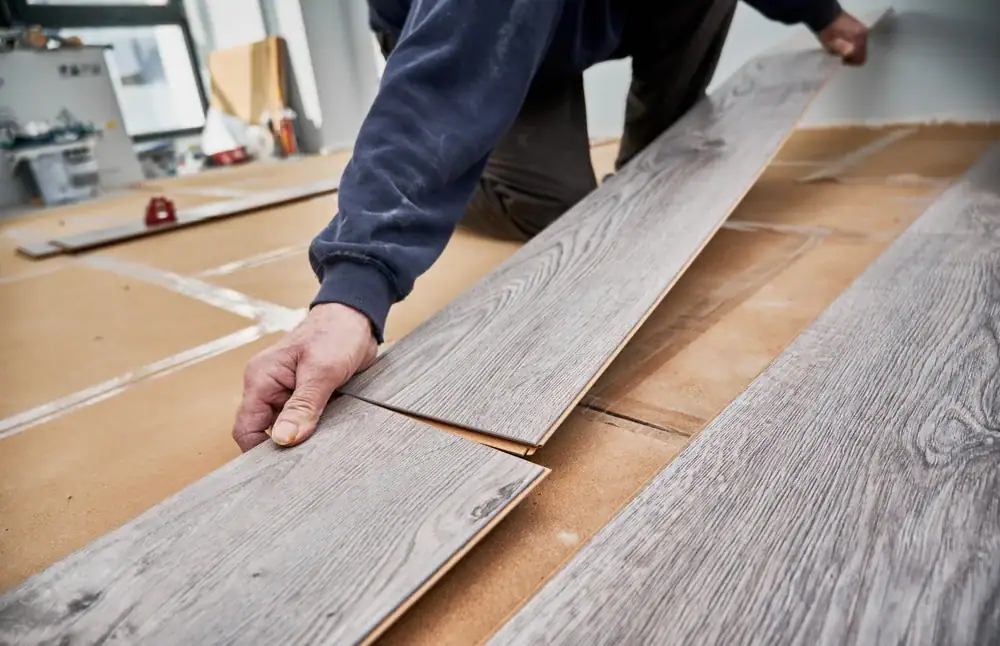
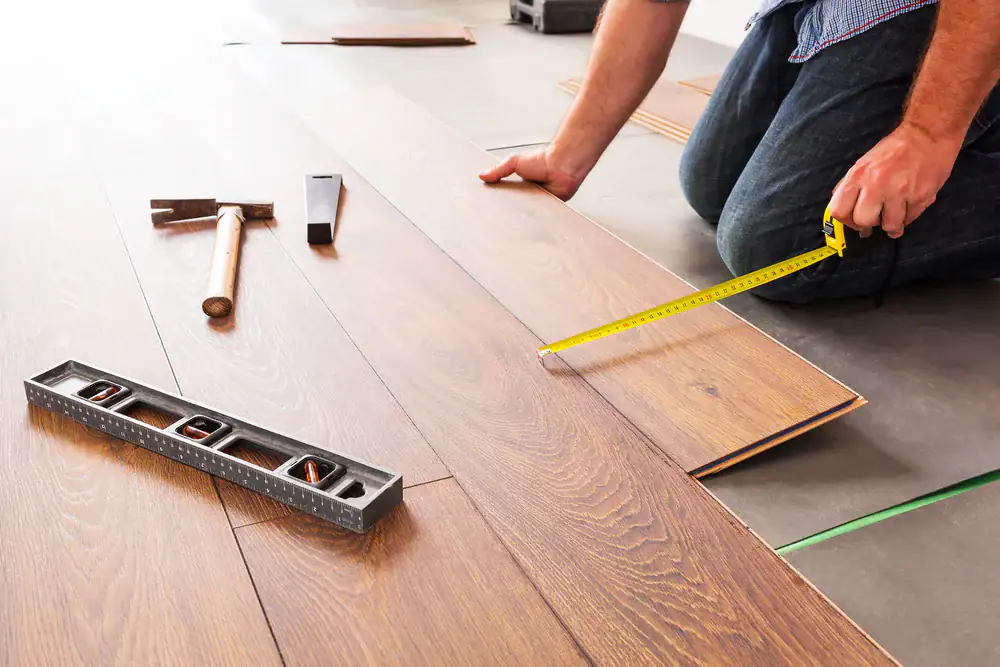
Hardwood Floor Installation Near Hunton
Most flooring problems start during installation. Moisture wasn’t tested. The subfloor wasn’t prepped correctly. Planks weren’t racked with any strategy. You don’t see the mistakes until months later when boards start cupping or the floor starts squeaking in high-traffic areas.
That’s what happens when the installer rushes or doesn’t know what they’re doing. Roughly 80% of wood floor problems trace back to moisture issues that should’ve been caught before the first plank went down.
You’re investing serious money into hardwood. What you get back should be floors that handle Virginia’s humidity swings without warping, stay quiet when you walk across them, and look intentional—not like someone just slapped boards down and called it done. That only happens when the installer knows how to prep, acclimate, and lay the floor with precision.
Experienced Wood Flooring Contractor in Hunton
We’ve been working in the Richmond area and surrounding counties for over 20 years. That includes Goochland County, where Hunton sits, along with Powhatan, Henrico, Chesterfield, and Hanover.
We’ve seen what happens when floors aren’t installed correctly. We’ve fixed plenty of them. The common thread is always the same: someone skipped a step, didn’t test moisture, or didn’t take the time to do it right.
Dave Emmerling oversees every job personally. You’re not getting a crew that shows up unsupervised. You’re getting licensed contractors who use modern equipment and follow a process that’s been refined over two decades. We’re BBB accredited with an A+ rating because we show up, do the work correctly, and don’t leave until it’s done right.
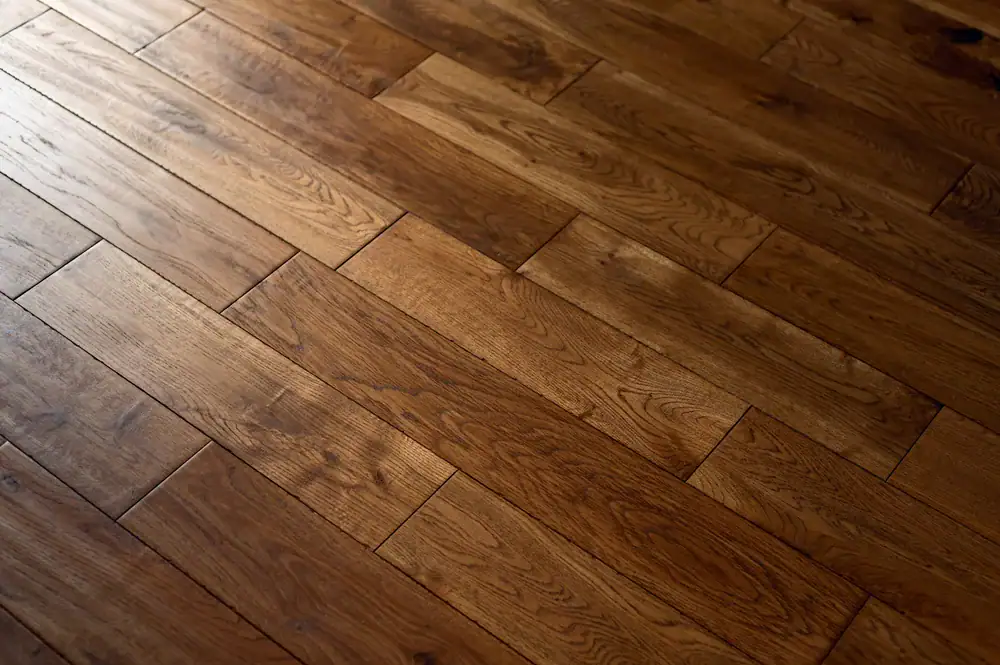
Our Hardwood Floor Installation Process
First, we test moisture levels in both your subfloor and the wood. This isn’t optional. If the moisture content is off, your floors will move when the seasons change. We won’t install until the numbers are right.
Next, we prep the subfloor. It needs to be level, clean, and stable. If it’s not, your floors will bounce, squeak, or wear unevenly. We handle any corrections before installation starts.
Then we acclimate the wood to your home’s environment. Hardwood needs time to adjust to the humidity and temperature where it’s going to live. Skipping this step is how you end up with gaps or cupping later.
When we install, we’re thinking about racking strategy—how each plank is placed relative to the others. Poor racking looks awkward and can throw off the entire floor. We take the time to do it right. Most rooms aren’t perfectly square, so we account for that upfront to avoid crooked lines or weird angles at the edges.
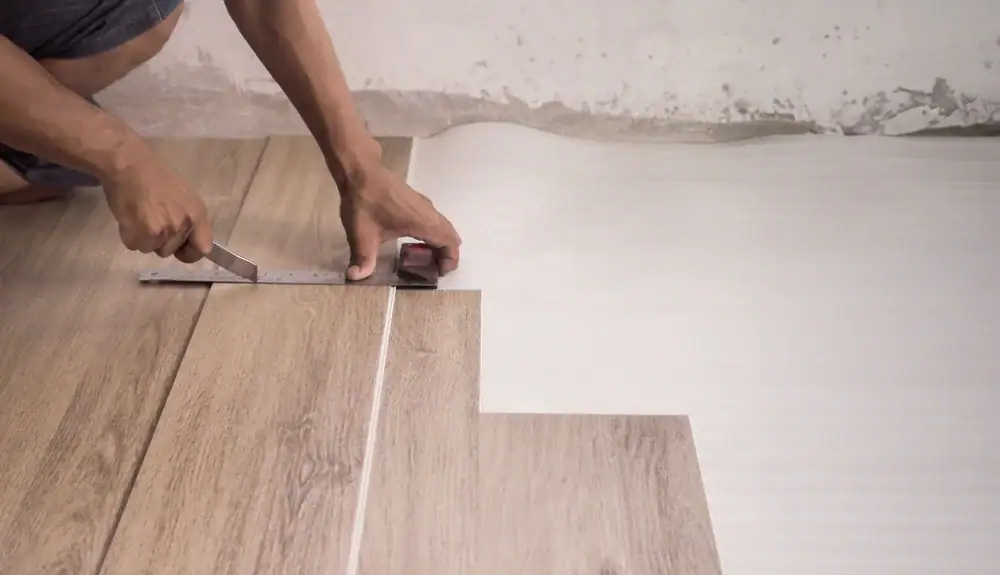
Solid Wood Flooring Installers Serving Hunton
You’re getting a full installation handled by licensed, insured contractors who’ve done this for decades. That means moisture testing, subfloor prep, proper acclimation, precision installation, and a final walkthrough to make sure everything meets our standards.
We use low-VOC, eco-friendly products when possible. Your home isn’t going to smell like chemicals for days after we’re done. The process is cleaner and faster than most people expect.
In the Richmond and Goochland County area, homes deal with humidity swings throughout the year. We account for that during installation so your floors can expand and contract naturally without buckling or gapping. It’s a detail that matters more here than in drier climates.
Wide plank flooring continues to be popular in 2025, typically six inches or wider. It creates a modern look that still feels timeless. Warm tones are replacing the gray trends from a few years ago. If you’re leaning toward engineered wood or solid hardwood, we’ll walk through the pros and cons based on your home’s layout and your priorities. No upselling—just honest recommendations based on what actually makes sense for your situation.
How long does it take to install hardwood floors in a typical room?
It depends on the size of the room, the condition of the subfloor, and the type of wood you’re installing. For an average-sized room—say, 200 to 300 square feet—installation usually takes one to two days after the wood has been acclimated.
Acclimation is the bigger time factor. Hardwood needs to sit in your home for several days to adjust to the humidity and temperature. If we skip that, you’re risking gaps or cupping down the line.
Subfloor prep can add time if there are issues. If the subfloor isn’t level or stable, we fix that first. Trying to install over a bad subfloor is how you end up with squeaks and uneven wear. We’d rather take the extra time upfront than have you call us back in six months with a problem that could’ve been avoided.
What's the difference between solid hardwood and engineered wood flooring?
Solid hardwood is exactly what it sounds like—planks milled from a single piece of wood, usually three-quarters of an inch thick. It can be sanded and refinished multiple times over its life, which can span decades. It’s a good choice for main living areas where you want longevity and the option to change the finish later.
Engineered wood has a thin layer of real hardwood on top, with plywood or composite layers underneath. It’s more stable in areas with moisture fluctuations, which makes it a better fit for basements or spaces where solid hardwood might expand and contract too much. You can refinish it, but only once or twice depending on the thickness of the top layer.
Neither is universally better. It depends on where you’re installing, what your subfloor looks like, and how long you plan to stay in the home. If you’re in a high-humidity area like Hunton, engineered wood might handle seasonal changes better. If you want maximum refinishing options and you’re installing on an upper level, solid hardwood makes more sense.
How do you prevent moisture problems during installation?
We test everything before installation starts. Both the subfloor and the hardwood get tested for moisture content. If the numbers don’t match up—or if either one is too high—we don’t install. Period.
Wood flooring needs to be within a certain moisture range relative to the subfloor, usually within two to four percentage points depending on the species. If you install when the moisture levels are off, the wood will either shrink and leave gaps or swell and buckle when the humidity changes. About 80% of hardwood floor problems come down to moisture that wasn’t managed correctly at installation.
We also make sure the wood acclimates in your home for several days before we install it. That gives it time to adjust to your home’s specific conditions. And if there’s a moisture issue with the subfloor—like a concrete slab that hasn’t fully cured or a crawl space with ventilation problems—we’ll tell you before we start. Fixing that first saves you from a much bigger headache later.
Can you install hardwood over existing flooring or do you remove it first?
It depends on what’s already there and what condition it’s in. In most cases, we remove the old flooring. Installing over existing floors can create height issues with door clearances and transitions to other rooms. It also makes it harder to inspect and prep the subfloor, which is critical for a solid installation.
If you have old vinyl or linoleum, we typically remove it. If there’s existing hardwood that’s damaged or outdated, we pull it up so we can check the subfloor underneath. Sometimes we find issues—uneven areas, soft spots, or moisture damage—that would’ve caused problems if we’d just installed over the top.
There are rare situations where installing over existing flooring makes sense, like if you have a very stable, level surface and height isn’t an issue. But that’s the exception. Most of the time, starting fresh gives you a better result and eliminates variables that could cause problems later. We’ll assess your specific situation and tell you what makes sense.
How soon can we walk on the floors after installation?
If it’s a nail-down or float installation, you can walk on the floors in socks almost immediately after we’re done. We recommend waiting 24 hours before moving furniture back in, just to let everything settle.
If we’re using adhesive, you’ll need to stay off the floors for at least 12 to 24 hours depending on the product. We’ll give you a specific timeline before we leave.
The finish is a different story. If we’re applying a new finish on-site, you’ll need to stay off the floors for at least 24 hours, and it can take several days for the finish to fully cure. During that time, avoid putting rugs down or moving heavy furniture. If we’re installing prefinished hardwood, there’s no wait time for the finish—you’re good to go as soon as the installation is complete.
Do you handle floor refinishing if our existing hardwood just needs restoration?
Yes. Refinishing is actually one of our core services. If your existing hardwood is scratched, dull, or worn but the boards themselves are still in good shape, refinishing is usually a smarter move than replacing the entire floor.
We use a dustless refinishing process that’s faster and cleaner than traditional sanding. Most projects are done in a day, and the dust containment system keeps your home cleaner than you’d expect. We sand down the existing finish, address any scratches or imperfections, and apply a new finish that brings the floor back to life.
Our signature buff and coat service is even less invasive. If your floors just need a refresh—not a full sand-down—we can clean, lightly buff, and apply a new coat of finish in one day. It’s a good option if your floors are starting to look tired but aren’t heavily damaged. We’ll assess what you’re working with and recommend the approach that makes the most sense for your floors and your budget.
Other Services we provide in Hunton