
Wood Floor Installers in Dorset Woods, VA
Hardwood That Lasts in Virginia's Climate
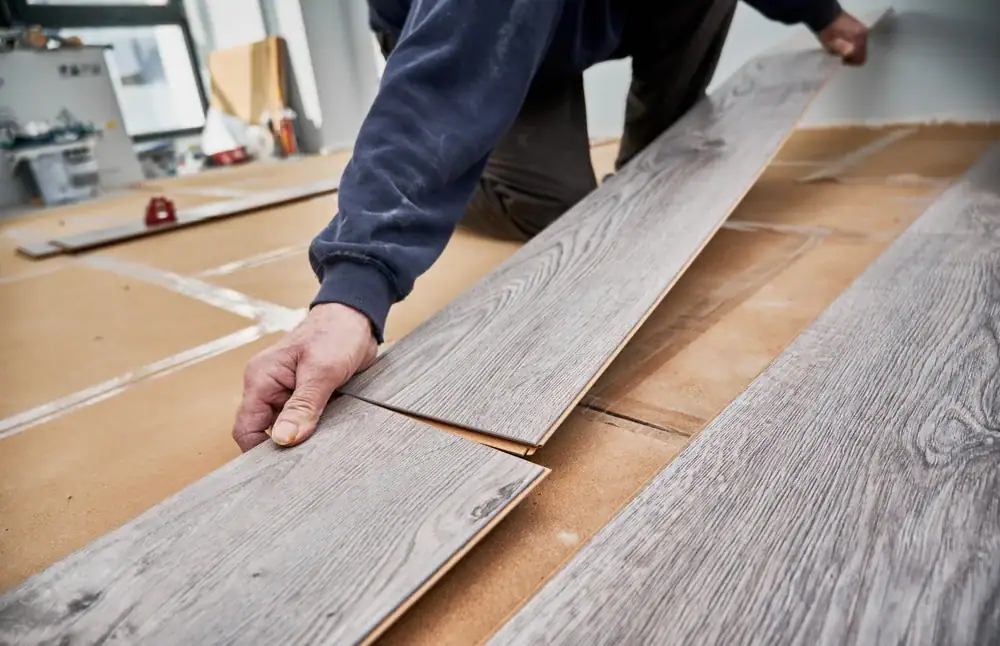
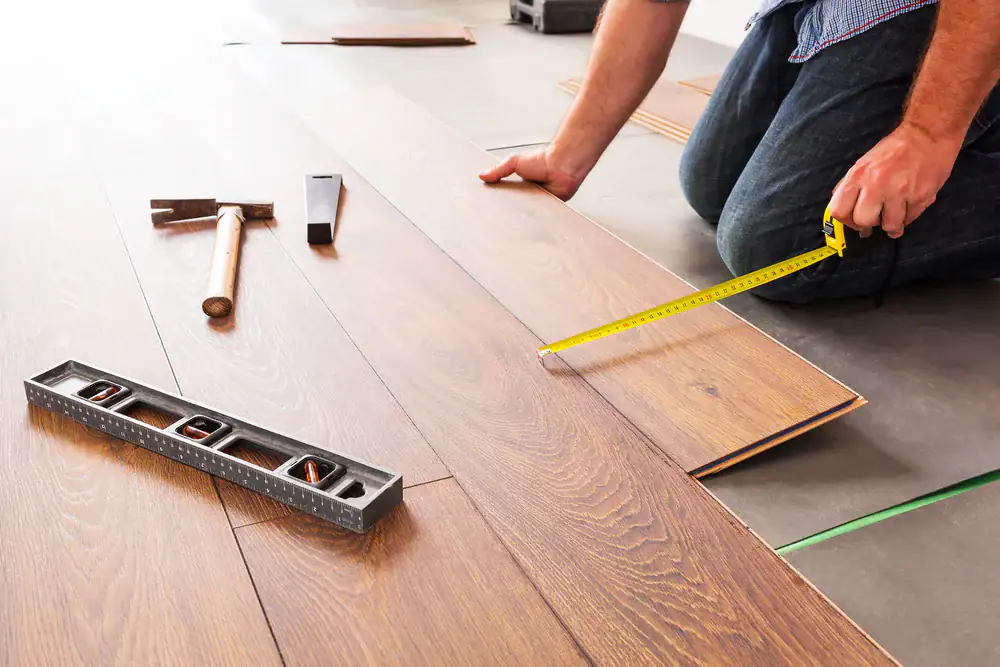
Hardwood Floor Installation in Dorset Woods
Virginia humidity does real damage to hardwood if it’s not installed right. You’ve probably seen it: gaps between boards in winter, buckling in summer, or that dull finish that shows up way too soon.
The difference comes down to acclimation and moisture management. When installers skip those steps, your floors pay the price within a year or two.
We handle hardwood floor installation the way it needs to be done in this climate. That means letting the wood adjust to your home’s humidity levels before it goes down, using moisture barriers where they’re actually needed, and spacing everything to account for seasonal movement. The result is a floor that looks great now and stays that way through twenty Virginia summers.
Homes in Dorset Woods range from 3,300 to nearly 7,000 square feet. That’s a lot of flooring, and it’s worth doing once instead of twice.
Wood Flooring Contractor Serving Henrico County
We’ve been installing and refinishing hardwood floors across Henrico County and the Richmond area since 2002. That’s over twenty years of dealing with Virginia’s humidity, older homes with subfloor quirks, and homeowners who want floors that actually last.
Our process is dustless, which matters more than most people realize. Traditional sanding fills your house with fine particles that get everywhere. Our system contains it, so you’re not cleaning dust out of your vents for months.
David Emmerling runs every job personally. You’re not getting a crew that shows up unsupervised—you’re getting someone with two decades of experience who knows what goes wrong and how to prevent it. We’re BBB accredited with an A+ rating, licensed by the Virginia Board for Contractors, and we’ve built our reputation on floors that hold up.
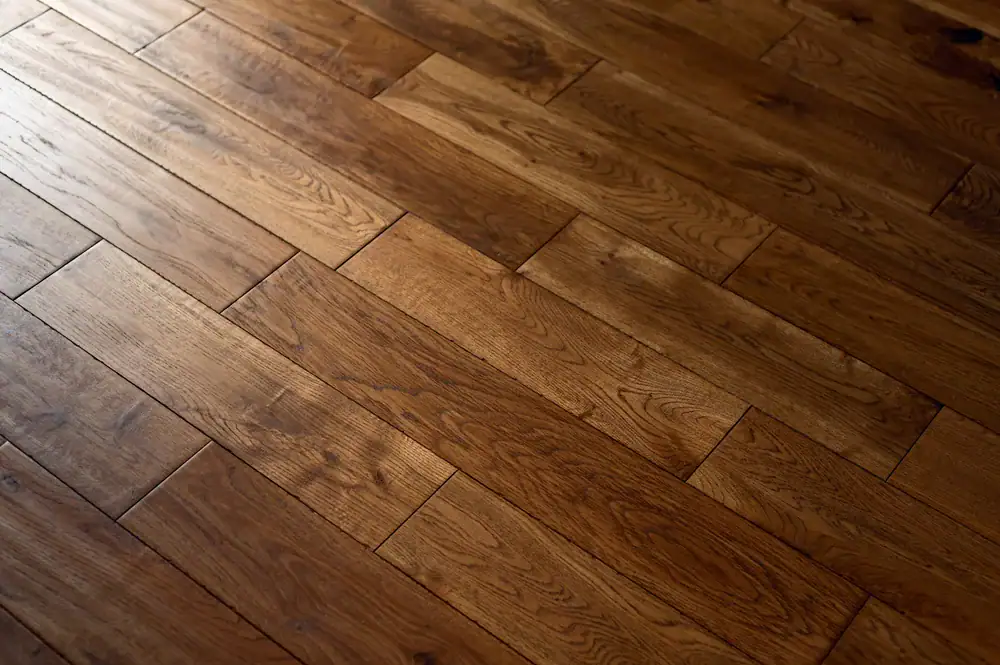
Our Hardwood Floor Installation Process
First, we come out to look at your space. We’re checking subfloor condition, measuring moisture levels, and talking through wood species and finish options that make sense for how you actually use the rooms.
Then we bring the wood to your home and let it acclimate. This isn’t optional in Virginia—it’s the difference between floors that move with the seasons and floors that crack. Depending on the wood type and your home’s humidity, this takes several days.
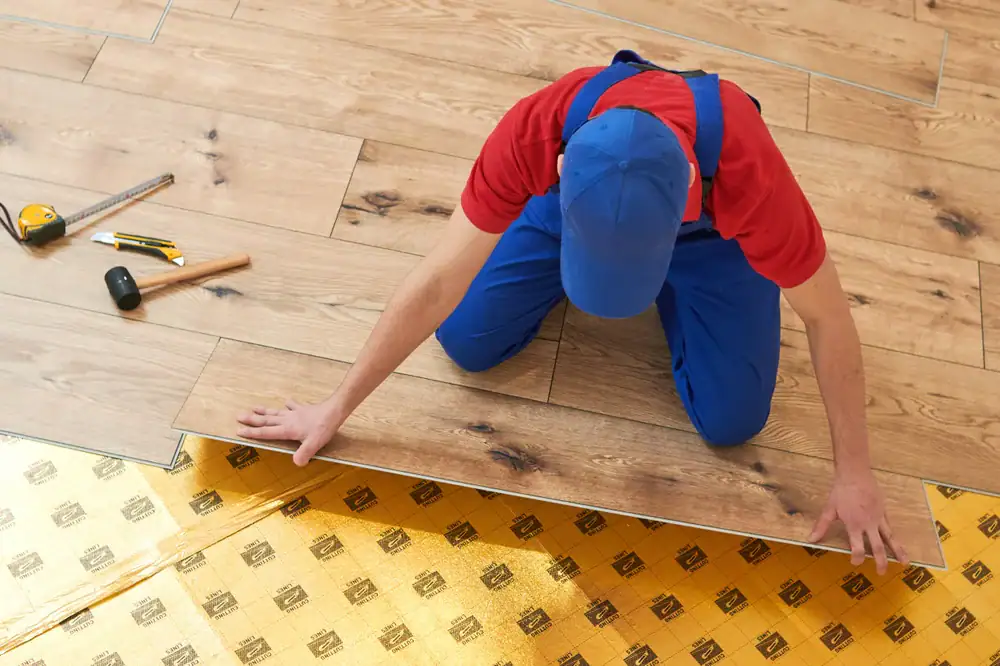
Installation day, we prep the subfloor, install moisture barriers if needed, and lay the flooring with expansion gaps calculated for your specific wood species. We’re accounting for how much that wood will move when summer humidity hits or winter heating dries everything out.
After installation, we sand (dustless system), stain if you’re going with color, and apply finish coats. Most projects wrap up in a few days, and because our system contains the dust, you’re not dealing with the mess that usually comes with hardwood work.
Final walkthrough happens with you there. We make sure you know how to maintain the finish and what to expect as the wood settles into its first year.
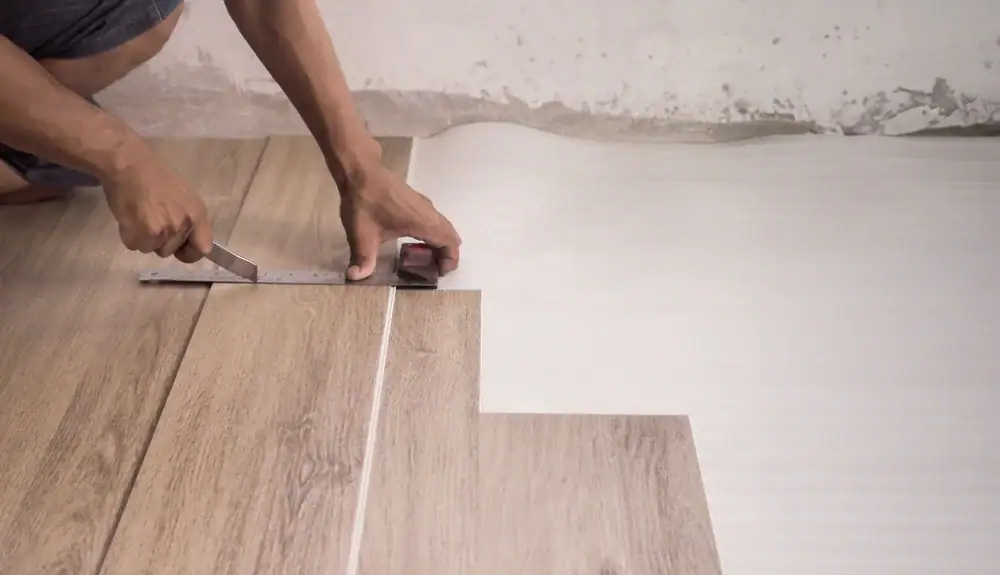
Solid Wood and Engineered Flooring Options
Solid hardwood is exactly what it sounds like: planks milled from a single piece of wood, usually three-quarters of an inch thick. It lasts 100+ years and can be refinished multiple times. It’s the premium option, and in homes like the ones in Dorset Woods, it’s often what makes the most sense for main living areas.
Engineered hardwood has a real wood veneer on top with a plywood-like core underneath. It handles moisture shifts better than solid wood, which makes it a smart choice for basements or rooms where humidity control isn’t perfect. Quality engineered floors last 40 to 80 years depending on veneer thickness, and they can be refinished a few times if the wear layer is thick enough.
Both need refinishing every 7 to 10 years to keep them looking right. That’s not a flaw—it’s just how wood floors work. The finish takes the abuse so the wood doesn’t have to.
In Henrico County, we’re seeing more people mix both types: solid hardwood in main living spaces, engineered in basements or bonus rooms where temperature swings are harder to control. Your home’s specific conditions determine what makes sense, and that’s part of what we assess during the estimate.
How long does hardwood floor installation take in a typical home?
Most installations take three to five days from start to finish, but that timeline includes acclimation time, which you don’t see happening.
Here’s the actual breakdown: We deliver the wood to your home and let it sit for three to seven days. It needs to adjust to your home’s humidity levels, or it’ll move too much after installation. While that’s happening, you’re living your life—the wood is just sitting in the space getting ready.
Active installation—the part where we’re actually working in your home—usually takes one to three days depending on square footage. Then the finish needs 24 to 48 hours to cure before you can walk on it normally and move furniture back.
If you’re in a rush, engineered flooring aclimates faster and some products can be walked on sooner. But solid hardwood in a 4,000+ square foot home isn’t something you want to rush. The acclimation step is what prevents gaps and buckling a year later.
Will hardwood floors increase my home's value in Dorset Woods?
Yes, and the return is better than most other renovations you could do.
Hardwood floors typically increase home value by 2% to 5%, with a return on investment between 70% and 80%. In Dorset Woods, where homes are already in the $500K+ range, that’s real money. More importantly, hardwood is what buyers expect in homes at this price point.
When you’re competing with other listings in Henrico County, floors matter. Buyers notice outdated carpet or damaged laminate immediately, and it affects their offer or whether they make one at all. Hardwood signals that the home has been maintained, and it photographs better in listings.
The ROI is highest when you’re planning to sell within five years, but even if you’re staying longer, you’re living with better floors. They’re easier to clean than carpet, they don’t trap allergens, and they last long enough that you’re probably only doing this once.
How do I prevent gaps from forming between my hardwood floor boards?
Gaps happen when humidity drops and the wood shrinks. You can’t eliminate seasonal movement entirely, but you can minimize it with proper installation and humidity control.
During installation, we account for your home’s typical humidity range and leave appropriate expansion gaps around the perimeter. The wood needs room to move, and if it doesn’t have it, you get buckling instead of gaps—which is worse.
After installation, keeping indoor humidity between 35% and 55% year-round makes the biggest difference. Most homes in Virginia drop below that in winter when heating systems are running. A whole-home humidifier solves this, and it’s worth the investment if you’re putting hardwood throughout a large home.
Small seasonal gaps—like a credit card’s width—are normal and not a defect. Gaps you can fit a nickel into mean either the humidity dropped too low or the wood wasn’t properly acclimated before installation. That’s why we don’t skip the acclimation step, even when schedules are tight.
What's the difference between site-finished and prefinished hardwood flooring?
Site-finished means we sand and finish the floor after installation, right in your home. Prefinished means the finish was applied at the factory before the planks arrived.
Site-finished gives you a completely smooth, seamless surface because we sand everything level after it’s installed. You get more stain color options, and the finish can be customized to your preference—matte, satin, or glossy. The downside is it takes longer and requires the sanding and finishing process to happen in your home, even though our dustless system minimizes mess.
Prefinished flooring goes down faster because there’s no finishing work after installation. The factory finish is extremely durable—often harder than what can be applied on-site. But you’ll have very slight bevels between boards, and your color options are limited to what the manufacturer offers.
For larger homes in Dorset Woods, site-finished usually makes more sense. You’re getting a custom result that looks seamless, and the timeline difference isn’t as critical when you’re already planning around acclimation time. Prefinished works well for smaller projects or when you need the space usable immediately.
Can you install hardwood floors over my existing flooring?
Sometimes, but it depends entirely on what’s there now and what’s underneath it.
If you have one layer of old hardwood that’s still structurally sound, we can often install engineered flooring over it. The existing floor becomes part of the subfloor system. This saves demo time and cost, but it raises your floor height, which affects transitions to other rooms and door clearances.
If you have tile, vinyl, or laminate, those usually need to come out. They don’t provide a stable nailing surface for solid hardwood, and any flex in the underlayment will cause problems. Carpet definitely comes out—there’s no scenario where it stays.
The real issue is what’s below everything. If your subfloor is damaged, uneven, or has moisture issues, we’re tearing out whatever’s on top to fix it properly. Skipping that step means your new floors will telegraph every problem that’s underneath them.
We assess all of this during the estimate. If your existing flooring can stay, we’ll tell you. If it can’t, we’ll explain why and what the removal process involves. There’s no point in installing beautiful hardwood over a subfloor that’s going to cause problems.
How much does professional hardwood floor installation cost in Henrico County?
Professional installation typically runs $6 to $12 per square foot for standard solid hardwood, with high-end species and custom work reaching $12 to $23 per square foot.
That price includes the wood, labor, finishing, and materials like underlayment or moisture barriers. It doesn’t include subfloor repairs if we find issues, or removal of existing flooring if that’s needed. Those get quoted separately because every situation is different.
For a 2,000 square foot main level—which is common in Dorset Woods homes—you’re looking at $12,000 to $24,000 for quality solid hardwood with site-applied finish. Engineered options run slightly less, usually $8 to $15 per square foot installed.
The range exists because wood species vary dramatically in cost. Red oak is the baseline. White oak, hickory, or exotic species like Brazilian cherry cost more. Wider planks cost more than narrow ones. Custom stain colors and hand-scraped textures add to the price.
We’re not the cheapest option in Richmond, and that’s intentional. You’re paying for proper acclimation, moisture management that prevents problems, dustless equipment, and someone with twenty years of experience running the job. Cheap installations look fine on day one—the problems show up in year two when the floors start moving.
Other Services we provide in Dorset Woods