
Hardwood Floor Refinishing in Fine Creek Mills, VA
Your Floors Restored Without the Dust or Drama
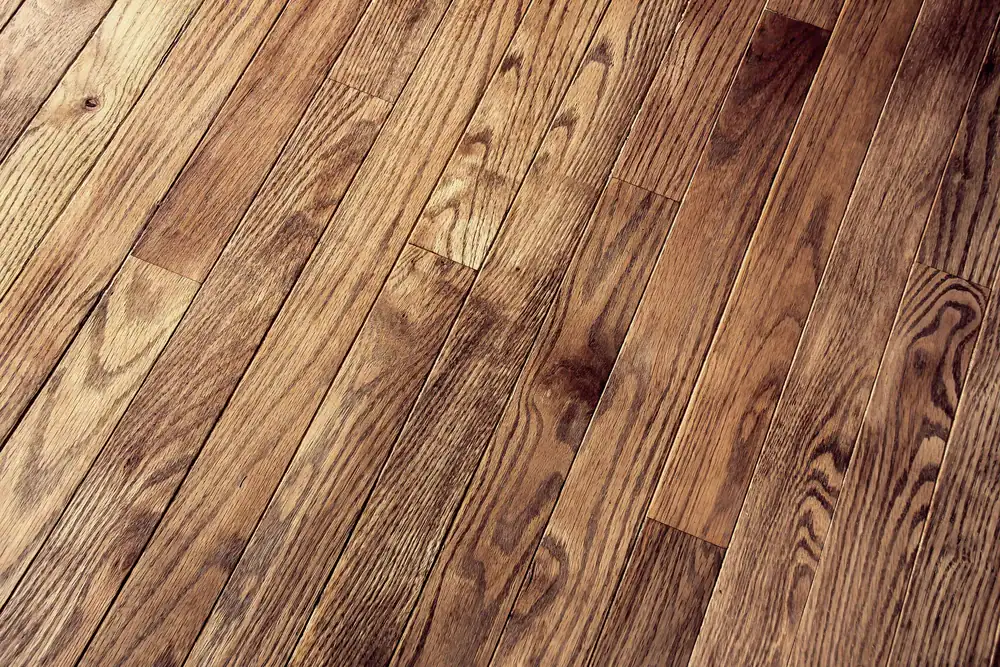
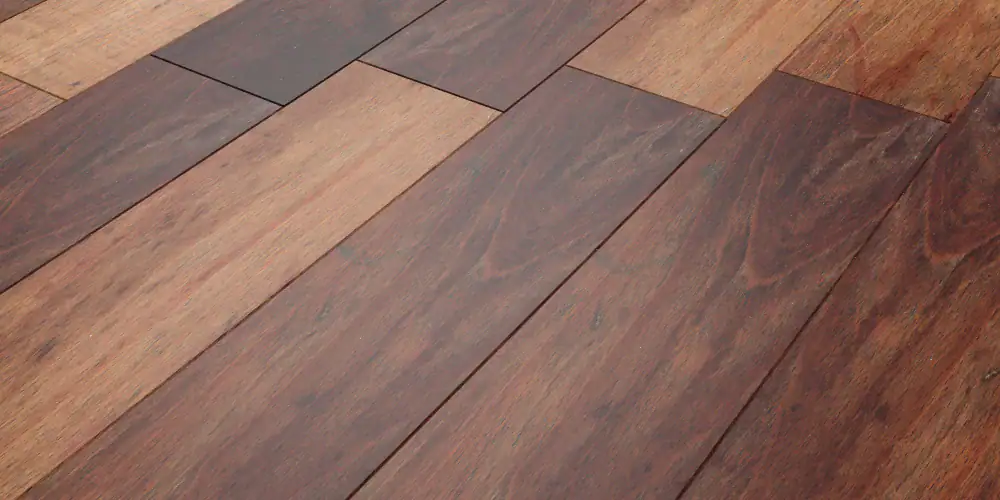
Floor Refinishing Services in Fine Creek Mills
You walk into rooms that feel brighter and cleaner. Scratches disappear. Dull spots shine. The wood grain comes back to life in ways you forgot were possible.
Your home value stays protected. Buyers in Powhatan County consistently rank well-maintained hardwood as a top priority, and refinished floors signal that a home has been cared for. That matters when it’s time to sell or refinance.
You also skip the mess and cost of replacement. Tearing out old floors and installing new ones runs $8 to $15 per square foot—sometimes more. Refinishing costs $3 to $8 per square foot and keeps your original wood intact. For a 1,000-square-foot area, that’s a difference of $5,000 to $10,000. Solid hardwood can be refinished three to five times over its life, which means you’re extending the lifespan of your floors by decades, not just years.
Hardwood Floor Refinishing Experts Near You
We’ve been restoring hardwood floors across Richmond and surrounding areas—including Powhatan County—for over 20 years. We’ve worked in Fine Creek Mills homes with original oak and pine floors, newer engineered hardwood, and everything in between.
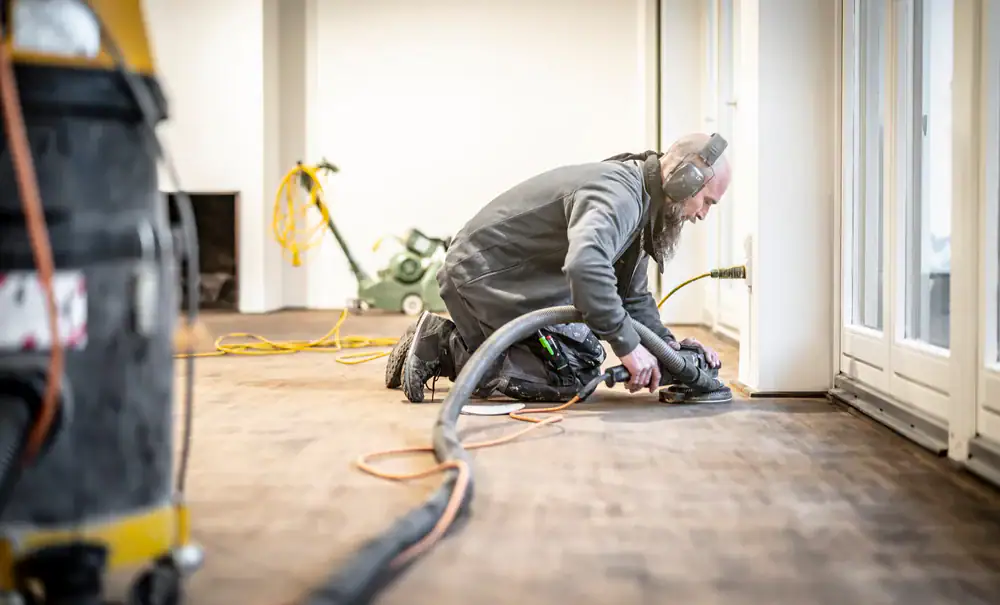
We use dustless sanding equipment that captures up to 95% of airborne particles. That means less cleanup for you and no dust settling into your vents, furniture, or lungs. Most projects finish in a day, and you’re back on your floors within 24 hours.
We’re not the cheapest option in the area, and that’s intentional. You’re paying for equipment that works, technicians who know how to handle different wood species, and finishes that hold up under real life—not just the first six months.
Our Hardwood Floor Refinishing Process
We start with an assessment of your floors. Not all hardwood is the same, and not all damage requires the same approach. We check the wood species, the finish type, the depth of scratches, and whether there’s any water damage or warping. That tells us whether you need a full sand-down or just a buff and recoat.
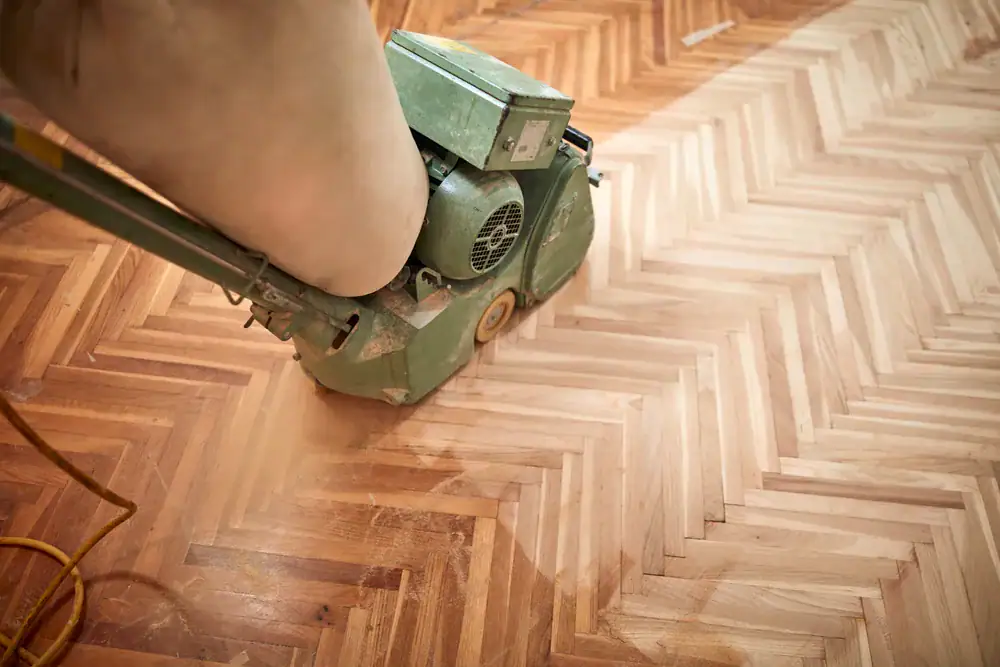
If your floors need sanding, we use dustless equipment that connects directly to a vacuum system. The sander removes the old finish and smooths out scratches, dents, and uneven spots. You’ll see bare wood when we’re done with this step. If you’re changing the color, this is when staining happens. We apply it evenly and let it dry completely before moving forward.
The final step is applying the topcoat. We typically use water-based polyurethane, which dries faster and has less odor than oil-based options. It also holds up well against foot traffic, pets, and furniture. Most floors need two to three coats, with light sanding between each one to ensure adhesion. Once the final coat cures, your floors are ready to handle daily life again.
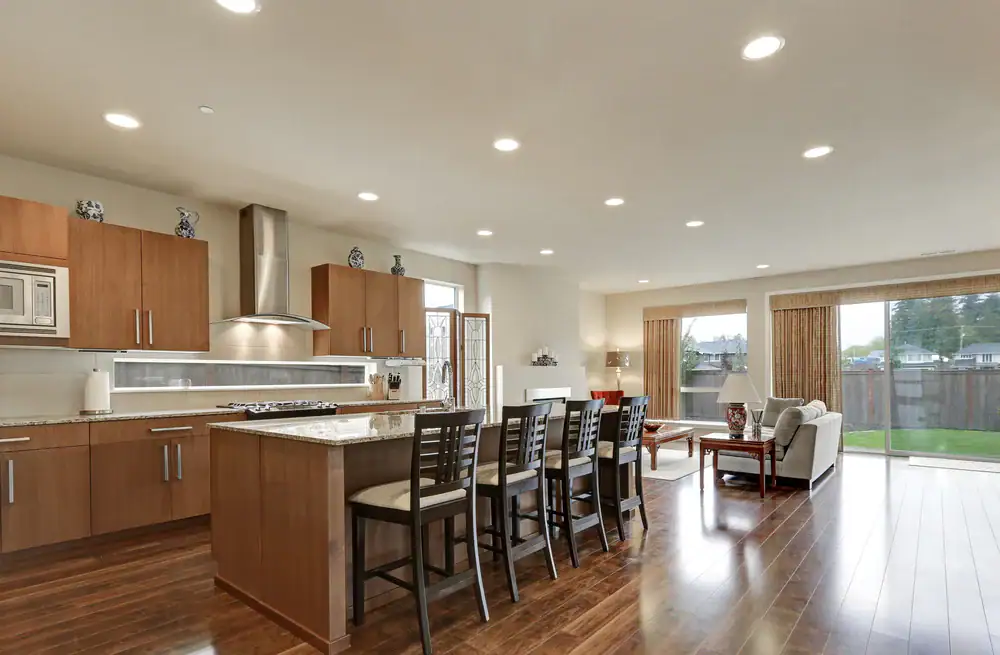
What's Included in Floor Refinishing
Hardwood floor sanding removes the old finish and levels out surface damage. We adjust grit levels depending on how much material needs to come off, starting coarse and finishing fine. This step is what makes refinishing possible—it resets the surface so you can apply a fresh finish.
Staining is optional but popular in Fine Creek Mills, where homeowners often want to shift from orange-toned oak to something more neutral or go darker for a modern look. Stain doesn’t just change color—it also highlights the wood grain. We test samples on your actual floor before committing to a shade, because lighting and wood type affect how stain appears.
Floor buffing, sometimes called screening, is a lighter alternative to full sanding. It scuffs up the existing finish so a new topcoat can bond without removing all the old layers. This works well if your floors are still in decent shape but starting to look dull or scratched. It’s faster and less invasive than a full refinish, and it’s what we use in our buff and coat service.
Powhatan County homes tend to have a mix of red oak, white oak, and southern yellow pine. Each species responds differently to sanding and staining, and knowing those differences prevents mistakes that cost time and money to fix.
How long does it take to refinish hardwood floors?
Most refinishing projects in Fine Creek Mills take one to three days depending on square footage and the condition of your floors. A straightforward buff and coat can be done in a single day. You’re off the floors while we work, and then you wait 24 hours before walking on them in socks.
A full sand and refinish takes longer. Sanding and staining happen on day one. Topcoats go down over the next day or two, with drying time in between. Water-based finishes dry faster than oil-based, which cuts down total project time.
If you’re moving furniture out and back in, plan for an extra day on each end. We can help move smaller pieces, but larger items like beds and dressers are usually on you or a moving service.
How much does hardwood floor refinishing cost in Fine Creek Mills?
Refinishing costs between $3 and $8 per square foot in the Fine Creek Mills area. A 400-square-foot bedroom runs $1,200 to $3,200. A 1,000-square-foot main level costs $3,000 to $8,000. The range depends on whether you’re doing a full sand and refinish or just a buff and recoat, and whether you’re adding stain.
Buff and coat is the lower end of that range. It’s less labor-intensive and uses less material. Full refinishing with sanding, staining, and multiple topcoats sits at the higher end. Custom colors, repairs to damaged boards, and difficult layouts can add to the cost.
Replacement costs $8 to $15 per square foot or more, which makes refinishing a better financial move if your floors are structurally sound. You’re keeping the original wood and avoiding the waste and disruption of a full tear-out.
Can all hardwood floors be refinished?
Solid hardwood can be refinished multiple times—usually three to five—before the wood gets too thin. Each sanding removes a small layer, so older floors that have been refinished several times may not have much material left. We measure the thickness before starting to make sure there’s enough wood to work with.
Engineered hardwood is trickier. It has a thin layer of real wood on top of plywood, and that top layer can only be sanded once or twice depending on its thickness. Some engineered floors have a veneer that’s too thin to sand at all. We check this during the assessment.
Floors with severe water damage, deep gouges, or structural issues may need board replacement before refinishing. If more than 20% of the floor is damaged, replacement might make more sense than trying to salvage it. We’ll tell you straight if that’s the case.
Is dustless sanding really dustless?
Dustless sanding captures up to 95% of the dust that traditional sanding creates, but it’s not completely dust-free. You’ll still see a fine layer of dust near the work area, but it won’t coat your entire house or get into your HVAC system the way old-school sanding does.
The equipment uses a vacuum system that pulls dust directly from the sander into a containment unit. That keeps airborne particles to a minimum and makes cleanup much faster. You won’t be finding dust in your kitchen cabinets three months later.
Traditional sanding creates clouds of dust that settle everywhere—on furniture, in vents, on window sills. It’s a mess that takes days to fully clean. Dustless systems cut that down to a quick vacuum and wipe-down after the job is done.
How long before I can walk on refinished floors?
You can walk on water-based polyurethane in socks after 24 hours. Light foot traffic is fine at that point, but you’ll want to wait 48 to 72 hours before putting furniture back or wearing shoes. Full cure time is about seven days, which is when the finish reaches maximum hardness.
Oil-based finishes take longer. You’re waiting 48 hours before walking on them and up to a week before moving furniture back. They also smell stronger and require better ventilation during application and drying.
Rushing this timeline risks denting or scratching the finish before it’s fully cured. That means you’ll see marks that shouldn’t be there and might need touch-ups sooner than expected. Patience here saves you frustration later.
Should I refinish or replace my hardwood floors?
Refinish if your floors are solid hardwood, structurally sound, and just showing surface wear like scratches, dullness, or discoloration. Refinishing costs half what replacement does and keeps the original character of your home intact. It’s also faster and creates less waste.
Replace if your floors are severely damaged—warped boards, large gaps, deep water stains that have penetrated the wood, or if you’ve already refinished them multiple times and there’s not enough material left. Engineered hardwood with a thin veneer that can’t be sanded is also a replacement candidate.
In Fine Creek Mills, where many homes have original hardwood, refinishing is usually the smarter move. You’re preserving something that adds value and charm, and you’re avoiding the cost and hassle of tearing everything out and starting over.
Other Services we provide in Fine Creek Mills