
Hardwood Floor Refinishing in Atlee, VA
Your Floors Restored in One Day, Not Five
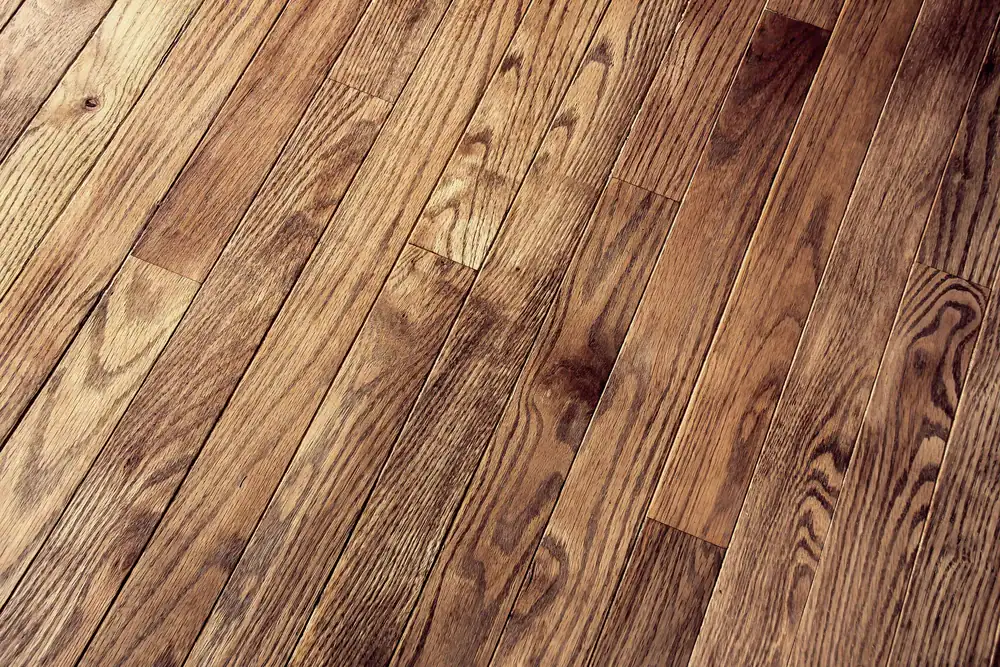
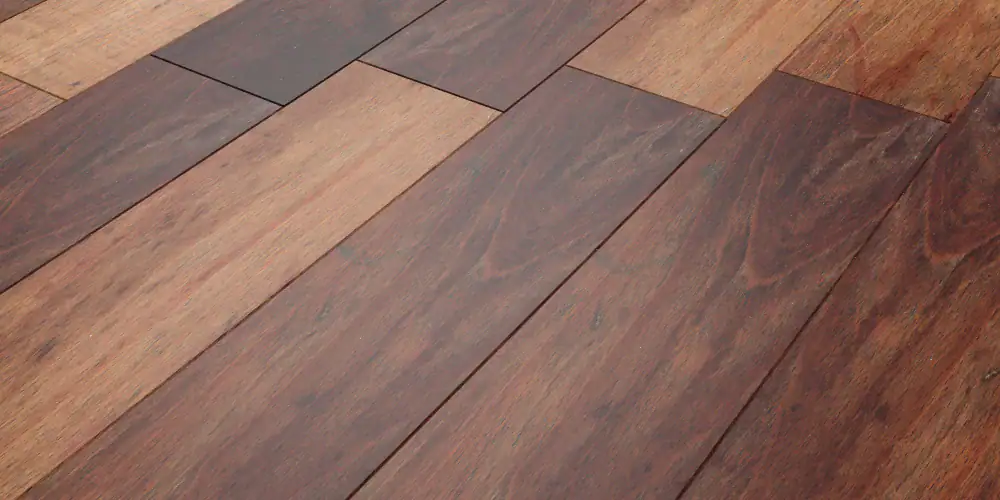
Floor Refinishing Services in Atlee
You’re not looking for another contractor who drags a job out for a week while your house fills with dust. You want your floors fixed, your home back to normal, and the whole thing done without drama.
Here’s what that looks like: you leave in the morning, and by evening, your floors look new again. No dust settling on your furniture. No days of waiting between coats. No wondering if you made a mistake hiring someone.
The difference is in how the work gets done. Dustless sanding equipment keeps your home clean. Fast-drying finishes mean you’re not tiptoeing around your own house for days. And over 20 years of doing this in Hanover County homes means we know exactly what your floors need based on age, wood type, and how much traffic they’ve seen.
Your floors can handle another refinishing. Most solid hardwood can be sanded and refinished three to five times over its life. That means decades more use for a fraction of what replacement costs. And in Atlee’s housing market where homes are selling at $515,000, that’s not just about saving money today—it’s about protecting your investment long-term.
Professional Floor Refinishing Atlee, VA
We’ve been refinishing hardwood floors across Hanover County since before Atlee Station Village became the community it is today. That means we’ve worked in homes like yours—colonials with original oak, newer builds with engineered hardwood, older properties where the floors have seen multiple refinishes already.
You’re not getting a crew that just bought a sander last year. You’re getting people who know the difference between red oak and white oak just by looking at the grain, who can tell you whether your floors can handle another sanding, and who won’t promise you something that’s not realistic for your situation.
Atlee homeowners have a median household income over $139,000 and own 90% of the homes here. You didn’t get here by making careless decisions, and you’re not about to start with your floors.
Our Hardwood Floor Refinishing Process
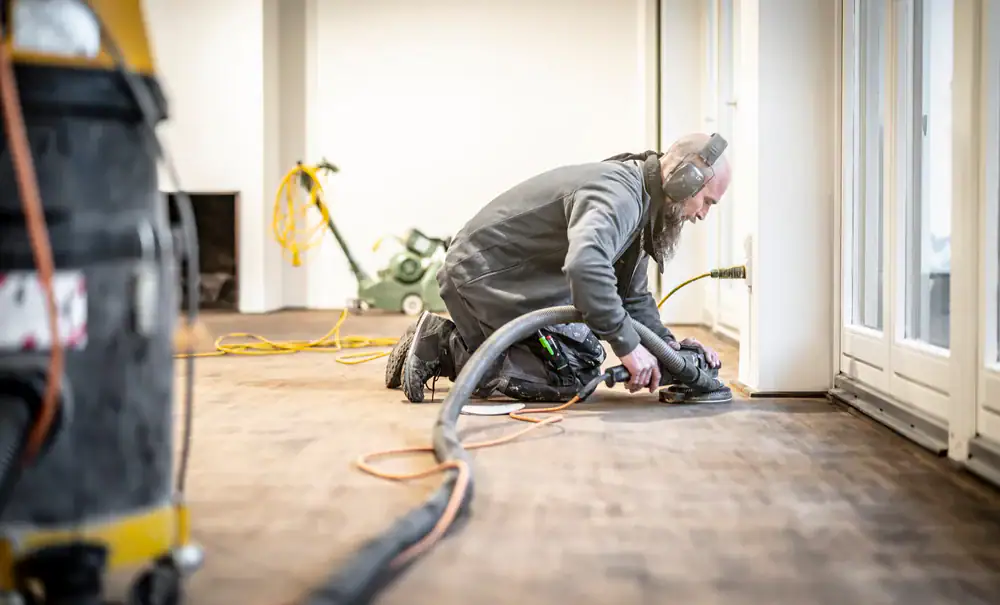
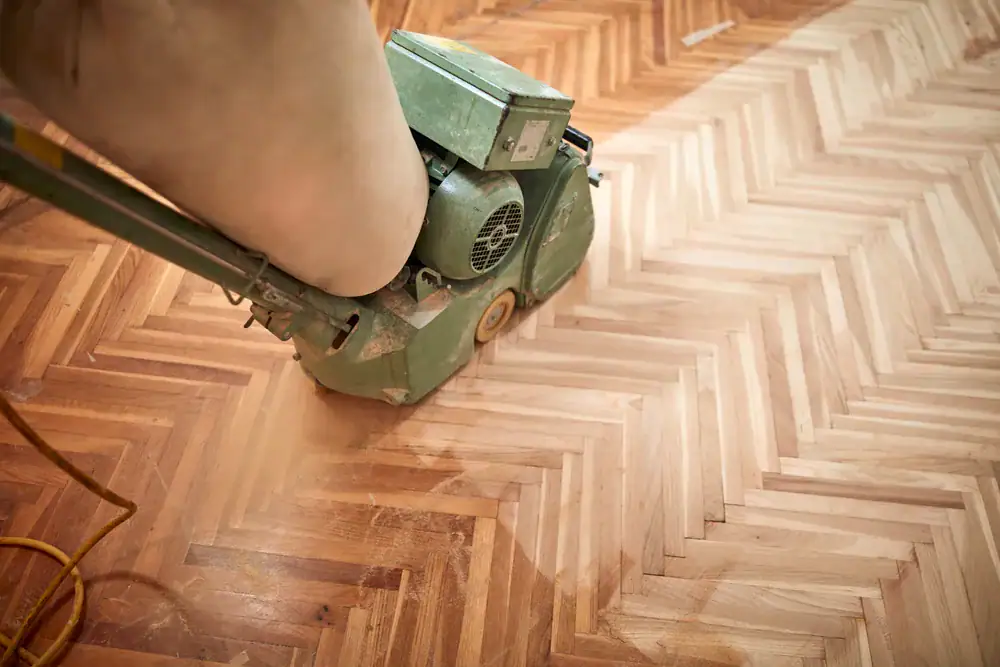
First, we move furniture out of the way or work with you on what needs moving. Then comes the sanding—this is where the dustless equipment matters. Traditional sanders throw fine dust everywhere, settling into vents, on top of cabinets, basically anywhere air can reach. Our system captures 99% of it at the source.
The sanding itself removes the old finish and any surface damage—scratches, light stains, worn areas. We’re taking off just enough material to get down to clean wood. How much depends on your floor’s condition and how many times it’s been refinished before. Solid hardwood can typically handle this process multiple times. Engineered hardwood is more limited.
After sanding comes staining if you want to change the color. Most Atlee homeowners right now are going with natural, low-sheen finishes that show off the wood grain. Matte finishes are trending in 2025, and they’re practical too—they hide minor scratches better than high-gloss.
Then we apply the finish. This is the protective layer that takes the actual wear from foot traffic, furniture, pets, all of it. We use fast-drying finishes that cure properly in hours, not days. Most jobs are wrapped up the same day we start. You’re walking on your floors that evening.
Hardwood Floor Sanding and Buffing Atlee
You’re getting a complete refinishing job, not a patch-and-pray situation. That means dustless sanding with commercial equipment that actually works, not a shop vac taped to a rental sander. It means proper surface preparation so the new finish actually bonds instead of peeling up in six months.
The process includes buffing between coats when needed, which levels out the finish and removes any dust particles that settled during drying. This is what separates a smooth, professional finish from one that feels rough or looks cloudy.
In Atlee specifically, we’re seeing a lot of requests for refinishing in homes built in the early 2000s. Those floors are hitting the 20-year mark where they need attention. The good news is most of them have only been refinished once, if at all, which means plenty of life left. Given that homes here are selling in just 23 days—half the national average—keeping your hardwood in top shape isn’t just about aesthetics. It’s about being ready when the market moves.
We also handle repairs before refinishing. If you’ve got boards that are cupped, cracked, or water-damaged, those get addressed first. Refinishing won’t fix structural problems, but replacing a few boards before we sand will give you a floor that looks uniform when we’re done.
How long does hardwood floor refinishing actually take in Atlee?
Most residential jobs are completed in one day. You leave in the morning, we do the work, and you’re back on your floors by evening.
The timeline depends on square footage and what condition your floors are in. A 1,000-square-foot main level with moderate wear? That’s a single-day job. A whole house with 2,500 square feet and some repairs needed? That might stretch into a second day.
Traditional refinishing takes three to five days because contractors use slower-drying finishes and older equipment. We use fast-cure products that are fully dry within hours. That’s not cutting corners—it’s using better materials that are designed for quicker turnaround without sacrificing durability.
Is refinishing really cheaper than replacing my hardwood floors?
Yes, significantly. Refinishing typically costs a fraction of replacement—usually one-third to one-half the price.
New hardwood installation runs $6 to $15 per square foot depending on the wood species and grade. That’s just material and labor. It doesn’t include removing and disposing of your old floors, which adds more cost and more time.
Refinishing costs less because you’re keeping the existing floor. We’re just removing the old finish, sanding the surface smooth, and applying new protective coats. For a 1,000-square-foot floor, you’re looking at thousands less than replacement. And if your hardwood is solid (not engineered), you can refinish it multiple times over its lifespan. That’s decades of use from the same floor.
What makes dustless refinishing different from traditional sanding?
Dustless systems capture sawdust at the source instead of letting it blow around your house. Traditional sanders create clouds of fine particles that settle everywhere—on furniture, in air vents, on window sills, inside cabinets.
Our equipment uses high-powered vacuums built into the sanding machines. As the sander removes old finish and wood, the vacuum pulls the dust directly into a containment system. It captures about 99% of particles before they become airborne.
This isn’t just about convenience. Fine wood dust can trigger respiratory issues and creates a serious cleanup job that takes days. With dustless sanding, your home stays clean throughout the process. You’re not wiping down surfaces for a week afterward or changing your HVAC filters early because they’re clogged with sawdust.
Can my hardwood floors be refinished, or are they too worn?
Most solid hardwood floors can be refinished unless they’ve been sanded too many times already or have structural damage that goes deeper than the surface.
Solid hardwood is typically three-quarters of an inch thick. Each refinishing removes about 1/32 to 1/16 of an inch of wood. That means most floors can handle three to five refinishes over their lifetime before you run out of material to work with.
Engineered hardwood is different. It has a thin layer of real wood over a plywood base. Depending on how thick that top layer is, you might get one refinishing, maybe two. Some engineered products can’t be refinished at all.
The only way to know for sure is to look at your specific floors. We can tell you during a consultation whether refinishing makes sense or if you’re better off with a different approach. If your floors are cupped, have deep gouges, or show signs of water damage that’s soaked into the subfloor, refinishing won’t fix those problems.
How do I know if I should refinish now or wait?
Refinish when the existing finish is worn through to bare wood in high-traffic areas, when scratches are deep enough that you can feel them with your fingernail, or when the floor looks dull even after cleaning.
Waiting too long can actually cost you more. Once the protective finish wears away completely, the wood itself starts taking damage. Water can seep in, causing stains that go deep. Scratches cut into bare wood instead of just the finish layer. At that point, you need more aggressive sanding to get back to clean wood, which removes more material and limits how many future refinishes your floor can handle.
If you’re planning to sell, refinishing before listing makes sense in Atlee’s market. Homes here sell in 23 days on average, and buyers notice floors immediately. Fresh hardwood signals that the home has been maintained. Worn, scratched floors raise questions about what else might need work.
What finish options work best for homes in Atlee?
Most homeowners here are choosing matte or satin finishes with natural or light stain colors. That’s partly trend—low-sheen finishes are popular in 2025—but also practical.
Matte finishes hide minor scratches and wear better than high-gloss. They show the wood grain without the reflective shine that can make imperfections more visible. For families with kids or pets, that means your floors look better longer between refinishes.
Natural oil finishes are also gaining traction. They penetrate the wood instead of sitting on top like polyurethane. The result is a more authentic look that highlights the wood’s character. They require more maintenance—you’ll need to reapply oil periodically—but many homeowners prefer the appearance.
If you’re unsure, we can show you samples and explain how different finishes perform in real-world conditions. Your choice should match both your aesthetic preferences and how much wear your floors actually see.
Other Services we provide in Atlee