
Floor Installation in Old Church, VA
Old Church Homes Need More Than a Fast Install
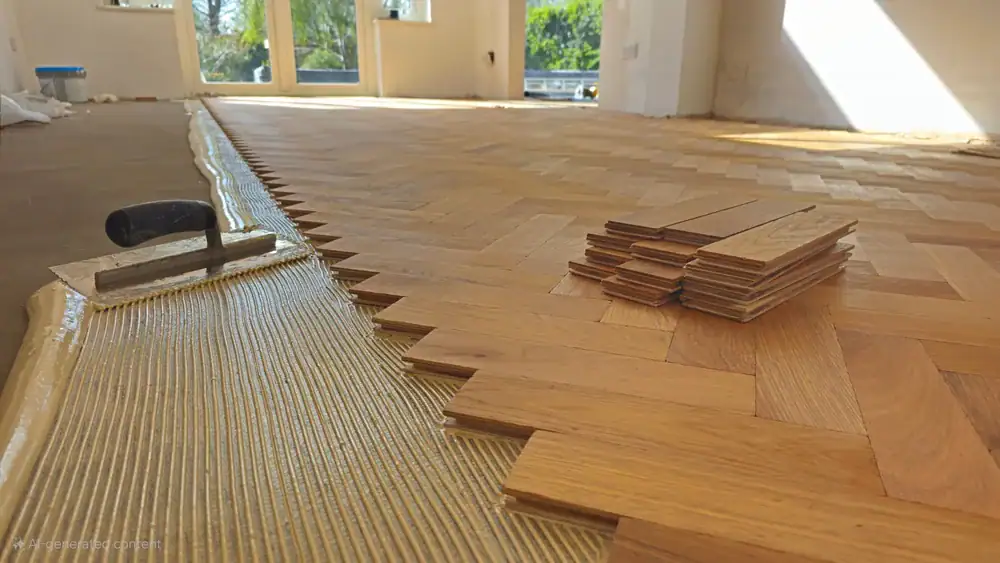
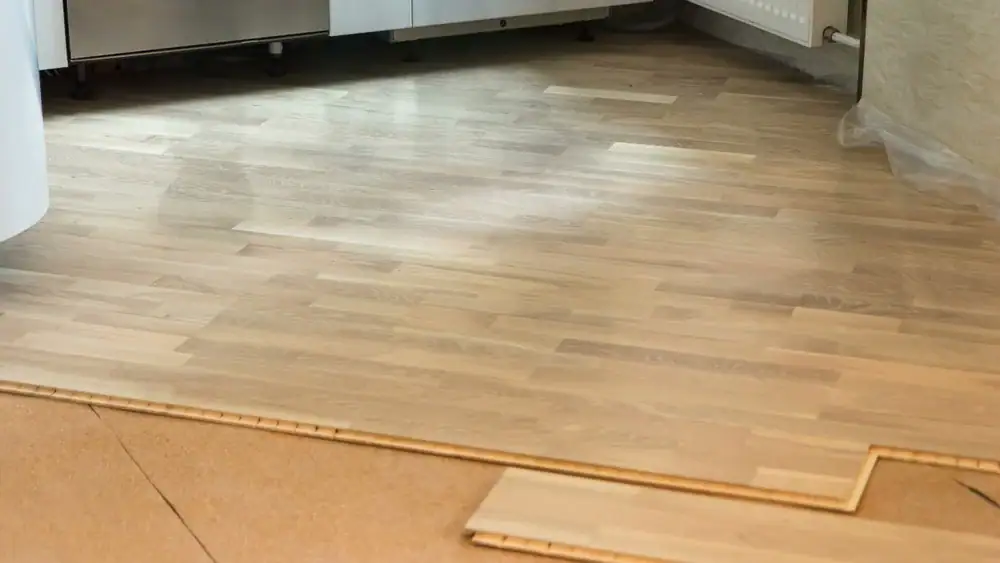
Hardwood Floor Installers Hanover County
Old Church sits near the Totopotomoy Creek and Matadequin Creek watersheds, and Hanover County’s clay-rich soils hold moisture longer than most homeowners realize. That ground moisture works its way into crawl spaces and subfloors and when it meets hardwood that wasn’t properly tested or acclimated, you get cupping, warping, and boards that start lifting within a year. It’s one of the most common and most preventable problems in this area.
The housing stock here doesn’t make it simpler. Old Church has older farmhouses that predate modern subfloor standards sitting alongside newer residential builds on large rural lots. Every one of those homes presents different conditions underneath the surface. A subfloor that looks fine to the eye can be holding moisture levels that will destroy a new hardwood installation in a single humid Virginia summer.
When the prep work is done right moisture tested, subfloor assessed, deficiencies corrected before a single board goes down you end up with floors that don’t squeak, don’t gap, and don’t need to be redone in three years. That’s the outcome. Floors that perform the way they should, in a home you’ve invested real money in.
Local Wood Floor Installers Old Church VA
We’ve been working across the Richmond metro including Old Church and the surrounding Hanover County corridor for over two decades. The company is owner-operated by David Emmerling, and that means real accountability on every job. Not a franchise. Not a subcontractor you’ve never met. A named person whose reputation is attached to the work done in your home.
Old Church and the surrounding Hanover County area are part of our regular service area not an afterthought. We know the difference between a newer build off Route 360 and an older property that’s been in a family for generations, and we approach each one accordingly. The subfloor conditions are different. The moisture exposure is different. The prep required is different.
Hundreds of five-star Google reviews from real Richmond-area homeowners back up what we’re saying here. But more than that our process backs it up. We test moisture in the subfloor and in the wood itself before installation begins. That step alone prevents the majority of the failures we’ve been called in to fix after another installer walked away.
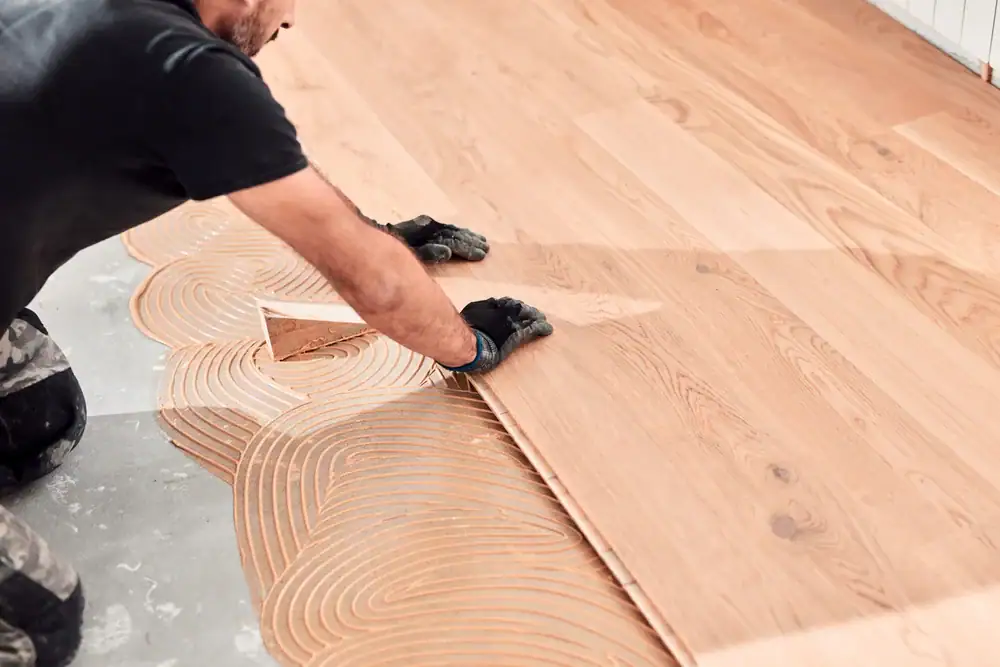
Hardwood Floor Installation Process Old Church
The first thing we do is assess your subfloor not assume it’s ready. In Old Church homes, especially those with crawl space foundations common in the area, subfloor moisture levels can vary significantly depending on how well the crawl space is ventilated and sealed. We test both the subfloor and the hardwood planks for moisture content before anything gets installed. If there’s a problem, we tell you upfront and correct it before moving forward.
From there, the wood gets time to acclimate to your home’s actual conditions temperature, humidity, the way your HVAC runs day to day. Virginia’s summers are humid enough that rushing this step is one of the fastest ways to end up with cupped boards. We don’t rush it. Once the wood is ready and the subfloor is confirmed, installation begins with the kind of attention to fit, fastening, and finish that keeps floors quiet and tight for years.
Most jobs are completed in approximately three days. We’re typically able to schedule within a week of booking. For homeowners in Old Church who are commuting to Richmond and managing a full household, that kind of predictable timeline matters. No drawn-out projects, no weeks of disruption just a clear start, a clean process, and floors you can actually enjoy when it’s done.
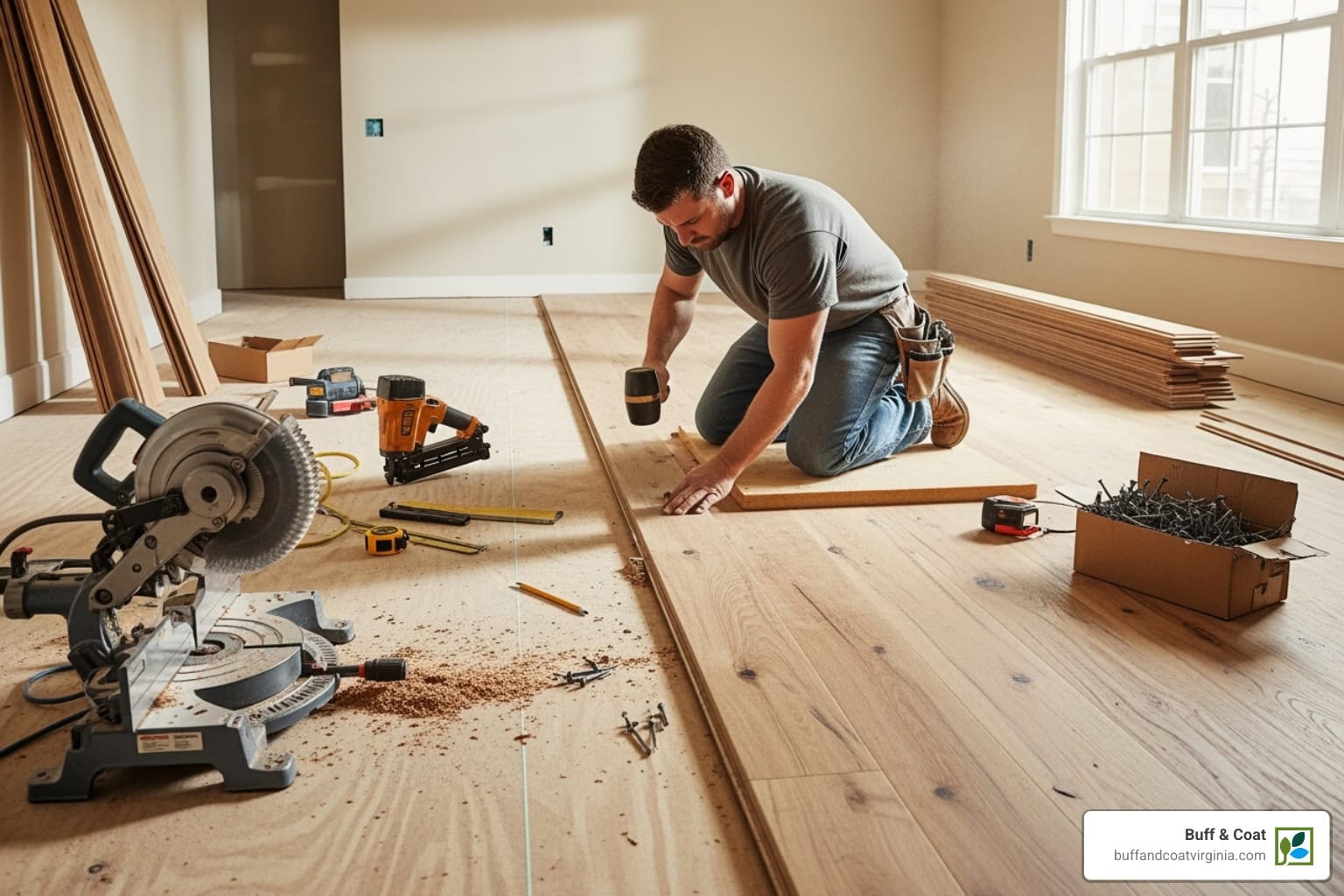
New Wood Floors Old Church Virginia
Not every room in every Old Church home is the right candidate for solid hardwood, and we’ll tell you that straight. Homes in this area particularly those with crawl spaces or concrete slabs sometimes perform better long-term with engineered hardwood, which handles moisture fluctuation more predictably than solid wood. If engineered is the smarter call for your space, we’ll say so. We’re not going to recommend something that’s going to fail just because it carries a higher price tag.
For homes where solid hardwood is the right fit, we install it the way it’s meant to be installed with proper nailing or stapling patterns, tight seams, and transitions that are flush and finished. If you have existing hardwood in other rooms, we can match species and finish so the new installation blends rather than clashes. That’s a detail that matters in older Old Church homes where original floors have character worth preserving.
Flooring installation cost in this area typically ranges from around $2,500 to $7,000 depending on square footage, material choice, and subfloor condition. If subfloor repairs are needed which is not uncommon in older properties near the Old Church crossroads that can add to the total, and we’ll walk you through exactly what’s involved and why before any work begins. No surprises after the fact.
Does the humidity in Old Church, VA affect which hardwood flooring I should choose?
It genuinely does, and it’s one of the first things worth thinking through before you commit to a material. Old Church sits in Virginia’s humid subtropical climate zone, and the area is near creek watersheds where ground moisture can be higher than in more developed suburban areas closer to Richmond. During summer months, relative humidity in this region regularly exceeds 70 to 80 percent conditions that cause solid hardwood to expand, and that can lead to cupping or buckling if the wood wasn’t properly acclimated or the subfloor wasn’t moisture-tested before installation.
For many Old Church homes particularly those with crawl space foundations engineered hardwood is worth a serious look. It’s constructed in layers that resist expansion and contraction more effectively than solid wood, which makes it a more stable long-term choice in high-humidity environments. That doesn’t mean solid hardwood is off the table. It means the decision should be based on your specific home’s conditions, not just what looks good in a showroom. We assess both the subfloor and the space before making any recommendation.
How much does hardwood floor installation typically cost in Old Church and Hanover County?
Most hardwood floor installation projects in the Old Church and Hanover County area fall somewhere between $2,500 and $7,000, with the national average sitting around $4,700. Where your project lands in that range depends on a few things: the square footage you’re covering, the type of wood you choose, and importantly the condition of your subfloor going in. In older homes common in Old Church, subfloor prep or repairs can add anywhere from $900 to $3,000 to the overall cost, depending on what’s found underneath.
That might sound like a wide range, but it’s honest. We won’t know exactly what your subfloor needs until we assess it, and any installer who gives you a firm total without looking at the subfloor first is leaving out a critical variable. The good news is that catching and correcting subfloor issues before installation is always cheaper than pulling up new floors to fix a problem that could have been prevented. We walk you through the full scope and cost before any work begins no surprises after the fact.
Do I need a building permit for hardwood floor installation in Hanover County?
For most standard hardwood floor installations replacing existing flooring with new hardwood a building permit is generally not required in Hanover County. Old Church is an unincorporated community, so all permitting goes through the county directly rather than a separate town or city government. There’s no additional municipal layer to navigate, which keeps the process straightforward for most residential projects.
Where it gets more nuanced is when subfloor work rises to the level of structural modification. If the prep work involves significant structural repairs to the floor framing or joists not just leveling or moisture barrier installation that could trigger permit requirements under Hanover County’s building code framework, which follows the Virginia Building Code with state-specific amendments. Our pre-installation assessment process is designed to identify exactly what your subfloor needs before work begins, so if anything looks like it might require a permit, you’ll know about it upfront rather than mid-project. We carry a valid Virginia Board for Contractors license, which is required for permitted residential work in Hanover County.
How long does hardwood floor installation take for a typical Old Church home?
For most residential projects, the installation itself takes approximately two to three days. But the full timeline from start to finish is a little longer than that, and it’s worth understanding why. Before installation begins, the hardwood needs time to acclimate to your home’s actual conditions the temperature, the humidity level, and how your HVAC system runs day to day. In Old Church’s climate, skipping or shortening that acclimation period is one of the most common reasons floors develop problems after installation. We don’t rush it.
We also factor in the subfloor assessment and any prep work that needs to happen before the wood goes down. If your home has a crawl space which is common in Old Church we check moisture levels carefully, because elevated crawl space humidity can affect subfloor readings and influence how long acclimation should take. Once everything is confirmed ready, installation moves efficiently. Most clients in the area are scheduled within a week of booking, and the job is wrapped up without the drawn-out timeline that tends to come with larger franchise operations.
What's the difference between solid hardwood and engineered hardwood for a home in Old Church?
Solid hardwood is exactly what it sounds like a single, solid piece of wood from top to bottom. It can be sanded and refinished multiple times over its lifetime, which is part of what makes it such a long-term investment. The trade-off is that it’s more sensitive to moisture and humidity changes, which is a real consideration in Old Church where summers are humid and many homes have crawl space foundations that can introduce ground moisture into the subfloor environment.
Engineered hardwood has a real hardwood veneer on top, bonded to layers of plywood or composite underneath. That layered construction makes it significantly more dimensionally stable it expands and contracts less as humidity fluctuates, which is why it often performs better in spaces with concrete slabs or in homes where crawl space moisture management isn’t perfect. It can still be refinished, though typically fewer times than solid wood. For older properties in the Old Church area where subfloor conditions are less predictable, engineered hardwood often delivers better long-term results. The right choice depends on your specific home, and we’ll give you a straight answer after seeing the space.
How do I know if my subfloor actually needs repairs before installation begins in Old Church?
Most homeowners can’t tell just by looking. A subfloor can appear perfectly intact and still have moisture content levels that will cause new hardwood to cup or warp within months of installation. This is especially true in Old Church and the surrounding Hanover County area, where clay-rich soils near the Totopotomoy Creek watershed retain moisture and crawl space conditions in older rural homes can vary significantly depending on ventilation and ground cover. The only way to know for certain is to test it with a moisture meter, not a visual inspection.
Beyond moisture, we check for levelness and structural stability. A subfloor that’s out of level by more than a small tolerance will cause hardwood to flex, which leads to squeaking over time. Soft spots, loose sections, or areas where the subfloor has separated from the joists below are also common in older Old Church homes and need to be addressed before installation proceeds. None of this is meant to alarm you most subfloor issues are correctable, and catching them early is always the better outcome. Our pre-installation assessment covers all of it, and we walk you through exactly what we find before any work begins.