
Floor Installation in Lakeside, VA
Lakeside's Older Homes Deserve More Than a Quick Install
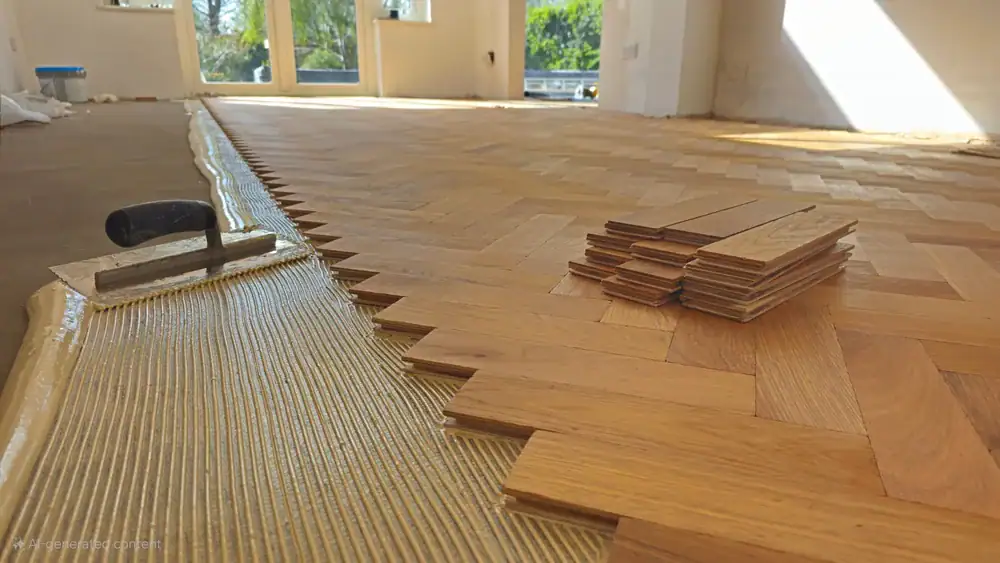
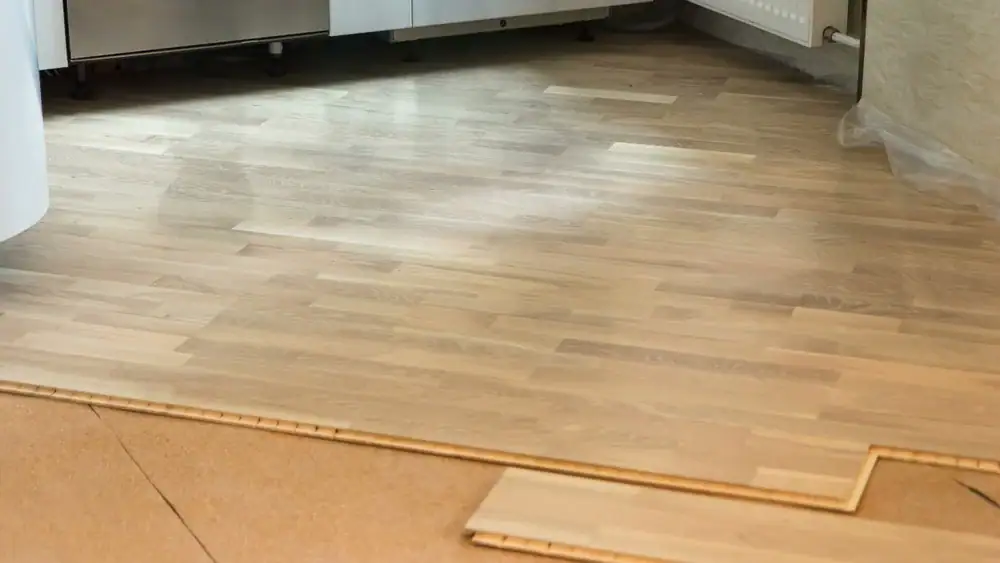
Hardwood Floor Installers Henrico County
Lakeside is a neighborhood with real character Cape Cods and bungalows built in the 1950s and 60s, original hardwood under decades of carpet, and subfloors that have quietly absorbed years of Virginia humidity. When you’re finally ready to put real wood floors in your home, what you get on the other side of that project depends almost entirely on what happens before installation starts.
Richmond’s summers are humid. Genuinely humid. Wood expands when moisture rises and contracts when the heat gives way to dry winter air. In a home without modern vapor barriers or a well-sealed crawl space which describes most of Lakeside’s housing stock that seasonal movement puts real stress on any floor that wasn’t installed with moisture in mind. The result, when installers skip that step, is cupping, gapping, and squeaks that show up within the first year and never fully go away.
When installation is done right, you don’t think about your floors. They feel solid, they look the way you imagined, and they hold up through years of Henrico County seasons without drama. That’s the outcome worth paying for not just beautiful wood on day one, but floors that still look and feel right a decade from now.
Local Wood Floor Installers Lakeside VA
We’ve been working in Richmond-area homes for over 20 years. Owner David Emmerling has personally handled hardwood floor installation and refinishing across Henrico County including the kind of mid-century homes that make up most of Lakeside’s neighborhoods along Lakeside Avenue and the streets surrounding Bryan Park. This isn’t a franchise operation where your job gets handed off to whoever’s available. David’s name is on the work, and that matters when you’re making a real investment in your home.
We’re based on Staples Mill Road in Glen Allen the same road Lakeside residents take to reach Kroger, Hermitage High School, and Parham Doctor’s Hospital. That’s not a coincidence. This area is part of our regular service territory, and the homes here are familiar territory. Hundreds of five-star Google reviews from Richmond-area homeowners reflect the kind of track record that only comes from doing the work correctly, consistently, over time.
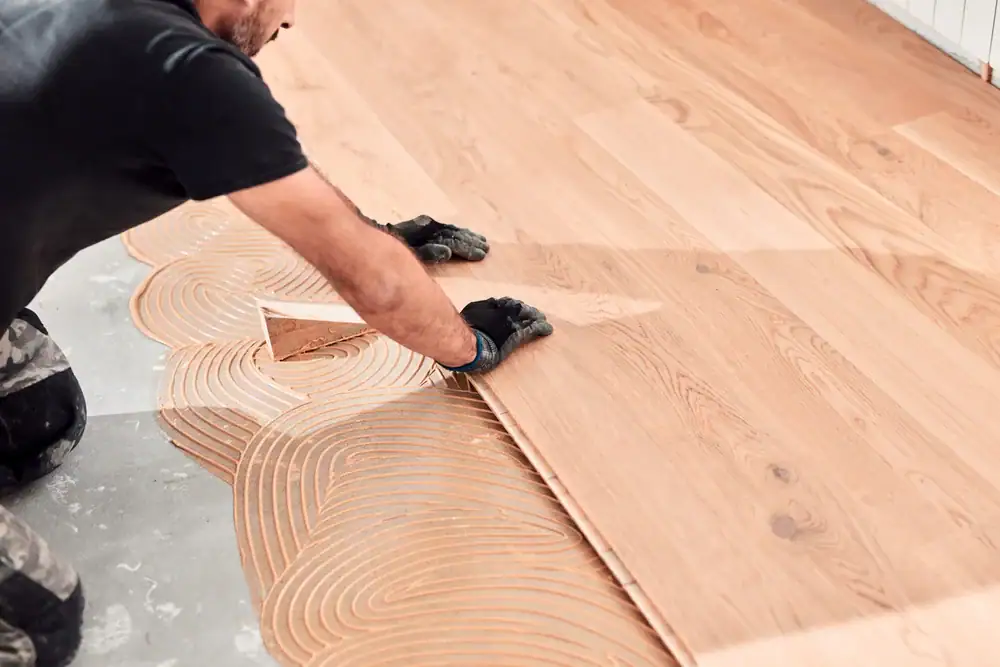
Hardwood Floor Installation Process Lakeside VA
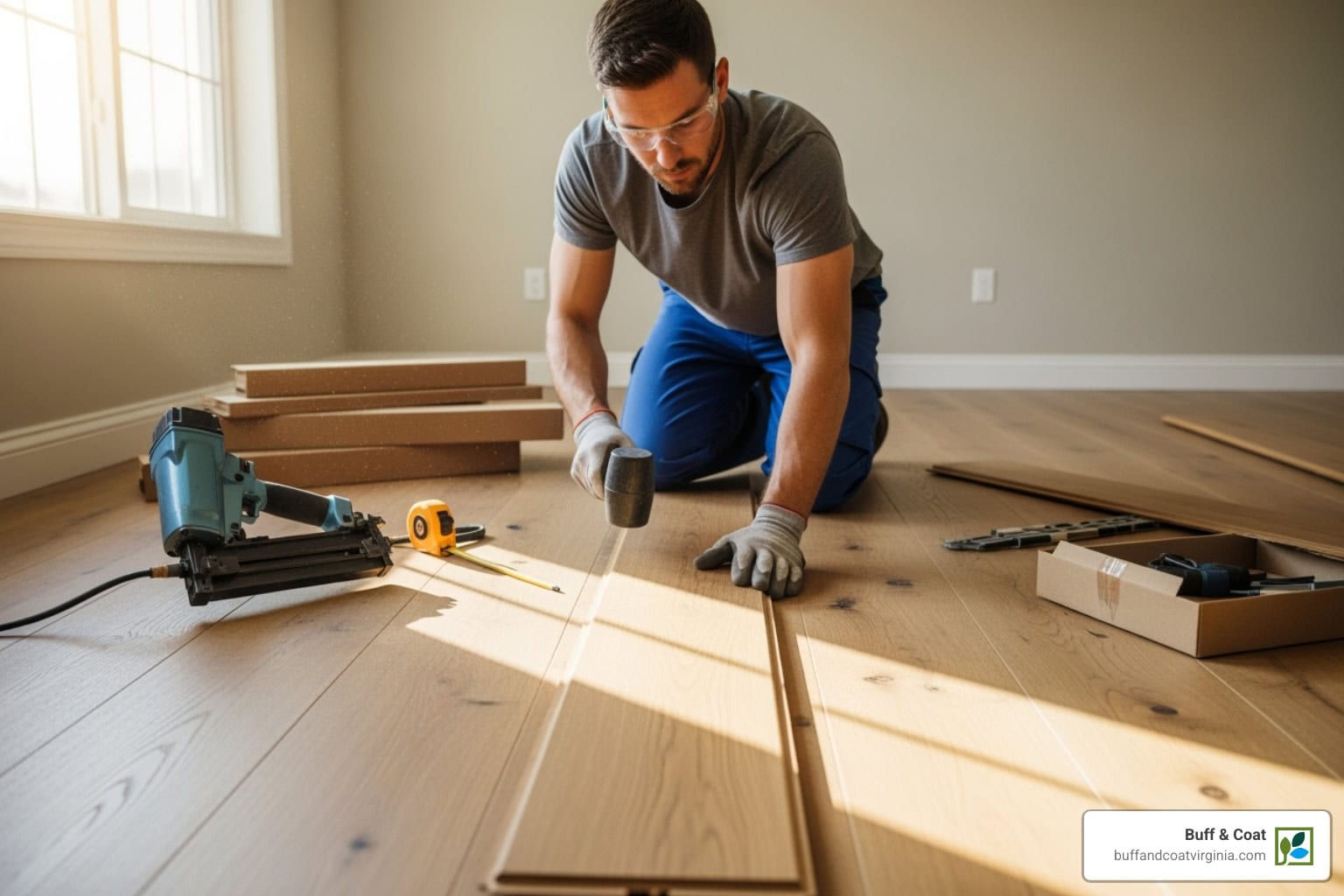
The first thing that happens on any installation job isn’t cutting wood it’s assessing what’s already there. The subfloor gets checked for levelness, structural stability, and moisture content before anything else. In Lakeside’s older homes, this step regularly turns up issues that would cause serious problems down the road if left unaddressed: uneven surfaces, soft spots, or moisture readings that are outside the acceptable range for hardwood installation. If something needs to be corrected, we correct it before the install begins.
Once the subfloor is confirmed ready, the wood itself gets tested. Both the subfloor and the new planks need to be within a specific moisture range of each other industry standard is within 4% before installation starts. In Virginia’s climate, where indoor humidity can swing significantly between July and January, skipping this step is how you end up with floors that buckle in summer or gap in winter. The wood also needs time to acclimate to your home’s interior conditions, which in an older Lakeside home with its own humidity patterns can take longer than a newer, tightly sealed build.
After that, installation moves efficiently. Most projects are completed within a few days, and we keep the process as clean and low-disruption as possible because you’re living in your home, not managing a vacant renovation property.
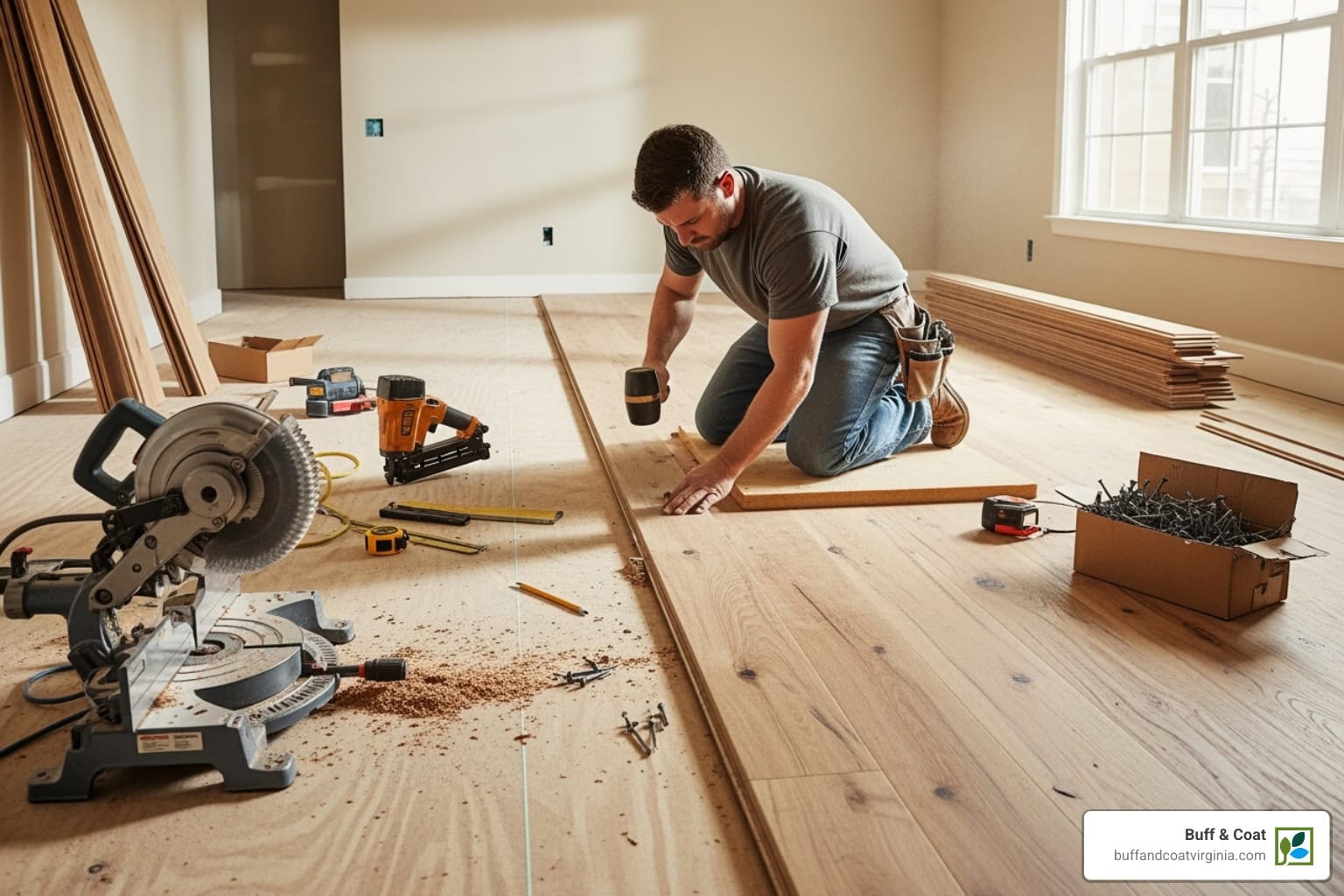
New Wood Floors Lakeside VA
Not every home in Lakeside needs the same solution, and a straight answer about that upfront is worth more than a polished sales pitch. Solid hardwood is a strong choice for many of the homes here but if your home has a concrete slab foundation, a crawl space with moisture history, or a room that sits below grade, engineered hardwood is often the technically correct call. It handles Virginia’s humidity swings with less movement than solid wood, and it performs better in conditions where moisture is a real variable. You’ll get an honest assessment of which option fits your specific subfloor and situation, not a recommendation based on margin.
For homeowners renovating a mid-century Lakeside home, one of the most common needs is matching new installation to existing original hardwood. Whether you’re extending floors into an addition, replacing a damaged section, or opening up a space that was previously carpeted, matching species, plank width, and finish tone to what’s already in the home takes real experience. That’s a capability our customers have specifically called out in reviews, and it’s particularly relevant in a neighborhood where the original floors are part of what makes the home worth preserving.
Henrico County generally does not require a building permit for standard residential flooring replacement, but if your project involves structural subfloor repairs, that can change. Any contractor working in Henrico should carry a valid Virginia contractor’s license, general liability insurance, and workers’ compensation coverage confirm that before signing anything.
How much does hardwood floor installation cost in Lakeside, VA?
The national average for hardwood floor installation runs around $4,700, with most projects landing somewhere between $2,500 and $7,000 depending on square footage, wood species, and the condition of the existing subfloor. In Lakeside specifically, subfloor condition is a real variable. Homes built in the 1950s and 60s are more likely to have subfloor issues that need to be addressed before installation things like uneven surfaces, moisture damage, or soft spots near exterior walls. Subfloor repairs can add anywhere from $900 to $3,000 to a project depending on what’s found.
The honest way to think about this: a lower upfront bid that skips the subfloor assessment isn’t actually saving you money. It’s deferring the cost and when problems show up six months later as squeaks, cupping, or gaps, fixing them is almost always more expensive than preventing them would have been. Getting a proper estimate that accounts for your actual subfloor condition is the only way to know what your project will really cost.
What's the difference between solid and engineered hardwood for my home?
Solid hardwood is exactly what it sounds like a single piece of wood milled to a consistent thickness. It’s durable, can be sanded and refinished multiple times over its lifetime, and is a natural fit for the kind of mid-century homes common in Lakeside. The trade-off is that solid wood moves with humidity. It expands when moisture rises in Richmond’s summers and contracts during dry winter months. In a home with a well-sealed crawl space and consistent indoor climate control, that’s manageable. In an older Lakeside home without modern moisture management, it requires careful installation and proper acclimation.
Engineered hardwood has a real wood veneer on top but is built with cross-layered plywood underneath, which makes it significantly more stable in response to humidity changes. For Lakeside homes with concrete slab foundations, moisture-prone crawl spaces, or below-grade installations, engineered hardwood is often the better technical choice. It still looks and feels like real wood because it is but it handles the conditions these homes actually live in more reliably than solid wood in those specific situations.
How long does hardwood floor installation take from start to finish?
For most standard residential projects, installation itself takes two to three days. That said, the timeline doesn’t start on day one of installation it starts with subfloor assessment and wood acclimation, both of which happen before any planks go down. Wood needs time to adjust to your home’s interior temperature and humidity before installation, and in an older Lakeside home where indoor conditions can vary room to room due to older windows, uneven HVAC coverage, or a drafty crawl space, that acclimation period matters more than it does in newer, tightly sealed construction.
Industry standard calls for five to fourteen days of acclimation depending on site conditions. Rushing that step is one of the more common shortcuts that leads to post-installation problems. So while the physical installation is relatively quick, building in the proper prep time upfront is what allows the finished floor to perform the way it should especially heading into a Virginia summer or a dry January.
Do I need a permit to install hardwood floors in Henrico County?
For standard residential flooring replacement in Henrico County swapping out carpet or old flooring for new hardwood a building permit is generally not required. The Virginia Uniform Statewide Building Code governs construction activity in Henrico, and like-for-like flooring replacement in an existing home typically falls outside the permit threshold.
Where it gets more complicated is if your project involves structural subfloor repairs or modifications. If a subfloor assessment turns up damage significant enough to require structural correction which is not uncommon in Lakeside homes built 60 to 80 years ago that work may require a permit depending on the scope. Any contractor you hire in Henrico County should hold a valid Virginia contractor’s license through the Virginia Board for Contractors, carry general liability insurance, and maintain workers’ compensation coverage. Those aren’t optional niceties they’re the baseline for working legally and responsibly in this area. Always ask for documentation before work begins.
Can new hardwood floors be matched to the original floors already in my Lakeside home?
Yes, and it’s one of the more common requests in a neighborhood like Lakeside. A lot of the renovations happening in these mid-century homes are partial a kitchen that’s being opened up, an addition being tied into the existing layout, a hallway connecting old and new space. When that happens, the new flooring needs to blend with what’s already there, and that requires matching species, plank width, and finish tone to original hardwood that may be 60 or 70 years old.
It’s not always a perfect science, but it’s absolutely achievable with the right experience. The key factors are identifying the existing wood species accurately, finding a plank width that aligns with the original installation, and finishing the new wood in a way that reads as continuous rather than patched. Our customers have specifically noted this in reviews the ability to make new installation look like it was always part of the home. In a neighborhood where the original character of the house is part of what makes it worth investing in, that matters.
How long will new hardwood floors actually last in a Lakeside home?
Solid hardwood that’s been properly installed and maintained can last 50 to 100 years. In Lakeside’s older homes, the floors that have survived in good condition since the 1950s are a good reference point they were installed carefully, from quality wood, and they’ve held up because the fundamentals were right from the start.
The biggest threats to longevity in this area are moisture-related. Richmond’s humidity swings are real, and floors that weren’t installed with proper moisture testing and subfloor preparation are the ones that start showing problems cupping, gapping, squeaking within the first few years. Beyond installation quality, finish maintenance plays a role. Hardwood that gets a buff and recoat every few years holds up significantly better than floors that go years without any attention. The wood itself isn’t fragile. It’s the installation shortcuts and deferred maintenance that shorten the lifespan.