
Floor Installation in Dumbarton, VA
Dumbarton's Older Homes Deserve More Than a Fast Install
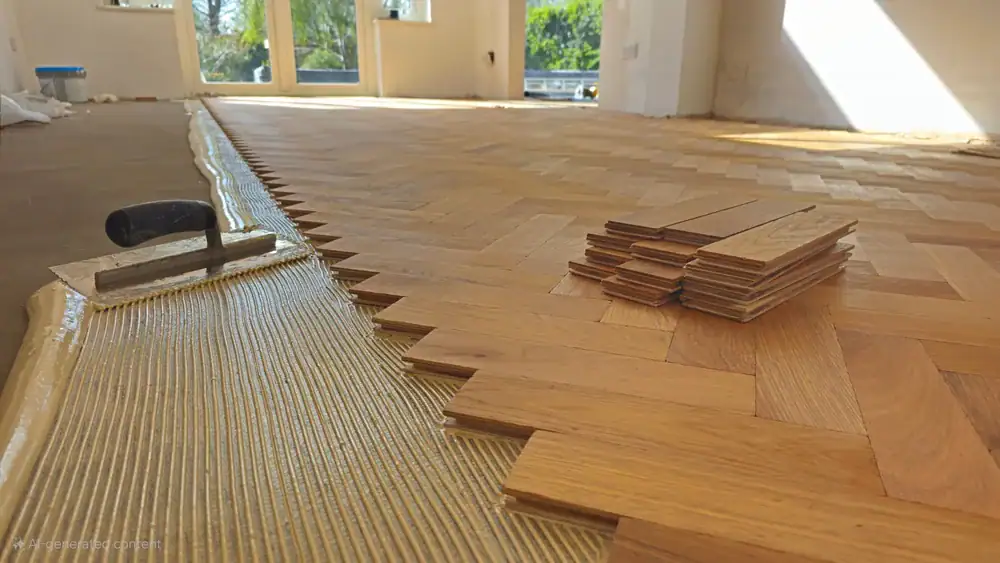
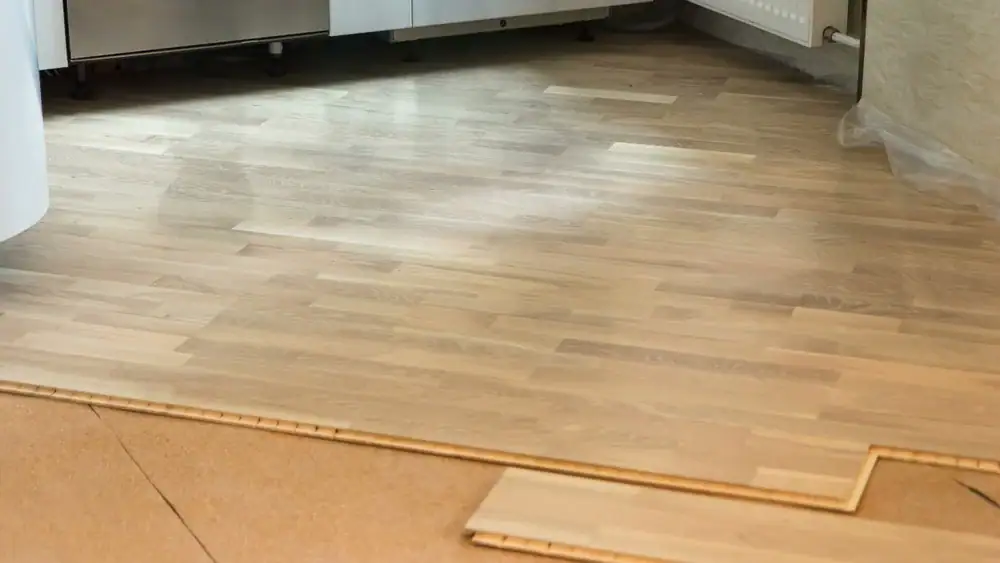
Hardwood Floor Installers Henrico County
When hardwood floor installation goes wrong, it rarely fails on day one. It fails six months later a plank starts cupping near the window, a section squeaks every morning, gaps open up along the wall. By then, the installer is long gone and you’re the one dealing with it. That’s not bad luck. That’s what happens when the prep work gets skipped.
Dumbarton’s housing stock is predominantly mid-century construction homes built in the 1950s and 1960s that have been through decades of Virginia’s humidity cycles. Subfloor systems in homes like these have experienced years of seasonal movement, moisture exposure, and settling. Without a proper assessment before installation begins, you’re laying new hardwood on a foundation that hasn’t been evaluated. That’s where most problems start, and it’s exactly what we address before anything else.
Richmond’s climate doesn’t help. Summer humidity in this area regularly climbs above 70%, and older homes along the Staples Mill corridor many with crawl spaces or aging foundations can hold moisture in the subfloor that you’d never know about just by looking. Moisture variance between the subfloor and the new wood is one of the leading causes of warping and cupping in Virginia installs. Testing for it isn’t extra. It’s the baseline for doing the job right.
Local Floor Installers Serving Dumbarton VA
We’ve been serving Henrico County homeowners since 2012, with our office at 10368 Staples Mill Road in Glen Allen the same road that runs directly through Dumbarton. This isn’t a franchise dispatching crews from across the metro. We’re a local business that knows this corridor, knows the housing stock in Dumbarton and the surrounding area, and has been doing this work in your backyard for over a decade.
Owner David Emmerling’s name is on every job. That matters because when you’re investing $4,000 to $7,000 in new hardwood floors, you want someone with a real stake in the outcome not a franchise system where accountability gets diluted between a corporate office and a subcontracted crew. We’re licensed through the Virginia Board for Contractors and have earned hundreds of five-star reviews from Henrico County homeowners, including customers right here in the 23228 zip code.
We already have a documented service history in Dumbarton on the refinishing side. This is the same expertise, the same standards, applied to new floor installation.
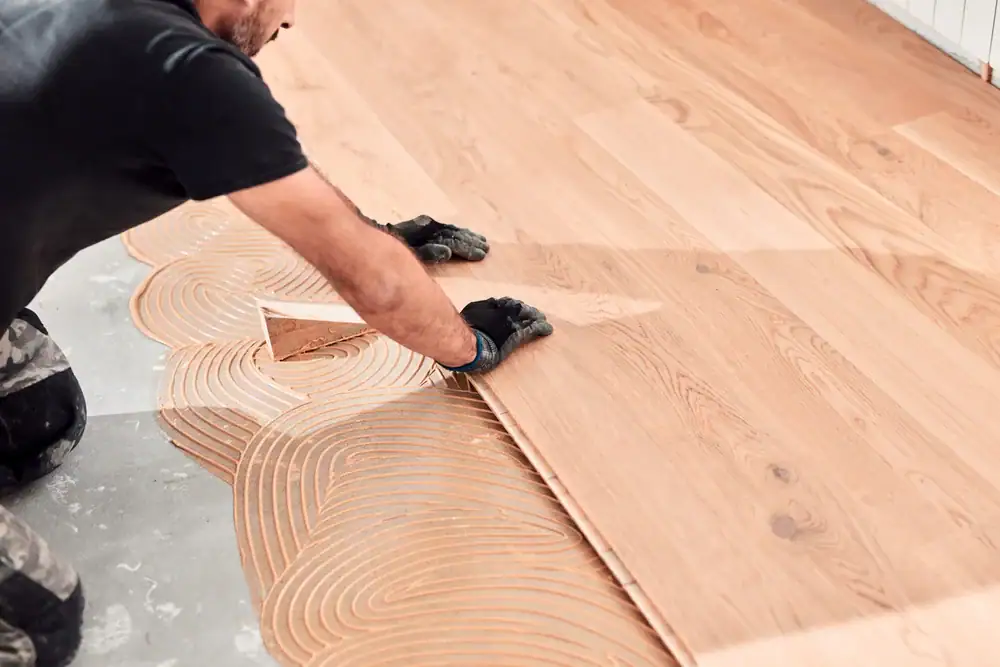
Hardwood Floor Installation Process Dumbarton VA
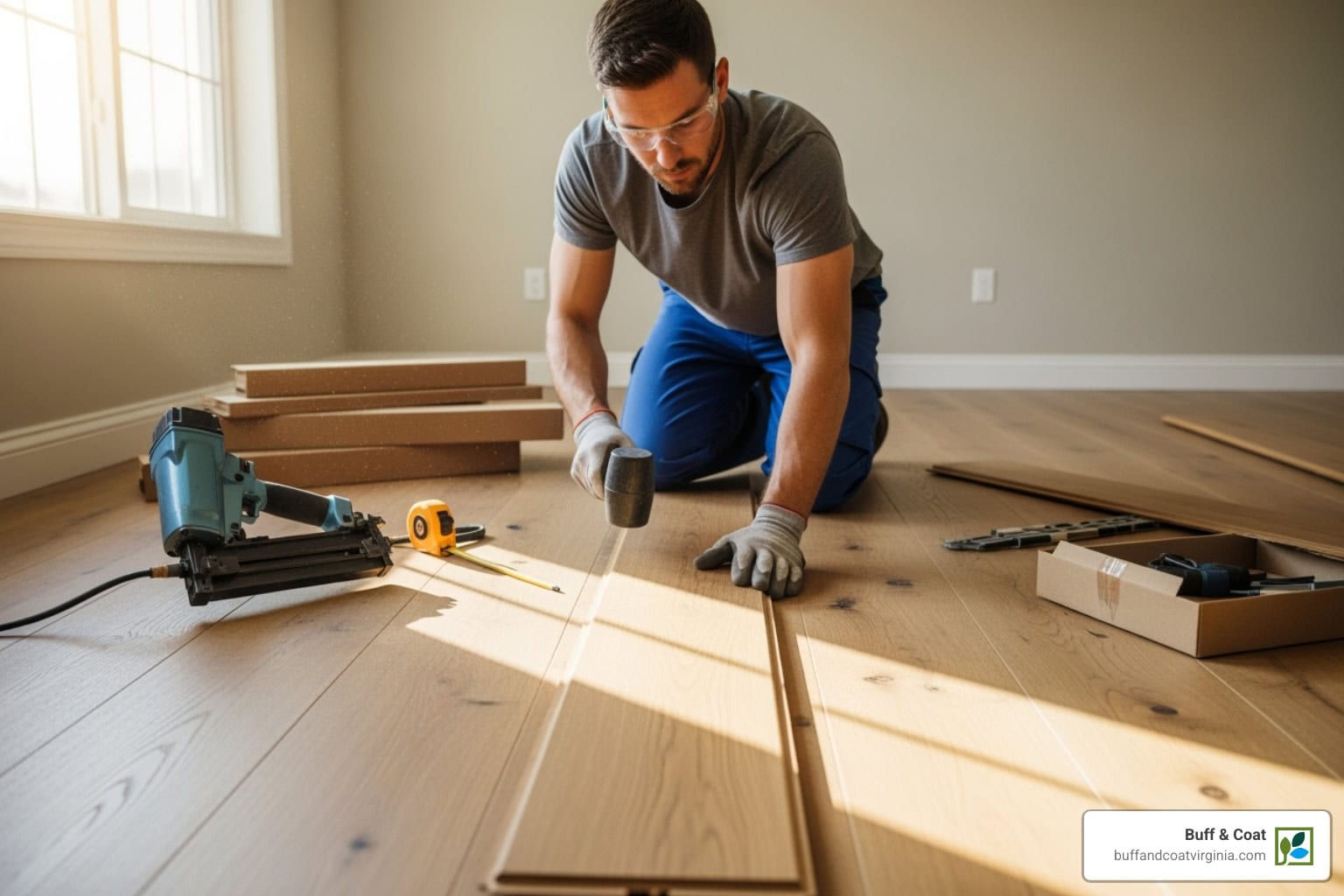
The process starts with the subfloor not the flooring samples. Before any material gets ordered or scheduled, we assess the subfloor for levelness, structural stability, and moisture content. In Dumbarton’s older homes, this step regularly uncovers conditions that would cause problems down the road: out-of-tolerance flatness, soft spots, or elevated moisture from a crawl space that’s been holding humidity through Richmond’s summers. If something needs to be corrected, it gets corrected before installation begins not discovered mid-project when it costs significantly more to fix.
Once the subfloor clears, the wood itself gets tested. Industry standards require that moisture variance between the subfloor and the new flooring stay within 4% for strip hardwood and within 2% for wide-plank material. In Virginia’s climate, that’s not a formality it’s a real variable that changes with the season. Solid hardwood also needs time to acclimate to your home’s interior conditions, typically 5 to 14 days, before installation. Skipping that window is one of the most common reasons new floors gap or buckle within the first year.
From there, installation proceeds with the material and method matched to your specific subfloor type and room conditions. If you have existing hardwood in adjacent rooms, we work to match the new flooring to what’s already there a detail that matters in a neighborhood full of homes where original hardwood is still present. Most projects are scheduled within a week and completed in as few as three days.
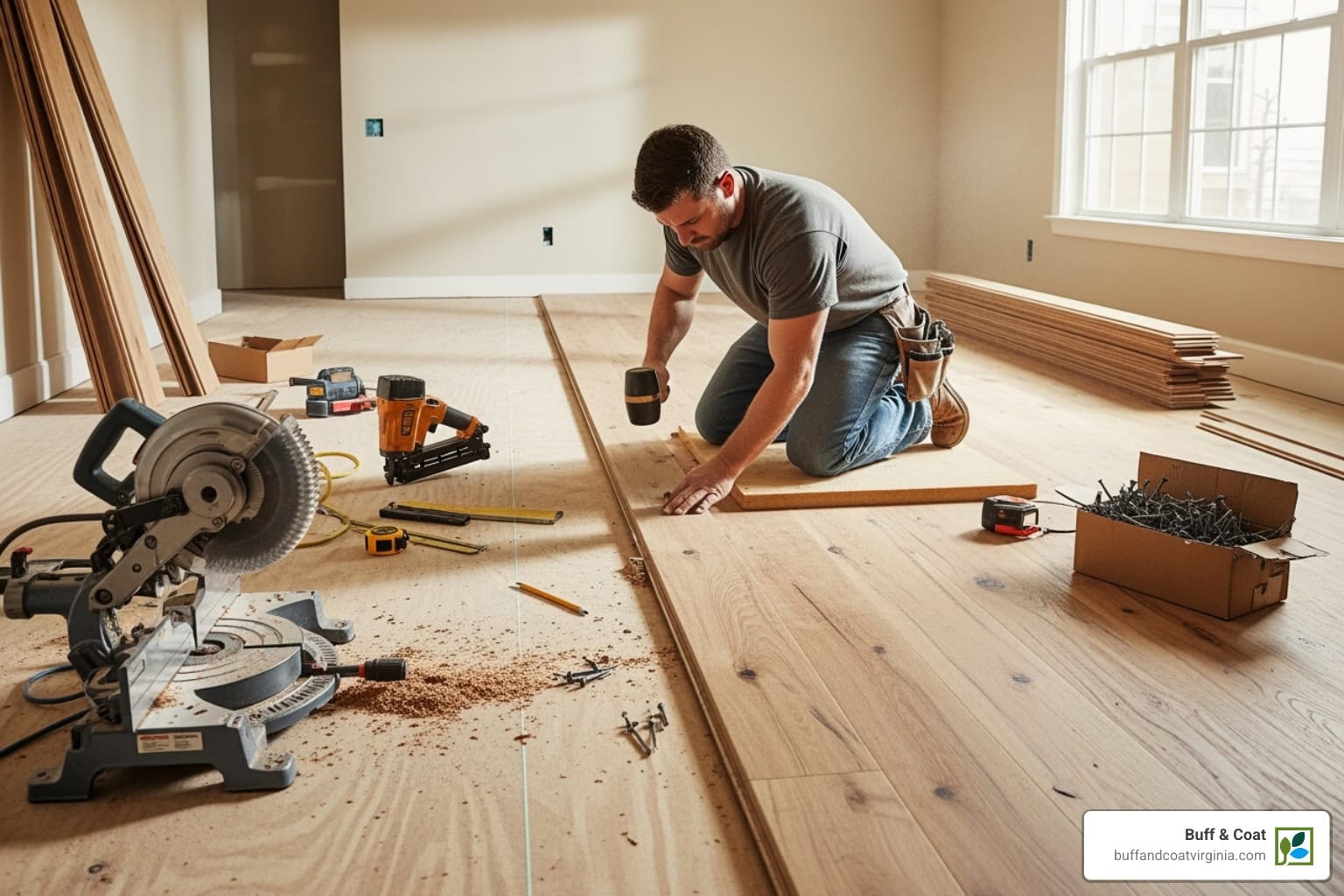
New Wood Floors and Flooring Installation Cost Dumbarton
Nationally, hardwood floor installation averages around $4,723, with most projects falling somewhere between $2,469 and $7,032 depending on square footage, material choice, and subfloor condition. In Henrico County’s active market where homes near Dumbarton Road have recently sold between $365,000 and $480,000 quality floors are a visible, value-affecting feature. The investment is real, and it deserves to be protected from the start.
One of the most common ways that investment gets eroded is through surprise subfloor costs discovered mid-project. When an installer skips the upfront assessment, subfloor repairs that could have been scoped and budgeted in advance become emergency add-ons typically running $900 to $3,000 on top of what you were quoted. Our process is designed to surface those issues before the job starts, so the number you agree to is the number you can plan around.
On material selection, not every Dumbarton home is the right fit for solid hardwood. Homes with concrete slabs or crawl-space foundations common in the 1950s and 1960s construction that defines much of this neighborhood are often better served by engineered hardwood, which handles Virginia’s humidity swings with more dimensional stability. We give you a straight read on what makes sense for your specific home, not a recommendation built around the higher-margin option.
Do I need a permit to install hardwood floors in Henrico County, VA?
For most standard hardwood floor installations in Henrico County where you’re laying new flooring over an existing subfloor a building permit is typically not required. It’s considered a cosmetic improvement rather than structural work, and Henrico County’s Department of Building Construction and Inspections generally doesn’t require a permit for that scope.
Where it gets more involved is if the subfloor itself needs structural repair. If joists need to be sistered, or if a significant section of subfloor decking needs to be replaced, that work may cross into permit territory depending on the scope. Our upfront subfloor assessment identifies these conditions before work begins, so if a permit is needed, you know about it in advance not halfway through the project. When in doubt, it’s always worth a quick call to Henrico County’s building department to confirm based on your specific situation.
How much does hardwood floor installation typically cost in Dumbarton, VA?
Most hardwood floor installation projects in the Richmond and Henrico County area fall somewhere between $2,469 and $7,032, with a national average around $4,723. Where your project lands within that range depends on the square footage, the material you choose solid versus engineered hardwood and the condition of your subfloor going in.
In Dumbarton specifically, the age of the housing stock is a real cost variable. Homes built in the 1950s and 1960s sometimes have subfloor conditions that need correction before new flooring can be safely installed. Those repairs typically add $900 to $3,000 if they’re discovered mid-project by an installer who didn’t assess upfront. Getting a proper subfloor evaluation before you commit to a quote is the most effective way to avoid that kind of budget surprise. We include that assessment as part of the process, not as an add-on after the fact.
What is the difference between solid and engineered hardwood for older Virginia homes?
Solid hardwood is milled from a single piece of wood and can be sanded and refinished multiple times over its lifespan which is a real advantage in a neighborhood like Dumbarton where homes are aging and floors see decades of use. The tradeoff is that solid wood is more sensitive to moisture and humidity changes. It expands and contracts with the seasons, which means subfloor moisture levels and the home’s foundation type matter a great deal.
Engineered hardwood is constructed in layers, which makes it significantly more dimensionally stable in Virginia’s climate. For Dumbarton homes with crawl-space foundations or concrete slabs both common in mid-century construction engineered hardwood handles the seasonal humidity swings that Richmond summers bring without the same risk of warping or gapping. It can still be refinished, though typically fewer times than solid wood. The right choice depends on your specific subfloor, your home’s moisture profile, and how long you plan to stay all things worth talking through before you commit to a material.
How long does hardwood need to acclimate before installation in Dumbarton's climate?
Solid hardwood typically needs 5 to 14 days to acclimate inside your home before installation. The wood needs to adjust to the temperature and humidity of the space where it will live if you skip that window and install it while it’s still at a different moisture content than your interior environment, you’re setting up the floor to move after it’s already nailed down.
In Dumbarton and the broader Richmond area, this matters more than it might in a drier climate. Virginia’s summers are genuinely humid relative humidity regularly climbs above 70% from June through August and winter heating systems pull that moisture back out of the air significantly. The gap between summer and winter interior conditions in an older Dumbarton home can be substantial, especially in homes with less insulation or older building envelopes. Acclimation timing is also one reason spring and fall are generally the best seasons for installation in this area: interior conditions are more moderate and the wood stabilizes more predictably before it gets nailed down.
Can hardwood floors be installed over a crawl space foundation in a 1960s Dumbarton home?
Yes, but the crawl space condition matters a lot. Crawl spaces in mid-century Dumbarton homes can be a significant source of subfloor moisture especially in the warmer months when ground moisture migrates upward. If the crawl space isn’t properly ventilated or has a vapor barrier in poor condition, that moisture works its way into the subfloor and creates exactly the conditions that cause hardwood to warp, cup, or squeak after installation.
Before installing hardwood over a crawl-space foundation, the subfloor moisture level needs to be tested and confirmed to be within acceptable range. Industry standards require that the moisture content difference between the subfloor and the new flooring not exceed 4% for standard strip hardwood, or 2% for wide-plank material. If the crawl space is contributing elevated moisture, that issue needs to be addressed first either through improved ventilation, a new vapor barrier, or both. Our pre-installation assessment includes moisture testing specifically because homes like the ones on Dumbarton Road and throughout the 23228 zip code make it a necessary step, not an optional one.
How do I know if my existing subfloor needs repair before new floors go in?
The honest answer is that you usually can’t tell just by looking or walking on it. Some subfloor problems are obvious a soft spot, a visible dip, a section that bounces underfoot. But many of the issues that cause hardwood floors to fail after installation are invisible until the flooring is already down: moisture content that’s out of range, flatness that’s slightly off tolerance, or a section of decking that’s structurally compromised but feels fine to walk on.
In Dumbarton’s older housing stock homes built in the 1950s and 1960s subfloor systems have been through a long time. Plank subfloors over joists, which were common in that era, behave differently than modern OSB or plywood and require a more careful evaluation. The only reliable way to know what you’re working with is to have someone actually assess it: check flatness with a level across multiple points, test moisture content with a meter, and look at the structural condition of the decking and joists underneath. That’s the first thing we do on every installation job in Henrico County because finding a problem before the floor goes in costs far less than finding it after.