For many homeowners in Richmond, the idea of installing new flooring can feel like a massive undertaking. Whether you're finally replacing old, worn-out carpet or upgrading your floors to boost your home's value, the process can seem complicated. This guide is here to simplify it, breaking down the entire journey from planning and budgeting to choosing the perfect material for our unique Virginia climate.
Your Roadmap to a Successful Floor Installation
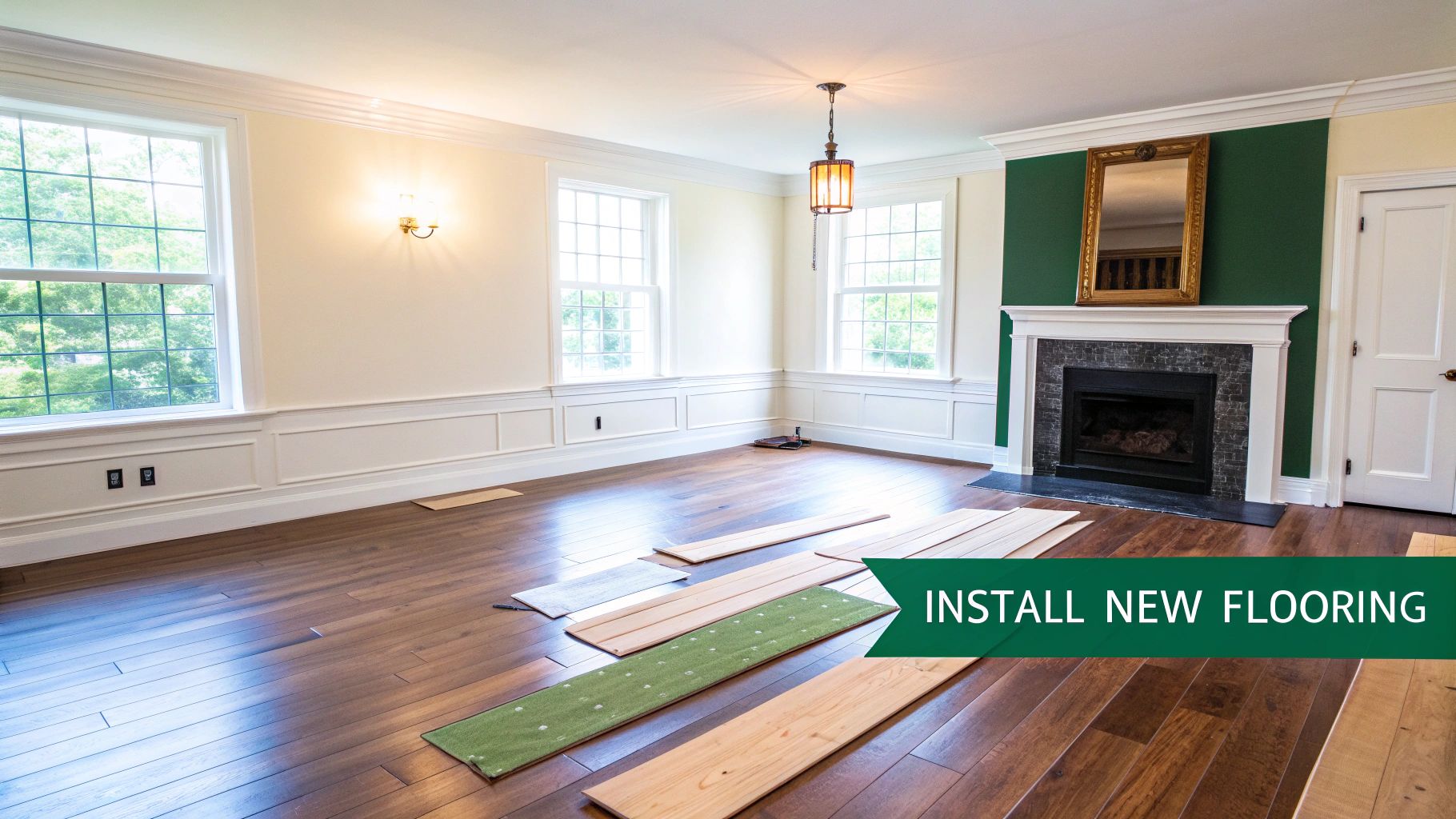
Deciding to install new flooring is one of the most impactful upgrades you can make to your home. It’s more than just a cosmetic fix; it’s a real investment in your property's value, your comfort, and how you live day-to-day. The right floor can transform a dated room into a modern, welcoming space, but a poor choice or a shoddy installation can lead to years of headaches.
This is especially true for those of us in the Richmond, Midlothian, and Chesterfield areas. Our beautiful historic homes and humid climate mean we have to be smart about the materials we choose. You'll be facing a few key decisions right from the start:
- What's the best material? You'll need to weigh the pros and cons of solid hardwood, engineered wood, and Luxury Vinyl Plank (LVP), especially for life here in Virginia.
- What's the real budget? It's crucial to understand the total cost, which includes the materials, labor, any subfloor prep, and even potential surprise repairs.
- Who's doing the work? Is this a project you can realistically tackle yourself, or is hiring a professional contractor the smarter, safer way to go?
Why Planning Is Non-Negotiable
A solid, well-thought-out plan is the bedrock of a smooth flooring project. Without one, you’re opening yourself up to unexpected costs, frustrating delays, and a final result that just doesn't live up to what you envisioned. Think of this guide as your personal roadmap, designed by Buff & Coat to help you navigate every stage with the confidence that comes from having an expert in your corner.
And the desire for quality flooring isn't just a local trend. The worldwide flooring market was valued at an incredible USD 416.56 billion in 2024 and is expected to soar to USD 646.70 billion by 2032. What's driving this? A universal need for durable, beautiful surfaces in our homes. Hardwood, not surprisingly, continues to be a top pick for its timeless style and sheer strength. You can read more about the global flooring market trends to see just how popular these upgrades are.
Key Takeaway: A successful flooring installation hinges on informed decisions made before the first plank is ever laid. From material choice to professional installation, every step matters.
To give you a quick snapshot, here's how some of the most popular flooring options stack up against each other.
Flooring Installation At a Glance
| Consideration | Solid Hardwood | Engineered Hardwood | Luxury Vinyl Plank (LVP/LVT) |
|---|---|---|---|
| Best For | Living areas, bedrooms, dining rooms. Timeless appeal. | Basements, kitchens, and areas with some moisture. | Bathrooms, kitchens, mudrooms, high-traffic areas. |
| Moisture Resistance | Low – Prone to warping in humid conditions. | Moderate – More stable than solid hardwood. | High – Waterproof or highly water-resistant. |
| Durability | High – Can be sanded and refinished multiple times. | High – Very durable top layer. | Very High – Scratch, dent, and stain resistant. |
| Installation | Professional installation is highly recommended. | Can be DIY-friendly (floating/click-lock). | Very DIY-friendly; typically installed as a floating floor. |
| Cost | Highest initial cost for material and labor. | Mid-to-high range cost. | Most budget-friendly option. |
This table is just the starting point. This guide will arm you with the practical info you need to transform your home with beautiful, durable floors that your family will love for years.
If you’re kicking off your flooring journey, getting an expert opinion can save you time and prevent costly mistakes.
Richmond homeowners: get a fast quote for your flooring installation project. Call 804-392-1114 today.
Planning Your Project from Budget to Materials
A beautiful new floor doesn't just happen. The most successful projects are born out of smart planning, long before the first board is laid down. This is where you map everything out, turning a dream into an actionable plan by nailing down your budget and choosing the perfect materials for your home.
Getting this phase right is the difference between a project that runs smoothly and one that’s full of headaches and surprise expenses. It’s about looking past the price tag on the flooring and seeing the whole picture.
Setting a Realistic Budget
One of the easiest traps to fall into is underestimating the true cost of a new floor. Your budget must account for more than just the wood itself. A solid financial plan will cover a few key areas you can't afford to overlook:
- Materials: This is the big one, but don’t forget to add about 5-10% extra to your order. This covers cuts, mistakes, and waste—you'll need it.
- Labor: Professional installation is an investment in getting it done right the first time. The cost here can shift based on the complexity, like a tricky herringbone pattern or wrapping a staircase.
- Underlayment and Adhesives: These are the unsung heroes of a great floor. They provide a moisture barrier, dampen sound, and create a stable foundation.
- Subfloor Prep: What’s underneath matters. Your subfloor might need leveling, cleaning, or repairs. Skipping this step is a guaranteed way to end up with creaky, uneven floors.
- Demo and Disposal: The old floor has to go somewhere. The cost to tear out and haul away old carpet, tile, or existing hardwood needs to be part of the equation.
Laying all these costs out gives you a clear, honest look at the total investment. For a more detailed look at what to expect, check out our complete guide on flooring installation costs.
Choosing Materials for Richmond Homes
Picking the right material is a balancing act between your style, your lifestyle, and the unique Richmond climate. Our local humidity can be a real challenge for some types of flooring, so choosing wisely is key to a long-lasting result.
If you're considering wood, it’s worth taking the time to learn more about different types of wood for your flooring project from people who know lumber inside and out.
Local Insight: For a classic Colonial in Short Pump or a historic rowhouse in the Fan, solid hardwood is a timeless choice that just feels right. But if you're finishing a basement in Chesterfield where moisture is a concern, a high-quality engineered hardwood or LVP from a trusted floor installation Richmond specialist is often the smarter, more stable way to go.
Think about how you live. Got kids and pets? A durable, scratch-resistant option like LVP might be the perfect fit for those high-traffic zones. Is this for a quiet, formal living room? The undeniable beauty of solid oak or maple could be exactly what the space needs.
It's no surprise that the demand for high-quality, long-lasting flooring is on the rise. The global hardwood flooring market hit USD 51.38 billion in 2024 and is expected to grow to USD 69.78 billion by 2033. This boom is fueled by homeowners who want beautiful, durable, and sustainable options. With North America making up over 36.5% of that market, homeowners here in Richmond have access to some of the best materials available.
Ready to discuss your project? Buff & Coat can help you choose the right material and provide a clear, honest estimate. Call 804-392-1114 to get started.
What to Expect During Professional Installation
Choosing a professional for your flooring installation isn’t just about getting the job done—it's an investment in real craftsmanship and long-term peace of mind. When you work with an experienced team like Buff & Coat, you're getting a proven process that protects your Richmond home and guarantees a flawless result. We believe in being upfront, so let’s pull back the curtain on what our installation process actually looks like.
This quick visual breaks down our core planning steps, from sorting out the budget and materials to getting the site prepped and ready for the main event.
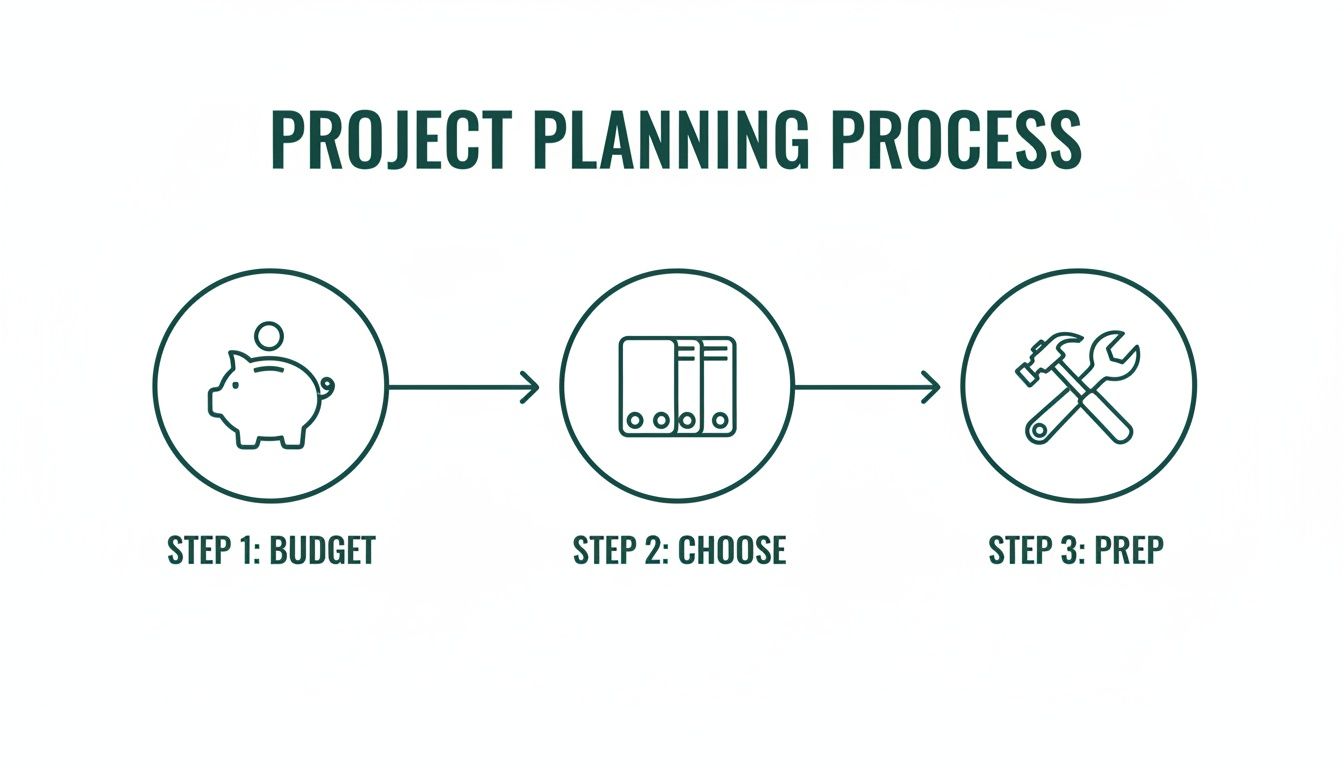
Each of these steps sets the stage for the next, making sure your vision becomes a beautifully installed floor without any hitches.
The Critical First Step: Acclimation
Before we lay a single plank, your new flooring has to get comfortable in its new surroundings. This process is called acclimation, and it's a non-negotiable step for us, especially with Virginia's ever-changing humidity. Wood is a natural product; it breathes, expanding and contracting with shifts in temperature and moisture.
That’s why we deliver the flooring to your home several days before we even think about starting the installation. This gives the wood time to adjust to your home’s specific climate, which is the secret to preventing ugly gaps or buckling later on. Rushing this part of the job is asking for trouble, so we always build this waiting period into our project timeline.
Meticulous Subfloor Preparation
The final look and feel of your floor is only as good as the foundation it sits on. A wonky or damaged subfloor is a recipe for squeaks, uneven spots, and a floor that wears out way too soon. Our crew takes the time to inspect and prep the subfloor, ensuring it’s perfectly clean, flat, and solid.
Depending on what we find, this might involve:
- Leveling: We either grind down high spots or use a self-leveling compound to fill in any dips.
- Cleaning: Every bit of debris, dust, or old adhesive has to go. Anything left behind can interfere with the new floor.
- Repairs: We'll secure any loose plywood and replace sections that are damaged to create a stable, reliable base.
A perfectly prepared subfloor is the unsung hero of a quiet, durable, and long-lasting floor. It's a step we never compromise on, as it's foundational to quality workmanship.
Installation Techniques for a Flawless Finish
Once the subfloor is perfect, the real magic begins. The installation method we choose depends entirely on the flooring you've selected for your home.
-
Nail-Down or Staple-Down: This is the classic, time-tested approach for solid hardwood. Every single plank is fastened directly to the wood subfloor with special nails or staples, creating an incredibly secure floor that’s built to last for generations. It demands specialized tools and a whole lot of precision.
-
Glue-Down Installation: We often use this for engineered hardwood, especially over concrete slabs. A powerful adhesive is spread across the subfloor, giving you a rock-solid feel underfoot with great stability and less sound transmission.
-
Floating Installation: Very common for LVP and many engineered hardwoods, this modern technique involves clicking the planks together over an underlayment. The entire floor "floats" as one continuous surface, allowing it to expand and contract naturally with the seasons—a fantastic choice for many Richmond homes.
You can dig deeper into our specific approach and see real-world examples in our guide to top-tier wood floor installation in Richmond, VA.
Our Commitment to a Clean Worksite
One of our biggest promises is to leave your home just as clean as we found it—if not cleaner. Let's be honest, installing floors can kick up a lot of dust. But our advanced dust containment systems are designed to capture the overwhelming majority of airborne particles right at the source.
This not only protects your home's air quality but also dramatically cuts down on the cleanup you have to deal with afterward. It’s all part of making the experience healthier and more pleasant for your family from start to finish.
If you’re unsure which installation method is right for your home, Buff & Coat can take a look and give you honest recommendations. Call 804-392-1114 or request a free estimate today.
Deciding Between DIY and a Professional Contractor
It’s the classic crossroads for any homeowner starting a flooring project: should I roll up my sleeves and do this myself, or is it time to call in a pro? The DIY route has its charms, of course—who doesn't love the idea of saving some money and earning serious bragging rights?
But let's be real. Installing new flooring is a high-stakes game where one small miscalculation can turn into a huge, expensive headache. Before you lose a weekend to YouTube tutorials, it’s worth taking a hard look at what the job really entails.
A flawless finish depends on specialized tools that most people don’t have lying around the garage. We’re talking about professional-grade floor nailers, undercut jamb saws, and moisture meters. Trying to get by without them is a recipe for damaged boards, a voided manufacturer warranty, or a floor that just looks and feels… off.
The True Value of Professional Expertise
Hiring an experienced contractor is about so much more than just paying for labor. You're investing in quality, speed, and—most importantly—peace of mind. A seasoned pro has seen it all and knows how to sidestep problems a first-timer would never even anticipate.
Here are a few things a professional handles that often get missed on a DIY job:
- Subfloor Assessment: We know exactly what to look for—subtle dips, hidden moisture, or pesky squeaks that will telegraph right through your beautiful new floor if they aren't fixed first.
- Precise Layout: We map out the entire room before the first board is laid. This ensures your floor looks balanced, the lines are perfectly straight, and material waste is kept to a minimum, which can actually save you money.
- Managing Climate: Here in Richmond, our humid summers can make wood expand in a big way. A pro knows precisely how much expansion gap to leave along the walls to prevent your floors from buckling when the seasons change.
As you weigh your options, learning how to hire a professional and avoid costly mistakes is a critical step. It helps ensure you find the right partner for your project.
When DIY Might Be a Good Fit
While we'll almost always recommend a professional for tricky materials like solid hardwood, some projects are genuinely DIY-friendly if you're handy and well-prepared. Modern flooring like floating LVP (Luxury Vinyl Plank) with a click-lock system is designed to be much more forgiving for home installation.
If you do decide to tackle it yourself, be brutally honest about your skill level and get ready for a serious time commitment. This is rarely the single-weekend project it seems to be.
Key Consideration: Don't forget that your time is valuable. A professional crew can often knock out an installation in a fraction of the time it would take a DIYer, getting your home back to normal much faster.
DIY vs Professional Floor Installation
To help you decide, here’s a quick side-by-side look at what to expect from each path.
| Factor | DIY Approach | Professional Installation |
|---|---|---|
| Cost | Lower upfront labor costs, but risk of expensive material waste or repairs. | Higher upfront cost, but includes expertise, insurance, and warranty. |
| Tools | Requires renting or buying expensive, specialized equipment. | Pros arrive with all necessary high-grade tools for a perfect job. |
| Time | Can take several weekends, causing prolonged disruption to your home. | Typically completed in just a few days, minimizing inconvenience. |
| Quality & Finish | Results can be uneven, with visible gaps or mistakes. | A flawless, professional finish that adds significant home value. |
| Problem Solving | Unexpected issues (like a bad subfloor) can derail the project. | Experts anticipate and solve problems on the fly. |
| Warranty | Mistakes can void the flooring manufacturer's warranty. | The installer's labor warranty protects your investment. |
Ultimately, the choice comes down to balancing cost savings against risk.
The demand for quality hardwood flooring is stronger than ever. In 2024, residential replacement projects made up a massive 66.4% of wood flooring sales, proving that homeowners are committed to upgrading their spaces. With a diverse supply chain where nearly 50% of wood flooring imports come from Southeast Asian countries, there's no shortage of beautiful, high-quality materials for your project.
At the end of the day, a small cutting error can waste hundreds of dollars in materials, while an improper installation might mean tearing the whole thing out and starting over. If you aren't 100% confident in every single step, hiring a professional isn't just a luxury—it's smart insurance for your home's biggest asset.
Feeling unsure? Reading about how to choose the right wood floor contractors can help clarify what to look for in a local expert.
Caring for Your New Floors for a Lifetime of Use
You did it. The installation is complete, and your beautiful new floors are in. But the job isn't quite finished yet. Now it's all about protecting that investment so it looks just as good in ten years as it does today. A little bit of smart, proactive maintenance goes a very long way.
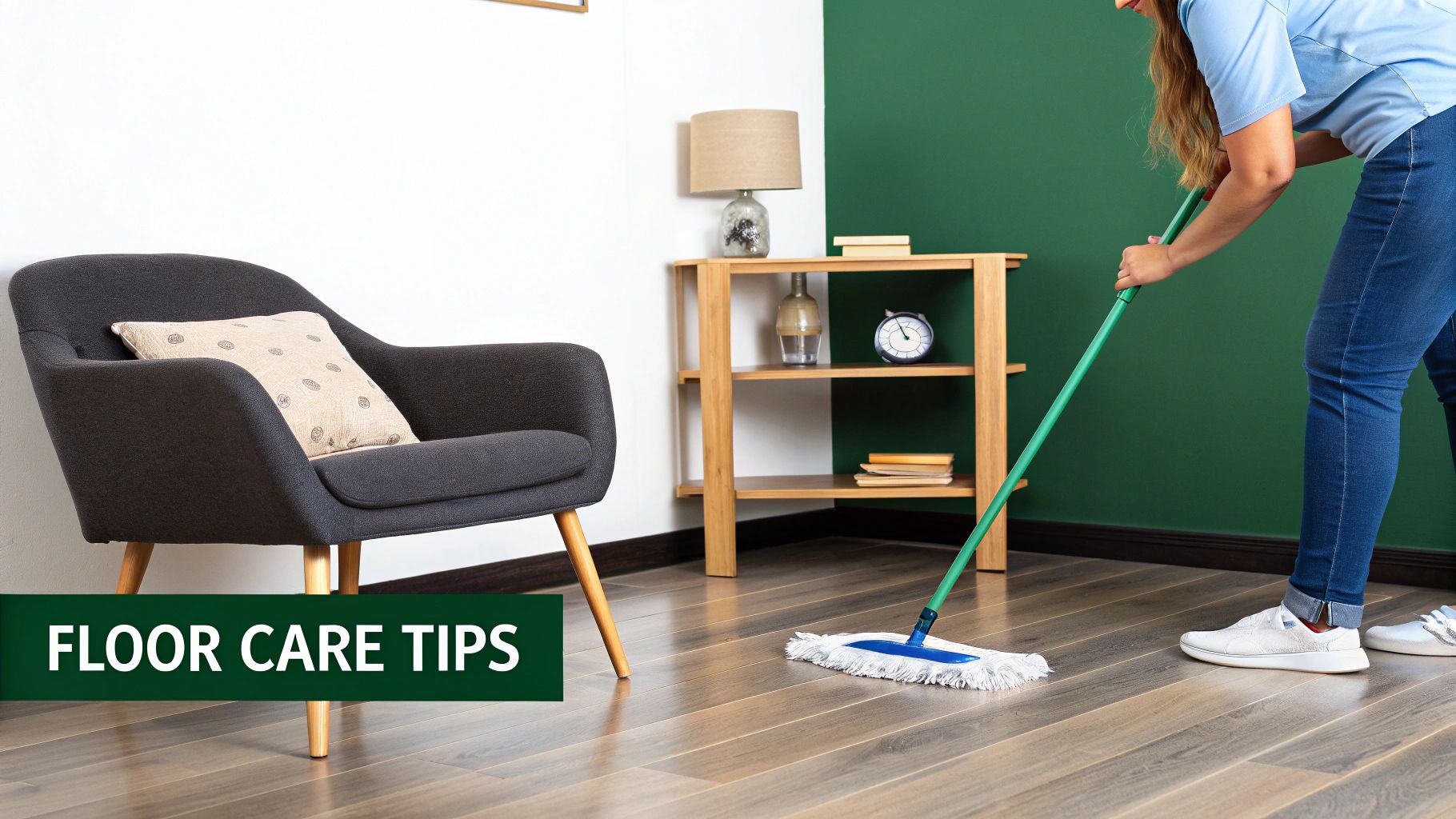
First things first: give your new floors some space. The initial 24 to 48 hours after the job is done are critical. This is when the finish is curing and the boards are settling into their new home. Try to avoid walking on them as much as possible to prevent any shifting or smudging.
Essential Daily and Weekly Maintenance
Simple habits are what separate a floor that ages gracefully from one that wears out prematurely. Your best defense is a consistent cleaning routine to fight off the daily grit and grime that acts like sandpaper on your floor’s finish.
For both hardwood and LVP, daily sweeping or a quick pass with a vacuum (using a soft-bristle head attachment!) is a game-changer. It picks up all those tiny particles that cause micro-scratches. Once a week, give it a more thorough clean with a pH-neutral cleaner made specifically for your type of floor, applied with a good microfiber mop.
What to Use and What to Avoid
The cleaning products you choose are just as important as how often you use them. Grabbing the wrong bottle from under the sink can strip the protective finish, leave a dull film, or even cause permanent damage.
Recommended Cleaning Practices:
- pH-Neutral Cleaners: Always look for cleaners specifically formulated for hardwood or LVP. They do the job without being harsh.
- Microfiber Mops: These are your best friend. They’re gentle, they grab dirt like a magnet, and they don’t oversaturate your floors with water.
- Immediate Spill Cleanup: Don't let spills sit. Wipe them up right away with a soft, dry cloth to keep moisture from seeping in and causing stains or damage.
Products to Steer Clear Of:
- Water and Vinegar: This is a common DIY "hack," but it's a huge mistake. The acid in vinegar will slowly eat away at your hardwood’s finish, leaving it dull and vulnerable.
- Steam Mops: The combination of high heat and moisture is a recipe for disaster on hardwood. It can cause boards to warp, cup, and delaminate. Just don't do it.
- Oil Soaps or Wax: These products sound like they'd be nourishing, but they actually build up a sticky residue that attracts even more dirt and makes your floors dangerously slick.
Preventive Measures for Long-Term Protection
Beyond just cleaning, a few simple, proactive steps can save you from a world of headaches and costly repairs down the road.
Expert Tip: Here in the Richmond area, our wild humidity swings are a hardwood floor's worst enemy. Keeping your home’s indoor humidity between 35% and 55% is absolutely critical. This prevents planks from shrinking and gapping in the dry winter and swelling or buckling in the humid summer. A whole-home humidifier/dehumidifier is a fantastic investment.
Here are a few other easy but highly effective tips:
- Furniture Pads: Put felt pads on the bottom of everything—chairs, tables, sofas, you name it. This is the #1 way to prevent scratches.
- Area Rugs and Mats: A good mat at every entryway is non-negotiable for trapping dirt before it gets tracked inside. Area rugs in high-traffic spots also provide a great layer of defense.
- Avoid High Heels: Sharp stiletto heels can act like a nail, leaving dozens of small dents in your beautiful wood. It's always a good idea to have a "shoes off" policy, especially for guests in heels.
Even with perfect care, the top layer of finish will eventually show some wear. But that doesn't mean you need a full, messy sanding job. Our buff and coat service is the perfect solution. It’s a quick, dust-free process that scuffs up and refreshes that protective top layer, erasing minor surface scratches and bringing back that original luster. It’s a brilliant way to postpone a major refinishing project for years.
If you’re unsure how to best care for your new floors, Buff & Coat can provide honest, expert advice. Call 804-392-1114 today.
Why Richmond Homeowners Choose Buff & Coat
Picking a contractor to install new flooring isn’t just about getting someone to lay down some planks. It’s about trust, and for over 15 years, Buff & Coat has been earning that trust across Richmond, Midlothian, and Henrico.
We're not some big, faceless franchise. We’re an owner-operated small business, and we’re your neighbors. We’re deeply rooted right here in the community, and that makes all the difference. When you work with us, you get a hands-on, personal approach that the big guys just can't deliver. We’re committed to doing things the right way, from our very first conversation to the final walkthrough.
Here’s why we are considered the best hardwood floor contractor Richmond homeowners can hire:
- 15+ Years in Business: We know Richmond homes. From the historic quirks of The Fan to the modern builds out in Short Pump, we understand what works best for our unique climate and architecture.
- Dustless Sanding Systems: Your home's air quality matters to us. Our advanced dustless sanding and containment systems keep your house clean and your family safe during the installation or refinishing process.
- Local, Owner-Operated: The owner is directly involved in our projects. That means you get a level of accountability and a high standard of work that you can truly count on.
- High-Quality Finishes: We only work with proven, top-tier finishes that are designed to stand up to real life and look fantastic for years, including low-odor options.
- Clear Pricing and Honest Advice: You’ll get a detailed, honest estimate with zero hidden fees or last-minute surprises. We believe in complete transparency from day one.
- 5-Star Customer Service: We stand behind our work and are committed to your absolute satisfaction.
Ready to restore your hardwood floors? Buff & Coat makes the process fast, clean, and stress-free. Call 804-392-1114 or request your free estimate at buffandcoatvirginia.com.
Got Questions? We've Got Answers.
When you're thinking about new floors, a lot of questions pop up. It's a big investment, and you want to get it right. Here are some of the most common things Richmond homeowners ask us, with straight-up answers to help you plan.
How Long Does a Typical Floor Installation Take?
This is the big one, right? The honest answer is: it depends. A straightforward 500-square-foot room usually takes our team between 2 to 4 days from start to finish.
But what does that timeframe actually include? It's more than just laying down planks.
- First, we have to get rid of the old flooring.
- Then comes the critical step of prepping the subfloor—cleaning, leveling, or making small repairs.
- We also let the new wood acclimate to your home's unique temperature and humidity. This step is non-negotiable for a long-lasting floor.
- Finally, the actual installation.
We don't do guesswork. Every estimate we provide includes a clear, realistic refinishing timeline, so you'll know exactly what to expect before we even begin.
What's the Average Cost to Install Floors in Richmond, VA?
The final cost of your project really boils down to two things: the material you fall in love with and how much prep work your subfloor needs. A classic nail-down solid hardwood installation, for example, is more labor-intensive and costs more per square foot than a modern, floating LVP floor.
The condition of your subfloor is the other major variable. If it needs a lot of leveling or repairs to create a perfect foundation, that will naturally add to the project cost.
The only way to get a firm number is to have us come out. We offer a free, no-pressure estimate where we assess the space, talk through your options, and give you a detailed quote with zero hidden fees.
We’ll assess your situation and provide an honest recommendation during our in-home consultation, ensuring you get a fair price for a high-quality job.
Do I Need to Move My Furniture Before You Get Here?
Yes, the room needs to be completely empty before our crew arrives. Think of it as a blank canvas for your beautiful new floors. While moving furniture isn't part of our installation service, we are more than happy to coordinate with your movers or help you schedule the best time to clear everything out.
Why is this so important? An empty room allows our installers to work safely and efficiently. More importantly, it ensures we can deliver that flawless, professional finish you're paying for without any obstacles.
Can You Just Install New Flooring Over My Old Floor?
Technically, it's sometimes possible. But is it a good idea? Almost never. We strongly advise against it.
Laying new flooring over an old surface is like putting a band-aid on a bigger problem. It can trap moisture or hide serious subfloor issues that will eventually ruin your new investment. Plus, layering floors creates awkward height differences at doorways and trim, which looks unprofessional and can even be a tripping hazard.
For a floor that is stable, durable, and built to last, our standard practice is to remove the old flooring completely. This lets us inspect and prepare the subfloor properly, creating the perfect foundation for your new floors. It's the only way to do the job right.
If you’re still not sure about the best path for your project, let the pros at Buff & Coat Hardwood Floor Refinishing take a look. We’ll give you honest, expert advice you can trust. Call 804-392-1114 or request your free estimate online today.