For many homeowners here in Richmond, there's a real tug-of-war between loving the clean, timeless look of hardwood floors and craving the cozy style of a great area rug. The good news? You don't have to choose. In fact, using hardwood floors and area rugs together is one of the smartest ways to protect your investment, define your spaces, and add a personal touch to your home.
The Perfect Pairing for Your Richmond Home
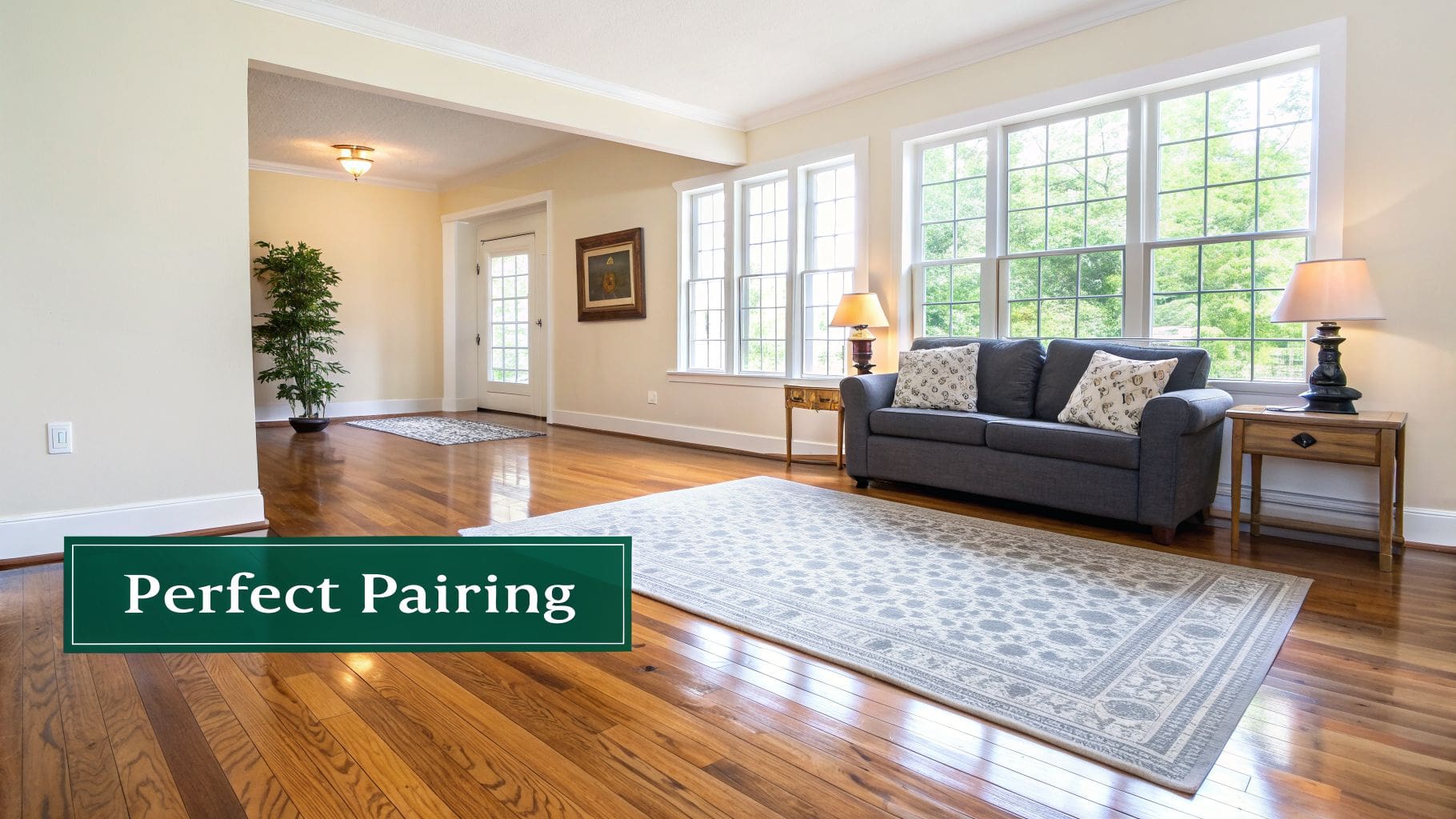
Here at Buff & Coat, one of the first questions we get from clients is, "Will an area rug damage my beautiful hardwood floors?" The short answer? Not if you do it right. A well-chosen rug and—this is key—the right rug pad actually work together to shield your floor's finish.
This isn't just about design; it's a practical move to protect your home's value. Just look at the global hardwood flooring market, which is projected to grow to nearly $78 billion by 2030. This trend, which you can read more about in this full market report, shows just how much people value premium, long-lasting floors—and how critical it is to protect that investment.
Why Combining Rugs and Hardwood Works
So, why is this combination such a win for homeowners in Richmond, VA? It comes down to a few major advantages.
- Protection in High-Traffic Zones: Think about your hallways, living rooms, and entryways. An area rug takes the brunt of daily foot traffic, preventing premature scuffs and scratches from dulling your floor’s finish.
- Defining Living Spaces: In today's open-concept homes, like many you'll find in Chesterfield or Short Pump, rugs are fantastic for creating visual "rooms." They can anchor a seating area or mark off a dining space without putting up a single wall.
- Comfort and Sound Dampening: Rugs simply make a room feel cozier. They add warmth underfoot and absorb sound, turning a big, echoey space into a quiet, comfortable retreat.
In our 15+ years of refinishing floors across the Richmond area, we’ve seen firsthand how a quality rug and pad can dramatically extend the life of a floor's finish. It's the single best thing you can do to protect your investment between professional services.
This guide will walk you through exactly how to enjoy the elegance of wood and the personality of a great rug, making sure they coexist beautifully for years to come.
Why the Right Rug Pad Is a Non-Negotiable Investment
If there is one thing we want Richmond homeowners to take away from this guide, it’s this: the rug pad is often more important than the rug itself for protecting your hardwood floors. We’ve seen firsthand how the wrong pad can permanently ruin a beautiful finish.
Over our 15 years of refinishing floors in the Richmond, VA area, we’ve been called to countless homes to fix damage caused by a single, seemingly harmless choice—a cheap rug pad.
The wrong pad, especially one made from synthetic rubber or plastic, can trap moisture. With Richmond’s notorious humidity, this creates a perfect storm for discoloration and finish failure. Even worse, the chemicals and plasticizers in these pads can have a direct chemical reaction with your floor’s polyurethane finish, leaving behind a sticky, waffle-patterned mess that you simply can't clean off.
This kind of damage often requires professional intervention, like a full buff and coat service, to fix correctly.
What to Look For in a Hardwood-Safe Rug Pad
The key is choosing a material that breathes and won't chemically interact with your floor’s finish. Here are the two best options we recommend for protecting your investment:
- 100% Felt: This is an excellent, breathable choice. It provides a dense cushion, allows air to circulate, and contains no adhesives or chemicals that could harm your floor.
- Felt + Natural Rubber Combination: This hybrid offers the best of both worlds. The felt cushions the floor, while a thin layer of genuine, natural rubber provides non-slip grip without sticking to or staining the finish.
Expert Tip: When you're shopping, read the label carefully. Look for phrases like "100% natural rubber," "safe for all floors," or "100% felt." If the packaging mentions PVC, synthetic latex, or unspecified "rubber," it's best to walk away.
Rug Pad Material Comparison for Hardwood Floors
Choosing the right material is absolutely critical. This table breaks down the common options to help you make a safe choice for your hardwood floors and area rugs.
| Pad Material | Hardwood Safety | Why It Works (or Doesn't) | Best For |
|---|---|---|---|
| 100% Felt | Excellent | Breathes naturally, provides thick cushioning, and contains no harmful chemicals. | Large area rugs in living or dining rooms that don't need significant grip. |
| Natural Rubber + Felt | Excellent | Combines breathable felt with the non-slip properties of safe, natural rubber. | High-traffic areas like hallways and entryways where slipping is a concern. |
| Synthetic Rubber/Latex | Poor | Contains plasticizers that can chemically react with and permanently stain polyurethane finishes. | Not recommended for hardwood floors. Use on tile or laminate instead. |
| PVC (Plastic) | Dangerous | Traps moisture, prevents airflow, and can adhere to the floor, causing severe discoloration. | Never use on hardwood floors. This is the most common cause of rug pad damage we see. |
Investing an extra $20-$50 in a quality pad can easily save you from a costly hardwood floor restoration down the road. For more guidance, our guide on the best types of carpet for hardwood floors offers additional insights on floor-safe materials.
Mastering Rug Sizing and Placement in Your Home
Getting the rug size right is one of those details that can absolutely make or break a room. We see it all the time—an undersized rug can make a space feel awkward and disconnected, while one that's too big swallows it whole, hiding the beautiful hardwood you paid for.
But don't worry, this is one of the most common challenges homeowners face, and a few simple guidelines are all you need. Proper rug placement is about more than just looks; it carves out functional zones, makes the room flow better, and even prevents tripping hazards.
Think of your area rug as the anchor for your furniture. Its job is to frame your beautiful hardwood floors, not hide them.
The Basic Rules of Rug Sizing
The single biggest mistake we see? Choosing a rug that’s way too small. It's a classic "postage stamp" problem—a tiny rug floating by itself in a big room. It might seem like you're showing off more of the floor, but it actually makes the space feel smaller and less pulled together.
For living rooms, the golden rule is to get a rug big enough for at least the front legs of your sofa and any accent chairs to rest comfortably on it. This simple trick visually ties the furniture together into a cohesive, inviting group. In a typical Richmond-area home, an 8’x10’ rug is a great starting point, but a 9’x12’ is often even better if you have the space.
The goal is to create a unified look. A rug should be proportioned to your furniture grouping, not just floating alone in the middle of the floor. This single change can make a room feel more intentional and professionally designed.
In the dining room, the logic is all about function. Your rug must be large enough so that when you pull the chairs out to sit down, all four legs stay on the rug. There’s nothing more annoying than a chair leg snagging the edge of the rug every time someone tries to get up. Once you've got that down, a more detailed guide on dining room rugs size under table can help you nail the specifics for your space.
And don't forget what goes under the rug. Protecting your hardwood is just as critical as getting the size right.
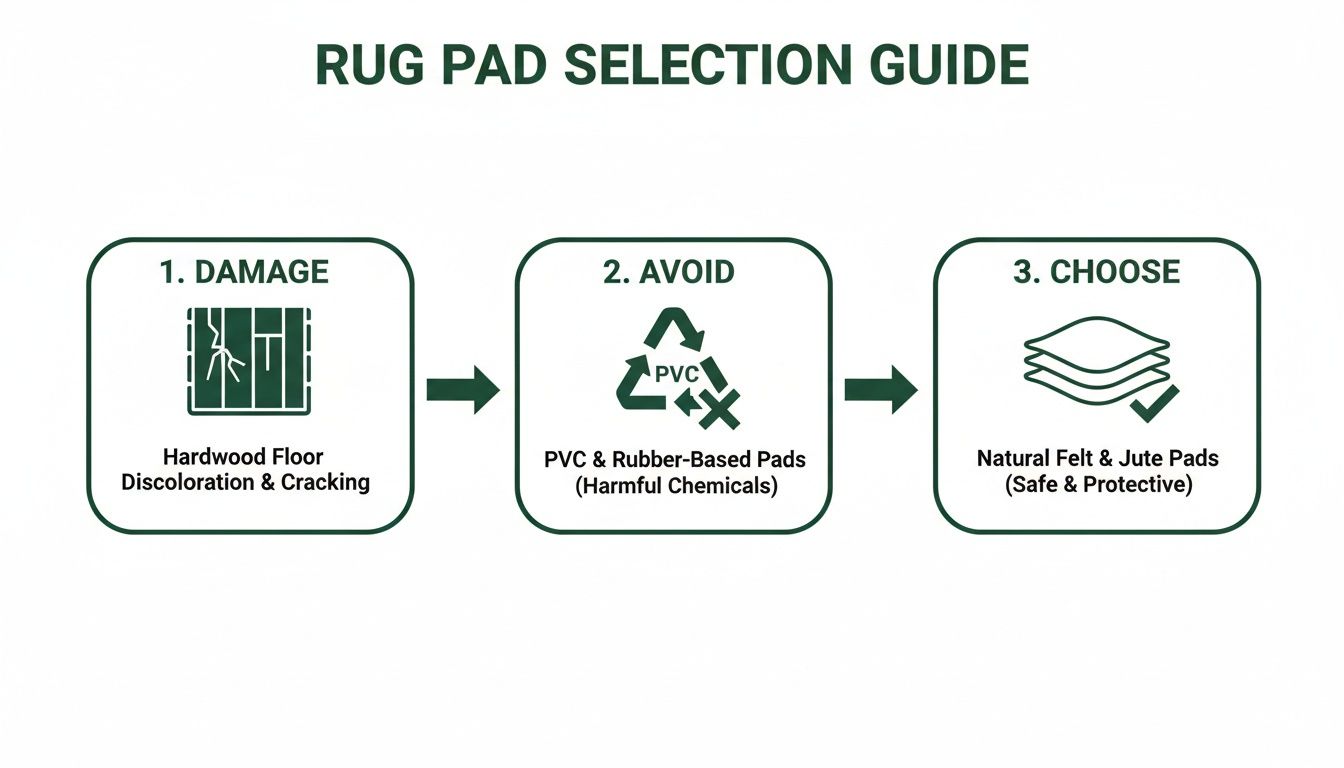
The main thing to remember here is that the material matters. Avoiding chemical-laden pads made of PVC or synthetic rubber is a must to prevent permanent damage to your floor's finish.
Sizing for Different Room Layouts
Every room has its own quirks, so you'll need to adapt these rules to your specific layout. Here’s how we approach sizing in some common local home styles.
- Open-Concept Spaces: For the many modern homes in Chesterfield and Henrico, a large area rug is your best friend. It’s essential for defining the living area and creating a visual separation from the nearby kitchen or dining space.
- Historic Fan District Homes: Those charming, narrow living rooms in the Fan can often get away with a slightly smaller rug, like a 6’x9’. This works especially well if the sofa is placed against a wall. Just make sure the rug is still wide enough to extend about a foot beyond the sofa on each side.
- Bedrooms: You want a soft place for your feet to land in the morning. Your rug should extend at least 18-24 inches from the sides and foot of your bed to create a comfortable, luxurious border.
No matter the room, try to leave about 18 inches of bare hardwood exposed between the edge of the rug and the walls. This creates a beautiful, deliberate frame that makes the room feel balanced and spacious. Of course, kitchens are a different beast with their own set of rules, which you can check out in our guide to kitchen rugs on hardwood.
Ongoing Care to Prevent Rug-Related Floor Damage
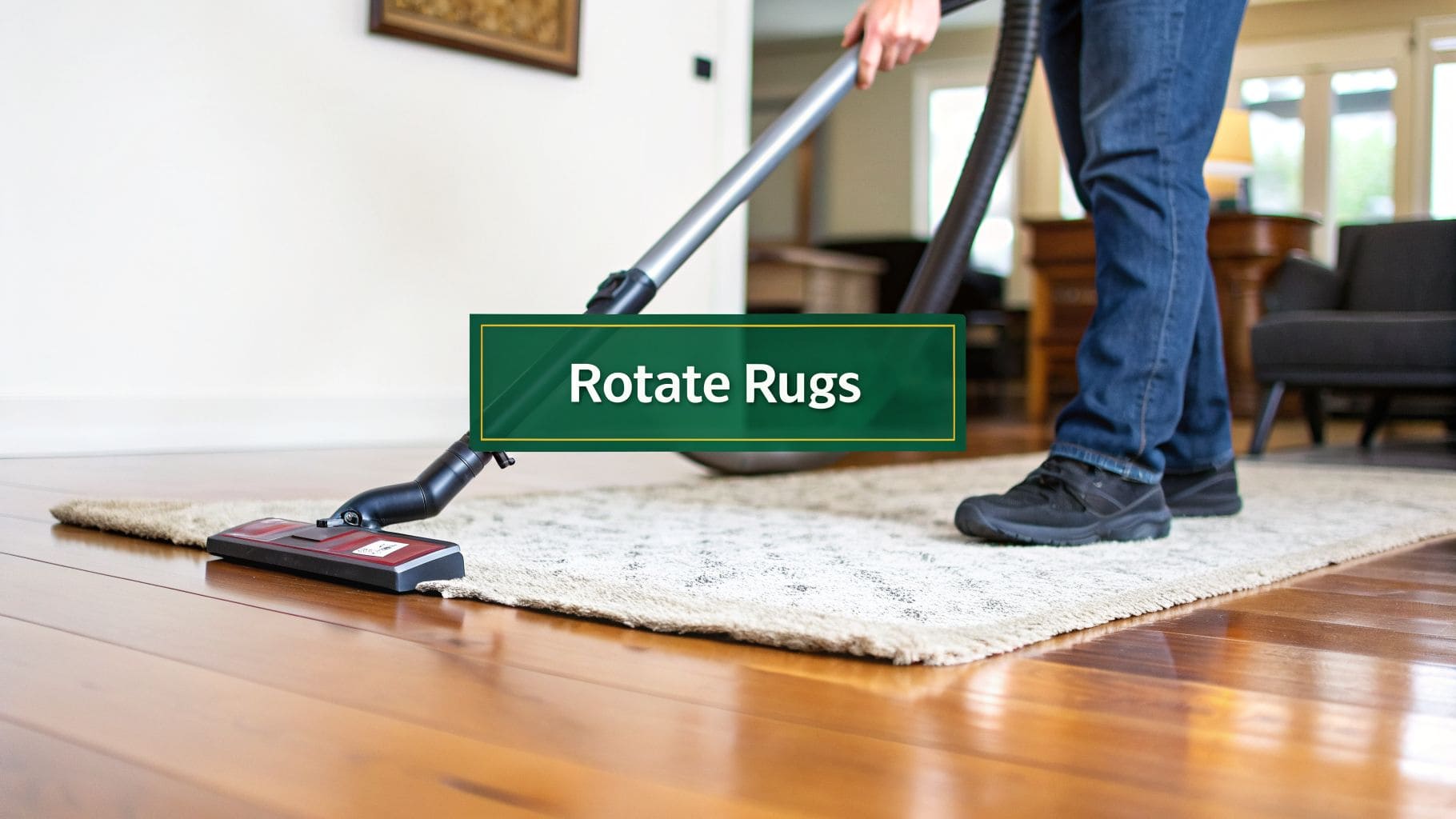
So, you’ve picked the perfect rug and the right pad. The hard part’s over, right? Almost. A little routine maintenance goes a long way in making sure your beautiful floors stay that way. While hardwood floors and area rugs are a classic combination, they need some simple, ongoing attention to prevent unintended damage over time.
In our floor restoration work, the number one culprit we see is trapped grit. It’s unavoidable—tiny particles of dust, dirt, and sand will always find their way under the edges of your rug. Every time someone walks across it, that grit acts just like sandpaper, grinding away at your floor's finish and creating dull spots and micro-scratches.
Create a Simple Cleaning Schedule
Your best defense is a consistent cleaning routine. This doesn't have to be a major chore, but consistency is what makes it effective.
- Weekly: Give the area rug a good vacuuming. This removes surface dirt before it has a chance to work its way underneath.
- Monthly: Take a minute to lift the corners and edges of your rugs and vacuum the hardwood beneath. This simple step clears out the abrasive grit that loves to build up right along the rug line.
- A few times a year: At least twice a year, it’s a great idea to roll the rug up completely and clean the entire floor underneath. This is also the perfect time to rotate the rug to help it wear more evenly.
This kind of proactive cleaning can really postpone the need for a professional buff and coat service by protecting the top layer of your floor’s finish.
Combat Uneven Fading and Discoloration
Another major issue, especially in Richmond homes blessed with lots of natural light, is uneven fading from UV exposure. Hardwood floors naturally change color when exposed to sunlight, and if a rug sits in the same exact spot for years, you’ll end up with a very obvious outline—what we call "tan lines" on your floor.
The best way to prevent this is to periodically move your rug. Even shifting it six inches every six months can make a huge difference in allowing the floor to age evenly.
Moving the rug also gives the floor underneath a chance to breathe, which is especially important for preventing moisture buildup during those humid Virginia summers. And while rugs are a big part of floor protection, don't forget about other potential damage sources. For instance, learning how to protect your floors from your furniture is another crucial step in keeping your hardwood looking pristine.
If you're noticing scratches or dullness despite your best efforts, it might be time for a professional opinion.
If you’re unsure whether your hardwood floors need a refresh, Buff & Coat can take a look and give you honest recommendations. Call 804-392-1114 for a free assessment.
Preparing for a Professional Recoating Service
So, you’ve decided it’s time to bring in the pros to refresh your floors. Great choice! A little bit of prep work on your end makes a huge difference and is the first step toward getting that flawless, uniform finish you’re looking for.
Think of it as giving us a blank canvas to work with. Before our team arrives, it’s absolutely essential that all furniture, plants, and other items are moved out of the room. Most importantly, all area rugs must be cleared from the hardwood floors. This is also the perfect opportunity to get those rugs deep cleaned while we work on your floors.
What to Expect on Service Day
Once the room is empty, our team takes over to make the process as clean and smooth as possible. A lot of Richmond homeowners ask us about dust, but you can relax. Our advanced dustless sanding system is designed to capture the vast majority of airborne particles right at the source. It makes the hardwood floor restoration process much cleaner and less disruptive than you might remember from old-school methods.
A completely empty room is non-negotiable for a quality finish. It allows our technicians to move efficiently and apply the coating evenly across the entire surface, from wall to wall, without any stop-and-start marks.
Our wood floor recoating process is built for efficiency and to minimize the disruption to your daily life. We'll screen the floor to gently abrade the old finish, clean the surface meticulously, and then apply a tough new coat of polyurethane.
Your Pre-Service Checklist
To make sure your floor refinishing in Richmond, VA, goes off without a hitch, we just ask that you run through these simple steps before we get there:
- Remove All Furniture: This means everything—sofas, tables, chairs, bookshelves, and entertainment centers.
- Clear All Floor Coverings: Roll up and move every single area rug and runner from the rooms we'll be servicing.
- Empty the Closets: If we are recoating the floor inside a closet, it needs to be completely empty, too.
- Secure Your Pets: For their safety and to ensure a perfect finish, please keep your pets contained in another part of the house.
- Plan for Foot Traffic: The new finish needs some time to cure. You'll need to plan on avoiding the floors for the time we specify, which is typically a few hours for light traffic.
Tackling these steps helps our team work efficiently and deliver the beautiful, durable results you expect. For an even more detailed walkthrough, feel free to check out our full guide on how to prepare your house for hardwood floor refinishing.
Why Richmond Homeowners Choose Buff & Coat
For over 15 years, Buff & Coat has been serving homeowners across Richmond, Midlothian, and Chesterfield. We’re a local, owner-operated business built on honest advice, quality workmanship, and a commitment to our community. We believe in doing the job right and making the process as straightforward and stress-free as possible for you.
- 15+ Years of Local Experience: We understand the unique needs of homes in the Richmond area.
- Dustless Sanding Systems: Our advanced equipment keeps your home clean during the refinishing process.
- Local, Owner-Operated Business: You work directly with a team that cares about your satisfaction.
- High-Quality, Low-Odor Finishes: We use durable products that are safe for your family and built to last.
- Clear Pricing & Honest Advice: You’ll get a fair, detailed quote with no surprises or sales pressure.
- 5-Star Customer Service: We pride ourselves on clear communication and respecting your home.
Your Top Questions About Rugs on Hardwood Floors
As hardwood experts here in the Richmond area, we get a lot of questions from homeowners. One of the most common topics? How to correctly use area rugs without accidentally damaging those beautiful wood floors.
Let's dive into the questions we hear most often and give you the straightforward answers you need.
What's the Safest Kind of Rug for Hardwood?
While rugs made from natural fibers like wool, cotton, or jute are great choices, the truth is that the rug material itself isn't the most important factor. The real key to protecting your floors lies in what's underneath the rug.
You should always steer clear of rugs that have a built-in synthetic rubber or shiny plastic backing. These materials are notorious for trapping moisture and can even have a chemical reaction with your floor's polyurethane finish, leaving behind a permanent stain or discoloration.
No matter what kind of rug you choose, the non-negotiable rule is to pair it with a high-quality rug pad. The safest options are 100% felt or a combination pad made from felt and natural rubber.
How Often Should I Clean Under My Area Rugs?
This is a great question, and keeping up with it is one of the best ways to prevent long-term damage.
For rugs in high-traffic spots like your living room or main hallway, try to lift the corners and vacuum underneath every one to two months. It’s a quick task, but it removes the trapped grit and dirt that can act like sandpaper on your finish every time someone walks by.
At least twice a year, it’s smart to remove the rug completely. This gives you a chance to thoroughly clean the rug itself and give the hardwood floor beneath it a proper cleaning.
Help! I Lifted My Rug and the Floor Is Discolored. What Do I Do?
First, don't panic. Take a closer look to figure out what's going on. If the floor under the rug is noticeably lighter than the surrounding wood, that's almost always from sunlight. The exposed parts of your floor have naturally darkened over time due to UV exposure, while the covered area stayed protected. In most cases, this will even out on its own once the entire floor gets consistent light.
However, if the area is sticky, stained, or the finish is clearly damaged, the culprit was likely a cheap or improper rug pad.
For these more serious issues, a professional solution is your best bet. A simple wood floor recoating can sometimes be enough to fix minor surface problems. But if the stain or damage has penetrated the wood, a full hardwood floor refinishing service will be needed to sand down past the damaged layer and apply a fresh, even finish.
Ready to restore your hardwood floors? Buff & Coat makes the process fast, clean, and stress-free. Call 804-392-1114 or request your free estimate online.