For Richmond homeowners, installing new hardwood flooring isn’t just an upgrade—it’s a long-term investment in your home’s character, warmth, and value. Whether you’re considering the timeless appeal of solid hardwood for a historic Fan District home or the practical versatility of engineered planks for a modern build in Short Pump, the choice comes down to your home’s unique needs. This guide cuts through the confusion to provide clear, practical advice, helping you select a floor you’ll love for decades.
Choosing the Right Hardwood for Your Richmond Home

Choosing new hardwood flooring is one of the most important decisions you can make for your home’s interior. It’s about more than just aesthetics; it’s about finding a material that can handle daily family life and withstand Virginia’s humid summers and cool winters. The right hardwood floor adds a sense of warmth and personality that nothing else can, all while boosting your home’s value.
But with so many options, it’s easy to feel overwhelmed. You’ll hear terms like “solid,” “engineered,” “Janka hardness,” and a dozen different wood species, each with its own advantages. Our goal is to break it all down so you can make a confident choice that fits your family’s lifestyle, your home’s architecture, and your budget.
Key Factors to Consider
Before falling in love with a specific wood grain or color, it helps to think through a few practical details.
- Location in Your Home: Is the floor for a high-traffic area like a kitchen or entryway? Or is it for a space where moisture could be a concern, such as a finished basement or bathroom?
- Your Lifestyle: Do you have pets, active children, or entertain guests often? If so, durability should be a top priority.
- Home Style: The flooring should complement the existing character of your home, whether it’s a classic Colonial in Chesterfield or a contemporary new build in Glen Allen. A well-chosen floor feels like it has always belonged.
Getting familiar with the best engineered hardwood flooring brands can also give you a head start on understanding quality and durability. Once you have a clear picture of your needs, finding the perfect hardwood becomes much simpler.
Solid vs. Engineered Wood: What’s the Difference?
When you’re ready to invest in hardwood flooring, the first big decision is choosing between solid and engineered wood. While they can look identical on the surface, their construction is fundamentally different. The right choice depends on your home’s environment, the specific room, and your long-term goals.
Solid hardwood is the classic choice—a single, solid piece of wood milled directly from a harvested tree. It’s traditional, authentic, and built to last. This construction allows it to be sanded and refinished multiple times over its lifespan, making it an excellent investment for most areas of a home.
Engineered hardwood, on the other hand, is constructed in layers. It features a top layer of real hardwood—the part you see and walk on—bonded to a core of multiple layers of plywood or high-density fiberboard, stacked in alternating directions. This clever cross-layered structure gives it unique performance advantages.
Understanding Core Construction
The biggest difference comes down to how each type handles moisture and temperature changes. As a natural product, solid wood expands and contracts with fluctuations in humidity. This is normal, but it means it’s not the best choice for damp areas like basements or for installation directly over a concrete slab.
Engineered wood’s layered core is its secret weapon, giving it incredible dimensional stability. Those crisscrossing layers counteract wood’s natural tendency to swell or shrink, making it a perfect fit for Richmond’s humid climate.
This stability allows engineered flooring to be installed almost anywhere, including below-grade spaces where solid wood would be at risk of warping.
Refinishing Potential and Lifespan
One of the most valued features of solid hardwood is its longevity. Because the entire plank is solid wood, it can typically be sanded down and refinished four to six times. This means you can erase decades of wear or simply update the stain to match new decor. With proper care, a solid hardwood floor can easily last a century or more.
Engineered floors can also be refinished, but the number of times depends on the thickness of the top hardwood layer (the “veneer”).
- High-quality engineered planks with a thick veneer (3mm or more) can usually be fully sanded once or twice.
- Planks with thinner veneers may only be suitable for a light screening and recoating, what we call a buff and coat service, instead of a full sanding.
While engineered wood has grown in popularity for its versatility, the demand for classic solid wood remains strong. Many homeowners gravitate toward its authentic feel and unmatched lifespan. You can learn more about these preferences in reports on global wood flooring market trends.
Solid vs. Engineered Hardwood at a Glance
To make things easier, here’s a quick comparison to help you decide which option might be the better fit for your Richmond home.
| Feature | Solid Hardwood | Engineered Hardwood |
|---|---|---|
| Construction | A single, solid piece of wood. | Real wood veneer over a multi-layer plywood core. |
| Installation Areas | On or above ground level; not for basements. | Any level of the home, including basements. |
| Refinishing | Can be sanded 4-6 times. | Can be sanded 1-2 times (veneer dependent). |
| Humidity Stability | Prone to expanding and contracting. | Highly stable; resists warping from humidity. |
| Lifespan | 100+ years with proper care. | 30-50+ years, depending on quality. |
Both are fantastic choices that add value and beauty to your home. The best option really depends on where the flooring is going and how you envision it serving your home in the future.
If you’re unsure whether your home needs solid or engineered hardwood, Buff & Coat can take a look and give you honest recommendations. Call 804-392-1114 or request a free estimate today.
The Hardwood Floor Installation Process From Start to Finish
Choosing your perfect hardwood is exciting, but a flawless installation is what truly brings the vision to life. A professional process ensures your floors not only look stunning but also perform correctly for decades. Understanding what to expect makes the entire journey smooth and stress-free.
The process begins long before the first plank is laid. A critical, often overlooked step is acclimation. We bring the new wood into your home and let it sit for several days. This allows the planks to adjust to the specific temperature and humidity levels inside your Richmond-area home, preventing gapping or buckling later on.
Preparing for a Flawless Installation
Once the wood is acclimated, our focus shifts to the subfloor. A subfloor that isn’t clean, flat, and dry is the primary cause of future problems, leading to squeaks, shifting planks, and an uneven feel.
At Buff & Coat, we take subfloor preparation very seriously. We meticulously inspect and prepare the surface, ensuring it meets the strict standards required for a successful floor installation in Richmond. Getting this foundation right isn’t just a step—it’s essential for a lasting result.
This infographic breaks down the key differences between solid and engineered hardwood, which directly influences how we install it.
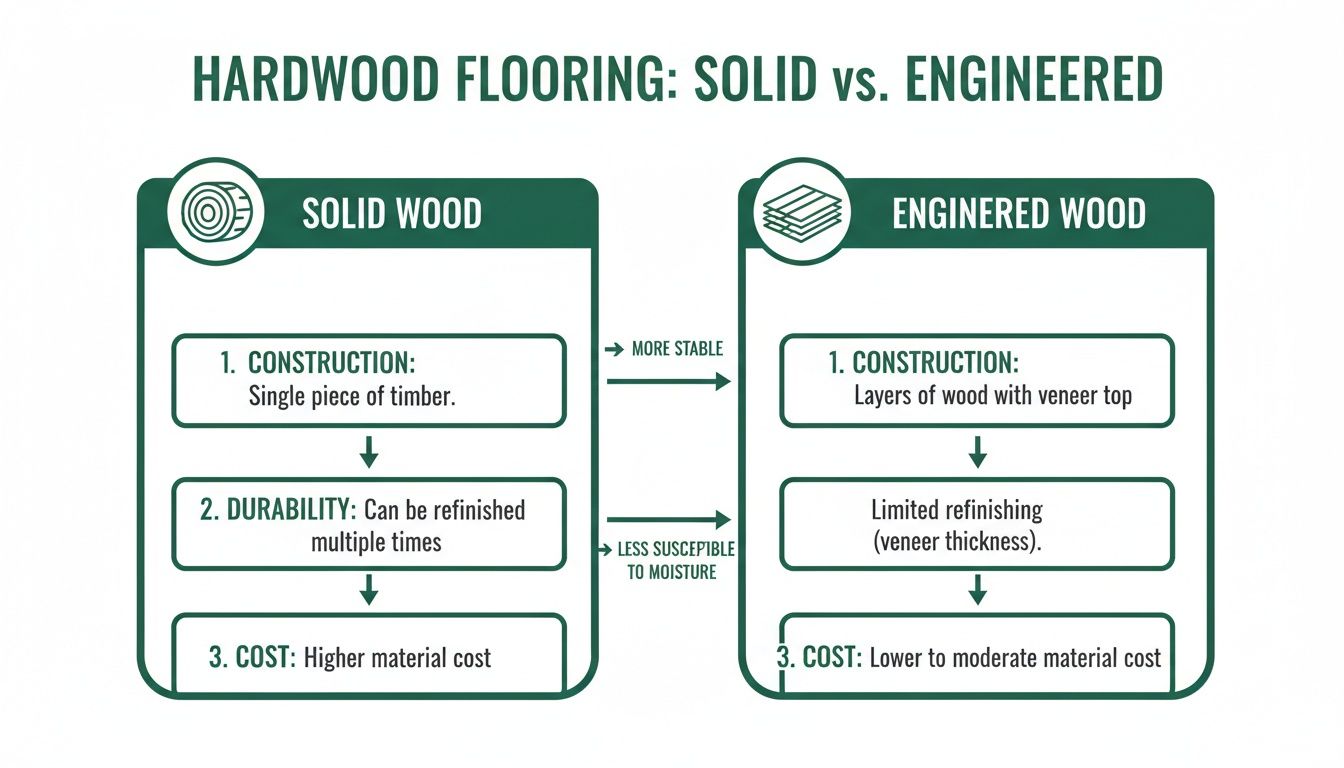
You can see how the layered core of engineered wood offers more stability against moisture, while classic solid wood provides unmatched refinishing potential for a lifetime of beauty.
The Main Installation Methods
With a prepared subfloor, we’re ready to begin the installation. The method we use depends on your chosen flooring and the type of subfloor in your home.
- Nail-Down/Staple-Down: This traditional method is used almost exclusively for solid hardwood. Planks are fastened directly to a wooden subfloor with specialized flooring nails or staples for a secure feel.
- Glue-Down: This technique involves applying a powerful adhesive directly to the subfloor. It’s a common choice for engineered wood, especially over concrete slab foundations—which we see in many Henrico and Chesterfield homes.
- Floating Installation: In this method, the planks are clicked or glued together to form a single surface that “floats” over the subfloor. It’s almost exclusively used for engineered flooring and is a great option for basements or other areas where subfloor adhesion is challenging.
Our team has over 15 years of experience matching the right installation method to the right home, ensuring a secure, long-lasting fit every time. We also use advanced dust containment systems to keep your home as clean as possible. You can dive deeper into the specifics in our complete guide to hardwood floor installation.
Timeline and What to Expect On-Site
A typical professional hardwood floor installation takes 2 to 5 days for an average-sized project. This timeline covers everything from subfloor prep to installation and final finishing touches. We will communicate the full schedule with you beforehand so you know exactly what to expect.
During the installation, our team works carefully to lay each board with precision. We treat your home with respect, maintain a clean work environment, and leave you with a beautifully finished product that adds significant value and comfort to your space.
Richmond homeowners: get a fast quote for your flooring project. Call 804-392-1114 or request a free estimate today.
Caring for Your Hardwood Floors to Ensure They Last
Your new hardwood floors are installed—now the goal is to keep them looking great. Proper care isn’t about difficult labor; it’s about simple, consistent routines that protect your investment for years to come.
Think of tiny bits of grit and dust as fine-grit sandpaper. Every time you walk across the floor, they create microscopic scratches that slowly dull the finish. The key is to stop these small issues before they become noticeable problems.
Simple Maintenance Routines
The secret to long-lasting hardwood is building good habits. A simple schedule makes floor care feel like a normal part of keeping your home tidy.
- Daily Sweep: Use a soft-bristle broom or a dust mop for a quick once-over. This is the single most effective way to remove daily dust, pet hair, and dirt that can wear down the finish.
- Weekly Vacuum: Once a week, use your vacuum’s soft brush attachment to pick up what the broom missed. Be sure to turn the beater bar off, as its stiff bristles can cause scratches. This is especially important for floors with beveled edges where debris can collect.
- As-Needed Cleaning: For spills or smudges, use a microfiber cloth lightly dampened with a pH-neutral hardwood floor cleaner. Never use a soaking wet mop—excess water is wood’s enemy and can cause serious damage to both the planks and the finish.
Choosing the Right Cleaning Products
The cleaning aisle can be overwhelming, but for hardwood flooring, the rule is simple: gentle is always better. Harsh chemicals can strip the protective polyurethane finish, leaving the wood vulnerable.
What to use:
- pH-Neutral Cleaners: Stick with products specifically formulated for hardwood floors. They clean effectively without leaving a hazy film or damaging the finish.
- Microfiber Tools: Microfiber mops and cloths are ideal. They trap dirt instead of just pushing it around, and they aren’t abrasive.
What to avoid:
- Vinegar and Water: While a popular DIY solution, vinegar is acidic. Over time, it will slowly degrade your floor’s finish, making it dull.
- Steam Mops: Forcing high-heat steam into your floors is a recipe for disaster. The moisture can get between boards, leading to warping, cupping, and permanent damage.
- Oil Soaps or Wax Polishes: These products coat the floor rather than cleaning it. They build up a cloudy, sticky residue that attracts dirt and can interfere with future refinishing.
Expert Tip: Don’t spray cleaner directly on the floor. Instead, lightly mist your microfiber mop head. This prevents too much liquid from pooling on the surface and gives you better control.
Proactive Protection Strategies
Beyond cleaning, a few smart preventative steps will make a huge difference.
First, place high-quality doormats at every entrance. A good mat traps the majority of dirt, salt, and water before it ever touches your wood floors.
Next, apply felt furniture pads to the bottom of all furniture—chairs, tables, sofas, and more. This is an inexpensive, easy way to prevent the countless scratches and gouges that occur from daily life. Check them every few months and replace them as they wear down.
Finally, try to keep your home’s humidity in a stable range, ideally between 35% and 55%. Virginia’s humid summers and dry winters cause wood to expand and contract. Using a humidifier in winter and a dehumidifier in summer will help minimize this movement and prevent gaps from forming between boards.
If you have questions about caring for your specific floors, Buff & Coat is here to help. We offer honest advice to Richmond homeowners on everything from cleaning to hardwood floor scratch repair. Call us at 804-392-1114.
Reviving Worn Floors: Recoating vs. Refinishing
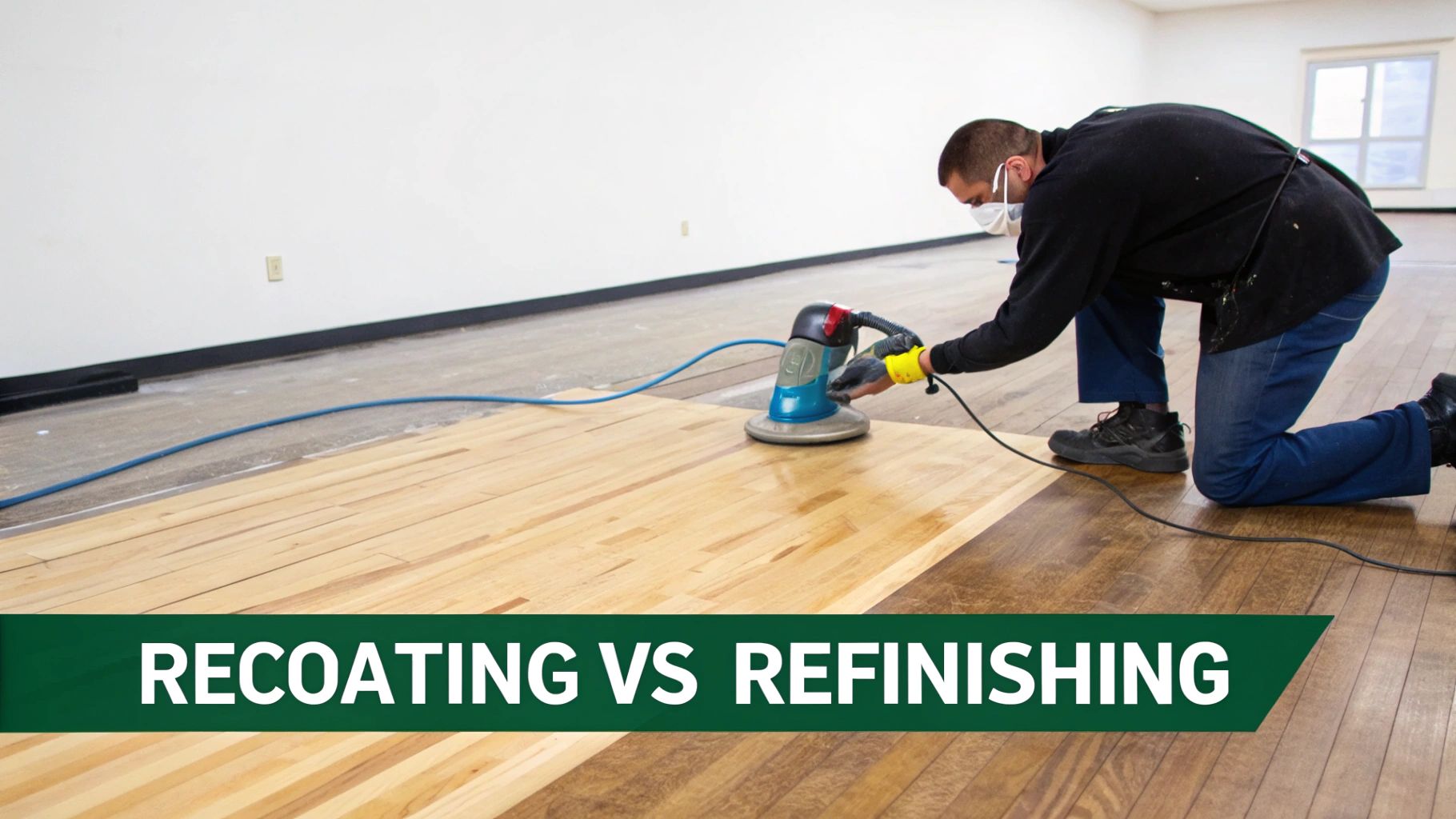
Even the most durable hardwood flooring will eventually show signs of wear. When your floors start looking tired, Richmond-area homeowners have two excellent options to bring them back to life: a buff and coat service or a full sand-and-refinish.
Understanding which is right for your floors can save time and money. It all comes down to the floor’s condition. One is a surface-level refresh for minor wear, while the other is a complete restoration for floors with deeper damage.
When to Choose a Buff and Coat Service
A buff and coat service, also known as wood floor recoating, is the perfect solution for floors that are structurally sound but have lost their cosmetic appeal. Think of it as a deep cleaning followed by a fresh, protective topcoat. It’s a fast and effective way to restore the original luster.
This is the best option if your floors show:
- Superficial Scratches: Light scuffs that are only in the top polyurethane layer and haven’t penetrated to the wood stain.
- Dull or Worn Finish: The floor has lost its sheen in high-traffic areas, but the color is still even. It just looks tired, not damaged.
- No Deep Gouges or Stains: The issues are all on the surface. There are no gray or black water spots, and no deep cuts that have reached the bare wood.
The buff and coat process is straightforward and minimally invasive. We use a professional buffer to lightly abrade (or “screen”) the top layer of the finish. This cleans the surface and creates the perfect texture for the new polyurethane to adhere. We then apply a fresh, durable coat that instantly revives the floor’s appearance and adds a tough new layer of protection.
The best part? A buff and coat is significantly faster and more affordable than a full refinish. For many homeowners in the Richmond area, we can complete the entire job in a single day.
When a Full Refinish Is Necessary
Sometimes, the damage goes deeper than the surface. If the wear on your hardwood has gone past the finish, a full hardwood floor refinishing is the only way to truly restore it. This is a complete reset for your floors. We sand the wood down to its raw, natural state and build it back up from scratch.
You’ll know you need a full sand-and-refinish if you see:
- Deep Scratches and Gouges: Any scratch that has cut through the finish and into the wood itself cannot be fixed with a recoat.
- Gray or Black Water Stains: This is a sign that moisture has penetrated the wood, causing oxidation. The only way to remove it is to sand away the discolored layer.
- Widespread Bare Patches: In the busiest parts of your home, the finish may have worn away completely, leaving the raw wood exposed.
- You Want to Change the Color: If you’re ready for a new look—like moving from honey oak to dark walnut—sanding is the only way to strip the old color and apply a new stain.
During a refinish, we use powerful dustless sanding equipment to remove all of the old finish, stain, and surface damage. This reveals a fresh, flawless layer of raw wood. At that point, your floor is a blank canvas, ready for any new stain color you choose, followed by multiple coats of commercial-grade polyurethane for maximum protection. Ensuring that finish is applied smoothly is key; resources like these 8 Essential Paint Spraying Tips For A Flawless Finish can offer great insights into achieving a perfect layer.
Choosing Your Floor Renewal Method
Still unsure? This table breaks down the key differences to help you decide.
| Floor Condition | Best Solution | Process Overview | Typical Timeline |
|---|---|---|---|
| Light surface scratches, dull finish, no deep damage | Buff and Coat | Lightly abrade (screen) the top finish layer and apply a new coat of polyurethane. | 1 Day |
| Deep scratches, water stains, bare wood, color change | Full Refinish | Sand the floor down to raw wood, re-stain (optional), and apply multiple new coats. | 3-5 Days |
The right choice depends entirely on the current state of your hardwood. A buff and coat is a fantastic, cost-effective maintenance step, while a full refinish is a true restoration project that can make old floors look brand new.
Not sure which service your floors need? Buff & Coat can give you an honest, expert opinion. Call us at 804-392-1114 for a free estimate in the Richmond, VA area.
Why Richmond Homeowners Choose Buff & Coat
Choosing a professional for your hardwood flooring is as important as selecting the wood itself. While national chains may seem convenient, a local, owner-operated company provides a level of accountability, expertise, and personalized service you just can’t find anywhere else. When you partner with a local expert, you’re working with a neighbor who understands the unique character and challenges of Richmond-area homes.
- 15+ Years of Local Experience: We’ve been proudly serving homeowners in Richmond, Midlothian, Chesterfield, and Henrico for over a decade. We know the local home styles and what it takes to deliver lasting results.
- Advanced Dustless Sanding Systems: Our powerful dust-containment equipment captures the vast majority of airborne particles during sanding, keeping your home’s air clean and minimizing cleanup.
- Local, Owner-Operated Business: The expert you meet for your estimate is the same person overseeing your project. This means clear communication and direct accountability from start to finish.
- High-Quality, Low-Odor Finishes: We use only top-tier, durable polyurethane finishes that are low in VOCs, ensuring a safer indoor environment for your family and pets.
- Clear Pricing and Honest Advice: We provide detailed, transparent quotes with no hidden fees or sales pressure. Our goal is to give you the information you need to make the best decision for your home.
- 5-Star Customer Service: We are a small business built on trust and quality workmanship. We stand behind our work and are committed to your complete satisfaction.
Frequently Asked Questions About Hardwood Floors
We get a lot of questions from homeowners around Richmond, so we’ve gathered the most common ones to help you feel confident about your flooring project.
How Long Does Hardwood Floor Refinishing Take?
The timeline for hardwood floor refinishing depends on the scope of the project, but we can provide a reliable estimate.
A straightforward buff and coat service on a room in decent condition can often be completed in just one day.
A full sand-and-refinish project is more involved. A typical timeline breaks down like this:
- Day 1: Sanding the floors down to bare wood.
- Day 2: Applying the new stain (if desired) and the first protective coat of polyurethane.
- Day 3-4: Applying the remaining coats of finish, allowing for proper drying time between each layer.
In total, you should plan for the project to take about 3 to 5 days. After the final coat, the floor needs time to cure before furniture can be moved back. We provide clear instructions to ensure your newly finished floors last for years.
What Is the Cost of Hardwood Floor Refinishing in Richmond VA?
The refinishing cost varies because it’s tailored to your specific floors. The final price depends on the total square footage and the service your floors need.
A buff and coat service is the most budget-friendly option, ideal for floors with light surface wear. A full sand-and-refinish is a larger investment but delivers a complete transformation.
Other factors that can influence the cost include:
- The condition of the floors: If significant hardwood floor repair is needed for deep gouges or water damage, this will be included in the quote.
- Stain selection: Choosing a new stain color adds a step to the process.
- Type of finish: We use high-quality, durable finishes, including low-odor options, and the cost reflects that professional-grade quality.
At Buff & Coat, we provide free, no-pressure estimates. We’ll assess your floors in person and give you a detailed quote so you know exactly what to expect—just honest advice and fair pricing for homeowners in Richmond, VA.
Can Engineered Hardwood Be Refinished?
Yes, it absolutely can, but with one important condition: the thickness of the real wood top layer (the “wear layer”).
Think of the wear layer as the amount of sandable life your floor has. A thicker layer provides more wood to work with, allowing for a full sanding just like solid hardwood.
Expert Tip: As a general rule, an engineered floor with a wear layer of 3mm or more can usually be sanded and refinished at least once. If the veneer is thinner (less than 2mm), a full sanding isn’t possible, but a buff and coat service is often the perfect solution to restore its appearance.
During our free in-home consultation, we will measure your floor’s wear layer and give you a straight answer on whether engineered hardwood refinishing is the right choice.
Is the Dustless Sanding Process Truly Dust-Free?
While no sanding process is 100% dust-free, our modern dustless sanding technology gets remarkably close. It’s a world of difference from older methods that left a film of dust on everything in your home.
Here’s how it works: we connect powerful, high-efficiency vacuums directly to our sanding equipment. As the sander works, the vacuum captures the vast majority of wood dust at the source, before it can become airborne.
For Richmond homeowners, the benefits are significant:
- Cleaner Air Quality: This is crucial for families with allergies or asthma, as it keeps your indoor air healthier.
- Minimal Cleanup: You won’t be finding dust in cabinets and on shelves for weeks after we’re gone.
- A Better Finish: A dust-free environment is essential for a perfectly smooth application of stain and polyurethane. No stray particles means no imperfections in the final coat.
We are committed to making the hardwood floor restoration process as clean and undisruptive as possible, and our dustless system is key to that promise. As global trends shaping the hardwood market show, homeowners expect higher quality results, and that includes a clean, professional process.
Ready to restore your hardwood floors? Buff & Coat makes the process fast, clean, and stress-free.
Call 804-392-1114 or request your free estimate today.