

Home Blog Commercial Wood Floor Finish: Expert Selection Guide
Commercial Wood Floor Finish: Expert Selection Guide

Richmond homeowners and small business owners usually start looking into hardwood floor refinishing when the same spots keep failing first. The entry, hallway, kitchen path, or checkout area gets dull, scuffed, and tired-looking while the rest of the floor still looks fine. If that sounds familiar, a commercial wood floor finish may be the better solution, but only if you understand what it does, what it doesn't do, and how to maintain it.
Buff & Coat Hardwood Floor Refinishing is a Richmond-based floor refinishing and installation company with 15+ years of experience. We provide dustless sanding, buffing and coating, hardwood floor installations, LVP/LVT installs, and repair work across Richmond, Midlothian, Chesterfield, Henrico, Glen Allen, Short Pump, Mechanicsville, plus occasional jobs in Charlottesville, Fredericksburg, and Virginia Beach. For anyone researching floor refinishing Richmond VA, wood floor recoating, or a buff and coat service, the goal is simple: choose a finish system that fits your traffic, your maintenance habits, and how you want the floor to look in daily life.
Why Your High-Traffic Floors Need a Better Solution
A common Richmond scenario goes like this. The floor was refinished a few years ago, it looked great at first, and now the traffic lanes are telling a different story. You see grayish wear in front of the sink, scratches where chairs slide back, and a dull path from the front door through the main living area.
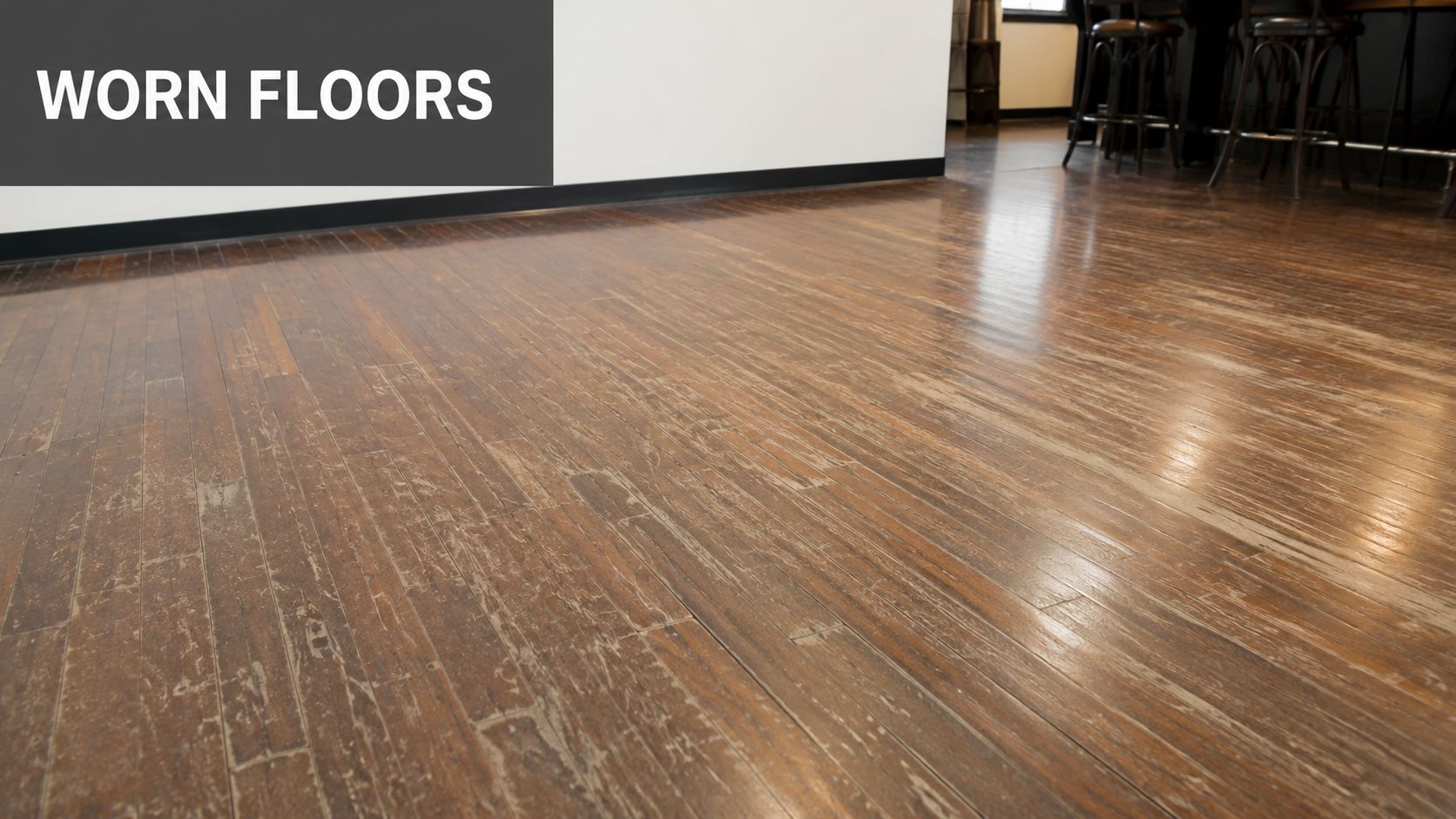
That same pattern shows up in light commercial spaces too. A small office waiting room, café seating area, boutique aisle, or studio entrance can wear out fast because the finish takes repeated abrasion in the same zones every day. The wood may still be sound. The finish is what's failing first.
Signs your finish is losing the battle
Look for a few practical clues:
- Dull traffic lanes that don't improve with cleaning
- Fine surface scratching that makes the floor look hazy
- Loss of sheen near doors, islands, and hall transitions
- Early discoloration or gray wear where finish protection is thinning
- Rough feel underfoot in paths that should still feel smooth
These issues matter because once the finish wears through, dirt and moisture can reach the wood more easily. At that point, a simple buff and coat service may no longer be enough. You may be looking at full hardwood floor restoration or deeper hardwood floor repair instead.
Practical rule: If the floor still has finish integrity and the damage is mostly in the topcoat, recoating is often the smart move. If bare wood is showing, your options narrow fast.
Why this gets expensive when ignored
High-traffic wear usually doesn't stay neatly contained. The damaged lanes widen. Cleaning gets harder. The floor starts looking older than the rest of the property, which is frustrating in a home and noticeable in a customer-facing business.
In Richmond VA, that's especially common in households with kids, pets, and active entryways. People assume they need a harder finish and that's the end of the conversation. The situation is more nuanced than that.
If you're unsure whether your floors need wood floor recoating or full hardwood floor refinishing, Buff & Coat can take a look and give you honest recommendations. Call 804-392-1114 or request a free estimate today.
What Is a Commercial Wood Floor Finish
A family comes in through the back door all day, the dog cuts the same corner by the island, and chairs drag in and out at dinner. In a small shop, the wear shows up even faster near the counter and entry. Those are the conditions a commercial wood floor finish is built for.
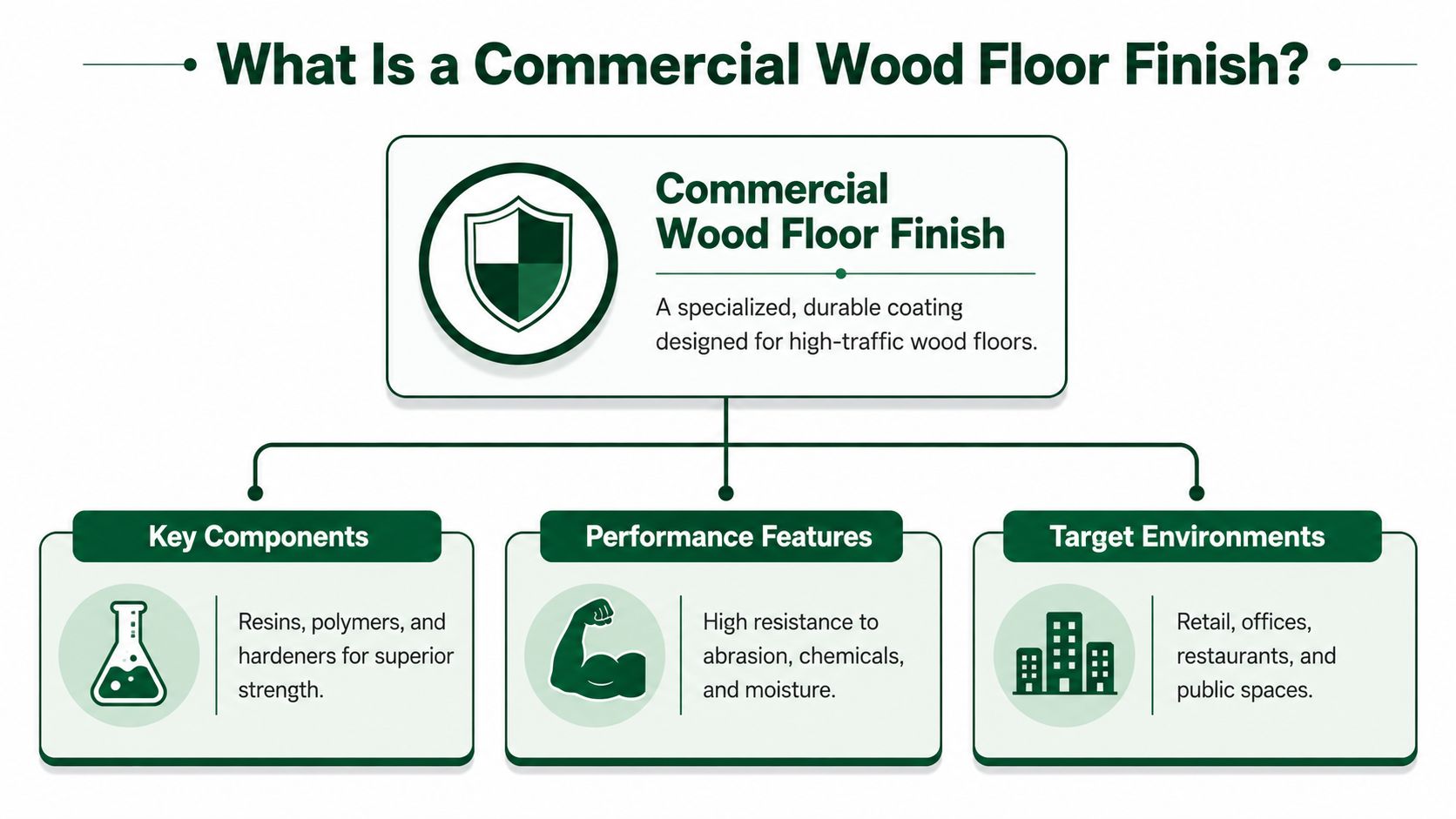
A commercial finish is a higher-build, higher-wear coating system made to hold up under repeated traffic better than a standard residential product. The key difference is not magic hardness. It is how the finish is formulated and layered so the protective film resists abrasion longer and gives you a wider maintenance window before the floor looks tired.
What makes it different
In the field, the difference usually comes down to three things. Film build, wear resistance, and maintenance planning.
A stronger commercial system can buy you more time in busy areas before traffic lanes, sheen loss, and surface scratching become obvious. That matters in kitchens, hallways, home offices, boutiques, and waiting rooms. It also matters for owners who want to recoat on schedule instead of sanding back to bare wood sooner than expected.
That said, harder is not always better for every property.
Some commercial finishes feel a little less warm underfoot visually because the look can be more clean and modern than rich and traditional. Some dry fast and keep odor down, which is great for occupied homes, but they may show scratches differently than oil-based systems. Some products give excellent early durability but still need disciplined buff and coat maintenance if you want the best long-term value. If you are also comparing surface options beyond wood, our guide to the best commercial flooring options for high-traffic properties helps frame that decision.
Where it makes sense
Commercial-grade finish is often a smart fit for:
- Busy residential floors with kids, pets, guests, and constant kitchen traffic
- Homes with rolling loads such as office chairs, strollers, or frequent furniture movement
- Light commercial spaces like salons, studios, retail shops, and reception areas
- Owners who want to protect appearance longer and stay on a recoat cycle instead of rushing toward full refinishing
It is still a finish, not armor. It will not hide deep gouges, fix cupping, or make a softer species behave like white oak. Prep work, cleaning habits, entry mats, and timing of maintenance still decide how well the floor ages.
Why Richmond property owners ask for it
Around Richmond, many homeowners and small business owners ask for a commercial finish because they want a floor that wears well without turning the house into a jobsite for a week or leaving a thick plastic look. That is a reasonable goal, but product choice should match the space.
I usually frame it this way. Choose the finish based on traffic, appearance, downtime, and your willingness to maintain it. The best result is rarely the product with the biggest durability claim on the label. It is the one that fits how the space is used.
For day-to-day maintenance between recoats, cleaning methods matter almost as much as the finish itself. Learn more at WipesBlog about floor care.
Comparing Commercial Finish Types for Your Property
Users don't need every finish option on the market. They need the right one for the way the space is used. The biggest mistake is picking based on one trait alone, usually “hardest” or “lowest odor,” without thinking through maintenance, appearance, and downtime.
The core trade-off most guides skip
Commercial-grade finishes get their stronger wear performance from increased coating grammage, which means more protective buildup in the abrasion-resistant layers. Craft Flooring's commercial finish overview explains that this increased buildup is directly tied to longer service life and also makes early screen and recoat work critical before the finish degrades far enough to require a full sand-and-refinish.
That matters because people often hear “commercial grade” and assume “install it once and forget it.” That's not how wood floors work.
The main finish categories
Here's the practical way to compare the common choices.
| Commercial Floor Finish Comparison | ||||
|---|---|---|---|---|
| Finish Type | Durability | VOC Level | Appearance | Best For |
| Oil-modified urethane | Solid for many residential uses, but not usually the first choice when rapid return matters | Higher odor profile in many applications | Warmer tone, can amber over time | Traditional homes, owners who like a richer classic look |
| Water-based commercial polyurethane | Strong option for abrasion and scratch resistance in busy spaces | Often preferred when low-odor finishes matter | Clearer, less yellowing look | Busy homes, light commercial spaces, faster refinishing timeline needs |
| Two-component water-based systems | Often chosen when extra performance is the priority | Lower odor than many older solvent-heavy systems | Available in matte to higher sheen looks | Heavy family traffic, boutiques, offices, cafés |
| Hardwax oil | More natural feel, but higher maintenance commitment | Often chosen by owners focused on low-VOC or natural-feel finishes | Matte, soft, natural appearance | Design-focused spaces willing to maintain regularly |
Water-based commercial finishes
For many homes and light commercial properties in Richmond VA, the discussion often turns to water-based systems. A good water-based system gives you strong wear resistance, lower odor than many older finish systems, and a cleaner visual look. It's often the best fit when the property can't stay out of service for long.
This is also the category many people mean when they ask for VOC-free or low-odor finishes, even though the exact product still needs to be checked carefully.
Hardwax oil finishes
Hardwax oil has a very different personality. It penetrates and leaves a more natural, soft-looking surface. It can be beautiful, especially if you want a matte appearance and less “plastic” film look. But it asks more from the owner.
The trade-off is maintenance. Hardwax oil can make sense for an owner who wants the look and is fully prepared for more frequent care. It's not the finish I'd recommend to someone who wants to install it and think about it as little as possible.
If your top priority is a natural matte appearance, hardwax oil deserves a look. If your top priority is lower-maintenance toughness, water-based commercial polyurethane is usually the safer bet.
Oil-modified options
Some owners still prefer the warmer tone and familiar look of oil-modified finishes. There's nothing wrong with that when the expectations are realistic. The issue is that many homeowners comparing options today are also weighing odor, cure behavior, and color change over time.
For everyday floor care habits that protect any finish type, Learn more at WipesBlog about floor care. It's a useful read if you want to avoid cleaning products that create residue problems later.
If you're also comparing surface materials for business use, this guide to best commercial flooring options helps frame where wood fits and where it doesn't.
Which one fits your property
A few common examples make this clearer:
- Busy family home in Richmond VA: A water-based commercial polyurethane is often the practical choice because it balances durability, appearance, and lower disruption.
- Small retail shop or office in Richmond VA: A stronger commercial water-based system usually makes sense when wear and return-to-service both matter.
- Design-focused home with a natural aesthetic: Hardwax oil can be a great fit if the owner accepts the maintenance cycle.
- Older home with warm traditional character: Oil-modified finishes may still appeal when color warmth is part of the goal.
The best hardwood floor contractor in Richmond won't push one finish for every job. The right answer changes with traffic, wood species, maintenance habits, and the look you want to live with.
Durability Appearance and Safety Considerations
A floor can look great the day the crew leaves and still be the wrong finish six months later. I see that problem most often in Richmond when owners choose based on hardness alone and ignore how the floor will age, how often it can be recoated, and what living with the finish feels like.
Durability in daily use
Durability starts with abrasion resistance, but that is only part of the story. The better question is how the finish handles your actual traffic pattern, and what it will cost to keep it looking respectable without sanding again too soon.
A harder finish often resists surface wear better, but harder is not always better in every room. Some commercial systems hold up well under shoes, pets, rolling chairs, and tracked-in grit, yet they can also show scratches more clearly or feel less warm visually than a softer-looking residential option. That trade-off matters in a family home, a studio, or a small office where appearance counts just as much as service life.
Entry paths usually fail first. Hallways from exterior doors, kitchens, and routes between a parking area and a workspace take the beating.
Appearance after the project is done
Appearance is where many finish guides oversimplify things. A finish does not just change color and sheen on day one. It changes how wear shows up over time.
Matte and satin finishes usually hide dust, small scratches, and swirl marks better than semi-gloss or gloss. Higher sheen gives you more reflection and more contrast, which can be attractive in the right room, but it also makes everyday wear easier to spot. For many owners, the best-looking floor after a year is the one that ages evenly, not the one that looked the glossiest right after application.
That is one reason lower-sheen commercial systems make sense for owners already dealing with visible scratch patterns. They do not prevent damage. They make normal wear less distracting.
Some newer curing systems also change the conversation. If you want to compare a faster-curing, high-performance option, this guide to wood floor UV coating explains where that type of finish fits and where it does not.
Safety and indoor air quality
Safety is not only about slip resistance. It also includes odor during the job, VOC exposure, cure behavior, and how disruptive the project will be for people living or working in the space.
As noted earlier, UL has highlighted concerns around VOC emissions from wood floor finishes. In practice, that means product selection matters, especially for households with children, pets, asthma concerns, or anyone who cannot leave the property for long. Water-based commercial systems are often the easier choice when indoor air quality and faster return to use matter more than getting the warm amber tone of an oil-based product.
Surface safety matters after the finish cures too. A very glossy floor can show contaminants less clearly and may feel less forgiving underfoot in certain settings. In mixed-use properties, it helps to think beyond wear resistance and consider how the floor will be cleaned and maintained over time. If you are also comparing maintenance models used on other commercial surfaces, this overview of commercial floor stripping and waxing is a useful contrast. Wood does not follow the same care cycle, but the maintenance mindset is similar. The cheapest-looking option upfront often costs more in labor and disruption later.
If priorities are unclear, set them in this order. Indoor air quality first. Long-term maintenance second. Appearance third. That usually leads to a finish you will still be happy with after real use starts.
The Buff and Coat Process for a Lasting Finish
The finish gets the attention, but prep does most of the heavy lifting. A commercial-grade product applied over poor prep won't deliver commercial-grade results.
When a buff and coat works
A true buff and coat service is for floors that still have a sound existing finish but need the surface cleaned, lightly abraded, and recoated. It does not erase deep gouges or remove finish failure down to bare wood.
A sandless refinishing or buff-and-coat approach adds a new topcoat after preparing the existing finish layer. It covers surface-level issues, but it does not remove the old finish down to the wood, so scratches, gouges, and finish breakdown are not fully removed, as discussed in this sandless refinishing explanation.
When full sanding is the better call
If the floor has bare wood exposure, deep staining, major pet damage, severe scratching, or adhesion concerns, full sanding is usually the right route. That process resets the surface and gives the new finish a proper foundation.
Here's a practical walkthrough of the refinishing mindset in motion:
What a lasting process includes
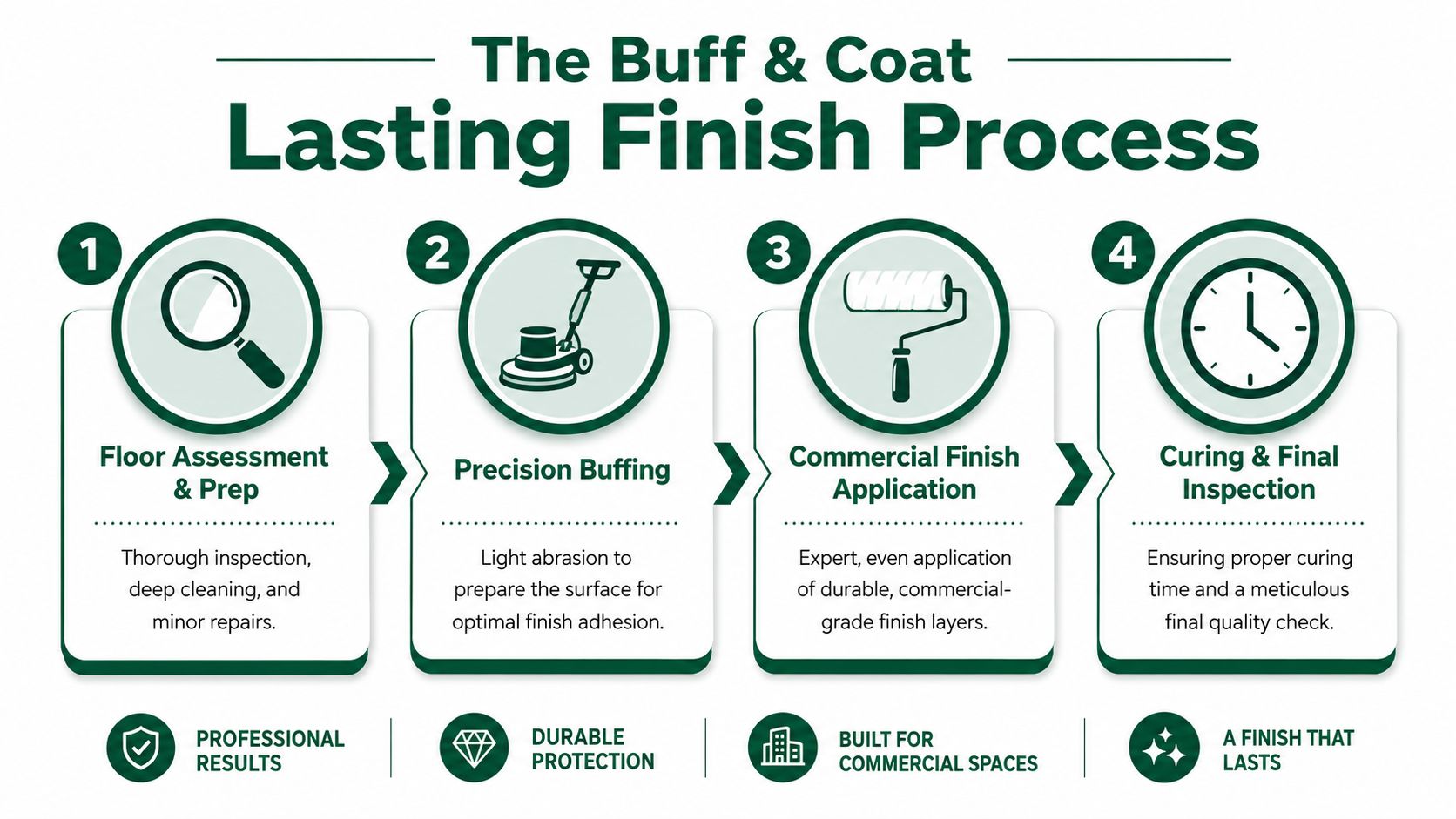
A durable result usually follows this sequence:
- Assessment and cleaning so the actual condition of the floor is clear.
- Dustless sanding or screening to create proper adhesion and reduce mess.
- Detail work at edges and corners where shortcuts show up first.
- Finish application with the right build for the space and traffic.
- Curing time and final review before normal use resumes.
A full dustless sanding process typically includes cleaning and setup, sanding off the current finish, progressing through finer grits, hand-scraping corners, cleanup, and then applying multiple finish coats after optional stain work, as outlined in this dustless sanding process guide.
For owners managing mixed surfaces, this overview of commercial floor stripping and waxing is useful context because not every commercial floor should be treated like hardwood.
If you're deciding between a light wood floor recoating and full hardwood floor refinishing, Buff & Coat can inspect the floor and tell you plainly which approach makes sense.
Lifecycle Costs Not Just the Upfront Price
The most expensive mistake with a commercial finish is assuming the higher upfront performance means the floor can be ignored afterward. It can't.
Why maintenance changes the real cost
The honest way to think about a commercial wood floor finish is through lifecycle cost, not just initial refinishing cost. According to Kiefer USA's guidance on wood sports floors, even ultra-durable commercial finishes require annual screening and recoating to prevent wear-through. Without that upkeep, the finish can degrade within 3 to 5 years, forcing a full re-sand.
That's the part many property owners never hear clearly enough. The finish may be tougher, but it still needs service before the damage reaches bare wood.
What works and what doesn't
What works:
- Planned recoating before traffic lanes fail
- Good cleaning habits that don't leave residue
- Entry mat control to reduce grit
- Fast response to wear areas instead of waiting for visible breakdown
What doesn't work:
- Treating commercial grade like permanent armor
- Using harsh cleaners that interfere with finish life
- Skipping maintenance because the floor still looks “mostly fine”
- Waiting until gray wear appears
The cheapest maintenance visit is usually the one that prevents a full sanding job later.
For owners trying to budget smartly, this guide to commercial wood floor cleaning helps connect daily care to long-term finish performance.
If you want honest advice on whether your floor needs maintenance now or can wait, call 804-392-1114 and ask for a straightforward assessment.
Why Richmond Homeowners Choose Buff and Coat
Homeowners looking for the best hardwood floor contractor Richmond usually want the same things. Clean work, clear answers, durable results, and someone local who won't overcomplicate the process.
Why Richmond homeowners choose Buff & Coat:
- 15 years in business with hands-on experience in residential and light commercial flooring
- Dustless sanding systems that help keep projects cleaner and more manageable
- Local, owner-operated service with a Richmond small-business approach
- High-quality finishes selected for durability, appearance, and real-world use
- Clear pricing and honest advice about whether a floor needs recoating, full refinishing, or repair
- 5-star customer service focused on responsiveness and workmanship
Buff & Coat Hardwood Floor Refinishing serves Richmond, Midlothian, Chesterfield, Henrico, Glen Allen, Short Pump, Mechanicsville, and occasional jobs in Charlottesville, Fredericksburg, and Virginia Beach. Whether you need hardwood floor repair, engineered hardwood refinishing, floor installation Richmond, or a straightforward buff and coat service, the goal stays the same: protect the floor you have and recommend replacement only when it's warranted.
Frequently Asked Questions on Commercial Floor Finishes
Can a commercial finish be applied over my existing floor finish
Sometimes, yes. It depends on whether the existing finish is still sound and compatible with recoating. If the old finish is failing, contaminated, or worn through, full sanding is usually the safer option.
How long do I need to stay off the floor after a commercial finish is applied
That depends on the finish system. Some waterborne commercial finishes reach return-to-service much faster than older systems. For example, waterborne commercial finishes like Bona Traffic HD can be ready for full traffic in 3 days, which is one reason they're often chosen when downtime matters.
Is a commercial-grade finish overkill for a regular home
Not always. In a quiet spare bedroom, probably yes. In a busy Richmond kitchen, main hallway, or home with kids and pets, it can make a lot of sense.
Will a buff and coat remove scratches
Only surface-level wear. A buff and coat refreshes the finish layer. It doesn't remove deep gouges or damage that has gone through to the wood.
How long does refinishing take
The refinishing timeline depends on floor condition, whether sanding is needed, and the cure behavior of the finish chosen. The best answer comes from seeing the floor in person.
Ready to restore your hardwood floors? Buff & Coat Hardwood Floor Refinishing makes the process fast, clean, and stress-free. Call 804-392-1114 or request your free estimate at buffandcoatvirginia.com.


