
For many Richmond homeowners, picking the best wood flooring for kitchen use feels like a tug-of-war between timeless style and real-world durability. The warmth of wood seems perfect for the heart of the home, but the fear of spills, dropped pans, and constant foot traffic makes people hesitate. The good news is that with modern materials and expert installation, you don't have to choose between beauty and performance.
This guide will walk you through the best options—from solid and engineered hardwood to luxury vinyl—so you can make a confident choice for your Richmond-area home.
Why Wood Floors Belong in Your Kitchen
Putting wood floors in a kitchen might sound risky, but it’s a choice that brings undeniable character and real value to a home. Whether you live in a historic Fan District rowhouse or a newer build in Chesterfield, the right wood flooring stands up to daily life while looking incredible.
Today's top contenders—solid hardwood, engineered hardwood, and high-quality wood-look alternatives—all offer fantastic solutions for this high-traffic space.
Modern Materials Have Changed the Game
Forget the old stories where one tipped glass of water spelled disaster. Today’s wood flooring is built for modern kitchens.
- Engineered Hardwood: Its layered core is a game-changer for stability, especially against Richmond's notorious humidity. This construction dramatically cuts down the risk of warping.
- Durable Finishes: We're talking professional-grade, low-VOC polyurethane coatings that create a tough, protective seal. They repel water, fight off scratches, and make cleanup surprisingly simple.
- Solid Hardwood: A classic for a reason. Naturally tough species like oak can take a beating from dropped pots and heavy traffic and still look great for decades.
A Smart Upgrade That Buyers Love
Wood floors aren't just a pretty face; they're a smart investment. Hardwood is one of the most sought-after features in a home. In fact, 22% of U.S. homeowners now choose it for their kitchen remodels, putting it right up there with tile as a top choice.
Engineered hardwood, in particular, has seen its popularity skyrocket. Its factory-applied finishes and superior stability can slash the risk of warping in a humid kitchen environment by up to 50% compared to traditional solid wood. If you want to dig deeper, this comprehensive survey on kitchen flooring trends has some great insights.
The secret to a long-lasting wood floor in your kitchen comes down to two things: picking the right product and having it installed and finished by pros who understand the local climate.
Solid Hardwood vs. Engineered: A Kitchen Performance Comparison
When you're trying to choose the best wood flooring for a kitchen, the conversation almost always lands on two heavyweights: solid hardwood and engineered hardwood. They both deliver that authentic, warm feel only real wood can provide, but how they're built makes a world of difference, especially in a room that sees as much action as a kitchen.
Getting a handle on these differences is the key to making a smart, long-term investment for your Richmond-area home.
On the surface, you can’t tell them apart. But peel back the layers, and you'll find that solid hardwood is just that—one solid piece of wood, top to bottom. Engineered hardwood, on the other hand, is constructed with a top layer of real hardwood (the veneer) fused to a core of stacked plywood or high-density fiberboard. That core is the secret to its unique performance.
Moisture Resistance and Stability
Kitchens are ground zero for humidity swings and the occasional spill, so moisture resistance has to be a top priority. As a natural material, solid hardwood breathes—it expands and contracts with humidity. In Richmond’s sticky summers, this can lead to problems like "cupping," where the edges of the planks curl up, or gapping between boards.
This is where engineered hardwood's layered core becomes the hero. The layers are glued together in alternating directions, which works to counteract the wood’s natural urge to move. This cross-ply construction gives it incredible dimensional stability, making it far less reactive to moisture in the air.
Key Takeaway: While a good, modern finish will protect both floor types from surface spills, engineered wood’s core gives it a structural advantage against the ambient humidity common in kitchens. This drastically reduces the risk of warping or cupping over time.
This decision tree can help you map out which path makes the most sense for your kitchen's demands and your own goals for the space.
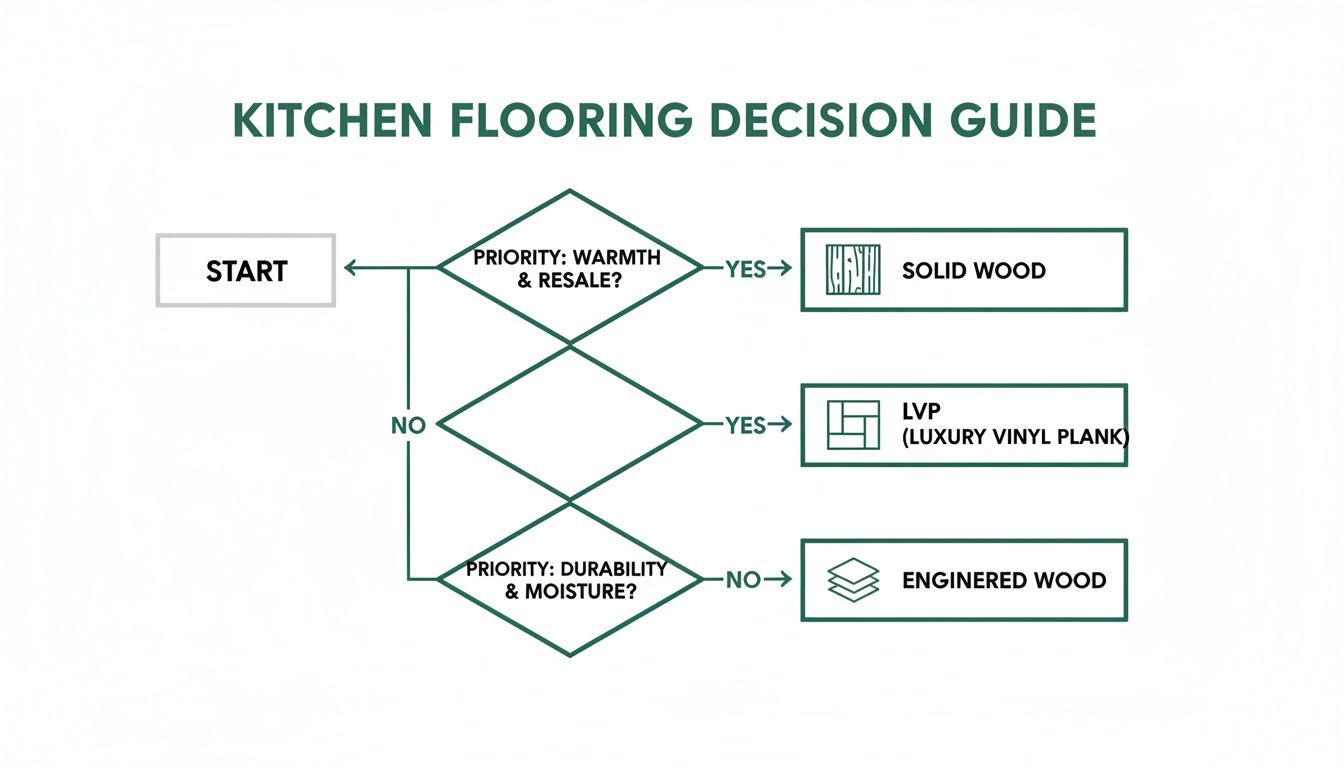
As the chart shows, while nothing beats solid wood for sheer authenticity, engineered flooring often strikes a better balance for moisture-prone rooms like the kitchen.
Durability Against Kitchen Mishaps
Durability is about more than just moisture. It’s about surviving dropped soup cans, scooting chairs, and the constant traffic of a busy household. Here, the comparison gets a little more complex because performance really hinges on two things: the wood species and the quality of the finish.
- Wood Species: The hardness of that top layer is what matters most. A solid red oak floor will stand up to dents just as well as an engineered floor with a thick red oak veneer. That's why hard species like oak, hickory, and maple are fantastic choices for either type of flooring in a high-traffic kitchen.
- Finish Quality: The protective finish is your floor’s armor. A professionally applied, multi-coat polyurethane creates a tough barrier that shrugs off scratches, stains, and scuffs. This is non-negotiable for both solid and engineered floors.
Long-Term Value and Refinishing Potential
Here’s where solid hardwood has traditionally held the edge. Because it’s a thick, solid piece of wood, it can be sanded down and refinished many, many times over its lifespan, which can easily top 100 years. This means you can completely erase deep scratches, change the stain color, and make the floor look brand new again and again.
Engineered hardwood’s refinishing potential is tied directly to the thickness of its top veneer. A high-quality engineered plank with a thick (3mm or more) veneer can usually be sanded and refinished once, maybe twice. Thinner veneers might only allow for a light "buff and coat" service, which refreshes the finish without actually removing any wood. For anyone who values long-term flexibility and the ability to adapt the floors to new design trends, this is a huge factor.
To help you see the differences at a glance, here’s a quick breakdown of how each type performs in a kitchen setting.
Kitchen Flooring Feature Comparison: Solid vs. Engineered
| Feature | Solid Hardwood | Engineered Hardwood | Recommendation for Kitchen Use |
|---|---|---|---|
| Moisture Stability | Prone to expansion/contraction with humidity. Higher risk of cupping or gapping in Richmond's climate. | Excellent stability due to cross-ply core. Far less reactive to humidity changes. | Engineered is the safer bet. Its construction is specifically designed to handle the moisture swings of a kitchen. |
| Refinishing Lifespan | Can be sanded and refinished 5-7+ times, offering a lifespan of over 100 years. | Can be refinished 1-2 times if the veneer is thick (3mm+); otherwise, limited to buffing. | Solid wins for long-term flexibility. If you want the option to change the look multiple times, solid is the way to go. |
| Installation Options | Typically nail-down only, requires a wood subfloor. | Can be nailed, glued, or floated. Can be installed over concrete slabs, common in many local homes. | Engineered offers more versatility, especially for basements or homes on a concrete slab foundation. |
| Dent & Scratch Resistance | Depends entirely on the wood species and finish quality. Same as engineered with an identical top layer. | Depends entirely on the veneer species and finish quality. Same as solid with an identical top layer. | It's a tie. Focus on a hard species like Oak or Hickory and a high-quality, durable finish for either option. |
Ultimately, both options can work beautifully in a kitchen if chosen and installed correctly. Solid wood brings unmatched longevity and refinishing power, while engineered wood provides superior stability that’s perfectly suited for our humid Virginia climate.
If you'd like to dive deeper into what's available, our guide to the best engineered hardwood flooring brands is a great place to start. If you’re unsure which option is right for your kitchen, Buff & Coat can take a look and give you honest recommendations.
When Is Luxury Vinyl Plank the Smarter Kitchen Choice?
While solid and engineered hardwoods bring an authentic, timeless character to a kitchen, there are times when practicality simply has to win the day. This is where luxury vinyl plank (LVP) flooring comes in—not as a lesser option, but as a smart, high-performance solution designed for the realities of modern family life. For some Richmond households, LVP is hands-down the best choice for kitchen functionality.
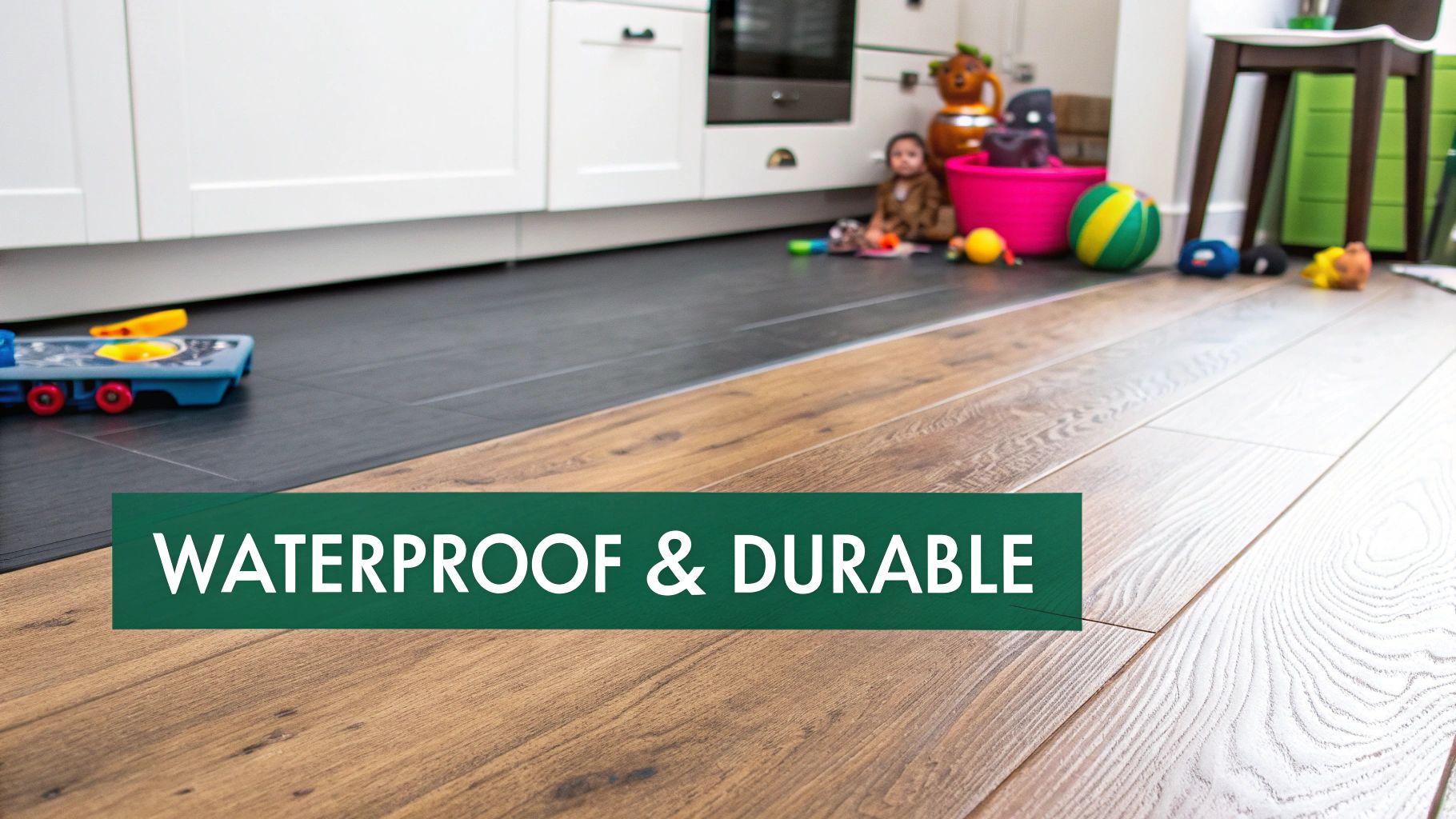
LVP is a completely synthetic product, engineered from the ground up to mimic the look of real wood. It uses a printed photographic layer under a tough, clear wear layer for its visuals. But its real magic is in its core—a rigid polymer composite that is 100% waterproof.
The Undeniable Strengths of LVP in the Kitchen
The number one reason people choose LVP is its total immunity to moisture. Unlike wood, which will warp, swell, or stain, LVP is dimensionally stable. It won’t be damaged by spilled drinks, a leaking dishwasher, or the dog's water bowl. This makes it an incredibly low-stress option for busy families.
Its toughness extends well beyond water, too. That top wear layer provides exceptional resistance to scratches, scuffs, and dents from dropped pots and pans. For homes with large dogs, active kids, or just heavy daily use, this resilience is a game-changer.
Expert Insight: The peace of mind that comes with LVP is a huge benefit. You get the warm aesthetic of wood without the constant worry about water damage. For a high-traffic kitchen that doubles as the family hub, this trade-off often makes perfect sense.
If you want to dig deeper into flooring that can handle constant activity, check out our guide on the best flooring for high-traffic areas.
A Clear Look at LVP's Limitations
Of course, these benefits come with trade-offs. While high-quality LVP does an impressive job of replicating wood grain and texture, it can never fully capture the unique, natural beauty of genuine hardwood. From certain angles or in direct light, its synthetic nature can become more apparent.
The biggest functional drawback is its lifespan and repairability. LVP cannot be sanded or refinished. If a plank gets a deep gouge or other serious damage, it has to be replaced individually—a process that can be tricky down the road. While its lifespan can reach 15-25 years, it doesn't have the multi-generational longevity of solid or well-made engineered wood.
Another key factor is home value. While premium LVP is a fantastic product, real estate experts consistently find that genuine hardwood flooring adds more resale value to a home than any wood-look alternative.
So, When Is LVP the Right Call for Your Kitchen?
Making the right choice comes down to balancing your lifestyle priorities with your long-term goals. LVP is often the smartest choice in these specific scenarios:
- Homes with Pets and Young Children: The superior scratch resistance and completely waterproof nature make it a worry-free option for busy, spill-prone households.
- Basement Kitchens or Slab Foundations: LVP is perfect for below-grade installations where moisture from the concrete is a constant concern.
- Rental Properties: Its durability and lower upfront cost make it a practical, tough-as-nails investment for rental units where wear and tear is high.
- Budget-Conscious Remodels: LVP delivers a high-end look for a fraction of the cost of real hardwood, freeing up your budget for other upgrades like countertops or appliances.
While Buff & Coat specializes in installing and restoring genuine hardwood, we also offer professional LVP/LVT installation across the Richmond area. We believe in helping homeowners find the best solution for their specific situation, ensuring a beautiful, functional floor that fits their life.
Richmond homeowners: get a fast quote for hardwood or LVP installation. Call 804-392-1114 or request a free estimate today.
Installation and Finishing: Where Your Kitchen Floor’s Longevity Is Forged
Picking out the perfect wood flooring for your kitchen is a huge decision, but the job isn't over when the boxes arrive. The real secret to a floor that shrugs off spills, handles daily foot traffic, and looks fantastic for decades lies in the details of its installation and finish. This is where experience and craftsmanship really make a difference, especially with the unique climate we have here in the Richmond area.
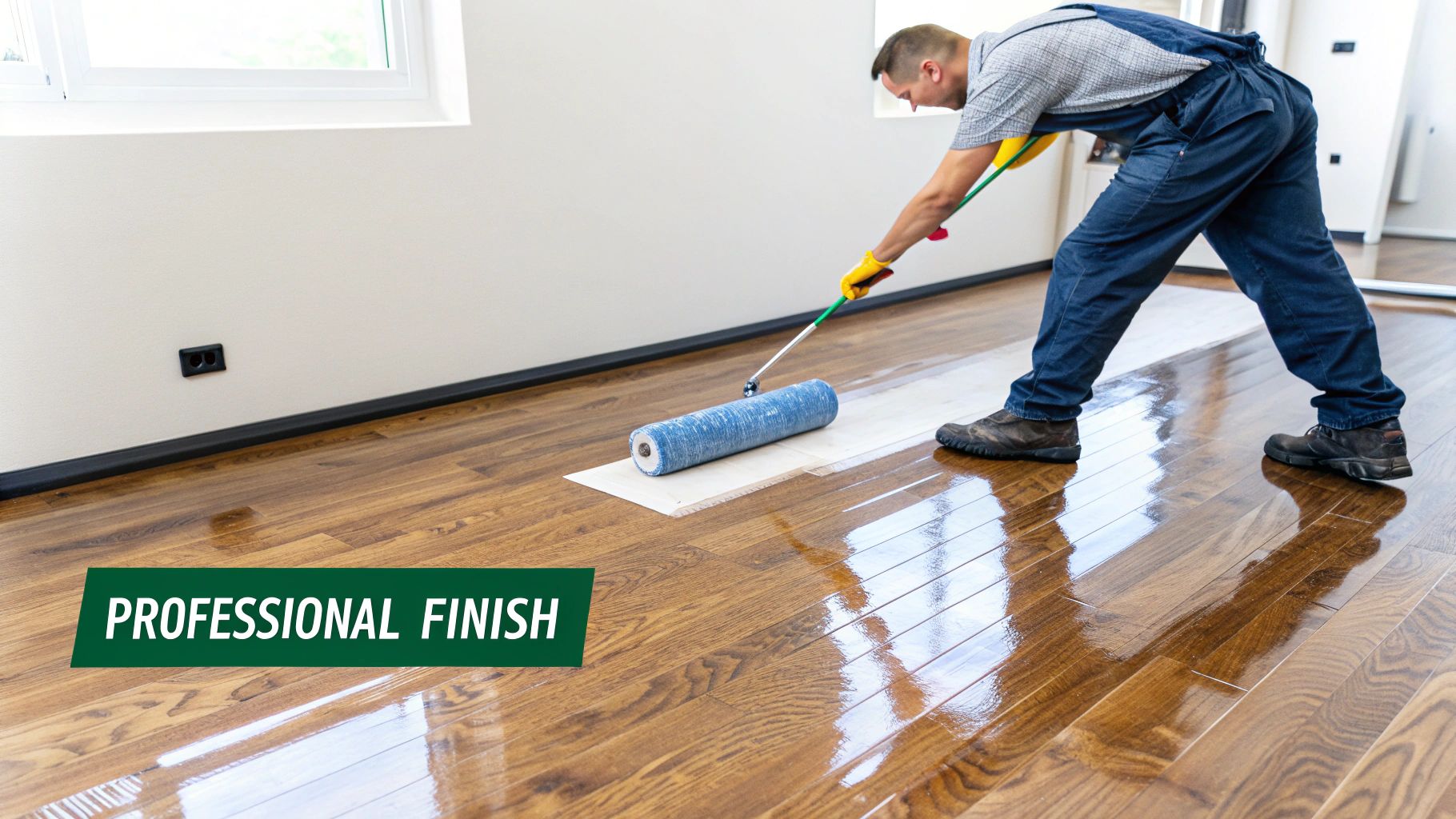
At Buff & Coat, we approach every floor installation in Richmond as a craft. A beautiful, durable result starts long before the first plank is laid down. It all begins with careful preparation that’s specific to your home.
The Make-or-Break Step: Acclimatization and Site Prep
Wood is a living, breathing material that expands and contracts with its environment. Just dropping off a load of flooring and installing it the next day is a surefire recipe for gapping, buckling, and other headaches down the road. This is especially true with the humidity swings we get in Central Virginia.
That's why acclimatization is a non-negotiable first step for us. We let the wood sit in your kitchen for several days, giving it a chance to adjust to your home's specific temperature and humidity. It’s a simple but vital step that ensures the flooring is stable and ready for a tight, lasting installation.
Before we lay a single board, we also run through a few critical checks:
- Subfloor Inspection: We check that your subfloor is perfectly flat, clean, and solid. A sound subfloor is the foundation for a quiet, even floor.
- Moisture Testing: Using professional-grade meters, we test both the subfloor and the new hardwood. This confirms the moisture content is within the right range to prevent future issues.
Pre-Finished vs. Site-Finished Flooring: A Practical Comparison
As you're choosing your flooring, you’ll come across a big decision: pre-finished or site-finished. Neither one is automatically better; the right call really depends on your project's goals and timeline.
Pre-finished flooring comes straight from the factory with the stain and finish already baked on. This means the installation is faster and cleaner, with no sanding dust or fumes in your home. These factory-applied finishes are incredibly tough and durable.
Site-finished flooring, on the other hand, is raw, unfinished wood that we install first. Once it’s in place, we sand it completely smooth and then apply the stain and protective finish right there in your kitchen. The big advantage here is total control—you get the exact custom color and sheen you want. Plus, it creates a perfectly sealed, uniform surface with no tiny bevels between the boards.
Our Take: If you’re after a completely seamless, high-end look with a custom color, site-finishing is the way to go. If you need a faster project with less disruption, pre-finished is an excellent, hard-wearing choice.
The Protective Power of a Modern Finish
The final finish is your kitchen floor’s armor. It’s what seals the wood against spills, resists scratches from dog claws, and stands up to the chaos of daily life. We exclusively use modern, commercial-grade, low-VOC polyurethane finishes. These water-based formulas deliver outstanding durability without the harsh smells of old-school oil-based products, keeping your home healthier and safer. You can dive deeper into the best polyurethane for hardwood floors in our detailed guide.
A professional finish isn't just about protection; it’s about bringing out the wood's beauty. It highlights the natural grain and gives your floor a clean, consistent sheen that pulls the whole kitchen together. If you're planning a full remodel, coordinating with professional kitchen renovation services can help ensure your new floors are the perfect complement to a stunning final design. At Buff & Coat, our detail-oriented process guarantees a flawless result you'll love for years.
Thinking about a new wood floor for your Richmond kitchen? Give Buff & Coat a call at 804-392-1114 for a free, no-pressure estimate and some expert advice.
Refinishing vs. Replacing Your Existing Kitchen Floors
If your Richmond home’s kitchen already has wood floors, you know how much character they add. But years of dropped utensils, spills, and constant foot traffic have probably left them looking a little tired and worn. Before you start getting quotes for a full tear-out and replacement, it's worth knowing that a high-quality restoration is often the smarter, more cost-effective choice.
Many homeowners see deep scratches or a dull finish and assume the floor is a lost cause. That’s rarely the case. A professional eye can often see the true potential hiding just beneath the surface wear.
Knowing When to Refinish
So, how do you know if your kitchen floors are a good candidate for refinishing? The good news is that most solid hardwood and many quality engineered wood floors can be fully brought back to life.
Here are the common signs that a professional refinishing is the right call:
- Widespread Surface Scratches: A network of fine scratches from daily life that has stolen the floor's shine.
- A Worn-Out Finish: You can see patches where the protective topcoat has worn away, especially in front of the sink, stove, or refrigerator.
- Minor Water Stains: Light discoloration or dark spots from old spills that haven’t penetrated too deeply into the wood itself.
- Outdated Color: You simply want to change the stain to a more modern color that better fits your kitchen’s new look.
These are almost always issues we can correct with professional sanding and refinishing, a process that can save you up to 70% compared to the cost of a full replacement. If you're weighing this against other updates, seeing a range of renovate old house ideas for kitchens can help you decide where to best invest your budget.
Our Approach to Kitchen Floor Restoration
At Buff & Coat, we specialize in bringing worn kitchen floors back to their former glory with minimal disruption to your home. We offer two main services, depending on the level of wear your floors have seen.
For floors with only light surface wear and an intact finish, our signature buff and coat service is a perfect fit. We lightly abrade the existing topcoat to ensure a strong bond and then apply a fresh, durable layer of polyurethane. It’s a fast, incredibly effective way to restore shine and protection in just a day.
For more significant damage—like deeper scratches, stubborn stains, or areas where the finish has worn through to bare wood—we perform a full hardwood floor refinishing. Using our advanced dustless sanding systems, we remove the old finish entirely, taking the wood down to a fresh, clean surface. This erases years of damage and gets the floor ready for a new stain and protective finish.
A Midlothian Kitchen Story: We recently worked on a 1990s home in Midlothian with its original oak kitchen floors. They were structurally perfect but covered in scratches, with a few dark water spots near the dishwasher. The homeowner was convinced they needed to be replaced. Instead, our team performed a dustless sanding and refinishing, applying a modern, natural-looking stain and three coats of commercial-grade polyurethane. The floors looked brand new, completely transforming the kitchen for a fraction of what new installation would have cost.
If you’re on the fence about whether your floors can be saved, let us take a look. We provide honest, clear recommendations to help you make the best decision for your home and your budget.
Get a fast, free estimate for floor refinishing in Richmond, VA. Call Buff & Coat today at 804-392-1114.
Why Richmond Homeowners Choose Buff & Coat
Choosing the right wood flooring for your kitchen is a balancing act between style and durability. Whether you’ve settled on classic solid hardwood, versatile engineered planks, or the unbeatable resilience of LVP, the final outcome always comes down to the quality of the craftsmanship. For homeowners in Richmond, Henrico, and Chesterfield, making that choice is a lot easier when you have a local partner you can trust.
At Buff & Coat, we bring over 15 years of hands-on experience to every single project. We’re not a faceless corporation; we’re a local, owner-operated business committed to giving honest advice and delivering exceptional quality. We live here, too, so we understand the unique challenges of Richmond's humidity and help you pick flooring that will perform beautifully for years.
Here's why we're considered the best hardwood floor contractor Richmond homeowners can call:
- 15+ Years in Business: Our experience means we've seen it all and know how to deliver a flawless, long-lasting result.
- Dustless Sanding Systems: We use advanced equipment to keep your home clean and your family safe from airborne dust during refinishing projects.
- Local, Owner-Operated: You get the personalized attention and accountability that only a local small business can provide.
- High-Quality Finishes: We use commercial-grade, low-VOC finishes that are tough enough for a kitchen and safe for your home.
- Clear Pricing and Honest Advice: We provide straightforward quotes and will never try to sell you a service you don’t need.
- 5-Star Customer Service: Our reputation is built on treating every home with respect and ensuring our clients are thrilled with the outcome.
Ready to restore your hardwood floors? Buff & Coat makes the process fast, clean, and stress-free.
Call 804-392-1114 or request your free estimate at buffandcoatvirginia.com.
FAQ: Your Kitchen Wood Flooring Questions
To wrap things up, let's tackle the questions we hear most often from Richmond homeowners trying to decide on the perfect kitchen floor.
Can you really put solid hardwood in a kitchen?
Yes, absolutely—and people do it all the time! With the right species (like a tough oak), a professional installation that accounts for our Virginia humidity, and a durable modern finish, solid hardwood performs beautifully in a kitchen. That said, engineered hardwood is often the go-to recommendation for a kitchen. Its construction gives it superior dimensional stability in areas with fluctuating moisture, making it a very safe and reliable choice.
How do you protect a wood kitchen floor from water damage?
Your first line of defense is a high-quality polyurethane finish. It seals the wood's pores and creates a tough barrier against moisture. From there, it’s all about building good habits to keep water from sitting on the floor for too long.
Here are a few simple habits that make all the difference:
- Wipe Up Spills Immediately: Don't let water, oil, or that dropped glass of iced tea linger. A quick wipe is all it takes.
- Use Floor Mats: A well-placed mat in front of the sink and dishwasher is your floor's best friend. It catches the inevitable splashes and drips.
- Check Your Appliances: Every few months, take a peek at your dishwasher connections, refrigerator ice maker line, and under-sink plumbing. Catching a tiny, slow leak early can save you from a major headache.
Is engineered wood considered 'fake' wood?
Not at all. This is one of the biggest misconceptions out there. Engineered hardwood is 100% genuine wood, just constructed in a smarter way for modern homes. The top layer—the part you see and walk on—is real, solid hardwood. It’s the same beautiful oak, hickory, or maple you love. This veneer is bonded to a core of layered plywood, which is what gives it that extra stability. You get the authentic look and feel of real wood without the vulnerability to moisture.
What is the best finish for a kitchen wood floor?
For a high-traffic area like a kitchen, we always recommend a commercial-grade, water-based polyurethane finish. These modern formulas give you the best of both worlds: incredible durability and a healthier home. They create a tough, resilient shield against foot traffic, scuffs, and spills, which is non-negotiable for a kitchen. Plus, they have low VOCs (Volatile Organic Compounds), which means fewer harsh smells during application and better indoor air quality for your family once the job is done. Choosing the right finish is just as crucial as choosing the right wood.
If you still have questions about finding the best wood flooring for your kitchen, the team at Buff & Coat Hardwood Floor Refinishing is here to help. We give honest, expert advice to help Richmond homeowners make a choice they'll be happy with for years.
Ready to get started? Call us at 804-392-1114 or request your free, no-obligation estimate online.