For Richmond homeowners with dogs, finding the right hardwood floor feels like a balancing act. You want that timeless look, but you also need something that can handle playful claws and the occasional "zoomies." The secret isn't avoiding wood altogether; it's about choosing the right wood. It really comes down to three things: the wood's natural hardness, a durable finish, and a forgiving grain pattern.
A species with a high Janka rating, like Hickory, paired with a tough, scratch-resistant finish and a lighter color can make all the difference. You can have gorgeous floors without constantly worrying about every little mark.
Choosing Hardwood Floors That Stand Up to Paws and Claws
Finding a beautiful hardwood floor that can happily coexist with a furry family member is a top priority for so many homeowners we talk to in the Richmond area. You're investing in a floor that should add value and joy, not become a source of stress. The good news? You don't have to sacrifice style for durability.
By focusing on a few critical elements, you can pick a wood floor that looks stunning and holds up to the daily realities of life with pets. This means looking past just the color and really digging into the properties that make a floor resilient.
Understanding the Key Factors
When you know what to look for, the whole process gets a lot simpler. This decision tree breaks down the three most important considerations you'll face: the wood's hardness, the protective finish, and the visual grain.
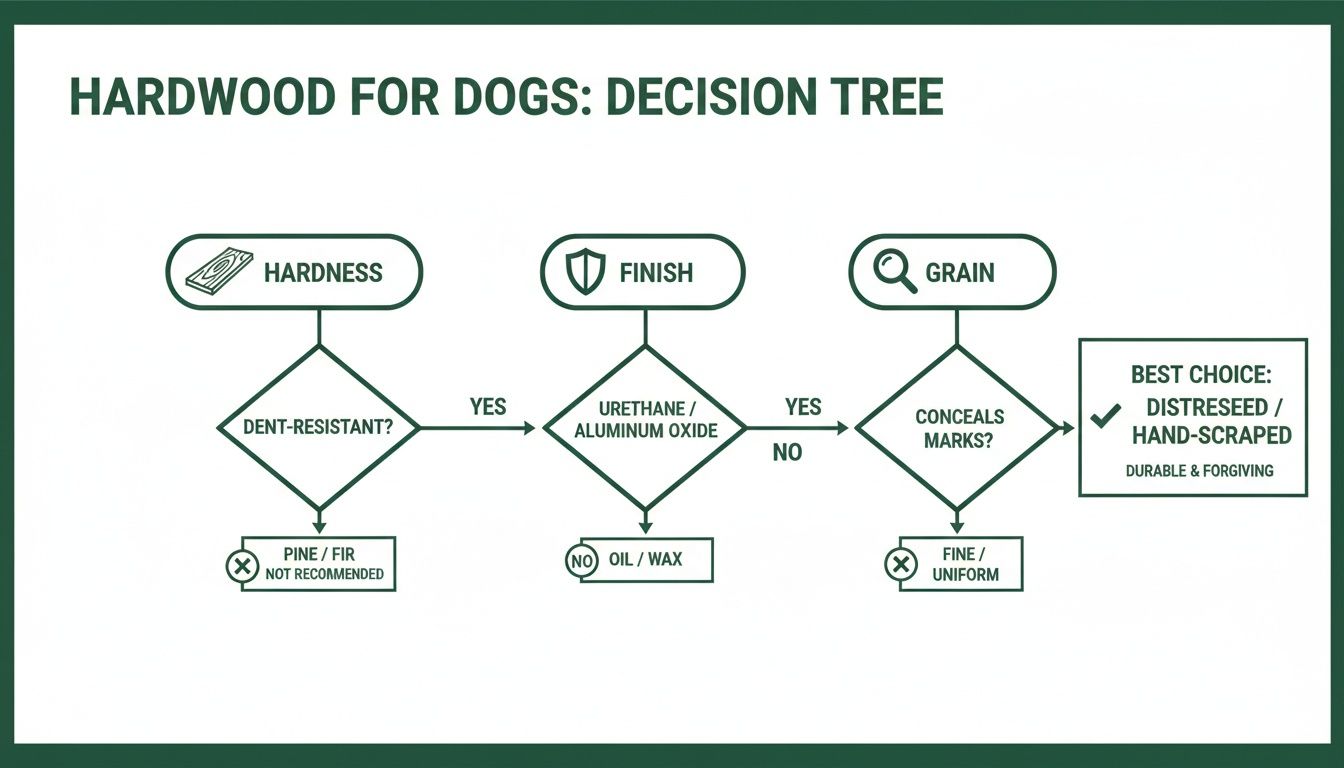
As the guide shows, you should start with the wood’s inherent hardness, then think about the protective finish, and finally, choose a grain and color that will help camouflage any minor wear and tear that happens over the years.
The Role of Wood Hardness
A wood's ability to resist dents and scratches is measured on the Janka hardness scale, a trusty industry standard developed way back in 1906. This is your number one tool for comparing different wood species.
For instance, hickory is a beast, topping the charts at 1,820 pounds-force (lbf). That makes it one of the toughest options for withstanding sharp puppy nails skittering across your living room. On the other hand, softer woods like red oak, at just 1,290 lbf, might show scratches much more easily after a few months of play. In our experience, opting for high-Janka woods like hickory or white oak (1,360 lbf) can slash visible damage by up to 40% in homes with active pets. You can learn more about how wood durability impacts flooring choices and explore different species on dedicated flooring resource sites.
To give you a quick reference, we've put together a table comparing some popular hardwood species by their Janka rating.
Comparing Hardwood Species by Janka Hardness for Pet Durability
| Wood Species | Janka Hardness Rating (lbf) | Best For Dogs (Yes/No) | Notes for Richmond Homes |
|---|---|---|---|
| Brazilian Cherry | 2,350 | Yes | Extremely hard, but its dark, rich color tends to show scratches more readily. |
| Hickory | 1,820 | Yes | An excellent, durable choice with a strong, busy grain that does a great job hiding wear. |
| Hard Maple | 1,450 | Yes | Very hard and durable, with a light, clean color that conceals pet hair well. |
| White Oak | 1,360 | Yes | A popular, classic option that balances hardness, cost, and aesthetics beautifully. |
| Red Oak | 1,290 | Yes (with caution) | The industry standard for a reason, but it's slightly softer than White Oak. |
| American Cherry | 950 | No | Simply too soft for active dogs; it will show dents and scratches very easily. |
| American Walnut | 1,010 | No | A gorgeous wood, but its softness makes it unsuitable for homes with pets. |
This table makes it clear that while some woods are beautiful, they just aren't cut out for a life with dogs. Sticking to the harder species on this list is your best bet for long-term satisfaction.
Solid vs. Engineered Hardwood: A Comparison for Dog Owners
Choosing between solid and engineered hardwood is one of the biggest decisions you'll make for a home with dogs. While classic solid hardwood has that timeless appeal and can be refinished again and again, engineered hardwood brings some unique strengths to the table—especially for Richmond homeowners dealing with our humid climate and four-legged family members.
This isn't just a simple pros-and-cons list. It’s about matching your floor’s construction to the realities of life with a dog. Get it right, and you'll have a floor that thrives for years; get it wrong, and you'll see premature wear and tear.
Understanding the Core Differences
At a glance, you might not be able to tell solid and engineered hardwood apart. That's because both have a top layer of real, beautiful hardwood. The magic—and the difference—is what lies underneath.
- Solid Hardwood: Just as the name implies, each plank is milled from a single, solid piece of wood. It's the traditional choice, famous for its longevity and the ability to be sanded down and refinished multiple times.
- Engineered Hardwood: These planks are built differently. They have a top layer of genuine hardwood (called the wear layer) that's bonded to a core of high-quality plywood or high-density fiberboard (HDF). This layered construction is what gives it some very specific advantages.
For dog owners, the real story is how these different structures handle moisture, scratches, and the general chaos of daily life.
Stability: The Engineered Advantage in Virginia
Richmond's climate can be tough on floors. Our humid summers and temperature swings put a lot of stress on hardwood, causing solid wood to naturally expand and contract. While this movement is normal, over time it can lead to frustrating gaps or cupping between the planks.
This is where engineered hardwood shines. It's far more dimensionally stable. The cross-layered core fights wood's natural tendency to swell or shrink, keeping the planks flat and tight.
Key Insight for Pet Owners: This stability is a game-changer when you're dealing with pet messes. A spilled water bowl or a potty training accident that isn't cleaned up immediately is much less likely to cause permanent warping or damage to an engineered plank than a solid one.
This structural integrity also means engineered flooring can be installed in places where solid wood is a no-go, like basements or directly over concrete slabs.
Durability and Factory-Applied Finishes
While solid hardwood is certainly durable, high-quality engineered planks often come with a tougher defense against scratches right out of the box. Manufacturers apply multiple layers of finish in a controlled factory setting, frequently using advanced coatings like aluminum oxide that are cured under UV light.
The result is a harder, more abrasion-resistant surface than what can typically be done with an on-site finish. For dog owners, these super-strong factory finishes are your floor’s first and best line of defense against claw marks.
Refinishing and Long-Term Value
Here's where solid hardwood has traditionally held the edge: its refinishing potential. A standard ¾-inch thick solid plank can be sanded and refinished 5-7 times, which means it could potentially last for a century or more.
But engineered hardwood can be refinished, too. The key is the thickness of its top wear layer.
- High-Quality Engineered: A plank with a thick wear layer (3mm or more) can be safely sanded and refinished 1-3 times.
- Lower-Quality Engineered: Be careful with thin wear layers (less than 2mm), as they might not be refinishable at all.
If you plan to be in your home for decades, the longevity of solid wood is definitely appealing. That said, a high-quality engineered floor can still offer a lifespan of 30-50 years or more, which is more than enough for most families. To find a durable option, you can check out our guide on the best engineered hardwood flooring brands.
If you are considering a new floor installation, Buff & Coat can provide an honest assessment of your home’s needs. Call 804-392-1114 or request a free estimate today.
Why the Finish Is Your Floor's Best Defense
While the hardness of the wood is a big piece of the puzzle, it’s really only half the story. The finish—that clear protective layer on top—is your floor’s true frontline defense against everything your dog can throw at it. We're talking scratching claws, muddy paws, and the occasional drool puddle or accident.
Think of the finish as the armor protecting the beautiful wood underneath. A weak or worn-down finish leaves your hardwood completely exposed and vulnerable to permanent damage. That's why picking the right finish is just as critical as choosing the right wood species.
Hardwood Finish Comparison for Homes with Dogs
The finish on your hardwood floors acts as a shield against daily wear and tear from pets. Understanding the differences between common options is key to making a durable choice. Below is a comparison to help you decide which finish best suits a home with dogs.
| Finish Type | Scratch Resistance | Moisture Resistance | Appearance (Sheen) | Best for Dogs? |
|---|---|---|---|---|
| Aluminum Oxide | Excellent | Very Good | Matte, Satin, Semi-Gloss | Yes, the top choice. Its incredible hardness stands up to claws and high traffic. |
| Water-Based Poly | Good | Good | Clear, low odor. Satin to Gloss. | Good. A solid, modern option, though less tough than aluminum oxide. Dries fast. |
| Oil-Based Poly | Very Good | Good | Amber tint. Satin to Gloss. | Good. Very durable but has strong fumes and a long cure time. Shows scratches more. |
| Hardwax Oil | Fair | Fair to Good | Natural, matte look. | No. While beautiful and easy to repair, it offers minimal scratch and moisture protection. |
For homeowners with dogs, an Aluminum Oxide finish is the clear winner due to its superior durability and resistance to the kind of daily abuse pets dish out. It provides the best long-term protection for your investment.
Polyurethane vs. The Modern Champion: Aluminum Oxide
For years, the go-to standard for finishing floors on-site was either an oil-based or water-based polyurethane. It’s a reliable product that creates a durable, plastic-like layer over the wood. But technology has come a long way, especially when it comes to factory-finished planks.
Today, the undisputed champion for pet-heavy households is aluminum oxide. This is a naturally occurring mineral that, when added to a polyurethane finish, creates an incredibly tough and abrasion-resistant surface.
- Standard Polyurethane: Offers decent protection but will eventually show fine scratches from a dog's claws over time.
- Aluminum Oxide Finish: This finish is typically applied in multiple layers and cured with UV light in a factory setting. The result? A surface that can be up to ten times more resistant to scratches and wear than standard polyurethane applied on-site.
This superior durability makes it the obvious choice for homes with active dogs. Just as you might use waterproof couch covers for dogs to protect furniture, a resilient floor finish is crucial for repelling spills and resisting damage.
The Smart Sheen Choice: Satin and Matte
Beyond the type of finish, the sheen level plays a massive role in how your floors look day-to-day. High-gloss finishes might seem glamorous at first, but they act like a spotlight for every tiny scratch, scuff, and stray piece of dog hair.
For dog owners, a lower sheen is always the smarter move.
Expert Tip: Satin or matte sheens are brilliant at camouflaging minor wear and tear. Their low reflectivity diffuses light, making small scratches from dog nails far less obvious. This simple choice can keep your floors looking newer for much longer.
In our experience serving Richmond homeowners, floors with a satin finish consistently hold up better and hide imperfections in busy households with pets and kids.
Renewing Your Floor's Shield: The Buff and Coat Service
Over time, even the toughest finish will start to show its age, especially in high-traffic areas like hallways and entryways. But this doesn't automatically mean you need a full, expensive, and disruptive sanding job. For floors with surface-level scuffs and a dulled appearance, a buff and coat service is the perfect fix.
Our process at Buff & Coat involves lightly abrading (or "screening") the top layer of the finish to smooth out minor scratches. Then, we apply a fresh, even coat of commercial-grade polyurethane to restore that protective shield. It’s a fast, effective way to renew your floor's pet-proof defense without the time and cost of a complete refinishing project. You can dive deeper into the different options in our guide to the best polyurethane for hardwood floors.
If you’re unsure whether your hardwood floors need refinishing, Buff & Coat can take a look and give you honest recommendations. Call 804-392-1114 or request a free estimate today.
Using Color and Grain to Camouflage Wear and Tear
Beyond hardness and finish, the visual character of your hardwood is your secret weapon for a beautiful, pet-friendly home. Dark, uniform floors might look sleek and modern, but they're basically a spotlight for every speck of dust, strand of dog hair, and tiny scratch. For homeowners with dogs, making a smart choice in color and grain is just as crucial as the Janka rating.
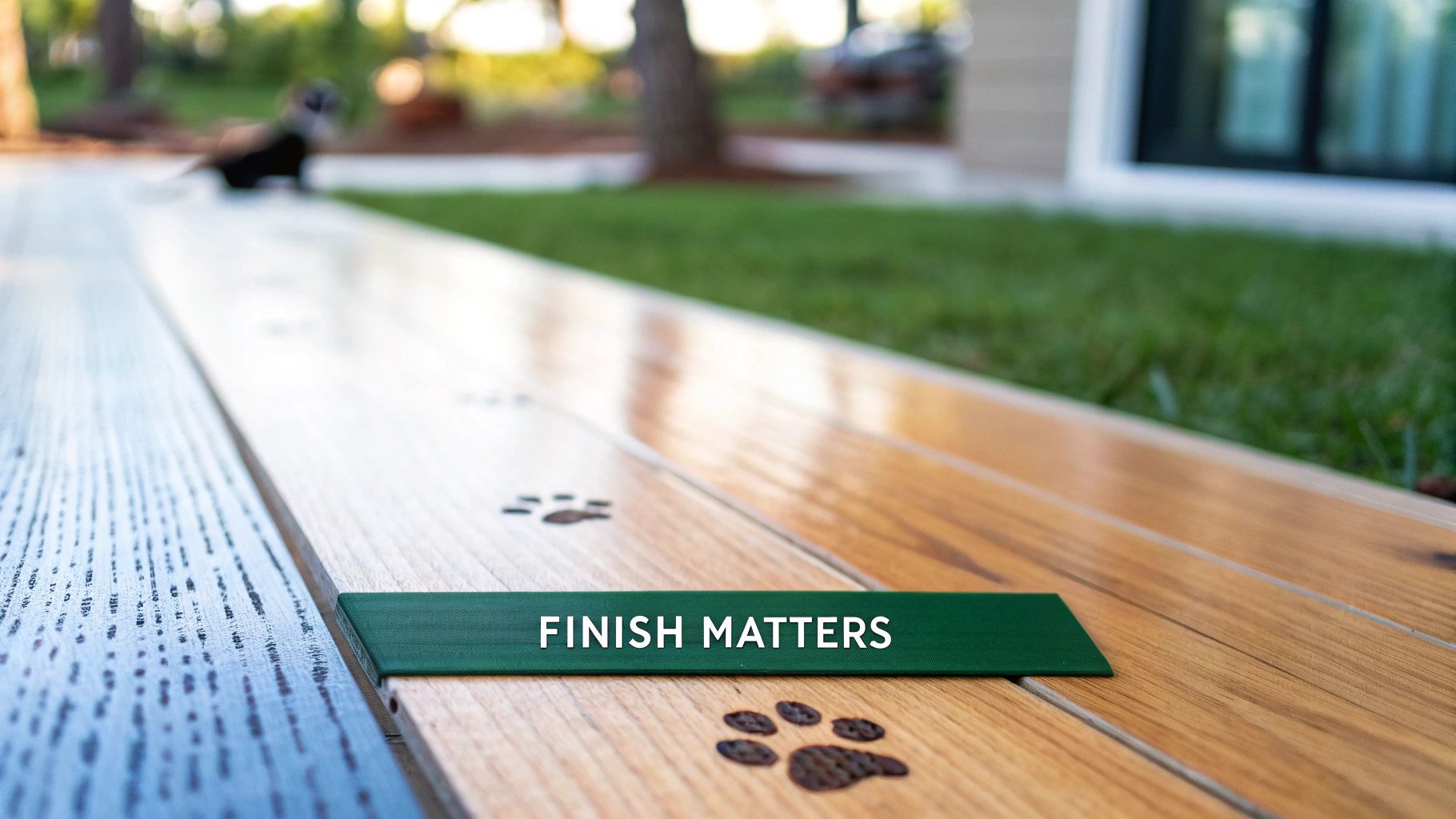
This is all about picking a floor that works for you, not against you, by gracefully hiding the minor imperfections of daily life with a four-legged family member.
Choosing Lighter and Natural Tones
When it's time to conceal pet-related messes, lighter-colored woods are worlds more forgiving than their dark counterparts. Floors with deep, dark stains like jacobean or ebony show everything.
- Light Woods: Species like White Oak, Maple, or Hickory in their natural state or with a light stain are brilliant at hiding fur, dust, and dander. They blend in with the debris instead of creating a stark contrast.
- Medium Tones: Warm, medium-toned floors also perform really well. They give you that classic look but are far less likely to highlight every minor scuff.
A good rule of thumb? Consider your dog's coat. A floor that complements their fur color will naturally make shedding less noticeable between cleanings.
Expert Tip: Steer clear of high-contrast, uniformly dark floors if you have a light-colored dog. The constant visibility of shed fur will drive you crazy. A lighter floor is a much lower-maintenance choice.
The Power of Prominent Grain Patterns
A floor with a strong, visible grain pattern is a dog owner’s best friend. The natural lines, swirls, and color variations in the wood create a "busy" visual texture that cleverly masks minor scuffs and scratches.
Wood species known for their robust graining are perfect for this:
- Hickory: Famous for its dramatic color shifts and bold, rustic grain.
- Oak (White or Red): Features a prominent, open grain pattern that adds tons of character and helps hide daily wear.
A floor that’s too uniform in its color and grain lacks this natural camouflage, making every little mark stand out. The more character and movement your floor has, the better it will conceal the realities of life with an active pet.
Embracing Textured Finishes
On top of the grain, a textured surface can provide an extra layer of concealment. These finishes are designed to look perfectly imperfect from day one, so little dings from a dropped toy or a dog’s claw just blend into the existing character.
- Wire-Brushed: This technique pulls out the softer wood grain, creating a subtle texture that feels great and is fantastic at hiding scratches.
- Hand-Scraped or Distressed: These finishes give the floor a rustic, time-worn appearance. New scratches and dents simply add to the intended aesthetic instead of taking away from it.
By choosing floors with lighter colors, strong grain patterns, and intentional texture, you can ensure your hardwood doesn't just look great on day one, but continues to look fantastic for years—even with the most energetic pups.
If you’re not sure what color or grain will work best for your Richmond home, our team can help. Call Buff & Coat at 804-392-1114 to discuss your options.
Maintaining and Repairing Your Pet-Friendly Floors
Picking the perfect pet-friendly hardwood is a huge first step, but what keeps it looking great for years is a solid maintenance plan. Let's be real—even the toughest floors have to stand up to the daily chaos of life with dogs. A little proactive care goes a long way in protecting your investment and keeping your floors from looking worn out before their time.
Simple, consistent habits are your best friend here. These routines are all about managing the dirt, moisture, and inevitable scratches that come with a four-legged family member, ensuring your floors stay beautiful.
Proactive Strategies to Protect Your Floors
It's always easier (and cheaper) to prevent damage than to fix it. By working a few smart habits into your routine, you can dramatically cut down on the wear and tear from your pets.
- Keep Nails Trimmed: This one is non-negotiable. Long, sharp claws are the number one enemy of hardwood floors. Regular nail trimming or grinding keeps them blunt, which makes a massive difference in preventing surface scratches.
- Use Entry Mats and Rugs: Place high-quality mats at every door to catch dirt, grit, and water before paws track it all over the house. In high-traffic areas—like the hallway where your dog loves to sprint or their favorite play spot—area rugs add another protective layer and give your pup better grip.
- Clean Up Accidents Immediately: Pet urine is acidic. If it sits, it will eat away at your floor's finish and can even stain the wood itself. As soon as you spot a puddle, clean it up with a pet-safe, pH-neutral cleaner. Our guide on how to remove pet stains from hardwood floors walks you through the best way to handle these messes.
Thinking beyond your four walls can also save your floors. If you're tired of cleaning muddy paw prints every time it rains, an outdoor solution might be the answer. This expert guide to pet turf installation can help you create an outdoor space that keeps the mud from ever reaching your beautiful hardwood.
When Damage Happens: What Are Your Options?
Even with the best prep, life happens. A dropped toy, a case of the zoomies, or just years of foot traffic will eventually leave a mark. The good news? Hardwood floors are uniquely repairable. For homeowners in the Richmond area, Buff & Coat offers two main solutions depending on how severe the damage is.
If your floors are looking a little dull with minor, surface-level scuffs, our buff and coat service is the perfect refresh. The process is quick, affordable, and won't turn your life upside down.
We lightly abrade the top layer of your existing finish to smooth out those fine scratches, then we apply a fresh, tough-as-nails coat of commercial-grade polyurethane. Think of it as a brand-new protective shield for your floor, all without the dust and disruption of a full sanding job.
For deeper scratches, widespread wear, or places where the finish is completely worn through, a full hardwood floor refinishing is the way to go. This is a total restoration. Our team uses advanced dustless sanding equipment to take the floor down to its raw, beautiful wood. From there, we can apply a new stain and multiple coats of a high-quality, durable finish. Your floors will look brand new—and often, they’ll be even more resilient than before.
Not sure which service your floors need? That's what we're here for. We'll give you an honest, expert assessment and recommend the right solution for your home.
Richmond homeowners: get a fast quote for refinishing or recoating.
Why Richmond Homeowners Choose Buff & Coat
When you're trying to figure out the best hardwood floors for dogs, going with a local pro makes all the difference. At Buff & Coat, we’ve spent over 15 years working right here in the Greater Richmond area. We know firsthand what Virginia’s humidity does to wood floors and understand the classic styles that define neighborhoods from Midlothian to The Fan.
We're a local, owner-operated business—not some faceless franchise. That means we’re personally invested in doing exceptional work and giving you honest advice. We treat your home just like we would our own.
Our Commitment to Quality and Your Peace of Mind
Picking the right contractor is just as crucial as picking the right wood species or finish. Our whole process is built around being clean, efficient, and completely transparent, so you can feel great about your investment.
Here’s what sets Buff & Coat apart for homeowners in Richmond, Chesterfield, and Henrico:
- 15 years in business: We have over a decade of hands-on experience in the Richmond area.
- Dustless Sanding Systems: We use modern, powerful dust-containment systems to keep your home clean and your family healthy.
- Local, Owner-Operated: When you call us, you're talking to a dedicated local expert, not a call center.
- High-Quality Finishes: We only use professional-grade, low-VOC finishes that are built to withstand daily life with pets.
- Clear Pricing and Honest Advice: You get a detailed, transparent estimate with no hidden fees or sales pressure.
- 5-Star Customer Service: Our goal is to make the process smooth and stress-free, from the first call to the final walkthrough.
We believe that finding the best hardwood floor contractor in Richmond means finding a partner you can trust. From the first consultation to the final coat of finish, we're dedicated to giving you a superior experience.
If you’re ready to install new pet-friendly flooring or bring your existing hardwood back to life, we have the expert guidance and quality craftsmanship your home deserves.
Ready to restore your hardwood floors? Buff & Coat makes the process fast, clean, and stress-free. Call 804-392-1114 or request your free estimate at https://buffandcoatvirginia.com.
FAQ: Best Hardwood Floors for Dogs
Here are the questions we hear most often from Richmond homeowners trying to find the perfect hardwood floors for their furry family members. With over 15 years of hands-on experience, we’ve seen it all and can help you find a beautiful floor that actually holds up to daily life with pets.
What is the most scratch-resistant hardwood for dogs?
Let's be honest: no wood is completely "scratch-proof," but some species are dramatically tougher than others. The best tool for figuring this out is the Janka hardness scale, which is just a fancy way of saying it measures how well a wood resists dents and dings.
Woods like Brazilian Cherry, Hickory, and Hard Maple sit at the top of that scale, making them fantastic choices for homes with active dogs. But hardness is only half the battle. The finish is your floor's first line of defense, and a modern aluminum oxide finish will protect against scratches far better than an old-school polyurethane coat.
For homeowners here in the Richmond area, we usually point people toward Hickory or White Oak. They hit the sweet spot of being impressively hard, having a beautiful grain that naturally hides minor wear, and being stable enough to handle our humid Virginia climate.
Can you repair dog scratches without refinishing the entire floor?
Absolutely. In most situations, you don't need to go through the hassle and expense of a full refinish. It all comes down to how deep the scratches are.
For those light, surface-level scuffs that haven't broken through the finish, our buff and coat service is the perfect fix. We lightly abrade the top layer of your existing finish to smooth out those imperfections and then apply a fresh, tough top coat. It’s a quick and affordable way to make minor scratches vanish.
If the damage is deeper—think gouges that have actually damaged the wood underneath—we can often perform targeted hardwood floor repair. This involves carefully replacing just the damaged boards. We'll always give you an honest assessment to figure out the most cost-effective solution that will look seamless in your Richmond home.
Is engineered hardwood better than solid hardwood for dogs?
Engineered hardwood often has a real advantage for dog owners, especially here in Virginia. Its layered construction gives it better dimensional stability, meaning it’s less likely to warp or cup if a pet accident isn't cleaned up right away.
Plus, high-quality engineered planks usually come from the factory with incredibly durable, multi-layered finishes that offer serious scratch resistance from day one.
The most important thing to look at is the thickness of the top hardwood layer, called the 'wear layer.' A thicker wear layer means the floor can be sanded and refinished down the road, just like solid hardwood. It’s a key factor in your floor's long-term value.
How can I protect new hardwood floors from a puppy?
Bringing a puppy home to new hardwood floors requires a proactive plan. The goal is to build good habits from the very beginning to stop damage before it even starts.
Here are the essentials:
- Keep Nails Trimmed: This is non-negotiable and the single most effective thing you can do. Short, blunt nails minimize scratching potential dramatically.
- Use Rugs Strategically: Place area rugs and runners in high-traffic hallways and play areas. A rug under the food and water bowl is a must-have to catch spills.
- Clean Accidents Immediately: Potty training accidents will happen. Clean them up right away with a pH-neutral cleaner made specifically for hardwood floors to prevent moisture damage.
- Create a "Safe Zone": Crate training or using baby gates is a lifesaver. It prevents your puppy from having unsupervised access to your floors while they're still learning the rules about chewing and potty training.
These simple routines are your best defense for keeping your new floors beautiful.
If you're still weighing your options, the team at Buff & Coat Hardwood Floor Refinishing is here to help. We provide practical, honest recommendations based on years of helping pet owners just like you.
Ready to restore your hardwood floors? Buff & Coat makes the process fast, clean, and stress-free. Call 804-392-1114 or request your free estimate at https://buffandcoatvirginia.com.