
Choosing the right flooring for busy spots like your entryway, kitchen, or main hallway is a major decision for any Richmond homeowner. While options like Luxury Vinyl Plank (LVP) and tile are popular, many don't realize that solid and engineered hardwood are often the smartest long-term investment. Picking the right material and finish ensures your floors will stand up to daily life, from pet claws in a Midlothian mudroom to constant foot traffic in a Chesterfield kitchen, without forcing you to spend a fortune on repairs down the road.
A Guide to High Traffic Flooring Options
Busy homes need floors that can take a beating. We're talking constant foot traffic, pets tearing through, dropped groceries, and muddy shoes—all without showing signs of wear and tear. An entryway in a Short Pump home or a kitchen in The Fan sees the kind of action that would destroy lesser materials in no time. A smart choice goes way beyond just looks; it's about understanding how these materials perform under real-world pressure.
This guide will walk you through the top contenders for those high-traffic zones, breaking down what they do well and where they fall short, so you can find the perfect match for your home.
Key Factors for High Traffic Areas
When you're weighing your options, keep these things top of mind:
- Durability and Hardness: How well does it resist scratches, dents, and scuffs from everything life throws at it—shoes, shifting furniture, and even your dog's claws?
- Moisture Resistance: This is a must-have for kitchens, mudrooms, and entryways where water, snow, and spills are just part of the daily routine.
- Maintenance Needs: Let's be honest, how much work will it take to keep the floor clean and looking great year after year?
- Long-Term Value: It's about finding that sweet spot between the upfront cost and how long the floor will last before needing major repairs or replacement.
A floor that nails these points won't just look fantastic for years; it will genuinely add to your home's overall value.
A lot of people think that putting hardwood in a high-traffic area is a non-starter. That's just not true. The key is choosing the right species and finish. Tough woods like oak and hickory are incredibly resilient, and a professionally applied finish acts like a powerful shield against daily abuse.
Comparing the Top Flooring Choices
Each flooring type brings something different to the table. The best fit really depends on the room itself and what your family needs. Here’s a quick rundown of the top three materials for busy Richmond homes.
| Flooring Type | Best For Durability | Best For Moisture | Maintenance Level |
|---|---|---|---|
| Hardwood | Excellent dent & scratch resistance (species-dependent) | Moderate (spills must be cleaned promptly) | Low to Moderate |
| Luxury Vinyl (LVP) | High scratch & stain resistance (wear layer is key) | Excellent (often 100% waterproof) | Very Low |
| Tile (Ceramic/Porcelain) | Superior scratch & dent resistance | Excellent (completely waterproof) | Low (grout needs occasional sealing) |
Getting a handle on these basic differences is the first step. Next, we’ll dig deeper into the real-world metrics that define durability—like the Janka Hardness Scale for wood and PEI ratings for tile. This is the kind of know-how that will help you pick a floor that doesn’t just match your style but truly stands up to the chaos of your busiest spaces.
A Deeper Dive into Durable Flooring Options
To find the right floor for a high-traffic area, you have to look past the marketing photos and get into what actually makes a material last. We're talking about the real-world metrics—hardness scales, wear layer thickness, abrasion ratings—that separate a floor that looks good for a year from one that performs for a decade or more. Knowing these details is what empowers you to make a smart, long-term investment.
This chart gives you a quick visual on how the big three flooring options stack up in terms of overall durability.
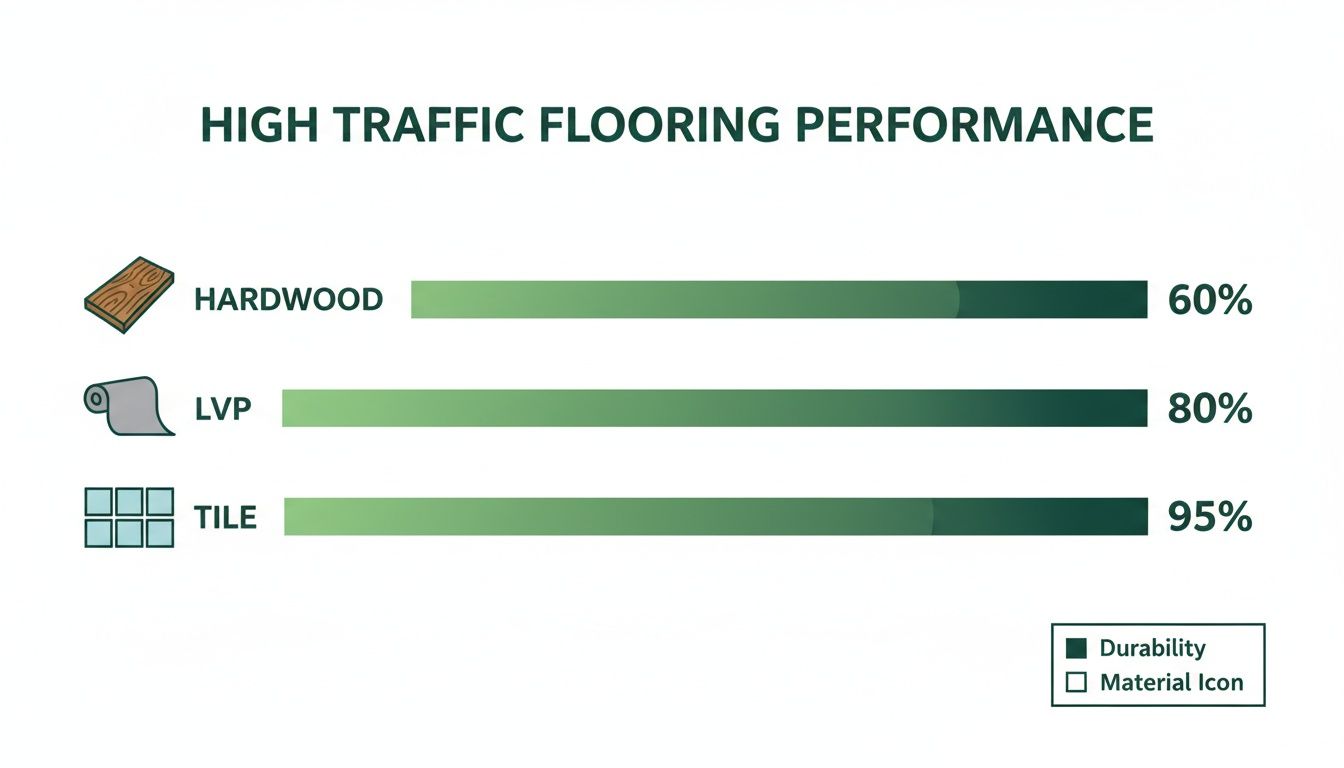
As you can see, tile is the clear winner for pure wear resistance, but don't count the others out. The right kind of hardwood or LVP can absolutely hold its own in a busy home.
Understanding Hardwood Durability
Not all wood is the same. The real secret to a tough hardwood floor is the Janka Hardness Scale, which measures how much force it takes to dent the wood. The higher the Janka rating, the better it will stand up to dropped toys, pet claws, and shifting furniture.
For high-traffic zones, you want to lean on harder species like hickory, oak, and maple. Hickory is a beast with a Janka score of 1820, making it about 41% harder than the standard red oak. White oak comes in at a respectable 1360, and maple is close behind at 1450—both are fantastic choices for resisting the daily grind.
Here in Richmond, where humidity can be a factor, engineered hardwood is often the smarter play. Its layered design—a slice of real hardwood on top of a stable plywood core—keeps it from expanding and contracting with the weather. You get the authentic beauty and durability of solid wood without the headaches of warping.
The Science Behind LVP Strength
Luxury Vinyl Plank (LVP) has taken the flooring world by storm, and for good reason: it’s stylish and incredibly resilient. Its toughness comes down to one critical feature: the wear layer. This is a clear top coat, measured in mils (a thousandth of an inch), that acts as a shield for the printed design underneath.
For a busy household, a thicker wear layer is non-negotiable. While a 6-12 mil layer is fine for a guest bedroom, your hallways and kitchen need a wear layer of 20 mils or more to truly stand up to pets, kids, and constant foot traffic.
This protective layer is what makes LVP a dream to maintain, shrugging off spills and scuffs without a problem. It’s no surprise that property managers love it; you can find great insights into long-lasting flooring by looking at guides on the best flooring for rental properties.
Decoding Tile Toughness
When it comes to sheer hardness, ceramic and porcelain tile are in a league of their own. Their durability is officially graded using the Porcelain Enamel Institute (PEI) rating, which classifies tile based on its ability to resist abrasion and wear. The scale goes from 0 to 5, and it’s pretty straightforward.
Here’s a quick guide to what the numbers mean:
- PEI 0: Wall use only. Don’t even think about walking on it.
- PEI 1: Very light traffic (think stocking feet in a rarely used bathroom).
- PEI 2: Light traffic, suitable for residential bathrooms.
- PEI 3: Light to moderate traffic, which covers most residential floors.
- PEI 4: Moderate to heavy traffic. This is your go-to for all residential areas and even light commercial use.
- PEI 5: Heavy-duty stuff, designed for busy commercial spaces.
For any high-traffic area in your home—kitchens, entryways, hallways—you should only be looking at tiles with a PEI rating of 4 or 5. Anything less, and you’re risking a floor that will chip, scratch, and fade long before its time.
Comparing Durability Metrics for High Traffic Flooring
Here's a quick look at how these durability metrics translate to real-world applications. This table summarizes the key factors for each flooring type, helping you match the material to your home's unique needs.
| Flooring Type | Key Durability Metric | Ideal For | Typical Lifespan |
|---|---|---|---|
| Hardwood | Janka Hardness Scale (1290+) | Living rooms, dining rooms, hallways | 20-100+ years (refinishable) |
| LVP | Wear Layer Thickness (20+ mil) | Kitchens, basements, mudrooms, rentals | 15-25 years |
| Tile | PEI Rating (4 or 5) | Bathrooms, entryways, kitchens | 50+ years |
Ultimately, choosing the right durable floor comes down to understanding the demands of your space and picking the material built to handle them.
If you’re unsure which flooring solution is right for your home, Buff & Coat can take a look and give you honest recommendations for installation or refinishing.
Call 804-392-1114 or request a free estimate today.
When to Refinish Instead of Replacing Your Floors
The constant foot traffic through your home’s busiest spaces—like the entryway, kitchen, and hallways—inevitably leaves its mark on your hardwood floors. When Richmond homeowners see those scratches and a lackluster finish, their first thought is often a full, expensive replacement. But hold on. In many situations, a professional hardwood floor refinishing is a much smarter, more cost-effective choice.
Knowing the difference can save you thousands of dollars and keep the original character of your home intact. The trick is to correctly read the signs your floors are giving you and understand the depth of the damage.
Signs It’s Time to Refinish Your Floors
If your hardwood floors are still structurally solid, chances are they can be brought back to life beautifully. High-traffic areas almost always show surface-level wear long before the actual wood is compromised.
Keep an eye out for these tell-tale signs that a refinish is the right move:
- Surface Scratches: A network of tiny scratches from shoes, pet claws, and daily life that haven't actually dug into the wood.
- Dull Finish: Your floor has lost its sheen and looks flat or cloudy, no matter how much you clean it.
- Minor Discoloration: You might see some sun-fading near windows or slight color changes in the main walkways. This is often just finish-deep.
- Worn-Off Finish: You can spot areas where the protective topcoat is completely gone, but the wood underneath is still in good shape.
These are the kinds of issues that a professional hardwood floor refinishing handles perfectly, as it targets the protective layer without needing to rip out and replace the planks.
The Buff and Coat Solution for Surface Wear
For floors showing the kind of cosmetic wear described above, a full sanding job isn't always the answer. This is where our specialized buff and coat service really shines. It's the ideal way to restore the best flooring for high traffic areas when the damage is only on the surface.
A buff and coat, also known as wood floor recoating, is a maintenance process that revitalizes the existing top layer of your floor's finish. It’s faster, cleaner, and more affordable than a full sand and refinish, making it an ideal choice for busy households in the Richmond area.
The process is straightforward. We lightly abrade (or "screen") the surface of the existing polyurethane finish. This roughs it up just enough for a new coat of finish to get a perfect grip. Then, we apply a fresh, durable topcoat, instantly bringing back the floor's protective shield and beautiful shine.
When Is a Full Replacement Necessary?
While refinishing is a fantastic option most of the time, some floors are simply past the point of no return. If your hardwood has suffered deep, structural damage, a new floor installation might be the only way forward.
It’s time to consider a replacement if you see:
- Deep Gouges or Cracks: Damage that goes way past the finish and deep into the wood plank itself.
- Widespread Water Damage: Extensive warping, cupping, or ugly black stains from long-term moisture.
- Subfloor Issues: Any movement, squeaking, or softness underfoot that points to problems with the foundation below the flooring.
- Thinning Wood: If the floors have already been sanded down multiple times, there may not be enough wood left for another go.
Making the right call between these options can be tough. Our team can help you figure out the most effective path forward.
If you’re unsure whether your floors can be saved, Buff & Coat can provide an honest, expert assessment. Call 804-392-1114 or request a free estimate today.
How We Restore Hardwood in High Traffic Homes
When your hardwood floors start looking tired from all the daily foot traffic, our mission is to bring back their strength and beauty with minimal disruption to your life. For our clients in Richmond, Chesterfield, and Glen Allen, we’ve built our process on honest advice, deep expertise, and a commitment to clean, quality work. It all starts with a straightforward assessment of your floors.
We believe in making the right recommendation, not just any recommendation. That’s why we kick off every project with a detailed, in-person consultation to see the condition of your floors firsthand and really understand what you need.
The Buff and Coat Process for Worn Floors
For most of the wear and tear we see in busy homes, our buff and coat service is the perfect fit. It's a quick, clean, and incredibly effective way to give new life to floors that are covered in surface-level scratches or have just lost their shine. The best part? It’s often done in just one day.
Our technique is simple but precise:
- Deep Cleaning: We start by giving the floor a thorough cleaning to lift away any dirt, oils, or old residues that could get in the way of a perfect finish.
- Light Abrasion: Next, we use a specialized buffing machine with a fine-grit screen to gently scuff up the existing topcoat. This creates an ideal surface for the new finish to bond to, ensuring it lasts.
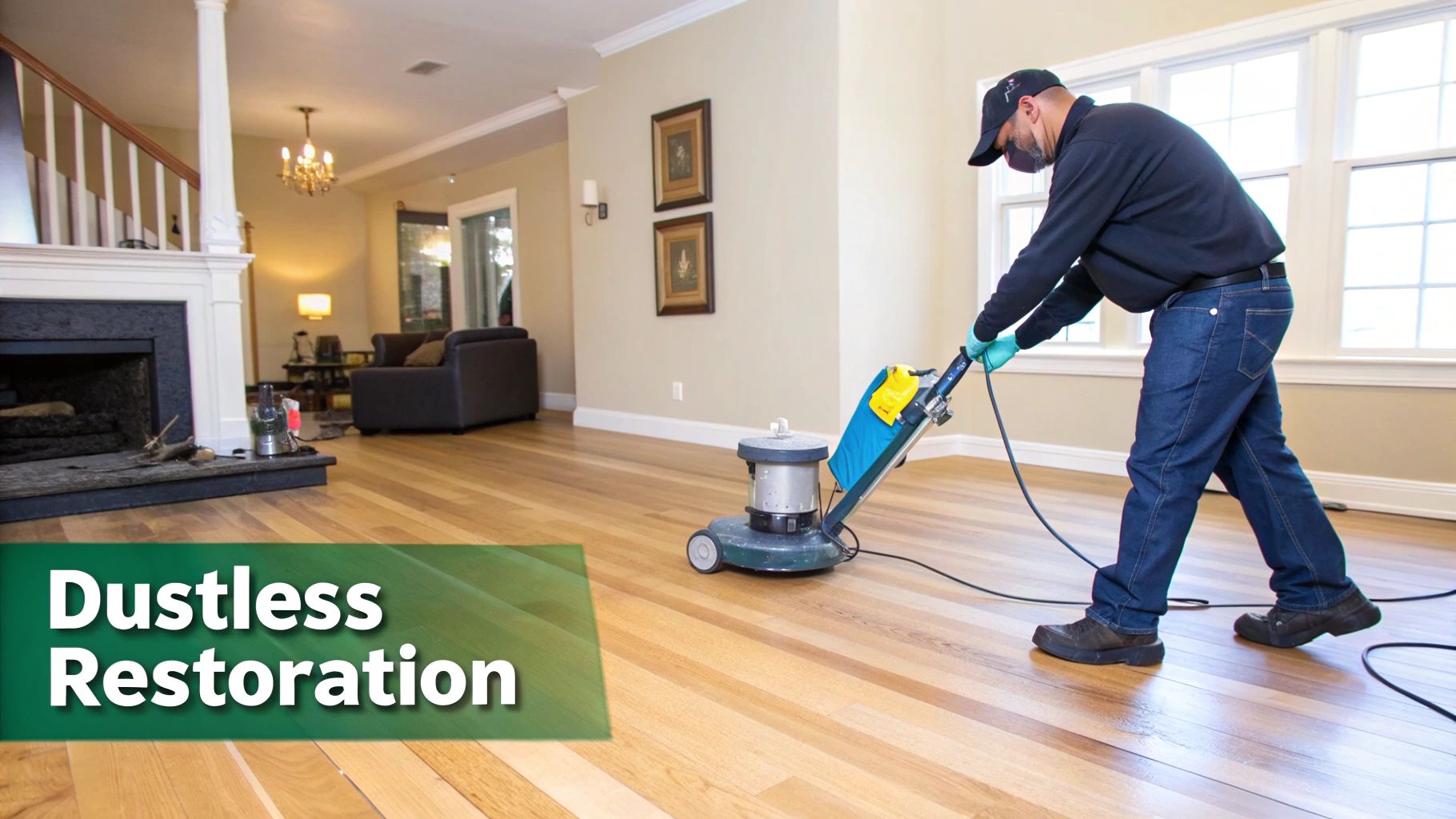
- Dustless System: As we work, our advanced dust containment systems are running, capturing airborne particles right at the source. This keeps your home clean and the air you breathe safe.
- Durable Recoating: To finish, we apply a fresh coat of a high-quality, low-odor polyurethane. This new protective layer restores the floor's original luster and durability, making it ready for action again.
The buff and coat method is specifically designed for floors that are structurally sound but just look worn out. Think of it as essential maintenance that extends the life of your hardwood, saving you from the cost and hassle of a full sand-and-refinish until it’s absolutely necessary.
Handling Deeper Damage with Precision
Sometimes, the damage is more than skin-deep. For floors with deep gouges, stubborn stains, or areas of heavy wear, we offer targeted hardwood floor repair and full dustless sanding services. We can even replace individual damaged boards, seamlessly weaving in new planks that are a perfect match for your existing floor.
Engineered hardwood is a fantastic choice for busy homes. It often has wear layers up to 6mm thick and can be refinished multiple times over its 20-40 year lifespan. Harder species like hickory and white oak can resist dents 40% better than softer woods, and the engineered core prevents 90% of the warping so common in Virginia’s humid climate.
Of course, wear isn't the only issue. Moisture problems can also demand serious restoration; this detailed guide to black mold on hardwood floors is a great resource for removal and repair strategies. Our team is fully equipped to handle these more complex situations, giving you clear guidance on the best path forward. Whether it's a simple recoat or a more involved repair, we deliver solutions that restore both the function and the beauty of your floors.
If you’re not sure whether your hardwood floors need refinishing, let Buff & Coat take a look. We'll give you an honest recommendation.
Call 804-392-1114 or request a free estimate today.
Analyzing the Cost and Long-Term Value of Your Flooring
When you're choosing flooring for a high-traffic spot in your home, it's easy to get fixated on the initial price tag. But the smartest investment isn't just about the upfront cost; it's about the entire lifecycle of the floor. You have to factor in maintenance, repairs, and what happens when it eventually wears out. Understanding the big picture helps Richmond homeowners pick an option that looks great and makes financial sense for years to come.
Comparing Upfront Installation Costs
Let's start with the sticker price. The initial cost to get new flooring installed can swing wildly from one material to another. Generally speaking, LVP is the most budget-friendly option right out of the gate, which is why it's so popular. Hardwood—both solid and engineered—sits at the premium end of the spectrum, while tile usually lands somewhere in the middle, though costs can climb depending on the material and how complex the job is.
- Luxury Vinyl Plank (LVP): You're typically looking at $2 to $7 per square foot just for the materials.
- Tile (Ceramic/Porcelain): Material costs can be on par with LVP, but professional installation is often more labor-intensive, which drives up the total price.
- Hardwood (Solid & Engineered): This is a true investment in your home. The price reflects the quality, beauty, and incredible longevity of the material.
It’s tempting to go with the lowest bid, but that initial number doesn't tell the whole story. The real value shows up when you see how each floor holds up over decades of use.
Lifecycle Costs: The True Financial Picture
A floor's "lifecycle cost" is the total expense from day one until the day it's replaced. This includes the initial purchase, all the cleaning and maintenance, and what it costs to tear it out and start over. From this perspective, hardwood really pulls ahead as the best flooring for high traffic areas in terms of long-term value.
Think about it: LVP and tile are tough, but they have a finite lifespan. Once they get deeply gouged, worn down, or simply look dated, your only real option is to tear them out completely. That means you're back to square one, paying for new materials and labor all over again.
Hardwood is different. It's not a disposable asset; it's a renewable one. When solid or high-quality engineered hardwood shows wear, it can be professionally refinished multiple times, extending its life for generations. This makes its long-term cost of ownership significantly lower than floors that must be replaced.
The Value of Refinishing vs. Replacing
This is where the financial benefit becomes crystal clear. A professional buff and coat service to refresh a worn hardwood floor costs just a tiny fraction of a full replacement. Even a complete sand-and-refinish project is dramatically more affordable than ripping out an old floor and laying a new one.
By refinishing, you can:
- Preserve Your Asset: You're keeping the original, high-value hardwood that adds so much character and structural integrity to your home.
- Boost Property Value: Well-maintained hardwood floors are a huge selling point for buyers and consistently deliver a fantastic return on investment.
- Avoid Landfill Waste: Restoring your floors is a much greener, more sustainable choice than just throwing them away.
Choosing to restore your hardwood isn't just a simple repair—it's a savvy financial move that pays you back for years.
Why Richmond Homeowners Choose Buff & Coat
Picking the right hardwood floor contractor in Richmond is just as important as choosing the flooring itself. For over 15 years, homeowners across Richmond, Midlothian, and Chesterfield have trusted Buff & Coat because we provide honest advice, deliver exceptional work, and have a process that respects your time and your home.
We’re not some faceless national chain. We are a local, owner-operated small business deeply rooted in the community. This experience gives us a genuine understanding of what homes in the Richmond area need—from historic properties in The Fan to newer builds out in Short Pump and Glen Allen. We know which hardwoods stand up to Virginia’s humidity and have the expertise to restore old floors so they can handle the demands of a busy family.
- 15+ Years of Local Experience: We know Richmond homes and what it takes to make floors last here.
- Dustless Sanding Systems: Our advanced equipment captures dust at the source, keeping your home clean and your air healthy.
- Local, Owner-Operated: You get personalized service and direct accountability from a team that cares about its reputation.
- High-Quality, Low-Odor Finishes: We use premium products that are durable and safe for your family and pets.
- Clear Pricing & Honest Advice: No sales games or unnecessary upsells—just straightforward solutions.
- 5-Star Customer Service: We pride ourselves on clear communication and a stress-free process from start to finish.
Ready to restore your hardwood floors? Buff & Coat makes the process fast, clean, and stress-free.
Call 804-392-1114 or request your free estimate at buffandcoatvirginia.com.
Frequently Asked Questions About High-Traffic Flooring
Even with all this information, you probably still have a few specific questions. Here in the Richmond area, we get asked a lot about the real-world performance and upkeep of different floors. Let’s tackle some of the most common ones we hear.
How often should I refinish hardwood floors in high traffic areas?
For those busy zones like hallways, entryways, and kitchens, a little proactive maintenance goes a long way. We recommend a buff and coat service every 3-5 years. Think of it as a tune-up for your floors—it restores the protective topcoat and stops daily wear from turning into permanent damage. It’s the best way to keep that shield against scuffs and scratches strong. A full sand and refinish, where we take the finish down to the bare wood, is a much bigger job that’s usually only needed every 10-20 years. The exact timing depends on your lifestyle, the type of wood, and how well you care for the floors day-to-day.
Is engineered hardwood as durable as solid hardwood?
It absolutely can be. A high-quality engineered hardwood is an incredibly durable choice, and in some situations, it actually outperforms solid wood. The secret is in the construction: you need a product with a thick wear layer (that’s the top slice of real hardwood) and a tough wood species like white oak or hickory. For Richmond’s climate, engineered hardwood is often the smarter choice. Its layered core gives it fantastic stability against the humidity swings we get here, which dramatically reduces the chances of warping or cupping that can sometimes plague solid wood planks.
Can you refinish or install floors without creating a huge mess?
Yes, you can, and you should demand it from any contractor. We know one of the biggest headaches for homeowners is the mess and chaos of a flooring project. That's why our floor refinishing and installation services are built around advanced dustless sanding systems. These are powerful vacuums that connect directly to our sanding equipment, capturing the overwhelming majority of airborne dust right at the source. This keeps your home’s air clean, protects your belongings, and cuts the final cleanup down to almost nothing, letting you enjoy your beautiful new floors without the lingering dusty mess.
If you're still on the fence about the right flooring for your home or wondering if your current floors have what it takes to be restored, Buff & Coat Hardwood Floor Refinishing can give you an honest, expert opinion.
Richmond homeowners: get a fast quote for refinishing or recoating. Call 804-392-1114 or request a free estimate today.