For homeowners here in Richmond, the perfect area rug does more than just add comfort and style—it has to protect your beautiful hardwood floors. The secret lies in choosing a rug made from natural, breathable fibers like wool or cotton and pairing it with a high-quality felt or natural rubber rug pad. These combinations are your best defense against scratches, stains, and ugly chemical reactions that can ruin your floor's finish, a common issue we see in the floor refinishing work we do across Richmond, VA.
Protecting Your Hardwood With the Right Area Rug
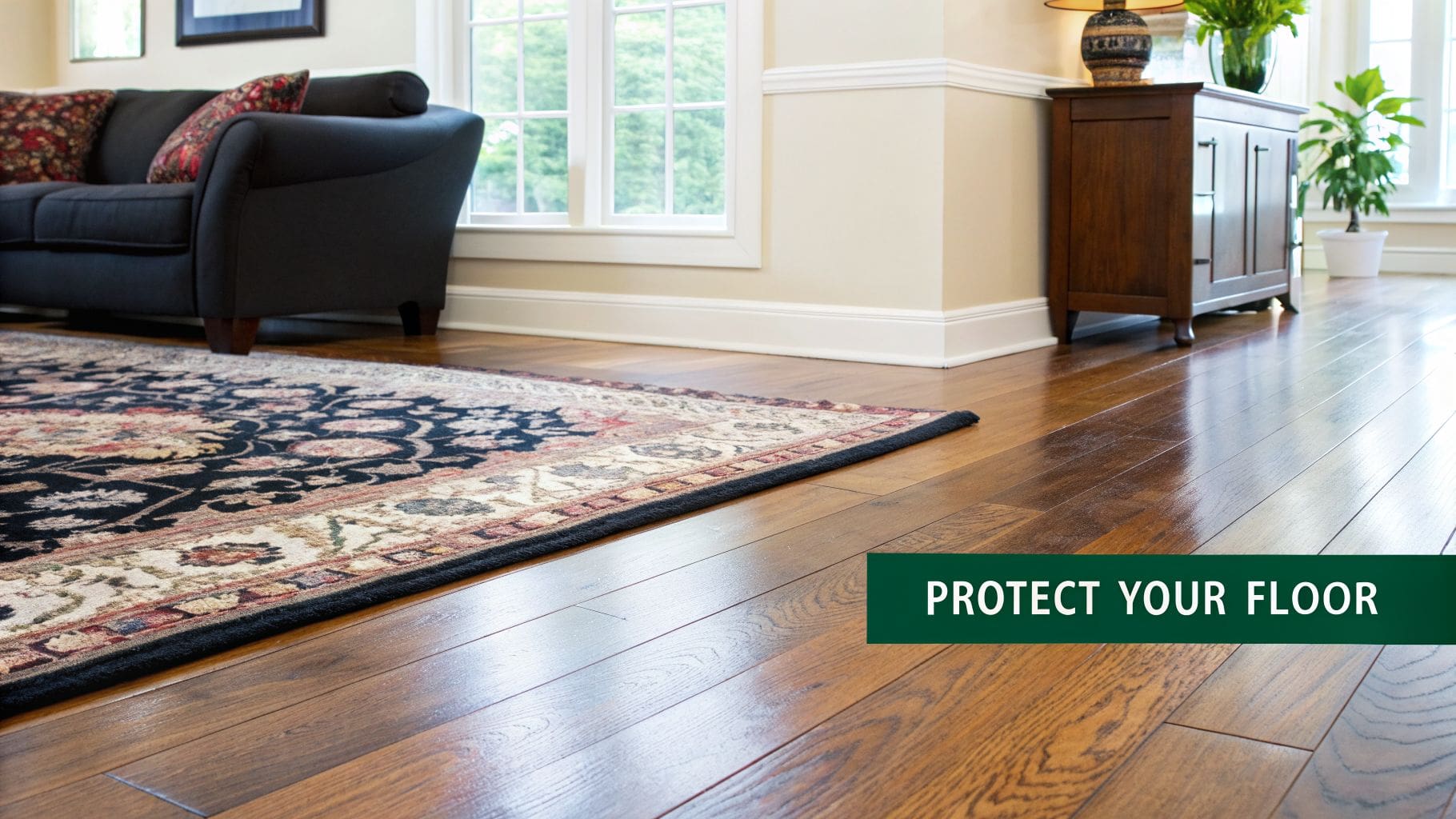
Hardwood floors are a huge part of what gives Richmond homes their character and value. They’re a significant investment, so the last thing you want is to accidentally damage them by choosing the wrong decor. The challenge is finding that perfect balance: getting the softness and design you love from a rug without harming the gorgeous wood underneath.
An area rug can completely transform a room, tying everything together and adding a much-needed layer of coziness. But a poor choice can lead to some seriously expensive and frustrating problems down the road.
Common Rug-Related Floor Problems We See
As a hardwood floor refinishing company with over 15 years of experience in the Richmond area, we've seen it all. Many homeowners, with the best intentions, pick out rugs or pads that end up causing irreversible damage. Here are some of the most common issues we encounter:
- Chemical Staining: Cheap, synthetic rug backings can off-gas and chemically react with a floor's finish, leaving a permanent discolored or sticky pattern.
- Abrasive Scratches: Coarse rug materials (like jute or sisal) or a rug that constantly shifts and slides can slowly wear away the protective topcoat.
- Finish Discoloration: Trapped moisture from non-breathable rug pads can cause the wood finish to turn hazy or cloudy.
These problems often sneak up on homeowners, developing slowly under the rug where they can't be seen. By the time you notice, the damage might be severe enough to require professional hardwood floor repair or even a full dustless sanding and refinishing job. Understanding what causes this damage is the first step to preventing it.
Before we dive into materials, it's worth noting that a big part of floor care is thinking about everything that touches them. Learning how to protect your floors from your furniture is just as critical as choosing the right rug. For a deeper look, you can also check out our detailed guide on choosing an area rug for hardwood floors.
If you’re unsure whether a rug has already damaged your floors, Buff & Coat can take a look and give you an honest recommendation. Call 804-392-1114 for a fast, free estimate in the Richmond area.
Why the Right Rug Pad Is Your Floor's Best Friend
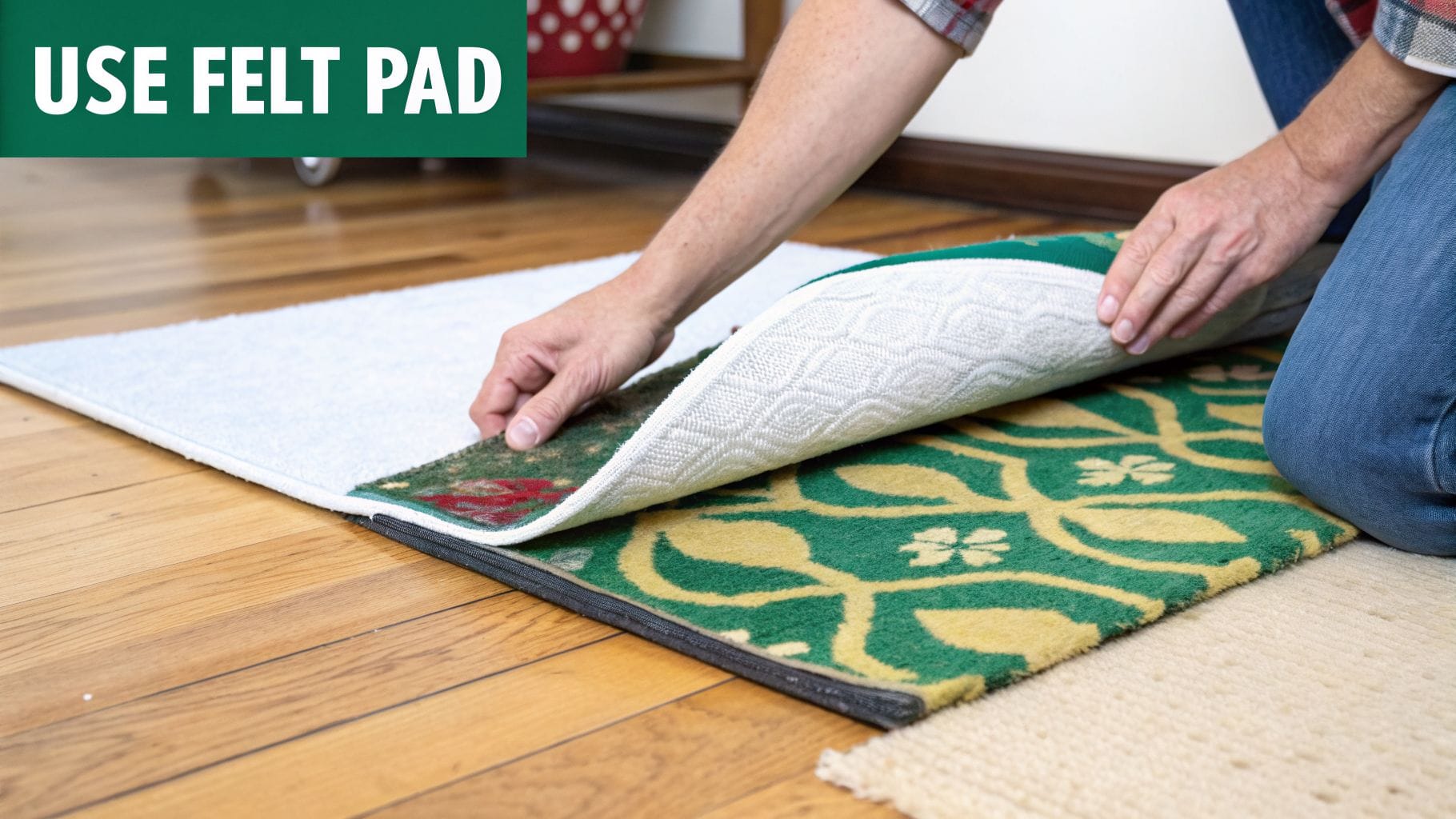
Think of a rug pad as essential insurance for your hardwood floors. While your area rug brings style and comfort to a room, it’s the pad underneath that’s doing the real heavy lifting—protecting your investment. Skipping it, or grabbing the wrong one, is one of the most common and costly mistakes we see homeowners in Richmond and Chesterfield make.
Many of those cheap, grippy rug pads you find at big box stores contain synthetic rubber, latex, or PVC. They seem harmless enough, but these materials can be devastating to your floor's polyurethane finish. Over time, a chemical reaction occurs that essentially “melts” the pad into the wood, leaving behind a permanent, ugly waffle pattern. This kind of damage is irreversible and can only be fixed with a full sanding and refinishing.
What to Look For in a Hardwood-Safe Pad
The fix is simple: choose a pad made from materials that work with your floor, not against it. When it comes to hardwood, there are two gold-standard options.
-
100% Felt: A dense felt pad provides a soft, breathable cushion. It’s crucial because it allows air to circulate, preventing trapped moisture that can damage the wood and its finish. This type is perfect for larger area rugs that are heavy enough to stay put on their own.
-
Felt + Natural Rubber: If you need some grip to keep a rug from sliding, look for a combination pad. The best ones pair a felt top with a bottom layer made of 100% natural rubber. Unlike its synthetic lookalikes, natural rubber is chemically stable and won’t stick to or stain your floors.
A quality underlay, like a dedicated rug pad for wood tile floors, is non-negotiable for preventing scratches and keeping your rug right where you want it.
Our Expert Take: The main job of a quality rug pad is to create a breathable, protective barrier. It stops micro-scratches from trapped dirt, absorbs the impact of foot traffic, and prevents dangerous chemical reactions before they can even start. As a local floor refinishing contractor, we can’t stress this enough.
While protecting the floor is a huge benefit, don't forget about indoor air quality. Carpets are known for trapping dust and dander, and some synthetic materials can release VOCs. Studies have found that hardwood floors can dramatically reduce airborne particles in a room—a key reason why 54% of home buyers prefer surfaces that are easy to clean. You can learn more about the health perks of hardwood in this in-depth flooring comparison.
At the end of the day, the small upfront cost of a high-quality rug pad will save you from the much larger expense and headache of a refinishing job down the road. For more tips on this, check out our guide to finding the best non-slip rugs for hardwood floors.
Selecting Rug Materials That Preserve Your Floors
Now that we’ve covered the importance of a quality rug pad, let's talk about the rug itself. Choosing the best carpet material for your hardwood floors is the next critical step. Not all fibers are created equal, and some are much kinder to your wood’s finish than others. The goal is to find a rug that’s not just beautiful, but also safe for the long haul.
From our experience working in homes from Midlothian to Glen Allen, natural fibers are almost always the clear winner. They’re breathable, durable, and generally safer for hardwood floor finishes.
Floor-Friendly Natural Fibers
- Wool: This is our top choice for a reason. Wool is naturally soft, incredibly durable, and has a great pile density that feels amazing underfoot. Most importantly, it’s breathable, meaning it won’t trap moisture against your beautiful floors.
- Cotton: Cotton rugs, especially flatweaves like dhurries or kilims, are lightweight and easy to clean. Their natural breathability makes them a solid, safe choice to place over any hardwood surface.
- Silk: While it's a luxury option, silk is exceptionally soft and has a gorgeous sheen. Just like other natural fibers, it’s perfectly safe for wood, but you’ll want to keep it in low-traffic areas because it's more delicate.
Natural Fibers That Require Caution
Some of the most popular natural materials on the market right now come with a small warning label.
- Jute and Sisal: We get it—these materials offer a fantastic, earthy texture that homeowners absolutely love. The problem is, they are naturally coarse and abrasive. Without a proper rug pad, those stiff fibers can act like fine-grit sandpaper, slowly creating micro-scratches on your floor's finish over time.
The Fix: Don't write off these stylish rugs just yet! The solution is simple: pair them with a high-quality, dense felt pad. This creates a soft, protective buffer between the coarse rug and your delicate hardwood finish.
What About Synthetic Rugs?
Synthetic rugs made from materials like nylon and polypropylene are incredibly popular for their stain resistance and affordability. This makes them a very practical option for busy households with kids or pets.
While you can definitely use them on hardwood, there’s one critical rule: they must be paired with a breathable rug pad.
Many synthetic rugs come with a built-in plastic or latex backing that can trap moisture and even off-gas chemicals, leading to the exact discoloration and staining we talked about earlier. A high-quality felt or natural rubber pad is non-negotiable here; it creates that essential breathable barrier to protect your floors.
Ultimately, your choice comes down to your lifestyle. For kitchens, where spills are a constant threat, a synthetic rug might be the more practical choice. You can explore our specific guide on the best rugs for hardwood floors in the kitchen for more tailored advice.
But whether you choose natural or synthetic, the key takeaway is always the same: pairing it with the right pad is what protects your investment.
How to Size and Place Rugs for Maximum Impact and Floor Health
Choosing the perfect rug is only half the battle. Knowing how to size and place it correctly is what truly brings a room together and makes it feel complete. A rug that’s too small can make your entire space feel disconnected and cheap. But the right size creates a cohesive, grounded foundation that actually enhances the beauty of your hardwood floors.
The most common mistake we see in homes around Richmond is what designers call the "floating rug"—a small rug stranded in the middle of a room, not touching any furniture. This visually shrinks the space and does nothing to define a conversation or seating area. Your rug should be the anchor, connecting all the key pieces of furniture.
Living Room Placement Rules
In your living room, you generally have three great options for placing a rug. Each one creates a slightly different feel, so the goal is to pick one and stick with it for all the furniture in that seating area.
-
All Legs On: This is the most luxurious and unifying choice. You get a large rug where all your furniture—the sofa, chairs, and coffee table—sits completely on top of it. This creates a grand, clearly defined seating area and works best in larger, open-concept spaces.
-
Front Legs On: This is easily the most popular and versatile method. The front legs of your sofa and chairs rest on the edge of the rug, tying everything together without needing a massive, room-sized rug. This approach is a fantastic way to find the best carpet for hardwood floors and make it work perfectly in a standard-sized Richmond living room.
-
No Legs On (The Right Way): In a very small or narrow room, you can float a rug in the center, but there's a catch. It must be large enough that its edges come within a few inches of the front legs of all your furniture. This creates the illusion of a connected space without visually overwhelming the room.
Sizing for Dining Rooms and Bedrooms
In a dining room, the rule is simple but non-negotiable: the rug has to be large enough so that when you pull the chairs out to sit down, all four legs remain on the rug. If the back legs catch on the edge, it’s not just a tripping hazard—it’s a clear sign the rug is too small.
For bedrooms, a large rug that sits under the bottom two-thirds of the bed and extends out on both sides creates a soft, warm landing spot for your feet in the morning. As an alternative, placing runners on either side of the bed can achieve a similar cozy effect while still showing off more of your beautiful hardwood.
Smart Maintenance for Your Rugs and Hardwood
You’ve found the perfect rug for your hardwood floors—great! But picking it out was just the first step. To keep both your rug and those beautiful wood surfaces looking their best, a little smart maintenance goes a long way. Setting up a simple routine is the secret to protecting your investment and stopping premature wear before it even starts.
It's easier than you think, and it will add years to the life of your floor and your rug.
A Simple Hardwood and Rug Care Routine
The main enemy here is tiny dirt and grit particles. When they get trapped between your rug and the floor, they act just like sandpaper with every footstep. Your goal is to keep them out.
- Vacuum Weekly (The Right Way): Run the vacuum over your area rugs at least once a week, but here’s the important part: turn off the beater bar. That spinning bristle brush is fantastic for deep-cleaning wall-to-wall carpet, but it can tear up delicate rug fibers and even scratch your hardwood's finish over time.
- Blot Spills Immediately: Life happens. When a spill occurs, grab a clean, dry cloth and blot—never rub! Rubbing just grinds the liquid deeper into the rug and increases the chances of it soaking through to the wood.
- Rotate Every 6-12 Months: Give your area rugs a 180-degree turn every 6 to 12 months. This simple trick ensures the rug wears evenly and, just as important, prevents the sun from unevenly fading the rug and the exposed hardwood around it. This is a big deal in sunny Richmond homes.
The Annual Inspection
This is the most important part of your routine. Pull your rugs up completely at least once a year. It’s the only way to get in there and thoroughly clean the floor underneath, removing all the abrasive dust that inevitably settles.
Think of this annual check-up as a health screening for your floors. It's your best chance to spot any dull spots, micro-scratches from the rug shifting, or any discoloration. These are the tell-tale signs that your floor’s protective finish is wearing thin and needs a recoat.
Catching these warning signs early is everything. Hardwood floors can last 50 to 100 years with proper care, but letting the finish wear away can lead to expensive, deep-set damage. In fact, that longevity and easy upkeep is a major reason why 54% of homeowners now prefer hardwood to carpet, especially in homes where pet dander and allergens are a concern, as noted in this comprehensive homeowner's guide.
If you see any of these issues during your annual rug lift, don't wait for the problem to get worse. A professional buff and coat service can restore that essential protective layer—and we can do it quickly without the dust, mess, or disruption of a full sanding job.
If you’re in the Richmond, VA area and notice the floors under your rugs are looking a little tired, give Buff & Coat a call. We’ll give you an honest assessment and let you know if a simple wood floor recoating is all it takes to bring back that protection and shine.
When to Call a Pro for Hardwood Floor Protection
Even if you’ve chosen the perfect area rug and have a stellar cleaning routine, your floor’s finish will eventually show signs of a life well-lived. Think of that finish like the clear coat on your car—it’s there to take the dings and scuffs of daily life so the beautiful wood underneath stays pristine.
The trick is learning to spot when that protective layer is wearing thin. Acting early is the key to preventing small issues from turning into real, expensive damage. For homeowners in the Richmond area, a quick annual check-up when you lift your rugs to clean can tell you everything you need to know.
Warning Signs Your Floors Need Help
Keep an eye out for these subtle but important clues that your floor’s protective finish is calling it quits:
- Dull Patches: Are the high-traffic lanes in your home starting to look flat or matte compared to the shiny areas under your sofa? This is the very first sign that the finish is wearing away.
- Visible Micro-Scratches: When the light hits just right, do you see a web of tiny, shallow scratches on the surface? This means daily grit and foot traffic are starting to cut into the topcoat.
- Discoloration: Have you spotted any yellowing or hazy areas, especially where an old rug pad used to be? This often points to a chemical reaction from an incompatible pad material.
Our Pro Tip: Don't panic when you see these issues! Catching them early is your best defense against a costly, full-blown hardwood floor restoration project down the road. A little prevention is always more affordable than a major repair.
For these kinds of surface-level problems, our signature buff and coat service is the perfect answer. It's a fast, completely dustless process where we gently scuff the old finish and apply a brand-new, durable topcoat of a low-odor, high-quality finish. We can restore your floor’s protection and bring back its original glow, often in just one day.
But what if the damage goes deeper? For scratches that have cut through to the wood stain or for stains left behind by pets, our dustless sanding and refinishing process can fully restore the wood itself.
Protecting your floors isn't just about looks—it's a smart financial decision. A recent study found that 54% of home buyers are willing to pay a premium for houses with hardwood. Better yet, a professional refinishing project can deliver a return of up to 106% on your investment. You can learn more about the numbers in this detailed resale value analysis.
Not sure what your floors need? If you're a Richmond homeowner, just give us a call. The Buff & Coat team will provide an honest, no-obligation assessment to help you find the right solution for your home and budget.
FAQ: Common Questions About Rugs on Hardwood Floors
It's a question we hear all the time from Richmond homeowners: "How can I enjoy the comfort of a rug without wrecking my beautiful hardwood floors?" It’s a perfectly valid concern. You want that cozy feel underfoot, but not at the expense of your stunning wood.
We've put together answers to the most common questions we get, so you can choose the best carpet for your hardwood floors and keep them looking fantastic.
Can a Rug Really Damage My Hardwood Floor?
Yes, absolutely. If you're not careful, the wrong rug or a bit of neglect can cause some serious, sometimes permanent, damage. The biggest offenders are rug pads made with synthetic rubber or PVC. These materials can have a chemical reaction with the polyurethane finish on your floors, leaving a stained, waffle-like pattern that’s impossible to remove without a full refinish.
Another problem is the grit and dirt that naturally get trapped underneath. With every step you take, that trapped debris acts just like sandpaper, grinding away at your floor's finish and creating thousands of tiny scratches.
The fix is simple. Always use a high-quality pad made from 100% felt or natural rubber. And at least once a year, lift your rugs and give the floor underneath a thorough cleaning. It’s a small bit of maintenance that goes a long way in protecting your investment.
How Long Should I Wait Before Putting a Rug on New Floors?
This is a critical step that many people unfortunately miss. You have to wait for the new finish to fully cure, which is very different from just being dry to the touch. If you put a rug down too soon, you’ll trap the solvents that are still evaporating from the finish. It essentially suffocates the floor, and the result is a soft, ruined finish.
The curing timeline depends entirely on the type of finish used:
- Water-based finishes need about 7–14 days to cure completely.
- Oil-based finishes take much longer, often requiring up to 30 days.
At Buff & Coat, we always give our Richmond clients a specific curing schedule for their new or refinished floors to make sure there are no costly surprises.
Are Jute or Sisal Rugs Safe for Hardwood?
Natural fiber rugs like jute and sisal are incredibly popular for their textured, earthy look. The problem is that their very nature is coarse and abrasive. Over time, the rough backing of that rug can act like a scouring pad on your floor’s protective finish, dulling it down and creating a worn-out path.
The good news is that you don't have to give up on that textured look you love. The solution is simple: always pair jute or sisal rugs with a high-quality, dense felt pad.
This pad creates a soft, protective buffer between the rough rug and the delicate finish. It absorbs the friction and stops the micro-scratches before they start, letting you have the style you want without harming your hardwood.
Why Richmond Homeowners Choose Buff & Coat
- 15+ Years in Business: We have decades of experience serving homeowners in Richmond, Midlothian, Henrico, and beyond.
- Dustless Sanding Systems: Our advanced equipment captures dust at the source, keeping your home clean during the refinishing process.
- Local, Owner-Operated: We’re a local small business, not a franchise. You get dedicated service and accountability from a team that cares.
- High-Quality Finishes: We use durable, low-odor finishes that protect your floors and look incredible.
- Clear Pricing & Honest Advice: We provide straightforward quotes and will never try to sell you a service you don’t need.
- 5-Star Customer Service: We pride ourselves on quality workmanship and happy clients.
Ready to restore your hardwood floors? Buff & Coat makes the process fast, clean, and stress-free. Call 804-392-1114 or request your free estimate at get your free estimate online.