
Floor Sanding in Westbriar, VA
Westbriar's 1960s Floors Deserve Better Than Another Coat of Paint
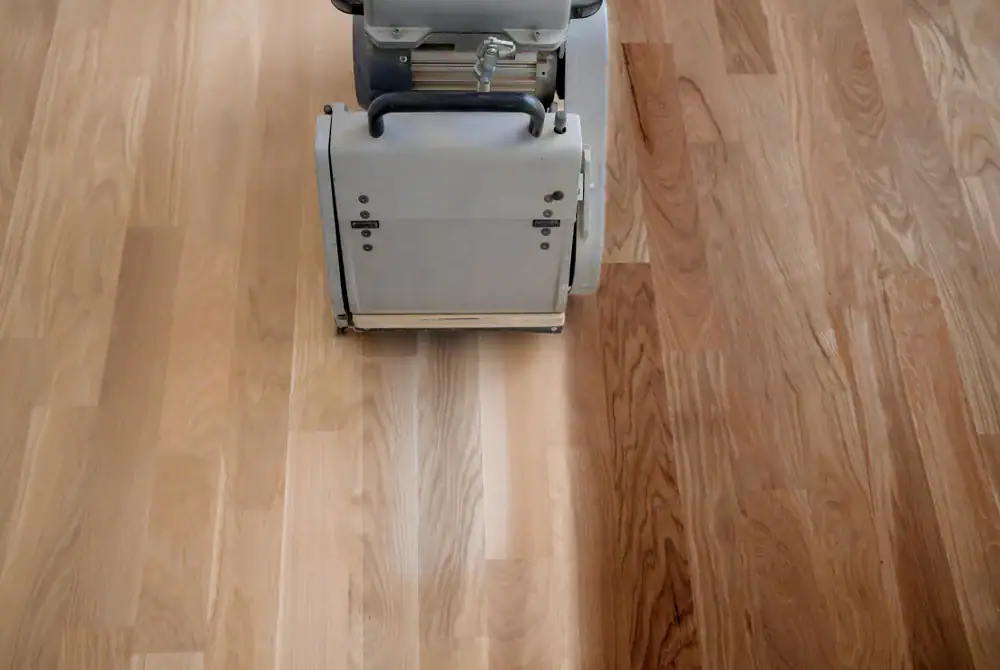
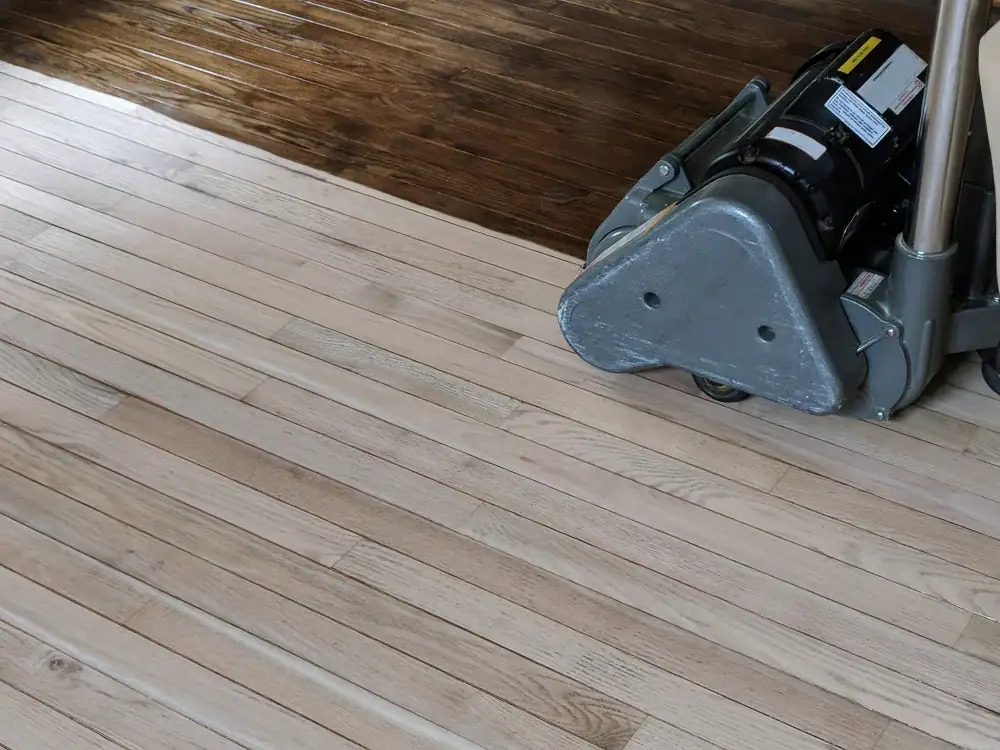
Hardwood Floor Refinishing Westbriar VA
When a floor gets properly sanded and refinished, you’re not just looking at something shinier. You’re looking at a surface that’s been taken back to bare wood, leveled, and sealed with a finish that actually holds not a surface coating sprayed over decades of buildup. That difference shows up immediately, and it holds up for years.
For Westbriar homeowners specifically, this matters more than it might somewhere else. The homes along Westbriar Drive and the surrounding streets were built in the early 1960s, and most of them still have their original solid oak floors. Those floors have been through sixty summers of Richmond humidity the kind that pushes moisture into wood and causes boards to cup and swell and sixty winters of dry heat that pulls it back out. That cycle leaves its mark. A full sand-down addresses all of it: the cupping, the surface scratches, the uneven fading from sunlight filtered through the tree canopy that lines this neighborhood.
If you’re thinking about selling, the numbers are worth knowing. The National Association of REALTORS® puts the return on professional floor refinishing at 147%. In a neighborhood where homes are valued in the $355,000–$392,000 range, that kind of return on a refinishing project is hard to ignore. And if you’re staying put, you’re simply getting your floors back the way they looked before years of foot traffic, furniture, and Henrico County weather took their toll.
Trusted Floor Sanding Company Henrico VA
We’ve been refinishing hardwood floors in Henrico County since 2012, and our owner David Emmerling has been doing this work in the Richmond area for over twenty years. That’s not a corporate timeline that’s a career built floor by floor in neighborhoods exactly like Westbriar.
The Tuckahoe District has a specific kind of housing stock. Mid-century homes, original oak floors, mature tree cover, and a climate that swings hard between humid summers and dry winters. If you’ve lived on or near Patterson Avenue long enough, you already know what that combination does to hardwood. David knows it too, which is why moisture testing is part of every project before a single pass of the sander.
More than 80% of our new business comes from referrals. In a community like Westbriar where neighbors talk, Nextdoor is active, and people have lived in the same house for years that number means something. It means the work holds up, and the people who’ve had it done are comfortable putting their name behind it.
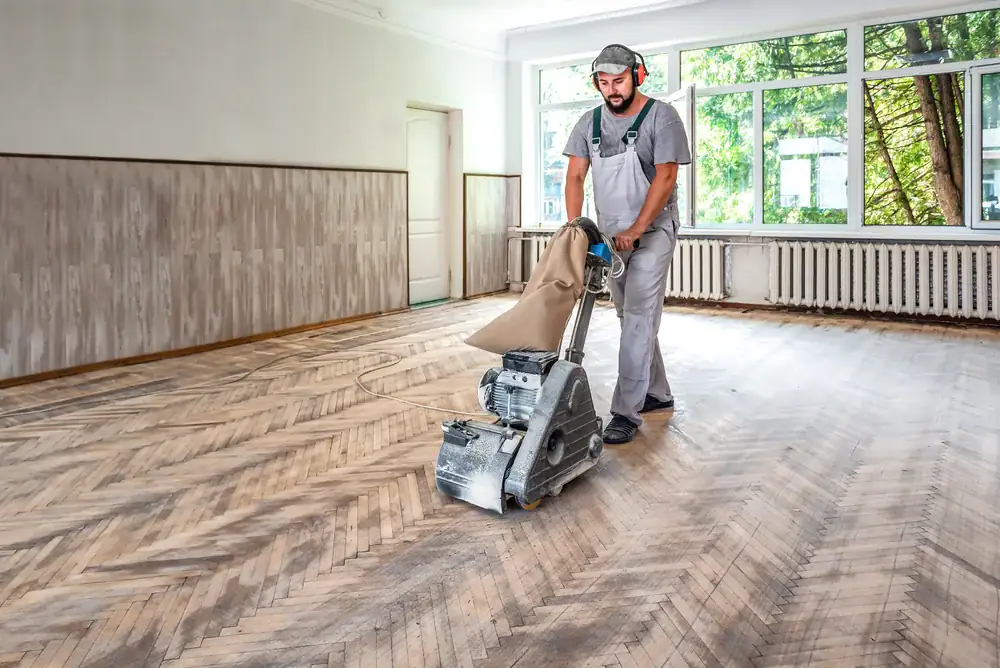
Dustless Floor Sanding Process Westbriar VA
It starts before we touch the floor. Moisture levels in the wood are tested first a step that’s easy to skip but critical in Richmond’s climate. If the boards are holding too much humidity from a wet summer, or they’ve dried out from months of forced-air heat, applying finish at the wrong time leads to adhesion problems down the road. That doesn’t happen here because it’s checked before the work begins.
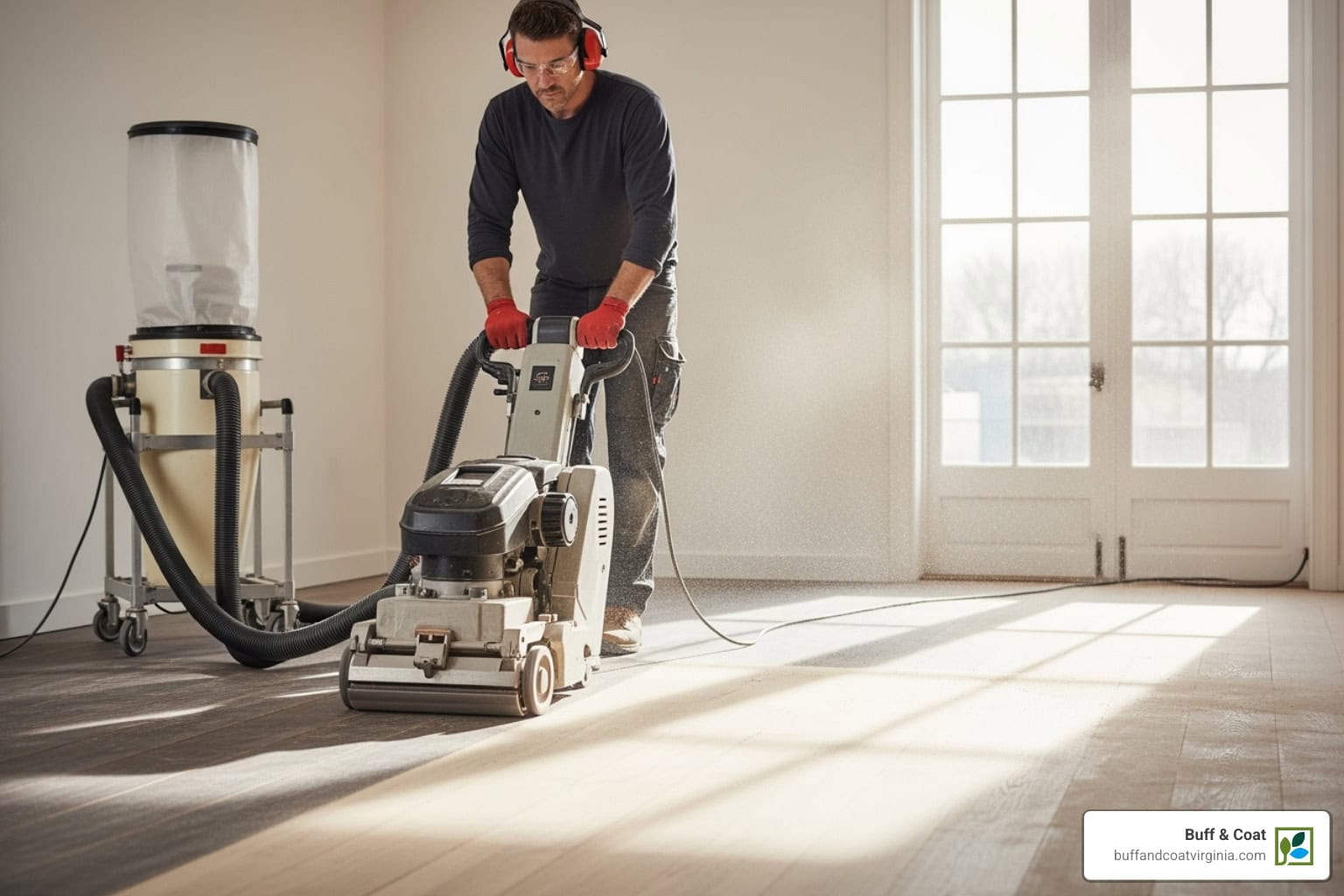
Once moisture is confirmed, the sanding starts with our dustless system. The equipment captures fine particles at the source, so they don’t become airborne and coat every surface in the room. This isn’t a dust-reduction claim it’s a contained process. Our customers consistently describe finishing the day with no cleanup required, which matters when you have a household to run and can’t spend a weekend wiping down furniture.
After sanding, the finish consultation happens in person. You’ll choose your gloss level satin is the most popular right now, and it works well with the warm, natural oak tone that’s trending back into favor after years of gray-stained floors and the finish goes down the same day. Water-based formulas cure faster and carry lower VOCs, so most families are back to normal use by the following morning. One day in, done.
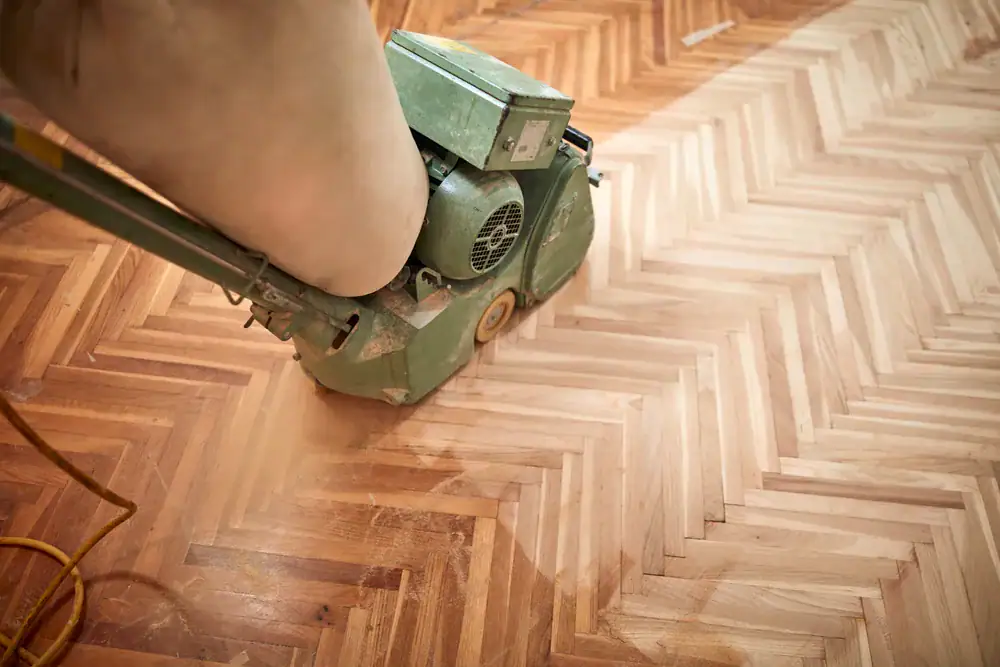
Wood Floor Sanding and Restoration Westbriar VA
Not every floor needs a full sand-down. Part of what we do before quoting anything is assess the actual condition of the wood. If the finish is worn but the floor itself is structurally sound and hasn’t been sanded too many times already, a buff and coat a surface-level scuff and recoat may be all it needs. That service runs around $1,024 for a typical Westbriar home and takes even less time than a full refinish.
If the floor has deeper scratches, visible cupping from moisture exposure, staining that’s worked into the wood, or a finish that’s been layered over so many times it’s starting to peel that’s when full sanding is the right call. Solid hardwood floors like the ones in Westbriar’s 1960s homes can be sanded four to five or more times over their lifetime. Most of these floors have been refinished once, maybe twice. There’s still plenty of life in them.
Full floor sanding runs $3–$8 per square foot in this area, depending on the size and condition of the floor. For a home in the 1,300–2,200 square foot range which covers most of what’s on Westbriar Drive that puts a full project somewhere between $3,900 and $17,600 at the outer edges, with most mid-sized projects landing well within that range. We’ll walk you through what your specific floor needs before any work is scheduled.
Are my original 1960s hardwood floors in Westbriar still worth refinishing?
Almost certainly, yes. Solid hardwood floors from the 1960s the kind found throughout Westbriar’s mid-century homes are typically 3/4-inch thick oak or pine, and they can be sanded professionally four to five or more times over their lifetime. Most of these floors have been refinished once or twice at most, which means there are multiple refinishing cycles still available in the wood.
What looks like a floor that needs to be replaced dull, scratched, faded unevenly from decades of sunlight through those tree-lined streets is almost always a floor that needs to be sanded. The only way to know for certain is to have someone assess the actual thickness and condition of the wood. We do that evaluation before recommending anything, and if replacement is genuinely the better call, that’s what you’ll be told.
How long does a floor sanding project typically take to complete?
Most floor sanding and refinishing projects are completed in a single day. That includes the sanding, the finish consultation, and the application of the finish itself. With water-based finishes which we use as standard curing is faster and VOC levels are lower, so most homeowners are back to normal foot traffic by the following morning.
This matters a lot for Westbriar families with full schedules and kids at home. You’re not looking at a multi-day project where you’re displaced, the furniture is stacked in the garage, and the smell lingers for a week. The process is designed to be in and out in one visit, with no mess left behind and no extended disruption to your household.
What does dustless floor sanding actually mean, and does it really work?
Dustless floor sanding means our equipment captures fine wood particles at the source at the sanding head itself before they become airborne. It’s not a filter on a shop vac at the end of a hose. The containment happens where the dust is created, which is what makes the difference between a genuinely clean process and one that still sends particles drifting into other rooms.
In older homes like the ones throughout Westbriar, this is especially relevant. Decades of accumulated particulates are already embedded in the structure of these houses. Adding a cloud of fine wood dust to that environment one that settles into HVAC ductwork, onto furniture, and onto surfaces three rooms away is a real concern for families, particularly those with children or anyone with respiratory sensitivities. Our customers consistently report no cleanup required after the project is finished. That’s the standard, not the exception.
How does Richmond's humidity affect hardwood floors and the refinishing process?
Richmond’s climate is one of the more demanding environments for hardwood floors in the mid-Atlantic region. Summers in Henrico County regularly push indoor humidity into ranges where solid wood absorbs enough moisture to cause cupping where the edges of boards rise higher than the center and crowning, where the middle of a board swells upward. Winters swing the opposite direction, with dry forced-air heat pulling moisture out of the wood and causing boards to gap or crack along the grain.
For floors in Westbriar’s 1960s homes that have been through this cycle sixty times, the cumulative effect is visible. It also affects the refinishing process directly. Applying finish over wood that’s at the wrong moisture content leads to adhesion failure, bubbling, or premature wear sometimes within months. That’s why moisture testing before any project is non-negotiable. It’s not a precaution it’s the step that determines whether the finish you’re paying for will actually last.
Is it worth refinishing my floors before listing my Westbriar home for sale?
The data makes a strong case for it. The National Association of REALTORS® documents a 147% return on investment for professional floor refinishing higher than new hardwood installation, which comes in at 118%. In a neighborhood where homes are selling in the $355,000–$392,000 range, that return on a refinishing project is significant. Homes with well-maintained hardwood floors also sell for up to 2.5% more than comparable homes without them.
Beyond the numbers, buyers in the West End expect move-in-ready presentation. Freshly sanded and refinished floors are one of the first things a buyer notices when they walk through a home, and worn, dull floors are one of the first things that creates hesitation. Refinishing costs a fraction of what replacement would and in most Westbriar homes with original solid oak floors, the refinished product will look better than any new installation at a comparable price point.
How do I know whether my floor needs a full sand-down or just a buff and coat?
The short answer is that it depends on how far the damage goes. A buff and coat which is a light scuff of the existing finish followed by a fresh topcoat works well when the finish is worn and dull but the wood itself is undamaged. If your floors look tired but there are no deep scratches, no staining in the wood, and no structural issues from moisture, a buff and coat can restore the appearance significantly and costs considerably less than a full refinish.
A full sand-down is the right call when the damage has worked past the finish and into the wood itself deep scratches, cupping from humidity exposure, visible staining, or a finish that’s been recoated so many times it’s starting to delaminate. For Westbriar’s older homes, where floors have been in service for sixty years and may have absorbed real wear over that time, full sanding is often the more appropriate recommendation. We assess the condition of the floor before recommending either service, so you’re not paying for more than your floor actually needs.