
Floor Sanding in Canterbury, VA
Canterbury's Original Hardwood Floors Deserve Better Than Replacement
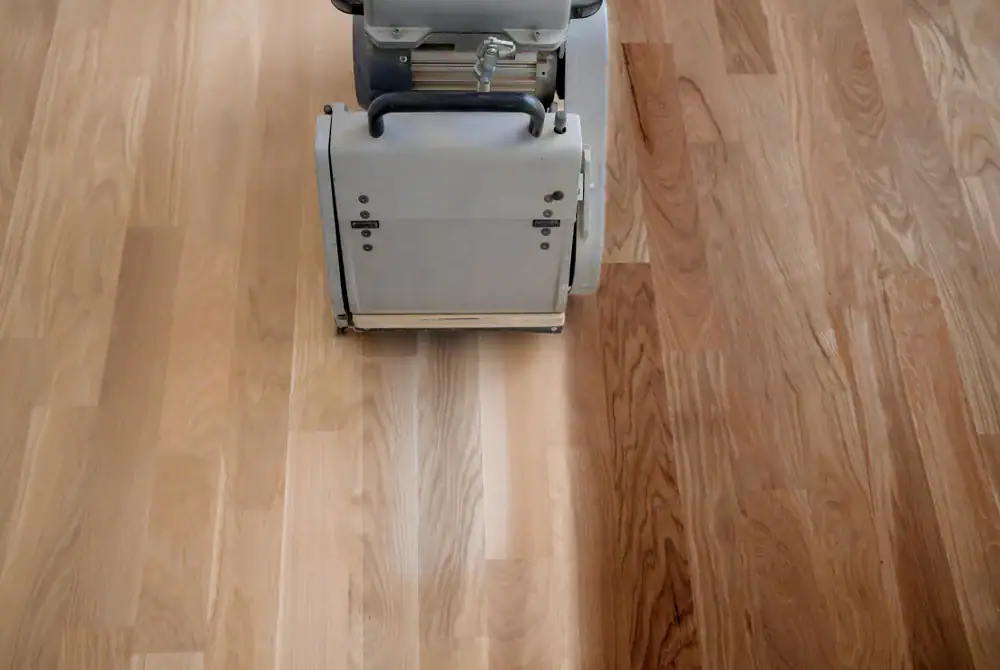
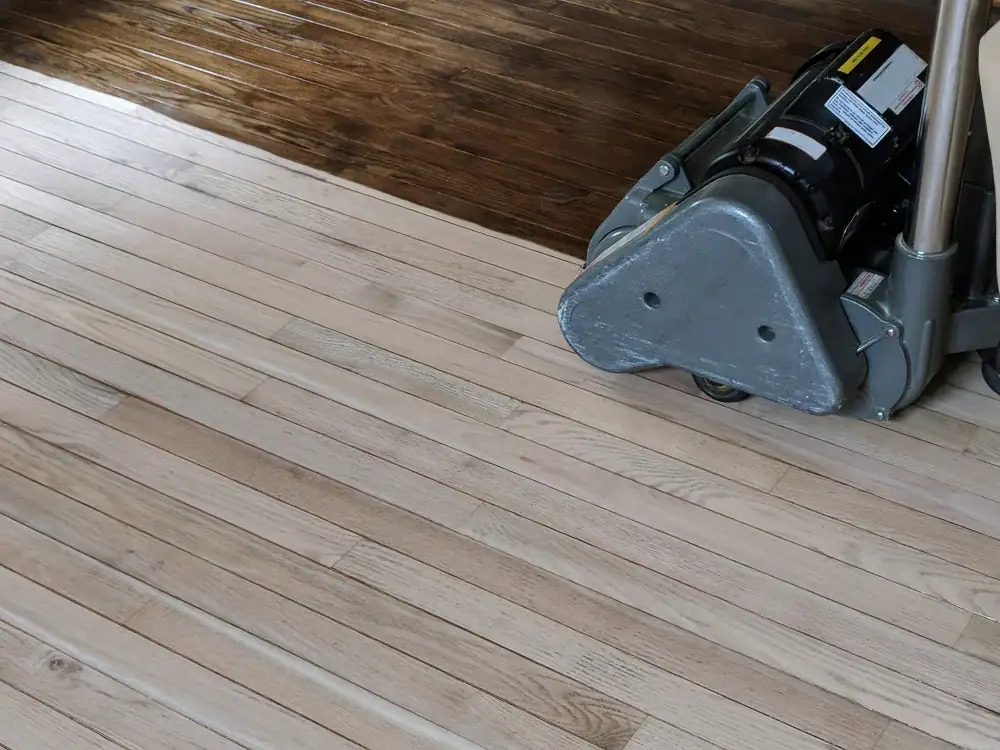
Hardwood Floor Refinishing Canterbury, VA
Canterbury’s housing stock tells a specific story. The brick colonials, Cape Cods, and ranch-style homes built along Patterson Avenue and throughout this neighborhood between the 1940s and 1990s were built with solid hardwood floors red oak, white oak, and heart pine laid at 3/4-inch thickness. Those floors have decades of life left. What they don’t have is the finish they deserve. Professional sanding brings them back.
Living near Tuckahoe Creek and Canterbury Lake means your floors have been fighting Virginia’s humidity longer than most. Hot, wet summers cause wood to expand and cup. Dry heating seasons pull moisture out and open gaps. After 40 or 50 years of that cycle, the surface shows it dull finish, worn traffic lanes, scratches that catch the light wrong. Sanding strips all of that back to clean, fresh wood and seals it properly for what’s ahead.
And if you’re thinking about selling, the math is straightforward. Canterbury homes are averaging $504,272 and selling in about 17 days right now. The National Association of REALTORS® documents a 147% return on investment for hardwood floor refinishing. Freshly sanded floors don’t just look better they signal to buyers that the home has been taken care of, which matters in a market this competitive.
Floor Sanding Company Serving Canterbury, VA
We’ve been working on hardwood floors across Henrico County for over 20 years. We’re owner-operated by David Emmerling, based out of Glen Allen about 5 miles from Canterbury via Patterson Avenue. This is the area we’ve built our business in, and Canterbury’s homes older, well-kept, with original hardwood that’s worth preserving are exactly the kind of work we do best.
Over 80% of our work comes through referrals. In a neighborhood like Canterbury, where the Canterbury Recreation Association keeps the community tight, that number means something real. It means the work holds up, and it means homeowners feel good enough about the experience to recommend us to people they know.
We carry a BBB A+ rating, a consistent 5-star Google rating, and a Virginia contractor’s license the baseline you should expect from anyone working on a home at this level.
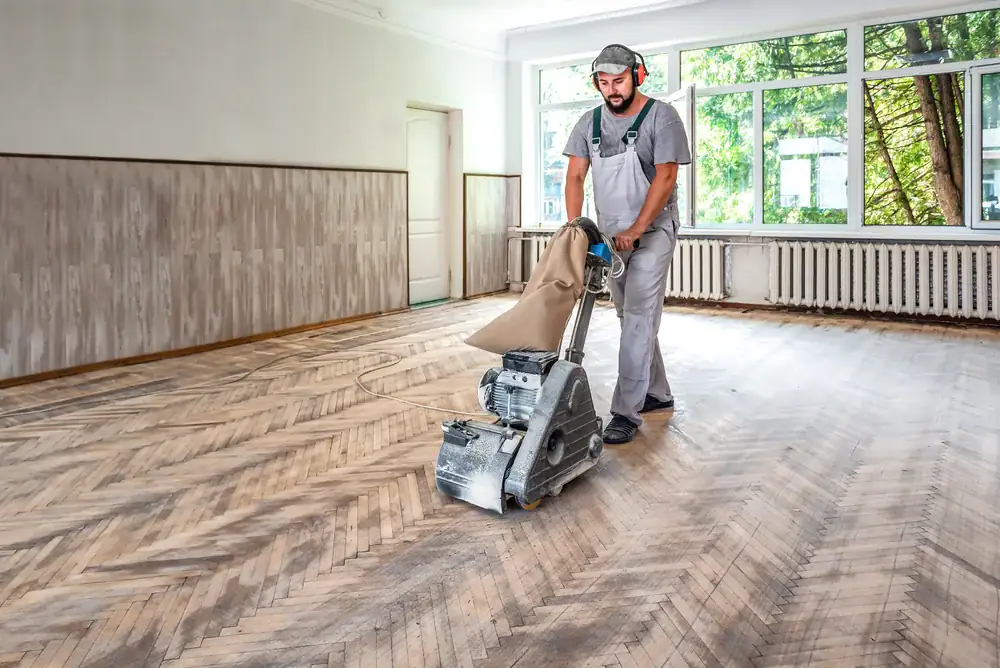
Dustless Floor Sanding Process in Canterbury, VA
Before anything starts, we do a proper assessment of your floors. That means checking for cupping, gaps, soft spots, finish condition, and wood thickness all of which affect how the sanding should be approached. Canterbury homes near the Tuckahoe Creek corridor sometimes show more moisture-related movement than homes in drier parts of Henrico, so that evaluation matters before the first pass is made.
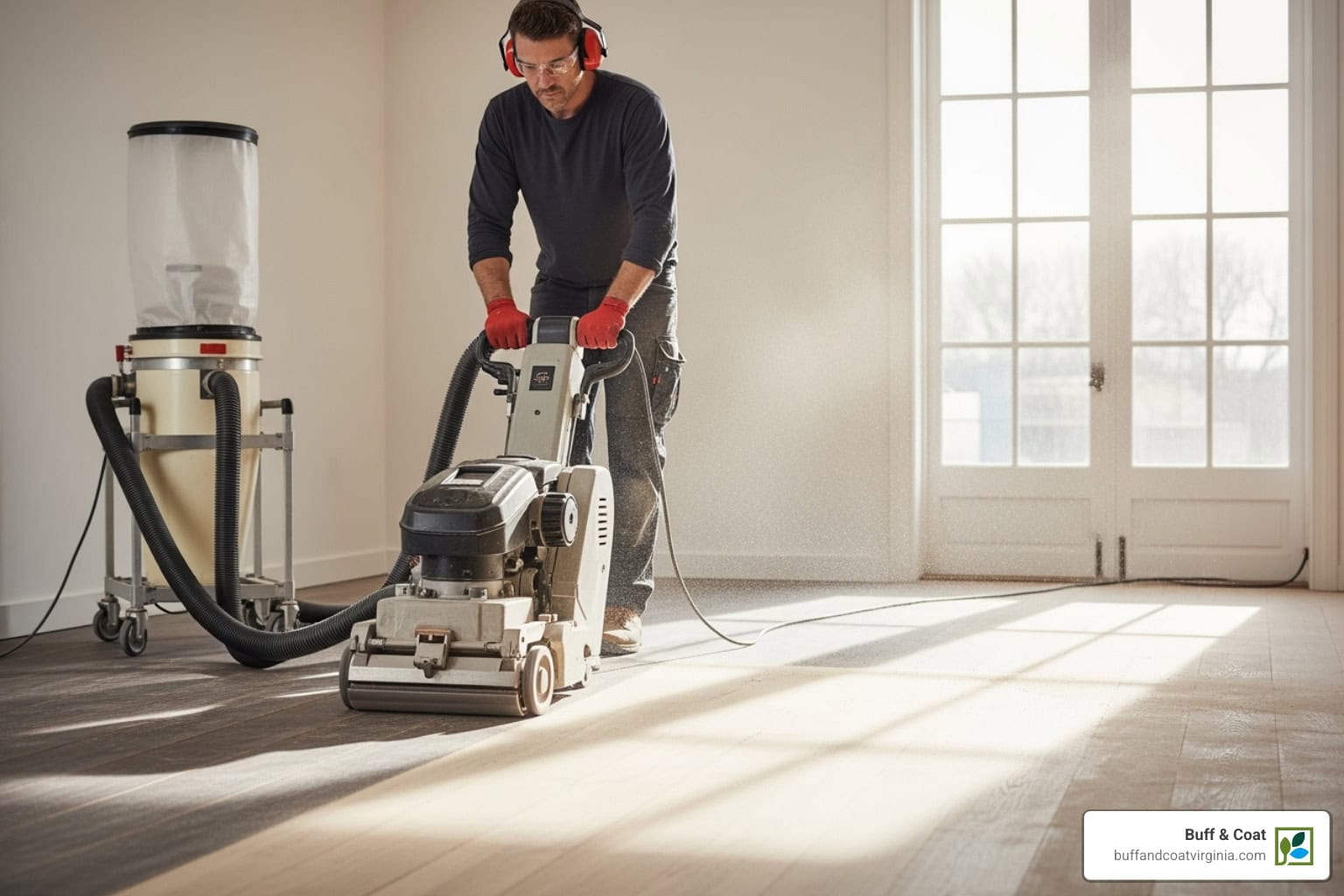
Once the work begins, our dustless sanding equipment captures the material at the source at the machine, before it goes airborne. This isn’t a “dust-reduced” setup that still lets a percentage escape. It’s the reason our customers consistently report that nothing in their home needed cleaning after the job was done. Sanding moves through progressively finer grits until the surface is smooth and ready to accept a finish. If there are boards that need repair or replacement, we handle that before the final passes so everything blends cleanly.
Finish selection happens in consultation with you satin, semi-gloss, or high gloss; water-based or oil-based; natural tone or stained. For Canterbury homes, water-based finishes are often the better call. They dry faster, don’t amber over time, and are significantly lower in VOCs meaning you’re back to normal the same day without the fumes that force families out of oil-finished homes for days.
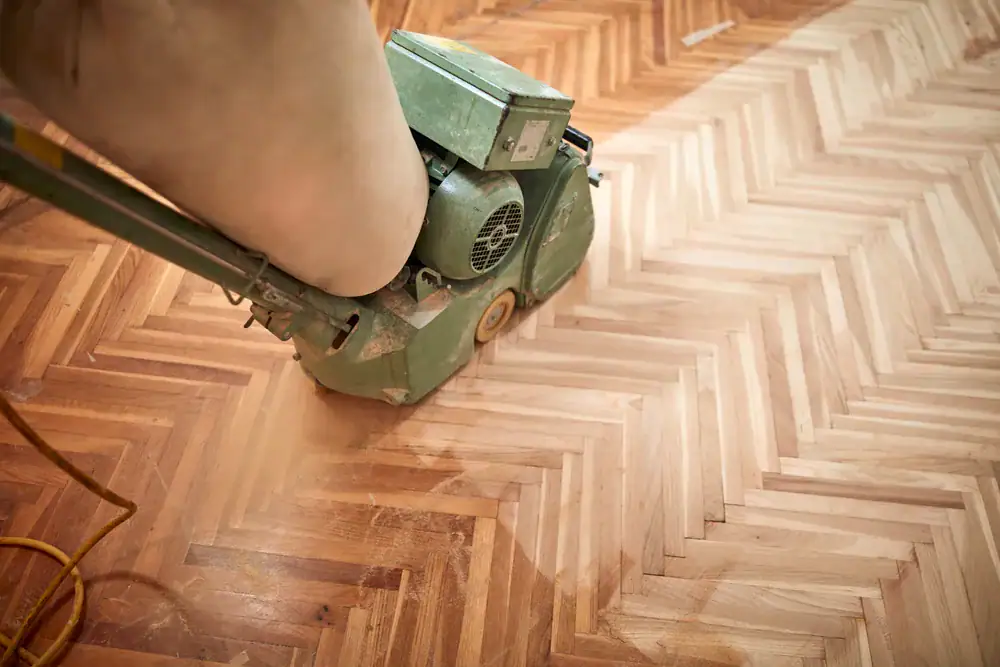
Wood Floor Sanding and Restoration in Canterbury, VA
We handle the full scope of what Canterbury homeowners typically need and that range matters in a neighborhood where the housing stock is older and the floors have history. Complete sanding and refinishing is our core service: stripping the existing finish, sanding down to bare wood, repairing or replacing damaged boards as needed, and applying the finish of your choice. For floors that are worn but not deeply damaged, our buff and coat process offers a lighter-touch option a surface scuff and recoat that refreshes the finish without a full sand-down, at a lower cost and faster turnaround.
For Canterbury homeowners doing kitchen expansions or room additions a common renovation pattern in this neighborhood floor matching is part of our conversation too. Blending new hardwood with existing original floors so the transition disappears is a technical skill, and it’s one that makes a real difference in how the finished project reads.
Cosmetic floor refinishing in Henrico County doesn’t typically require a permit, but any contractor working in Canterbury should hold a current Virginia contractor’s license through the DPOR Board for Contractors. We’re fully licensed and insured not something every operator in this market can say. Pricing for professional floor sanding typically runs $3–$8 per square foot, with most projects landing between $1,100 and $2,700 depending on square footage, floor condition, and finish selected.
Are Canterbury's older hardwood floors actually worth sanding, or should I replace them?
In most cases, yes they’re worth sanding. The solid hardwood floors installed in Canterbury’s 1940s through 1990s homes were laid at 3/4-inch thickness, which means they can typically withstand two to three full sanding cycles over their lifetime. Most Canterbury homes have been refinished once, maybe twice at most, which means there’s real life left in those boards.
The honest answer depends on the condition of the wood itself. If there’s significant cupping, soft spots from water damage, or boards that have been sanded down too thin, replacement may make sense for those sections. But in the majority of Canterbury homes we assess, the original floors are structurally sound and respond extremely well to professional sanding. Red oak and white oak the species most common in this neighborhood’s era of construction are excellent candidates. The character and density of original hardwood in a 1960s Canterbury colonial is genuinely difficult to replicate with new material, and the cost difference is significant: refinishing runs $3–$8 per square foot versus $6–$25 per square foot for replacement.
How long does floor sanding take, and do I need to leave my Canterbury home?
Most floor sanding projects are completed in a single day. You move furniture out in the morning, we do the work, and you move back in the evening. That’s the standard for a typical Canterbury main level not a best-case scenario, but the normal expectation.
The bigger question for most homeowners is fumes, not time. Oil-based finishes release VOCs that can linger for days and genuinely require you to stay elsewhere. Water-based finishes which we recommend for most Canterbury homes dry faster and produce significantly less odor, which means same-day return to normal use is realistic. If you have young children, pets, or anyone in the household with respiratory sensitivities, water-based is almost always the right call. The finish still performs well under Virginia’s seasonal humidity swings; it just doesn’t make your home uninhabitable for three days in the process.
My Canterbury floors are cupping and have gaps can they still be refinished?
Cupping and gapping are extremely common in Canterbury homes, and they’re almost always a moisture issue rather than a structural one. Cupping where the edges of a plank sit higher than the center happens when the wood absorbs humidity from below or from the surrounding air. Given Canterbury’s proximity to Tuckahoe Creek and Canterbury Lake, ambient outdoor humidity near this neighborhood runs higher than in more inland parts of Henrico County, which accelerates this pattern in homes that aren’t climate-controlled year-round.
Before sanding cupped floors, the moisture issue needs to be addressed first. Sanding over active cupping without resolving the source will produce a flat surface that re-cups once conditions return. A proper assessment identifies whether the cupping has stabilized meaning the wood has dried and returned close to flat or whether there’s an active moisture source that needs attention first. Gapping between boards in winter is usually seasonal and closes back up in summer; that’s normal wood movement and doesn’t prevent refinishing. The key is timing the project correctly and ensuring the wood is properly acclimated before the first pass.
What's the best time of year to sand hardwood floors in Canterbury, VA?
Spring and fall are the optimal windows March through May and September through November when Virginia’s ambient humidity is moderate and temperatures allow finishes to cure at a predictable rate. Those are the conditions where the wood is most stable and the finish performs best out of the gate.
Summer refinishing in Canterbury is technically feasible, but the elevated humidity near Tuckahoe Creek can extend drying and curing times for certain finishes, particularly oil-based products. Water-based finishes are far less sensitive to humidity and temperature variation, which makes them a practical choice for homeowners who need the project done in July or August and can’t wait for fall. Winter projects are also possible, but dry indoor heating causes wood to contract, and if the floors aren’t properly acclimated before sanding, you can end up with gaps that open once the heat kicks back on. None of these are reasons to avoid off-season projects they’re just factors that we account for in how we approach the prep and finish selection.
How much does floor sanding cost for a Canterbury home?
Professional floor sanding in the Canterbury area typically runs $3–$8 per square foot, with most projects landing between $1,100 and $2,700 for a standard main level. Where you fall in that range depends on a few things: total square footage, the current condition of the floors, whether any boards need repair or replacement before sanding, and the finish type you choose.
Water-based finishes tend to cost slightly more upfront than oil-based, but they dry faster, last longer without ambering, and don’t require you to vacate your home for days which has its own value. Board repair and replacement, if needed, adds to the total but is almost always worth addressing during the same project rather than patching later. The comparison that matters most for Canterbury homeowners thinking about this decision: full hardwood replacement runs $6–$25 per square foot. On a 1,000 square foot main level, that’s potentially $10,000–$15,000 more than refinishing for a result that won’t have the character or density of the original floors already in your home.
Does floor sanding actually help when selling a Canterbury home?
It’s one of the highest-return improvements you can make before listing. The National Association of REALTORS® documents a 147% return on investment for hardwood floor refinishing meaning a $2,000 project can return $3,000 or more in sale price. In Canterbury’s current market, where homes are averaging $504,272 and selling in about 17 days, buyers are paying close attention to condition and move-in readiness.
Hardwood floors are a named selling feature in Canterbury real estate listings multiple active listings in this neighborhood specifically call out “gleaming hardwood floors” as a highlight. When those floors look worn, scratched, or dull, it undercuts the rest of the home’s presentation and gives buyers a negotiating point. When they’re freshly sanded and finished, they photograph well, show well, and tell buyers the home has been maintained. Homes with well-maintained hardwood floors sell for up to 2.5% more than comparable homes without them. On a Canterbury home at the neighborhood’s average price point, that’s a meaningful number and the cost of refinishing is a fraction of what you’d recover.
Other Services we provide in Canterbury