
Floor Installation in Studley, VA
Hardwood Floors Built for Hanover County Humidity
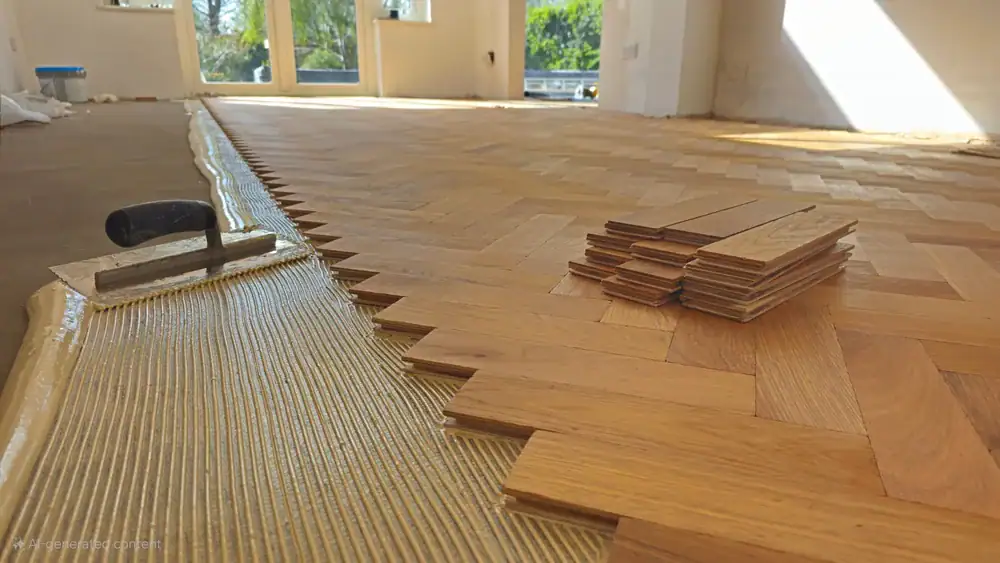
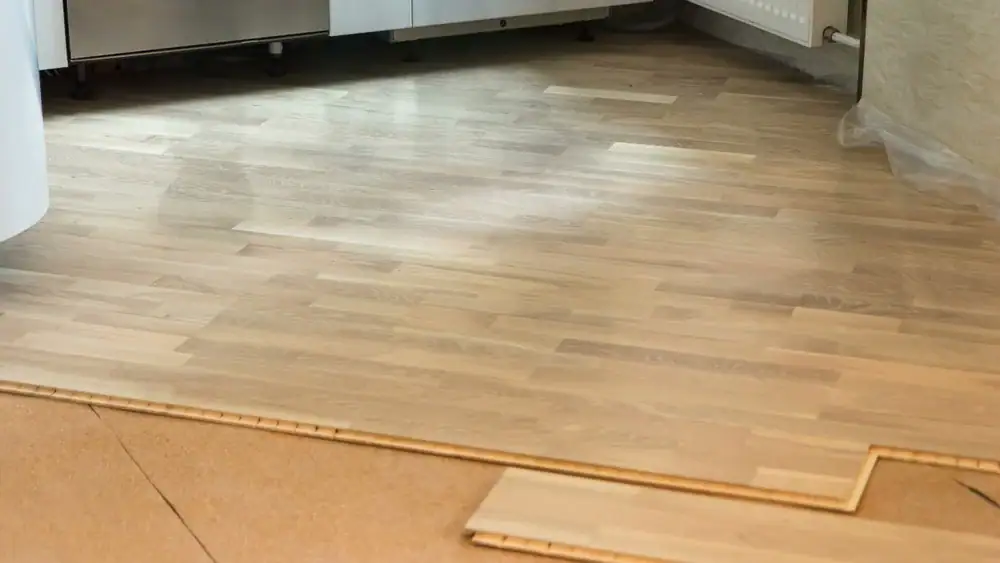
Hardwood Floor Installers Studley VA
Most floor installation problems don’t show up the day the job is done. They show up six months later a board that cups along the edge, a section that squeaks every time someone walks across it, a gap that opens up between planks over the winter. By then, the installer is long gone and the fix comes out of your pocket.
Studley homes sit in a climate that swings hard between humid summers and dry winters. That seasonal shift causes wood to expand and contract repeatedly throughout the year, and if the subfloor wasn’t properly assessed and the wood wasn’t tested for moisture content before installation, that movement turns into visible damage. Older homes along Studley Road and properties built over crawl spaces which are common throughout this part of Hanover County are especially vulnerable to moisture migrating upward from Virginia’s clay-rich soil.
When installation is done correctly, none of that happens. You get floors that stay flat, stay tight, and look the way they did on day one years down the road. That’s the actual outcome worth paying for.
Local Floor Installers Hanover County VA
We’ve been installing and refinishing hardwood floors across the Richmond metro since 2012. That’s over a decade of working in Virginia homes not just newer subdivisions, but older farmhouses, historic properties, and custom builds on larger rural lots like the ones you find throughout the Studley corridor along Route 606.
Owner David Emmerling runs the operation directly. There’s no franchise structure, no rotating crew you’ve never met, and no corporate complaint line if something needs attention. When you hire us, you’re working with a company whose reputation is tied directly to the quality of your finished floor. That kind of accountability isn’t something you get from a national brand operating out of a call center.
We’re licensed through the Virginia Board for Contractors and have earned hundreds of five-star Google reviews from homeowners throughout the Richmond area and Hanover County not aggregated from dozens of markets, but from real local customers in communities like Studley and the surrounding area.
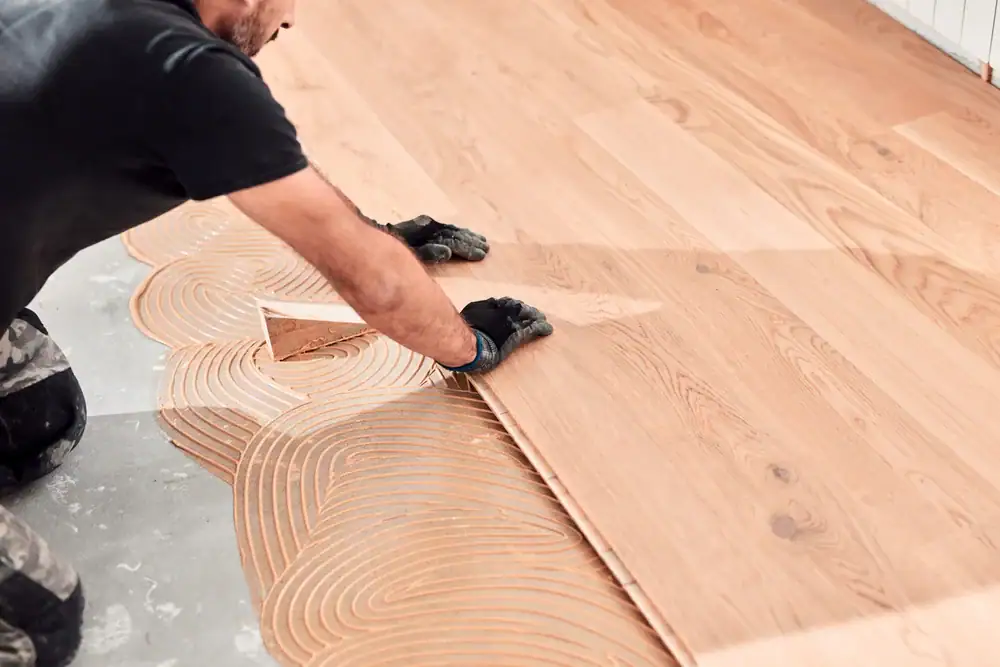
Hardwood Floor Installation Process Studley VA
The first thing that happens isn’t flooring it’s assessment. Before any wood touches your subfloor, we evaluate the subfloor itself for levelness, stability, and moisture content. If it’s not flat within industry tolerances, we address that first. If moisture readings are off, the installation doesn’t move forward until conditions are right. This step alone prevents the majority of warping, cupping, and squeaking problems that show up after inferior installs.
Once the subfloor clears, the wood gets tested too. Both the planks and the subfloor need to be within a close moisture range of each other before installation begins a standard set by the National Wood Flooring Association that many installers skip entirely. In Hanover County’s climate, where summer humidity can push indoor moisture levels well above what wood can absorb without swelling, this step isn’t optional. It’s what separates a floor that lasts from one that fails.
From there, installation moves efficiently. Most jobs are scheduled within a week and completed in a matter of days. You’ll know what to expect at each stage, and there won’t be surprises on the back end. The goal is a finished floor that performs the way it should in your specific home, in Virginia’s specific climate, for the long term.
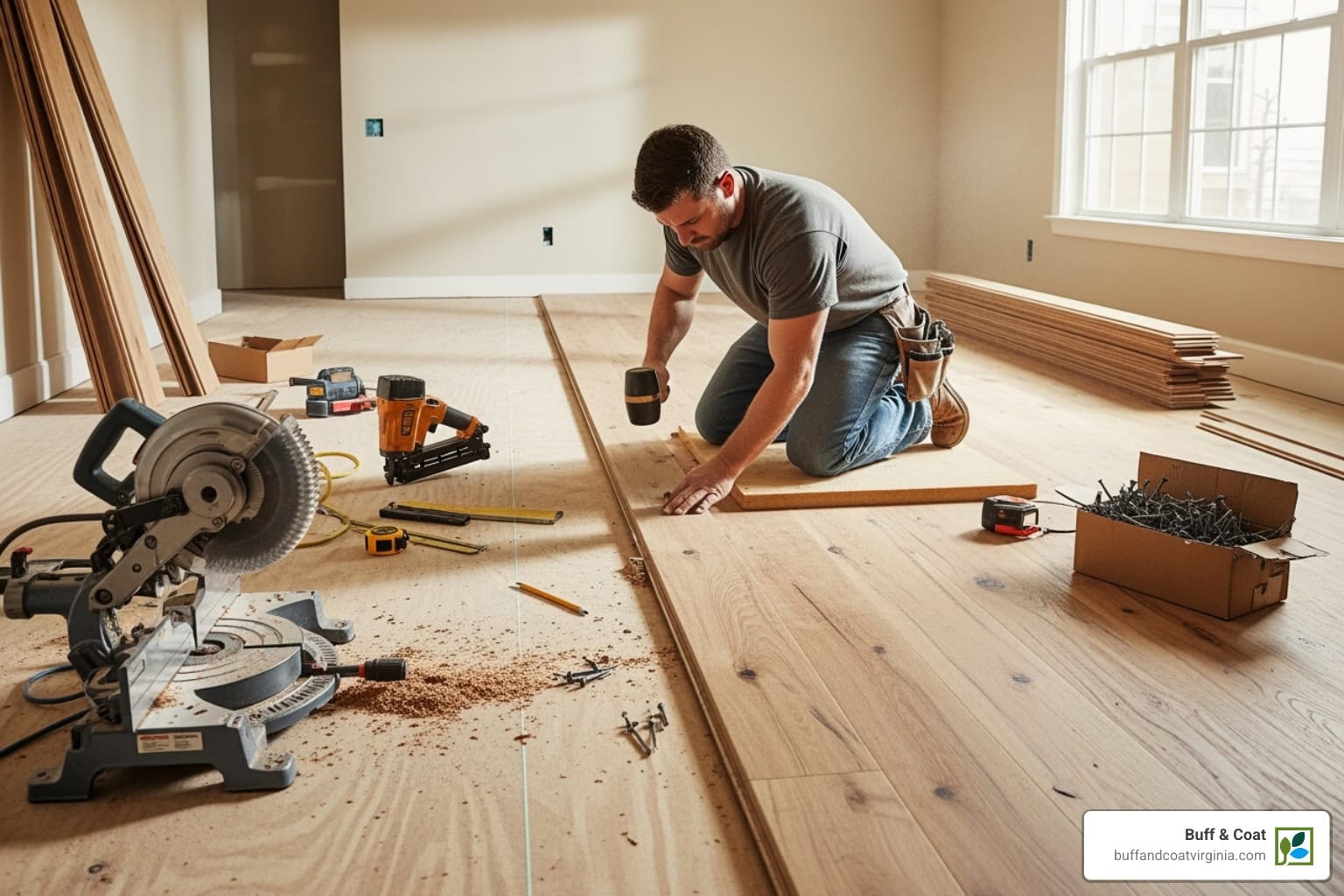
New Wood Floors Studley VA
Not every space is the right candidate for solid hardwood, and we’ll tell you that upfront. Solid wood is a strong choice for the right conditions but in Studley homes with crawl space foundations, which are common throughout this part of Hanover County, moisture from below-grade soil can work its way up into the subfloor over time. In those spaces, engineered hardwood’s layered construction holds up better against Virginia’s humidity swings without sacrificing the look and feel of real wood.
If you have existing hardwood in other rooms and you’re extending or replacing flooring, matching species, stain tone, and finish sheen is part of the job. It’s a detail that matters significantly in older homes along the Route 606 corridor and throughout Hanover County’s rural residential areas, where floors may have been in place for decades and a mismatched addition stands out immediately. We have a documented track record of matching new installation to existing hardwood it’s a specific skill that shows up consistently in customer reviews.
Every installation includes the full subfloor prep and moisture testing process described above. There’s no version of this job where that step gets skipped to save time. Flooring installation cost in this region typically ranges from roughly $2,500 to $7,000 depending on square footage, material, and subfloor conditions and investing in proper prep upfront is always less expensive than tearing up a floor and starting over.
Why do hardwood floors cup or warp after installation in Studley, VA?
Cupping where the edges of a board rise higher than the center is almost always a moisture problem. In Studley and the surrounding Hanover County area, the combination of humid summers and dry winter heating creates significant seasonal swings in indoor relative humidity. When wood absorbs moisture unevenly, it moves. If the subfloor wasn’t tested before installation, or if the wood wasn’t acclimated on-site long enough before being laid, that movement turns into visible damage.
The fix isn’t complicated, but it has to happen before installation, not after. Subfloor moisture content and wood moisture content need to be within a close range of each other the National Wood Flooring Association sets that tolerance at no more than 4% for standard strip flooring. Crawl space foundations, which are common in Hanover County’s rural residential properties, can introduce moisture from below that throws those numbers off if it’s not caught ahead of time. Proper testing at the start of the job is what keeps cupping from becoming your problem six months later.
How long does hardwood floor installation typically take from start to finish?
For most residential jobs, you’re looking at a few days of actual installation work once the subfloor prep is complete. The part that takes the most time upfront is acclimation solid hardwood needs to sit in your home’s environment for several days before installation begins so the wood adjusts to your indoor temperature and humidity levels. In Virginia’s climate, particularly during the more humid months, rushing that acclimation window is one of the most common shortcuts that leads to problems later.
Scheduling is typically within a week of your initial estimate with us. The full timeline from first contact to finished floor depends on the size of the project, whether subfloor repairs are needed, and the time of year. Spring and fall tend to be the most straightforward seasons for installation in Hanover County because indoor humidity is relatively stable summer and winter jobs can still be done correctly, but moisture management requires closer attention during those months.
Should I choose solid or engineered hardwood for my Hanover County home?
It depends primarily on your subfloor type and where in the house you’re installing. Solid hardwood is a strong long-term investment in the right conditions but it’s more sensitive to moisture, which matters in Hanover County homes with crawl space foundations. Crawl spaces in Virginia’s clay-heavy soil can hold moisture that migrates upward into the subfloor, and solid wood in those spaces is more likely to move seasonally than engineered wood would be.
Engineered hardwood uses a layered cross-ply construction that resists dimensional changes from humidity swings better than solid wood does. It still looks and feels like real hardwood because it is but it’s built to handle the kind of moisture variability that’s normal in this part of Virginia. For rooms over a crawl space or any area where moisture is a factor, engineered is often the smarter call. For above-grade spaces with a stable subfloor and consistent indoor climate control, solid hardwood is entirely appropriate. The right answer depends on your specific home, and that’s something worth discussing before you make a material decision.
Do I need a permit for hardwood floor installation in Hanover County, VA?
For standard hardwood floor installation laying new floors over an existing subfloor a permit is generally not required in Hanover County. Virginia’s Uniform Statewide Building Code governs residential construction and renovation throughout the Commonwealth, and routine interior flooring work typically falls outside the permit threshold.
Where it can get more involved is if structural subfloor repairs are needed. If the subfloor itself requires significant work replacing sections of damaged underlayment, addressing structural framing, or correcting issues that go beyond surface-level leveling the scope of that repair may trigger permit requirements depending on the extent of the work. As an unincorporated community, Studley falls under Hanover County’s jurisdiction for all building and zoning matters, so any questions about specific permit thresholds for your project should be directed to Hanover County’s building department. We’re licensed through the Virginia Board for Contractors, which means the work is being done in compliance with state licensing requirements regardless of whether a permit is required for your specific job.
How much does hardwood floor installation cost near Studley, VA?
Hardwood floor installation in the Richmond metro area including Hanover County typically runs between $2,500 and $7,000 for most residential projects, depending on square footage, material choice, and the condition of your existing subfloor. Those numbers assume a subfloor that’s in reasonably good shape. If subfloor repairs are needed leveling, replacing damaged sections, addressing moisture issues that work can add anywhere from $900 to $3,000 on top of the installation cost.
The homes along Studley Road and throughout the surrounding Hanover County corridor tend to be larger, higher-value properties, and the investment in quality installation reflects that. Skipping proper subfloor prep to lower the upfront cost is a false economy if the floor fails because of a moisture or levelness issue that wasn’t caught beforehand, you’re looking at tearing up the floor and starting over, which costs significantly more than doing it right the first time. Our estimate will be specific to your home’s square footage, material, and actual subfloor conditions not a generic number pulled from a pricing sheet.
Can new hardwood floors be matched to existing floors already in my home?
Yes, and it’s worth asking specifically about this before you hire anyone. Matching new hardwood to existing floors requires more than picking a similar color it means matching wood species, grain character, stain tone, and finish sheen so the addition reads as seamless rather than obvious. In older homes along the Route 606 corridor and throughout Hanover County’s rural residential areas, this comes up often. Floors that have been in place for decades develop a patina and tone that’s difficult to replicate exactly, but a skilled installer knows how to get close enough that the difference isn’t noticeable in normal light.
We have specific customer reviews that call out this capability by name homeowners who extended flooring into new rooms or replaced damaged sections and were satisfied with how well the new work matched the old. It’s not a guarantee that every match will be invisible, because aged wood has character that new wood takes time to develop, but the species selection, staining process, and finish application can be dialed in to get you as close as possible. If matching existing floors is a priority for your project, bring a sample or photo to the estimate so the right material decisions can be made from the start.