
Floor Installation in Laurel, VA
Older Laurel Homes Deserve More Than a Quick Install
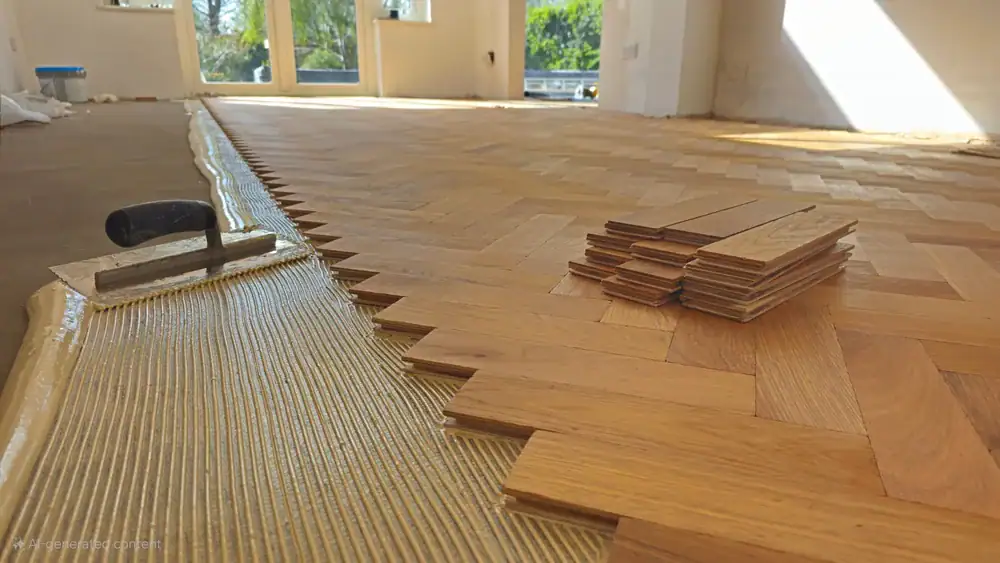
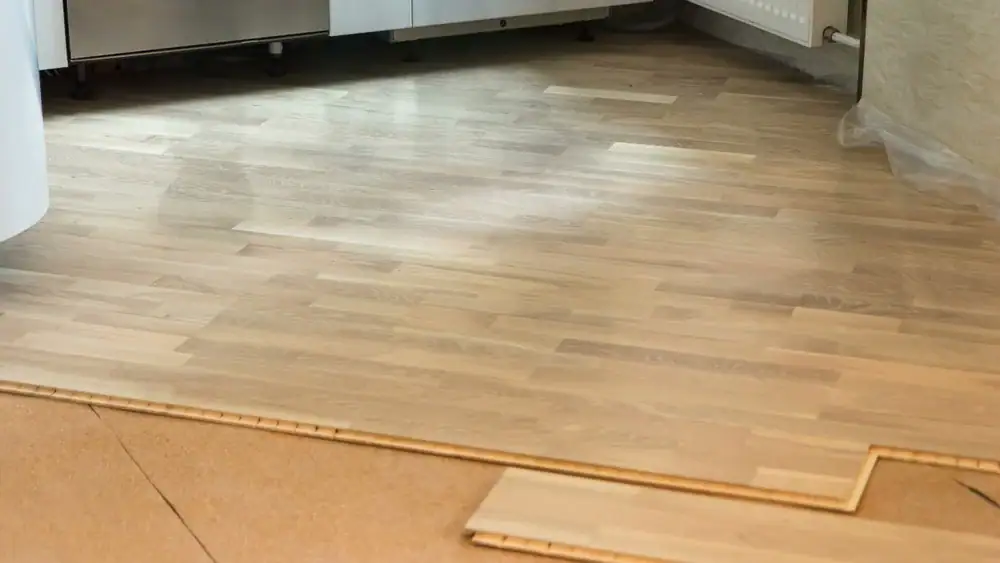
Hardwood Floor Installers Henrico County
A lot of Laurel homes were built between the 1940s and 1960s. That’s not a problem it’s actually a great foundation for hardwood. But it does mean the subfloor underneath has been through decades of seasonal movement, humidity cycles, and settling that newer construction simply hasn’t. When a floor installer skips the assessment and goes straight to laying planks, that history catches up fast. Squeaks, gaps, and cupping aren’t bad luck they’re the result of skipping steps that matter.
Virginia’s humid summers hit older Laurel homes harder than newer builds. Crawl spaces without modern vapor barriers let ground moisture work its way up, and if the subfloor and the wood aren’t tested before installation begins, you’re essentially gambling on whether the conditions are right. Getting that moisture reading before anything goes down is what separates a floor that performs for 30 years from one that starts showing problems before the next summer.
What you end up with, when the prep work is done right, is a floor that doesn’t move, doesn’t squeak, and doesn’t surprise you six months later. That’s what floor installation in a Laurel home should look like not just beautiful on day one, but stable and solid for the long run.
Local Floor Installers Near Laurel, VA
Buff and Coat has been working in Laurel and the surrounding Henrico County area for over 20 years. Our location on Staples Mill Road puts us directly on one of the main routes through western Henrico, which means we’re embedded in the community we serve. We know the homes here their age, their foundation types, their specific moisture challenges because we’ve been installing floors in them for a long time.
David Emmerling founded Buff and Coat in 2012 and still runs every job personally. His name is on the business, which means his reputation is attached to every floor we install whether it’s a ranch off Hungary Road, a split-level near Parham, or a townhome in one of Laurel’s established subdivisions. You’re not dealing with a franchise or a rotating crew of subcontractors.
Hundreds of five-star Google reviews from Richmond-area homeowners, a Virginia contractor’s license, and over two decades of hands-on experience in Henrico County’s specific housing conditions that’s what’s behind every project we take on in Laurel.
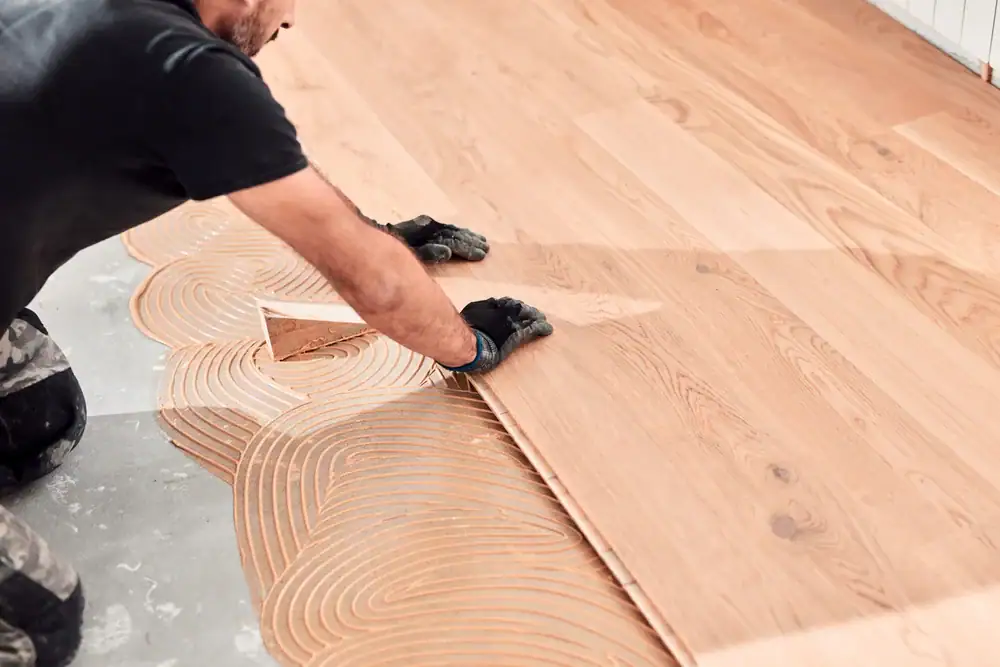
Hardwood Floor Installation Process Laurel VA
The first thing we do is assess your subfloor not after we’ve started, but before we quote the job. We check for levelness, stability, and moisture content. In Laurel’s older homes, this step regularly turns up conditions that would cause problems down the road: subfloors that have shifted over decades, crawl space moisture that’s worked its way into the wood, or areas that need to be corrected before anything goes on top. If we find something, we tell you upfront and we fix it first.
Once the subfloor is confirmed or corrected we test both the subfloor and your new wood planks for moisture content. The NWFA standard for strip flooring is within 4% between the two, and we hold to that. In Virginia’s climate, especially during summer months when indoor humidity can fluctuate significantly, skipping this step is one of the most common reasons floors cup and warp. We don’t skip it.
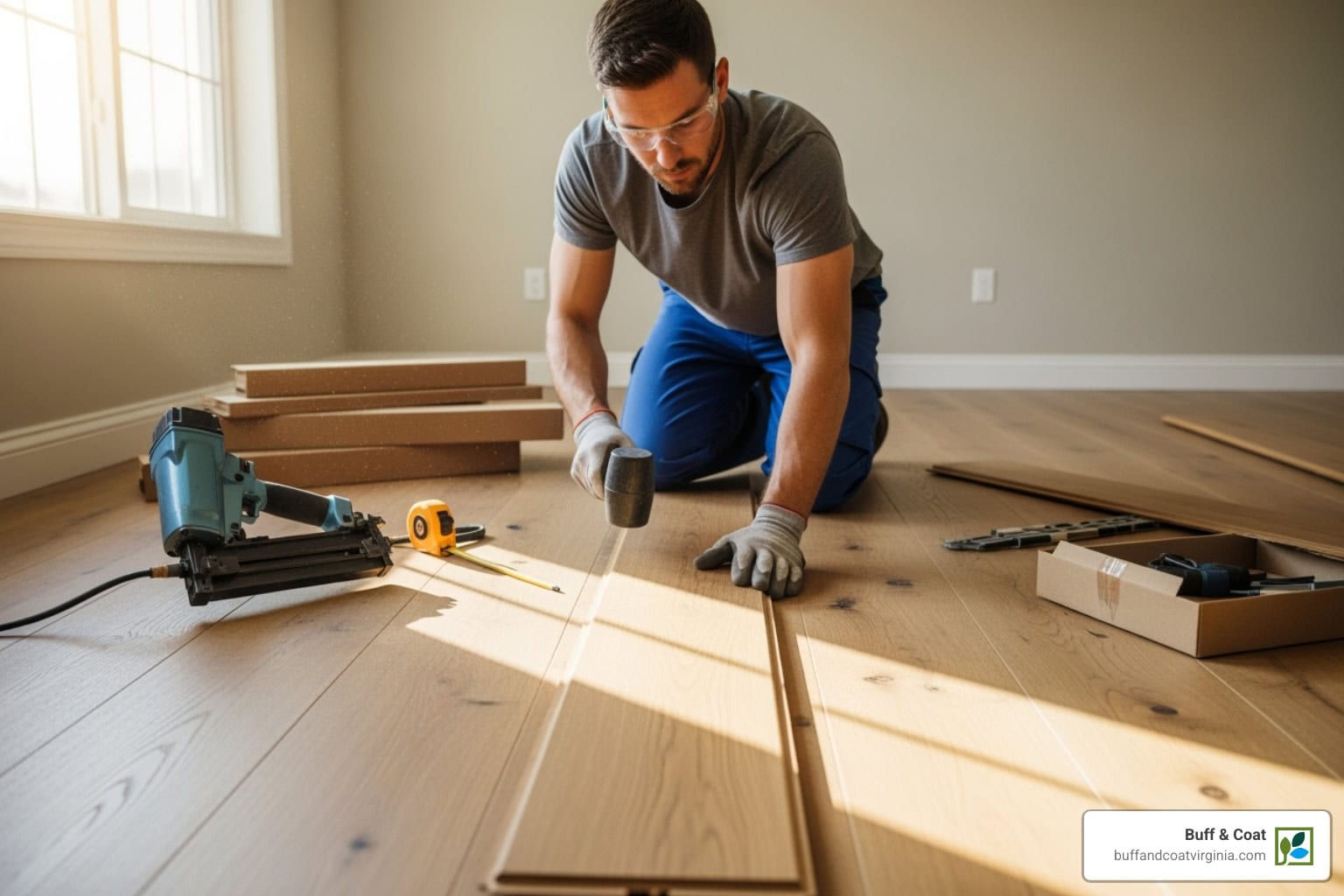
After that, the wood acclimated to your home’s actual conditions not a warehouse and installation follows with proper fastening technique for your specific subfloor type. When we’re done, you don’t need to wonder whether it was done right. The prep work is visible in how the floor performs.
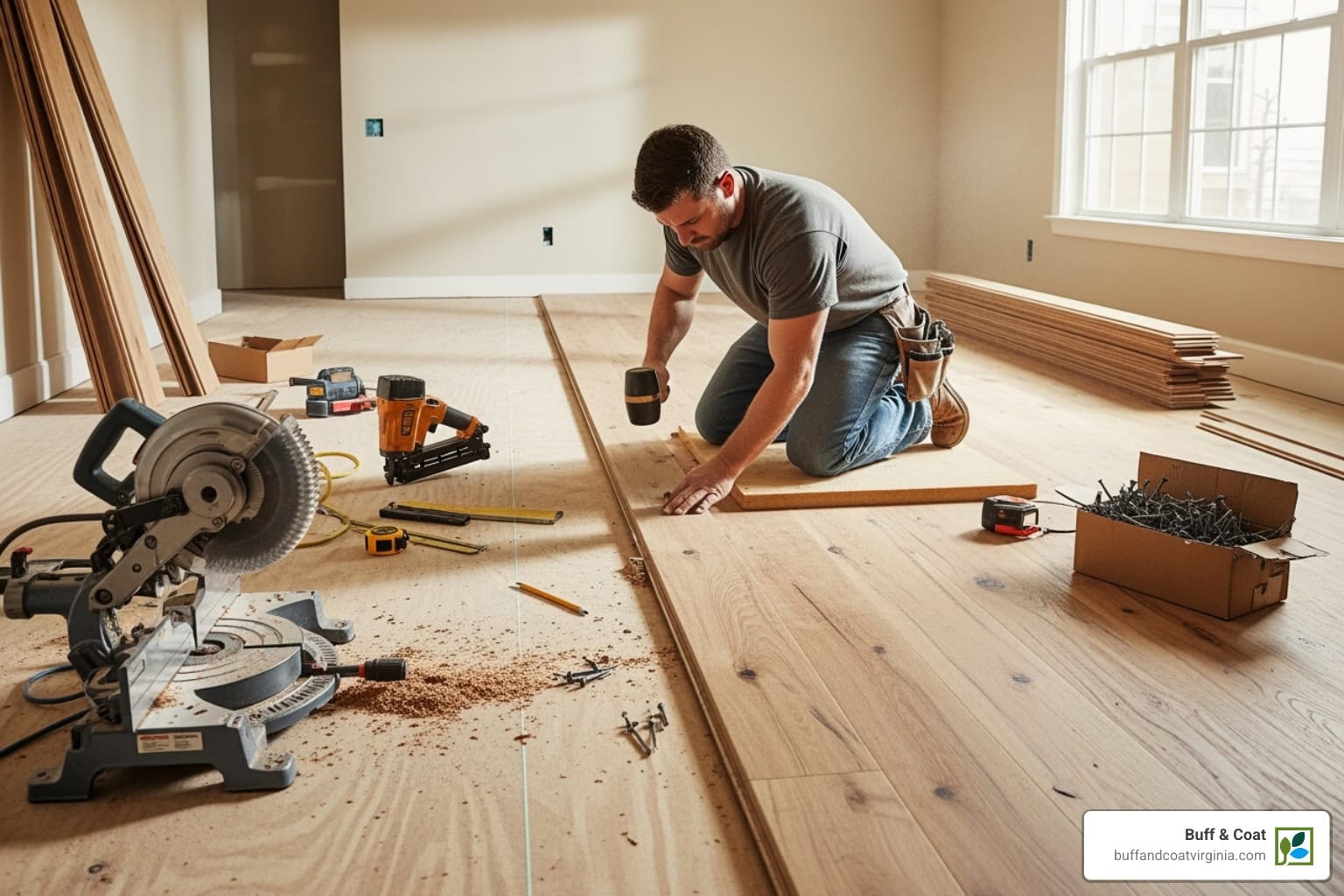
New Wood Floors Laurel VA
Not every home in Laurel is a candidate for solid hardwood, and we’ll tell you that honestly before you spend a dollar. Homes with crawl spaces, high subfloor moisture readings, or below-grade areas often perform better with engineered hardwood which handles Virginia’s seasonal humidity swings with more dimensional stability than solid wood. The goal is a floor that actually works in your specific home, not one that looks great in a showroom and fails in your conditions.
If solid hardwood is the right call, we’ll walk you through species, width, and finish options that fit both your lifestyle and your budget. Laurel homeowners investing in their properties for the long term not just a quick flip tend to want something that holds up through years of real use, and we guide that conversation based on what we’ve seen work in homes like yours across western Henrico County.
For homeowners renovating one room at a time, we also match new hardwood to existing floors so the transition looks intentional, not patched. That’s a detail that matters a lot when you’re adding hardwood to a kitchen or bedroom that connects to original oak in the living room. Flooring installation cost in Laurel typically ranges depending on subfloor condition, material choice, and square footage we give you a clear number before work begins, not after.
How much does hardwood floor installation cost in Laurel, VA?
The honest answer is that cost depends on a few things: the square footage you’re covering, the material you choose, and most importantly the condition of your subfloor. In Laurel, where a significant portion of homes were built between the 1940s and 1960s, subfloor repairs are more common than in newer construction. That’s not a reason to avoid hardwood; it’s just a reason to get an accurate assessment upfront rather than a lowball quote that grows once work starts.
Subfloor corrections can add anywhere from a few hundred to a few thousand dollars to a project, depending on what’s there. We identify those costs during the initial assessment so you’re not surprised mid-project. Material choice also plays a role solid hardwood runs higher than engineered, and species and width affect price as well. We walk through all of it before you commit to anything, so you have a real number to work with, not a range so wide it’s useless.
What's the difference between solid and engineered hardwood for my home?
Solid hardwood is exactly what it sounds like a single piece of wood from top to bottom. It’s durable, can be refinished multiple times over its life, and is a strong long-term investment. The limitation is moisture sensitivity. Solid hardwood expands and contracts with humidity changes, which means it’s not ideal for every installation environment particularly in homes with crawl spaces or below-grade areas where moisture levels are harder to control.
Engineered hardwood has a real wood top layer bonded to a plywood core, which gives it significantly more dimensional stability in humid conditions. For a Laurel home with a crawl space foundation and Virginia’s seasonal humidity swings, engineered hardwood often performs better over time. It’s not a compromise it’s the right tool for the right environment. We’ll tell you which one makes sense for your specific subfloor type and home conditions, not just which one costs more.
Why do hardwood floors warp or cup after installation in Virginia homes?
Warping and cupping almost always come down to moisture either too much of it, or a mismatch between the moisture content of the subfloor and the wood at the time of installation. Virginia’s humid subtropical climate means indoor humidity can climb well above the recommended 30–50% range during summer months, especially in homes without consistent HVAC operation. When wood absorbs that moisture after it’s already been installed, it expands. If there’s no room to expand, it pushes up at the edges that’s cupping.
The fix isn’t complicated, but it requires doing the work before installation, not after. Testing the subfloor and the wood planks separately, confirming they’re within acceptable moisture range of each other, and allowing the wood to acclimate to your home’s actual living conditions not a warehouse eliminates the vast majority of post-installation moisture problems. In Laurel’s older homes, where crawl spaces and aging vapor barriers are common, this step is especially critical. Skipping it is the single most common reason floors fail in this area.
Do I need a permit to install hardwood floors in Henrico County?
For a standard hardwood floor installation replacing existing flooring with new hardwood in the same space a building permit is generally not required in Henrico County. The Virginia Uniform Statewide Building Code governs residential renovation work here, and surface-level flooring replacement typically falls outside the permit threshold.
Where it gets more complicated is if your project involves structural subfloor repair work that touches floor joists, load-bearing elements, or makes changes to the building’s structural system. In those cases, a permit may be required through Henrico County’s Department of Building Construction and Inspections. If our assessment of your subfloor turns up anything that could fall into that category, we’ll flag it before work begins so you know exactly where you stand. It’s worth a quick check with the county for any project that goes beyond surface installation, and we’re happy to help you think through what applies to your specific situation.
When is the best time of year to install hardwood floors in Laurel, VA?
Spring and fall are the most reliable installation windows in Laurel. Humidity levels are moderate, temperatures are stable, and wood acclimation is more predictable which means installation goes smoothly and the floor settles into your home’s conditions without fighting against extreme seasonal swings.
Summer installation is possible but requires more attention to moisture management. Richmond’s outdoor humidity regularly climbs into the 70–80% range during peak summer, and homes without consistent air conditioning running can see interior humidity fluctuate enough to affect how wood behaves during and after installation. We test for this regardless of the season, but if you have flexibility, spring or fall gives you the most straightforward path. Winter installation works well too, as long as your heating system has been running consistently for at least several days beforehand dry heated air is its own variable, and we account for that during the acclimation period before anything goes down.
Can you install new hardwood floors in a Laurel home that still has the original subfloor?
Yes and in many cases, the original subfloor in a Laurel home from the 1950s or 1960s is structurally sound and perfectly workable. Older homes were often built with thicker dimensional lumber than modern construction uses, which can actually be an advantage. The question isn’t the age of the subfloor; it’s the current condition.
What we look for is levelness, stability, and moisture content. A subfloor that’s shifted out of flat over decades needs to be corrected before new hardwood goes on top otherwise that unevenness telegraphs through the finished floor and creates long-term problems. Moisture readings matter just as much. If the subfloor is reading high due to crawl space conditions, we address that before installation rather than hoping it resolves itself. Many Laurel homeowners are also uncovering original hardwood under carpet that was laid decades ago if that’s your situation, refinishing what’s already there may be a better option than new installation entirely. We’ll give you an honest read on which direction makes more sense for your home.