
Floor Installation in Hanover Hills, VA
Hardwood Floors Built to Handle What Hanover County Throws at Them
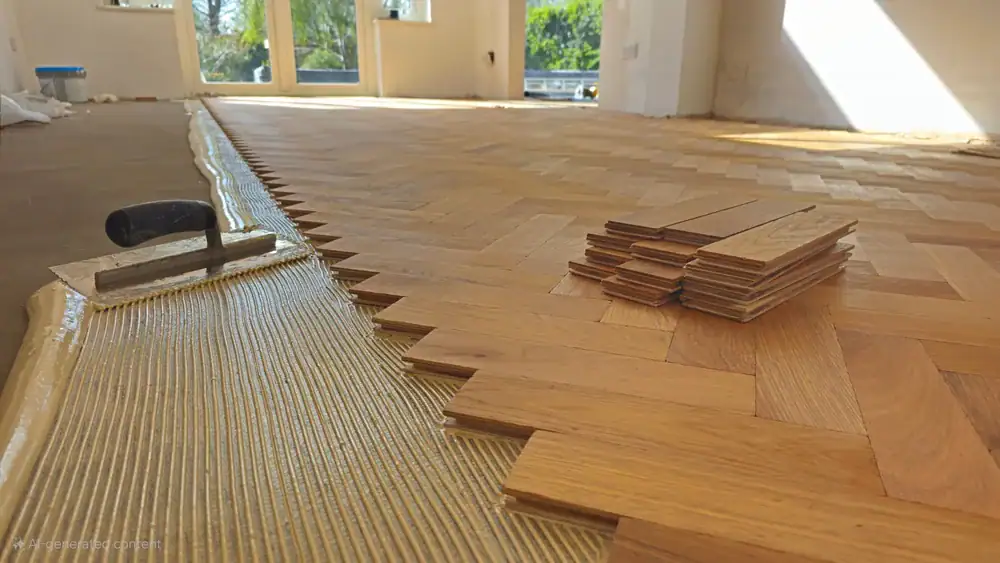
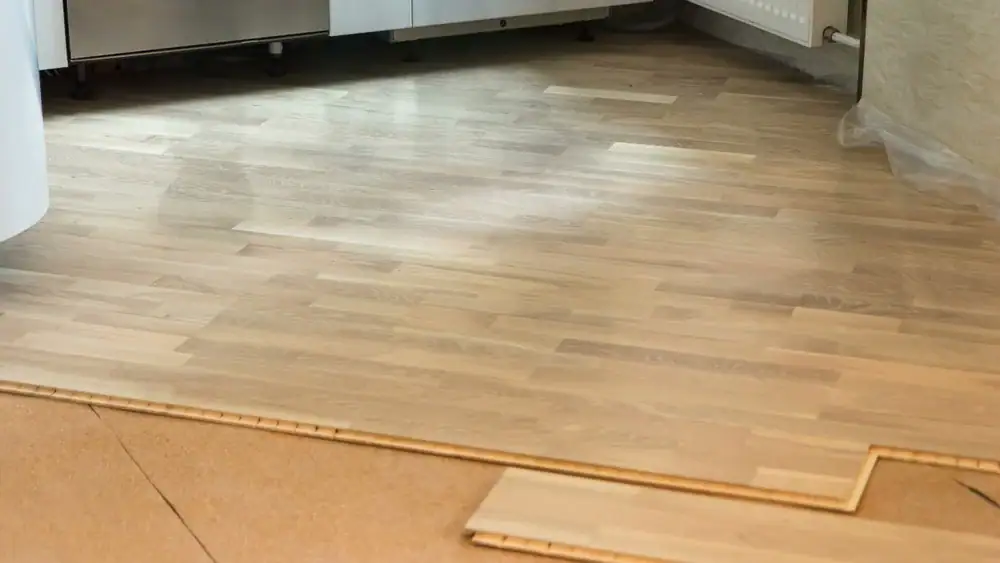
Hardwood Floor Installers Hanover Hills VA
Most hardwood floor problems the warping, the cupping, the squeaks that show up six months after the crew leaves aren’t bad luck. They’re the result of skipped steps. Moisture testing that didn’t happen. A subfloor that wasn’t assessed. Wood that wasn’t given time to acclimate before installation started.
Hanover Hills sits in a part of Hanover County where summer humidity regularly climbs past 70% and winter heating pulls that moisture right back out. That seasonal swing is relentless, and it affects every hardwood floor in the area. The difference between floors that handle it and floors that don’t comes down almost entirely to how the installation was prepared not which brand of wood was used or how much was spent on materials.
What you get when the process is done right is a floor that looks the same in August as it does in February. No gaps opening up in winter. No boards pressing against each other in summer. No squeaks developing where the subfloor wasn’t properly leveled. For a Hanover Hills home whether it’s an established colonial off Route 360 or a mid-century ranch that’s been in the family for decades that kind of long-term stability is exactly what a hardwood investment should deliver.
Local Floor Installers Serving Hanover County VA
We’ve been installing and refinishing hardwood floors across the Richmond metro since 2012. That’s over 13 years of working in Hanover Hills homes and throughout Hanover County learning the subfloor conditions, understanding the humidity patterns, and building a track record that shows up in hundreds of five-star Google reviews from real homeowners in the area.
We’re based in Glen Allen, just a short drive from Hanover Hills via Route 360 or I-295. This isn’t a franchise dispatching crews from across the metro. It’s an owner-operated business where David Emmerling’s name is on every job which means the accountability is real, not corporate.
Hanover County homes have their own character. Older wood-frame subfloors that have seen decades of seasonal movement. Rooms where matching new hardwood to existing floors matters as much as the installation itself. We’ve done this work in homes just like yours throughout Hanover Hills, and that experience shows in the results.
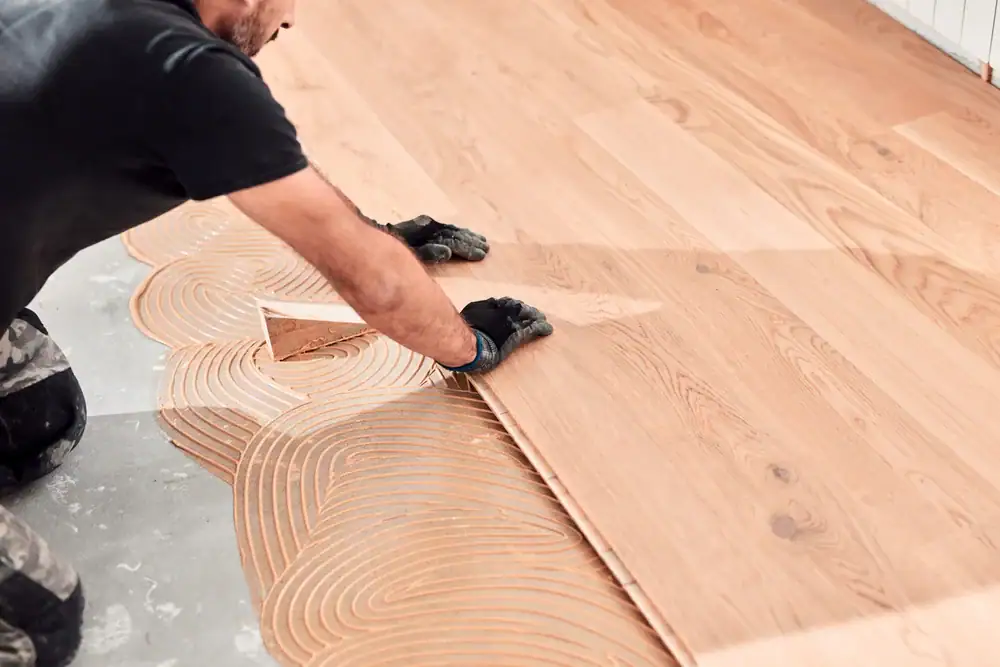
Hardwood Floor Installation Process Hanover Hills
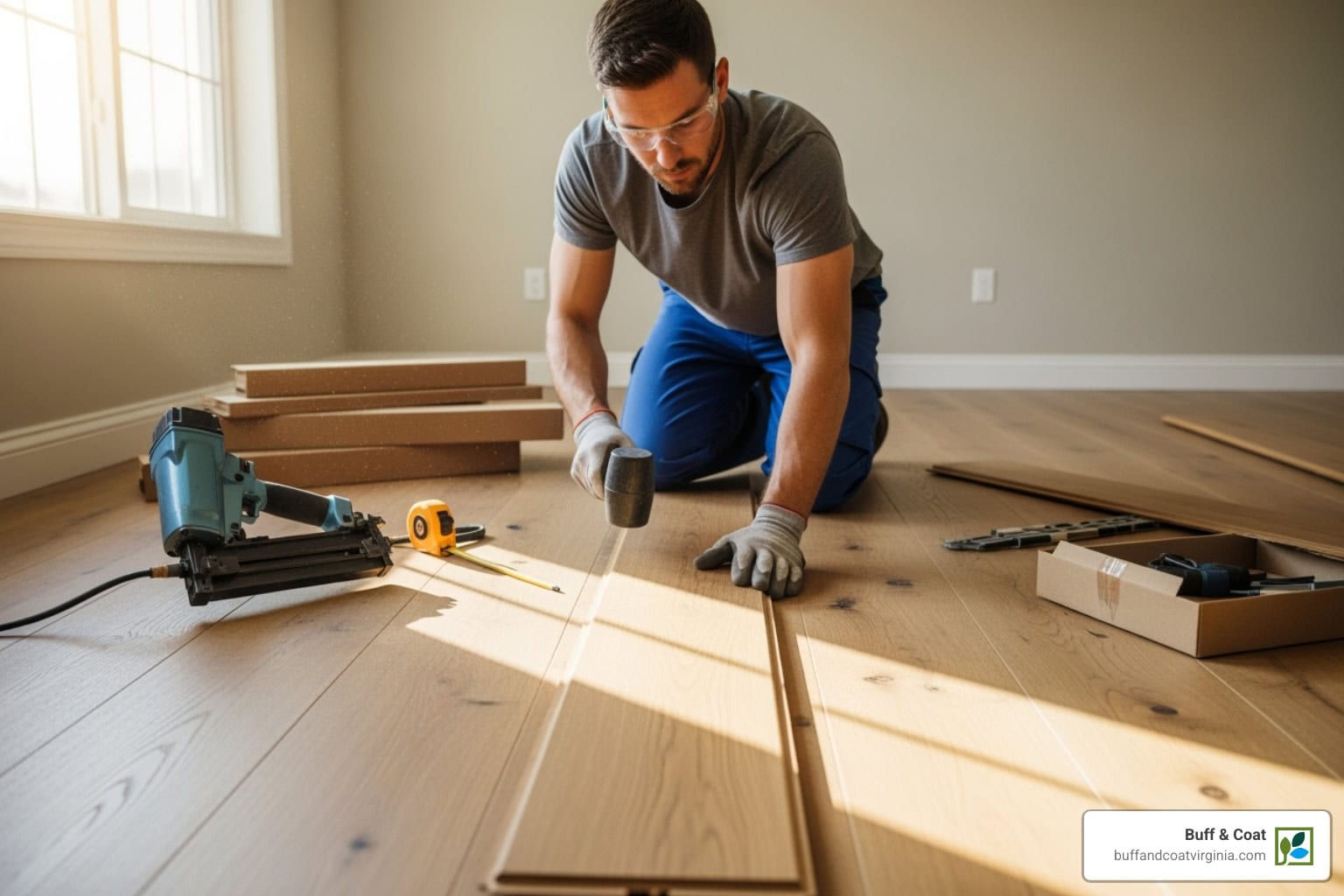
The first thing we do on any installation job isn’t touch the wood it’s assess the subfloor. In Hanover Hills homes, especially those built in the mid-to-late 20th century, subfloors can carry years of seasonal movement, minor settling, and moisture history. If there are high spots, soft areas, or levelness issues beyond the industry standard of 3/16 of an inch over a ten-foot span, those get addressed before anything else. Laying hardwood over a compromised subfloor doesn’t hide the problem it guarantees it becomes yours to deal with later.
Once the subfloor is confirmed or corrected, moisture testing happens on both the subfloor and the wood itself. In Hanover County’s climate, this step isn’t optional. Wood needs to acclimate to the indoor environment typically five to fourteen days before installation begins, and your home’s HVAC system needs to be running and stabilized. Skipping acclimation in a Virginia summer is one of the most common reasons floors fail within the first year.
After installation, the finish work is done cleanly, the transition areas are handled with care, and if you’re matching new hardwood to existing floors elsewhere in your home, that matching process gets the attention it deserves. You’ll know what to expect at every stage no surprises, no vague timelines, no crew showing up without warning.
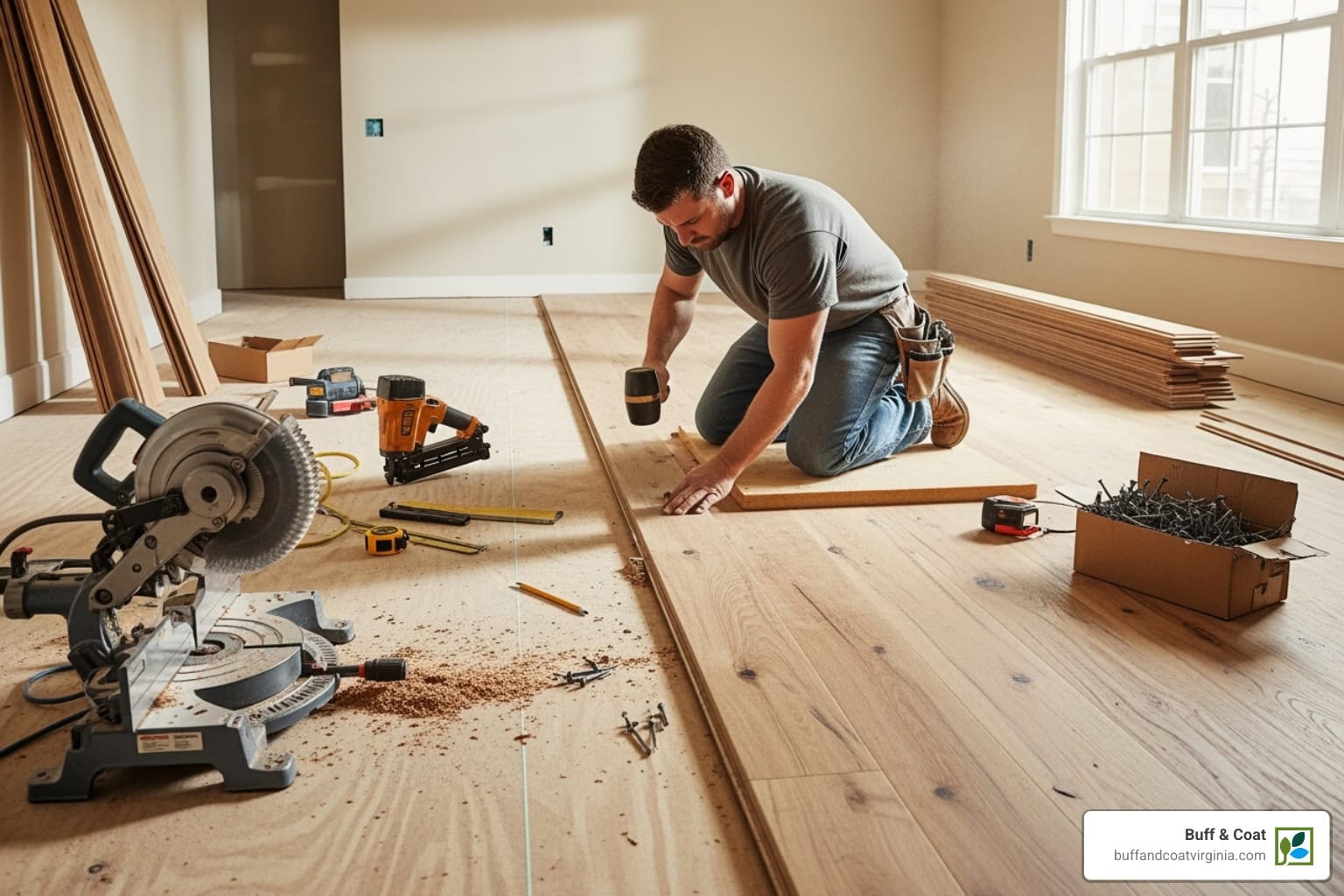
New Wood Floors and Solid Wood Flooring Hanover Hills
Not every Hanover Hills home needs the same solution, and we’ll tell you that upfront. Solid hardwood is a beautiful, lasting choice for the right space but in rooms built on a concrete slab, in areas below grade, or anywhere you’re planning wide planks over five inches, engineered hardwood is often the smarter call. It handles Virginia’s humidity swings better, resists the cupping that can affect wider solid boards, and still delivers the real wood look and feel that makes hardwood worth choosing in the first place.
We work with both solid and engineered hardwood and will give you an honest recommendation based on your subfloor type, your room conditions, and how the new floors need to relate to what’s already in your home. If you have original hardwood in your living room or hallway and you’re extending it into a bedroom or main floor addition, matching that species, width, stain, and finish is a specific skill and one that makes the difference between a home that looks cohesive and one that looks like two separate projects.
For Hanover County homeowners, there’s no permit required for a standard like-for-like floor installation in an existing home under Virginia’s building code. If the scope involves structural subfloor work, that’s a conversation worth having with Hanover County’s Department of Community Development but we’ll flag that for you before any work begins, not after.
Why do hardwood floors warp or cup in Hanover Hills homes after installation?
The short answer is moisture and in Hanover Hills, moisture is a year-round variable you can’t ignore. Summer humidity in this part of Virginia regularly pushes past 70%, which causes wood to absorb moisture from the air and expand. Then winter heating pulls that humidity back down, and the wood contracts. If the installer didn’t test moisture levels before laying the floor, or if the wood wasn’t given enough time to acclimate to your home’s indoor conditions, that expansion and contraction cycle has nowhere to go but up which is exactly how cupping and warping happen.
The fix isn’t complicated, but it requires discipline before the installation starts. Moisture testing both the subfloor and the wood planks, running your HVAC for at least five days prior to installation, and allowing proper acclimation time are the steps that prevent the overwhelming majority of post-installation failures. In a Hanover Hills home where you’re making a $4,000 to $7,000-plus investment in new floors, those steps aren’t extras they’re the foundation of the whole job.
How much does hardwood floor installation cost in Hanover County, VA?
The national average for hardwood floor installation runs around $4,723, with most projects landing somewhere between $2,500 and $7,000 depending on square footage, wood species, and the condition of the subfloor. In Hanover County, you’re working with a lot of mid-to-late 20th century housing stock and in those homes, subfloor preparation is often part of the equation. If the subfloor needs leveling, patching, or repair before installation can begin, that work typically adds anywhere from $900 to $3,000 to the overall project cost.
The most important thing to know going in is that a lower upfront quote doesn’t always mean a lower final cost especially if subfloor issues get discovered mid-job and the pricing changes after the work has started. We assess the subfloor before installation begins and give you an honest picture of what the job actually involves. That transparency upfront is how you avoid the surprise invoice conversation later.
Should I choose solid hardwood or engineered hardwood for my Hanover Hills home?
It depends on where the floor is going and what your subfloor looks like. Solid hardwood is a great choice for above-grade rooms with wood-frame subfloors it’s durable, refinishable multiple times over its life, and adds real long-term value to a Hanover Hills home. But Virginia’s humidity makes it less forgiving in certain applications. Wide plank solid hardwood, for example, is more prone to movement in climates like ours where the gap between summer and winter indoor humidity is significant.
Engineered hardwood is constructed with a real wood surface layer bonded to cross-ply layers underneath, which makes it significantly more dimensionally stable in humidity-variable environments. For Hanover Hills homes with concrete slab subfloors, rooms that run closer to grade level, or any space where you want wider planks without the added moisture risk, engineered hardwood is often the better long-term decision. We’ll walk you through both options honestly based on your specific home not just recommend whichever one has better margins.
How long does hardwood floor installation take in a typical Hanover Hills home?
For most standard residential projects, the installation itself takes one to three days depending on square footage and the complexity of the layout. But the full timeline is longer than that, and it should be. Before installation begins, the wood needs to acclimate inside your home typically five to fourteen days for solid hardwood, and a few days for engineered. During that window, your HVAC needs to be running and the indoor environment needs to be stable. In Hanover County summers, that means your air conditioning should be operating consistently before the wood ever comes out of the box.
If subfloor work is needed leveling, patching, or addressing soft spots that adds time before the installation clock starts. We build this into the project plan from the beginning, so you know the full timeline before anything is scheduled. The goal is to never rush a step that exists for a reason, and acclimation and subfloor prep are two of the most important ones.
Can new hardwood floors be matched to the existing floors in my Hanover Hills home?
Yes and it’s one of the more nuanced parts of a hardwood installation job. Matching new hardwood to existing floors requires getting the species, plank width, stain color, and finish sheen to align closely enough that the transition doesn’t stand out. In Hanover Hills, where a lot of homes were built in the 1970s, 80s, and 90s, many have original hardwood in main living areas and carpet or dated flooring in adjoining rooms. Homeowners upgrading those secondary spaces want the result to look intentional like the floors were always there together, not like two separate projects done years apart.
We have documented experience doing exactly this kind of matching work, and customers have called it out specifically in reviews. It’s not always a perfect science older floors have aged and darkened in ways that new wood hasn’t but the goal is always a transition that reads as cohesive rather than patched. That conversation starts during the estimate, not after the wood is already ordered.
Do I need a permit to install hardwood floors in Hanover County, VA?
For a standard hardwood floor installation in an existing Hanover County home replacing carpet, tile, or old hardwood with new hardwood no building permit is required under Virginia’s Uniform Statewide Building Code. This applies whether you’re in the Hanover Hills area, Mechanicsville, or elsewhere in the unincorporated county. The work is considered a finish improvement, not a structural change, and falls outside the permit threshold for residential flooring replacement.
Where it gets more nuanced is if the scope of work extends into the subfloor structure itself replacing damaged subfloor decking, sistering joists, or making corrections that affect the framing beneath the floor. That level of work can trigger a permit requirement through Hanover County’s Department of Community Development, and it’s worth confirming before that work begins. We’ll identify any subfloor conditions that might cross that line during the initial assessment and flag it for you before the project starts so you’re not finding out mid-job that something needs to be permitted.
Other Services we provide in Hanover Hills