
Floor Installation in Elmont, VA
Hanover County Homes Deserve Floors That Actually Last
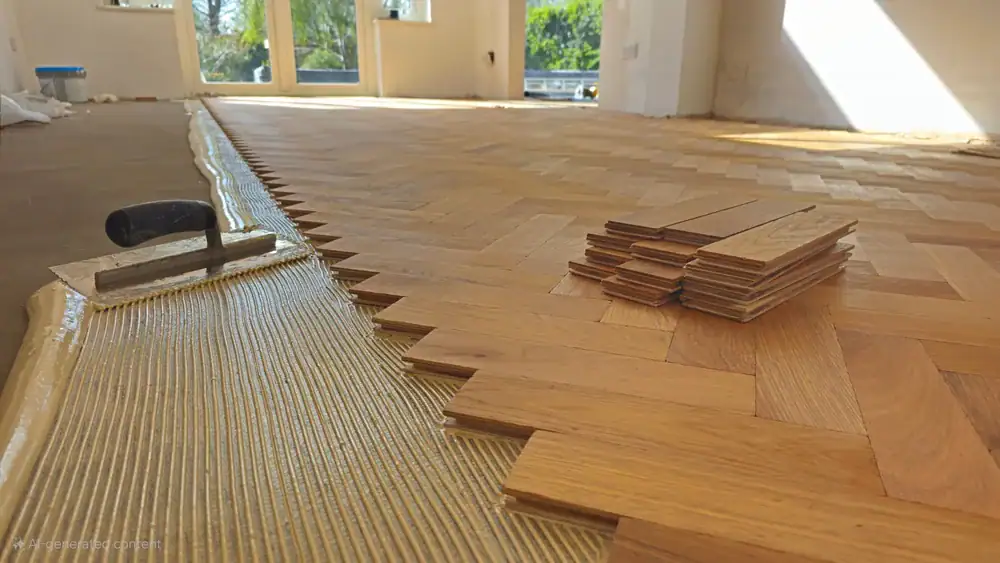
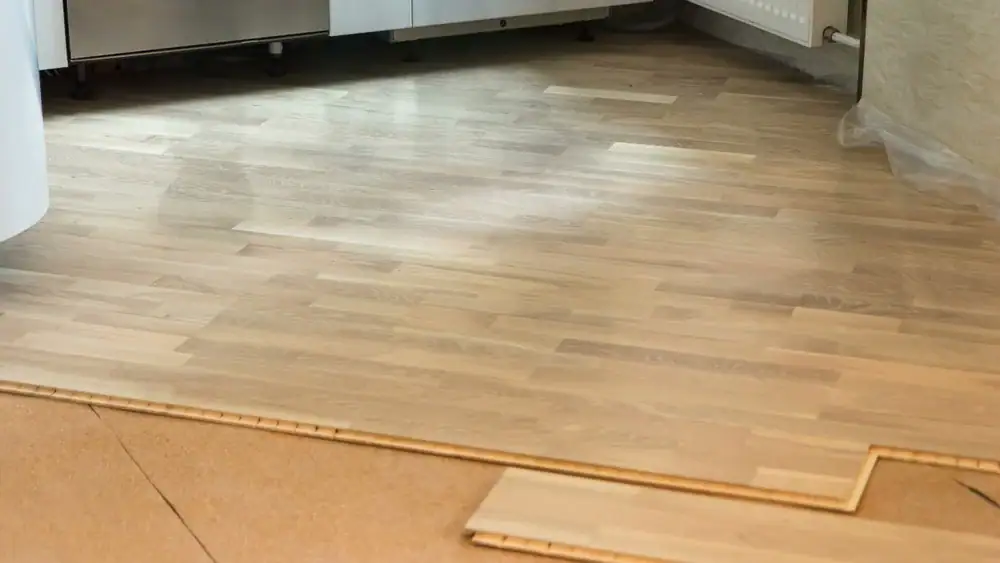
Hardwood Floor Installers Elmont, VA
Elmont sits in a part of Virginia where summer humidity pushes into the high 80s and winter heating pulls moisture right back out of your home. That swing wet season to dry season, year after year is exactly what causes hardwood floors to cup, gap, and squeak when they weren’t installed with that reality in mind. The right installation accounts for where you live, not just what’s on the spec sheet.
If your home is one of the older brick ranch-styles that define a lot of this area, your subfloor has years of settling behind it. Virginia’s clay-heavy soil doesn’t stay still, and neither do the floors built on top of it. Getting new hardwood down the right way means understanding what’s underneath first not just covering it up and hoping for the best.
For homeowners in newer developments like Chickahominy Falls, the considerations shift but don’t disappear. Proximity to the Chickahominy River means ground moisture is a real factor, and new construction subfloors have their own requirements that differ from older homes. Either way, what you end up with should be a floor that looks sharp, feels solid underfoot, and doesn’t give you problems six months from now.
Local Floor Installers Serving Elmont, VA
Buff and Coat Floor Refinishing is based in Glen Allen, just a few miles south of Elmont along the US Route 1 corridor. That proximity isn’t a footnote it means we work in Elmont and throughout Hanover County regularly, we know what these homes look like from the subfloor up, and our reputation is built on the same roads you drive every day.
David Emmerling has been working on hardwood floors in Virginia for over 20 years. That’s not a credential on a wall it’s two decades of seeing what holds up in this climate and what doesn’t. When something needs to be fixed before installation begins, he’ll tell you directly, including what it costs, before any work starts.
Hundreds of five-star reviews from Richmond-area homeowners back that up. No national call centers, no subcontractors you’ve never met. You get the same accountability on your job that built our name in the first place.
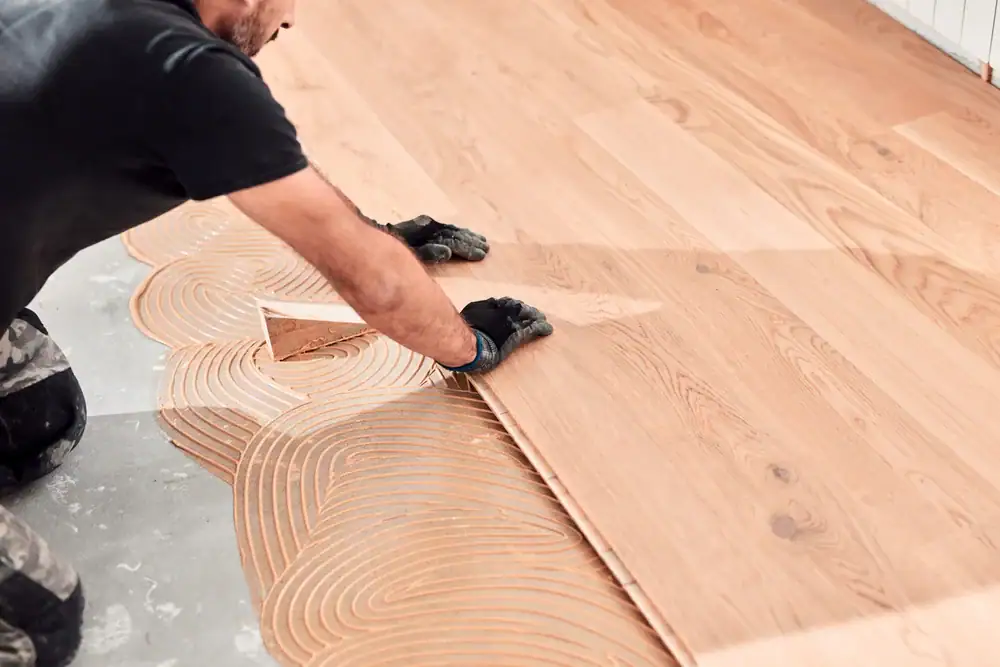
Hardwood Floor Installation Process Elmont, VA
It starts with a real assessment. Before anything is ordered or scheduled, we look at your subfloor levelness, stability, and moisture content. In Elmont, that last part matters more than most people realize. Homes with crawl-space foundations, which are common in the older ranch-style housing stock here, can carry ground moisture upward in ways that aren’t visible until a floor starts cupping. We test for it before it becomes your problem.
Once the subfloor checks out or once any issues are addressed and priced transparently your wood gets time to acclimate on-site. In Hanover County’s humid subtropical climate, skipping that step is one of the most common reasons floors fail after installation. Industry standards call for five to fourteen days depending on conditions. We follow them.
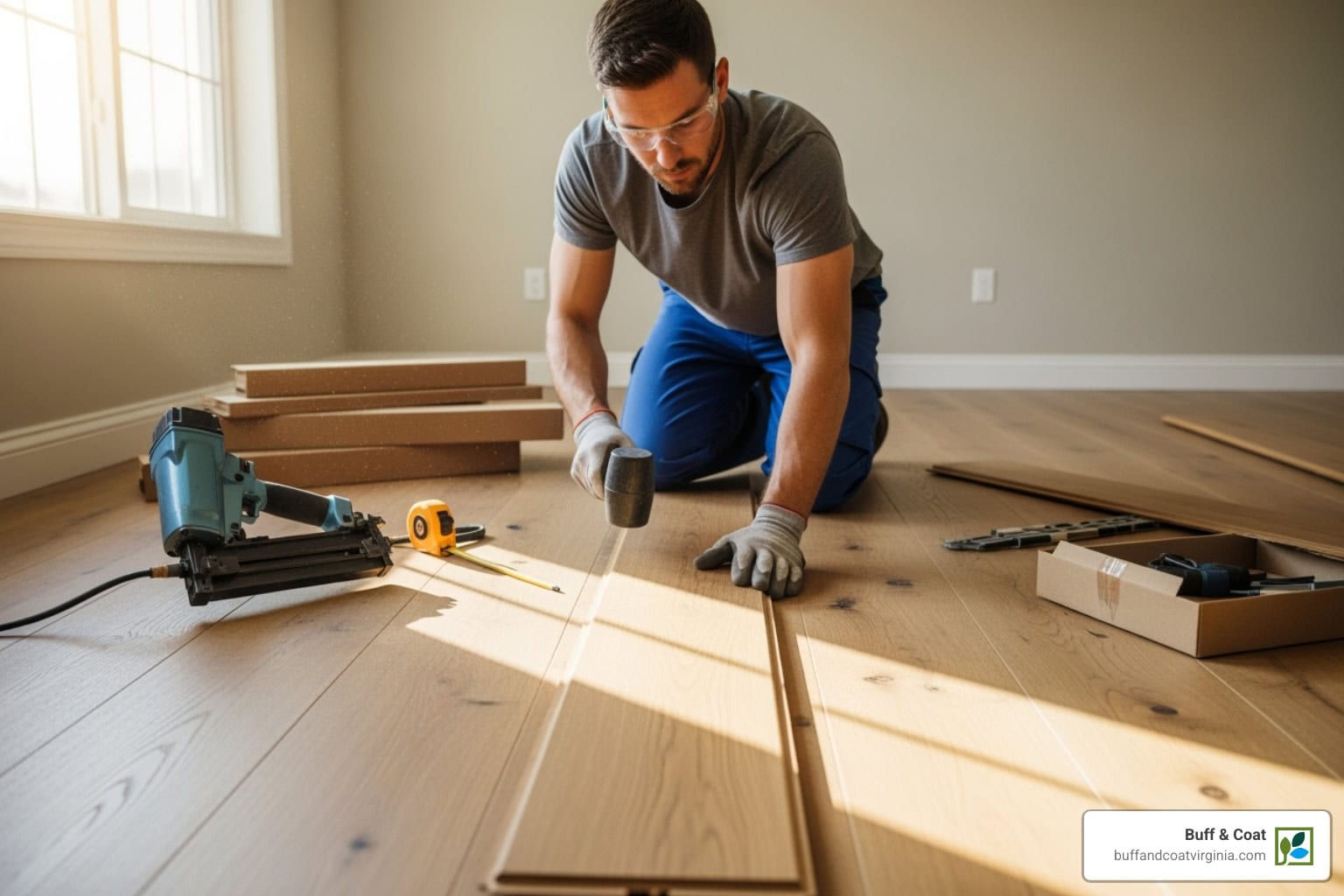
Then comes installation fastened, fitted, and finished to the spec your floor type requires. Whether you’re working with solid hardwood in an older Elmont home or engineered hardwood in a new construction near Cedar Lane, the method adapts to what your space actually needs. Most residential projects wrap up within a few days, with a dustless process that keeps your home livable throughout. When we leave, the floor is done not almost done.
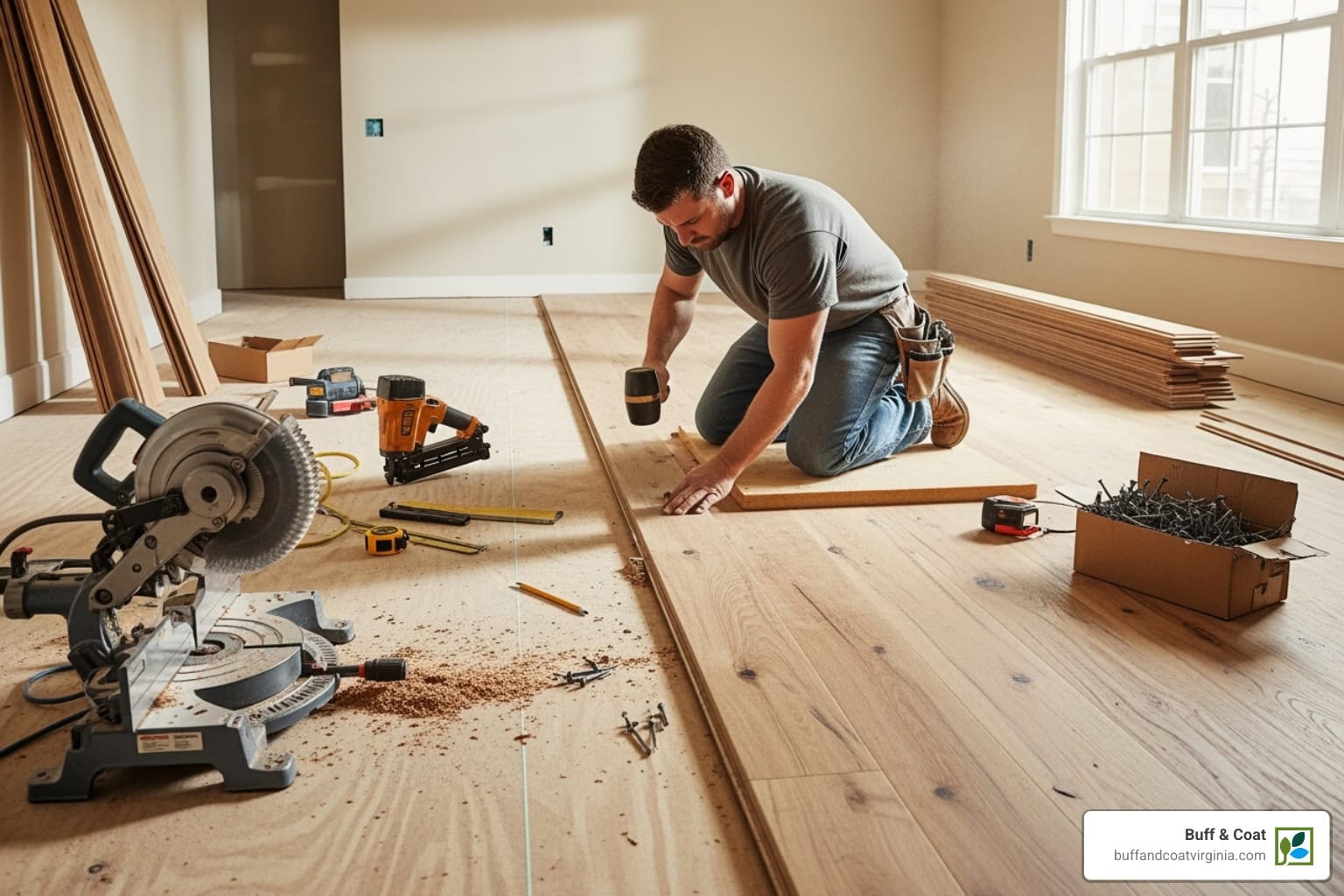
New Wood Floors and Solid Wood Flooring Elmont, VA
One of the most common questions we get from Elmont homeowners is whether to go with solid or engineered hardwood. The honest answer depends on your specific home. Solid hardwood is a long-term investment that can be refinished multiple times over decades but in rooms with higher moisture exposure or on concrete slab subfloors, engineered hardwood is often the smarter call. It handles Virginia’s humidity swings better, and for homes near the Chickahominy River, that dimensional stability isn’t a luxury it’s practical.
If you’re adding hardwood to a room that doesn’t have it yet, or replacing a section that was damaged, matching new flooring to what’s already in your home is something we do regularly. Getting the species, grain, and stain right so the transition is seamless takes real experience it’s not something you can shortcut. Homeowners in Elmont’s older ranch-style homes know this firsthand, because mismatched floors are one of the first things you notice and one of the hardest things to undo.
Flooring installation cost in Elmont typically runs between $2,500 and $7,000 depending on square footage, material, and subfloor condition. If subfloor repairs are needed, that can add $900 to $3,000 on top. You’ll know what you’re looking at before we start not after the floor is already pulled up.
What type of hardwood flooring holds up best in Elmont, VA's climate?
Elmont sits in a humid subtropical climate zone where summer humidity is high and winter heating systems dry the indoor air out significantly. That seasonal swing puts real stress on hardwood floors, and the right material choice makes a meaningful difference in how your floors hold up over time.
For most rooms in Elmont homes, both solid and engineered hardwood can perform well but the deciding factor is usually your subfloor type and the specific room’s moisture exposure. Solid hardwood works beautifully in living rooms, hallways, and bedrooms where subfloor conditions are stable. For rooms closer to ground level, near exterior walls, or in homes with crawl-space foundations common in Elmont’s older ranch-style housing stock, engineered hardwood offers better dimensional stability. It’s built in layers that resist the expansion and contraction that Virginia’s humidity shifts cause, which means fewer gaps in winter and less risk of cupping after a humid July.
How much does hardwood floor installation cost in Hanover County, VA?
For most residential projects in Elmont and the surrounding Hanover County area, hardwood floor installation runs between $2,500 and $7,000. That range reflects differences in square footage, material selection solid versus engineered hardwood and the condition of your existing subfloor going in.
The number that catches homeowners off guard most often is subfloor repair cost. If your subfloor needs leveling, stabilizing, or moisture remediation before new wood goes down, that can add anywhere from $900 to $3,000 to the total. In Elmont’s older homes particularly the mid-century ranch-styles with crawl-space foundations subfloor issues are common and worth diagnosing early. The good news is that a thorough pre-installation assessment tells you exactly what you’re dealing with before any work begins, so there are no surprise line items halfway through the job. What we quote is what you plan around.
How long does hardwood floor installation take from start to finish?
For a standard residential project, most installations take two to four days once the subfloor assessment is complete and the wood has finished acclimating. The acclimation period where the wood sits on-site and adjusts to your home’s temperature and humidity typically runs five to fourteen days before installation begins, depending on current conditions.
In Elmont’s climate, that acclimation window matters more than it does in drier regions. Skipping it or rushing it is one of the most consistent causes of post-installation gapping and movement, especially during Hanover County’s dry winter months when indoor heating pulls moisture out of freshly installed wood fast. Factor in the assessment, acclimation, and installation itself, and most homeowners are looking at a total timeline of one to two weeks from first visit to finished floor. We typically have scheduling available within a week of your initial consultation.
Can new hardwood floors be matched to existing floors in an older Elmont home?
Yes and it’s one of the more common requests we get from homeowners in Elmont, particularly in the older ranch-style and Colonial-style homes where original hardwood is still in place in some rooms but not others. Matching new hardwood to existing floors requires attention to species, plank width, grain pattern, and finish and the process takes more care than a standard full-room installation.
The result, when it’s done right, is a transition you genuinely can’t find. The new section blends into the existing floor without a visible seam or color mismatch. When it’s done wrong which happens when a contractor rushes the stain match or uses a different species without accounting for how it takes finish it’s obvious and difficult to fix. We’ve done this work extensively throughout Hanover County, and we’re straightforward with homeowners upfront about what’s achievable and what the process involves.
Do I need a permit for hardwood floor installation in Hanover County, VA?
For most standard hardwood floor installations in Hanover County meaning new flooring over an existing subfloor, or replacing existing floor covering a building permit is generally not required. This applies to the majority of residential projects in Elmont, whether you’re installing in an older home or a newer build in a development like Chickahominy Falls.
Where permits can come into play is when the scope of work involves structural subfloor replacement or significant framing repairs, rather than just the floor covering itself. If your subfloor assessment turns up damage that requires structural repair, it’s worth a quick verification with the Hanover County Department of Community Development before that portion of the work begins. Virginia contractors performing floor installation are also required to hold appropriate licensing through the Virginia Board for Contractors something worth confirming with any company you’re considering, regardless of the project scope.
Why are my hardwood floors cupping or gapping after installation in Virginia?
Cupping where the edges of planks rise higher than the center and gapping where spaces open up between planks are two of the most common post-installation complaints in Virginia, and both typically come back to moisture. Cupping usually means the bottom of the plank absorbed more moisture than the top, which happens when subfloor moisture wasn’t tested or addressed before installation. Gapping usually means the wood dried out faster than expected after it was installed, which in Hanover County often happens in winter when heating systems drop indoor humidity significantly.
Both problems are largely preventable. Proper moisture testing of the subfloor and the wood planks before installation begins combined with adequate on-site acclimation time catches the conditions that lead to these failures before they’re locked under your new floor. If you’re seeing cupping or gapping in floors that were recently installed by someone else, the cause is almost always a skipped step early in the process. In Elmont’s climate, with its wide seasonal humidity range and the added moisture considerations near the Chickahominy River, those steps aren’t optional they’re the foundation of an installation that actually holds.