
Floor Installation in Canterbury, VA
Canterbury Homes Deserve Floors That Last Decades
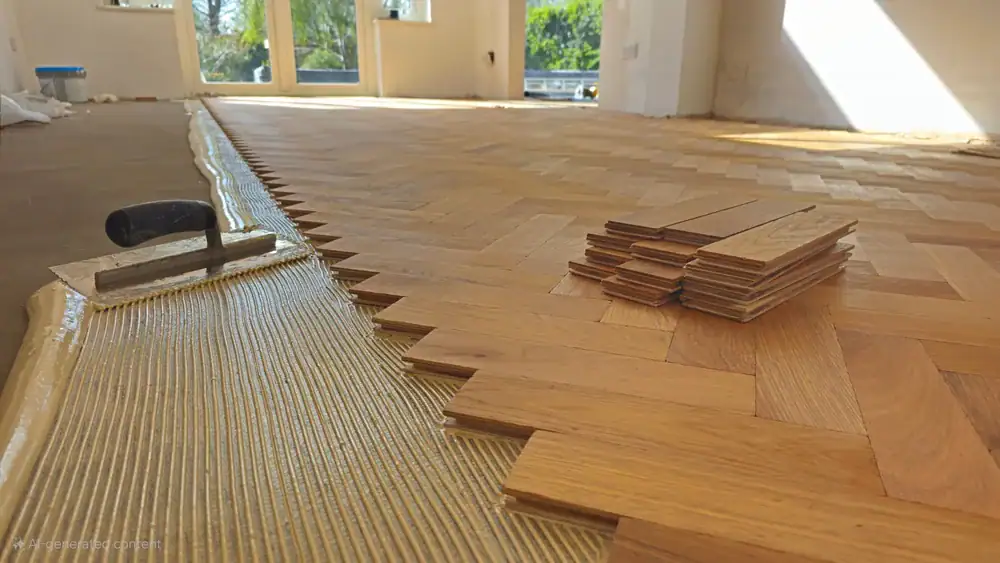
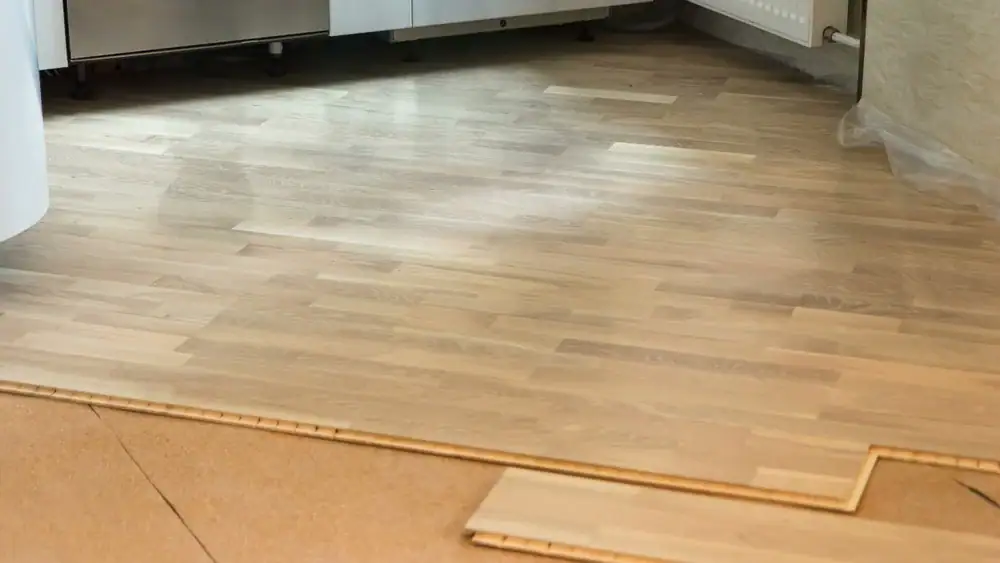
Hardwood Floor Installers Henrico County
Canterbury’s housing stock tells a specific story. Most homes here were built between 1970 and 1999, which means subfloors that have absorbed decades of Virginia humidity, settled over crawlspace foundations, and in many cases, original hardwood that’s been patched and refinished more times than it can handle. When you’re ready for new floors in Canterbury, what’s underneath matters just as much as what goes on top.
Richmond’s mixed-humid climate is genuinely hard on hardwood. Summer relative humidity in Henrico regularly climbs above 70 percent, and Canterbury’s mature tree canopy holds moisture close to the ground around older foundations. Floors installed without proper moisture testing in this environment don’t just squeak they cup, gap, and warp as the seasons change. Getting that right from the start is what separates a floor that looks great for six months from one that holds up for thirty years.
Beyond performance, there’s the investment side of it. Canterbury homes sell fast Tuckahoe-area properties move in roughly 15 days on market and hardwood floors are one of the first things buyers notice. Whether you’re planning to stay in your Canterbury home for the next twenty years or thinking about a future sale, floors installed correctly the first time protect the value of a home you’ve worked hard to build.
Local Floor Installers Canterbury VA
We’ve been working in Henrico County homes since 2012, with over a decade of hardwood installation and refinishing in Canterbury and the surrounding communities. We know what 1980s Henrico construction looks like from the subfloor up, and we know what Virginia summers do to a floor that wasn’t installed with moisture in mind. Our business is owner-operated by David Emmerling, which means his name and reputation are attached to every Canterbury job not a rotating crew dispatched from a corporate call center.
Being based in Glen Allen puts us just minutes from Canterbury along the Patterson Avenue corridor. That regional experience isn’t something you can get from a national franchise, and it shows in the results. We’ve earned hundreds of five-star Google reviews from homeowners across Henrico County real feedback from neighbors in communities just like Canterbury.
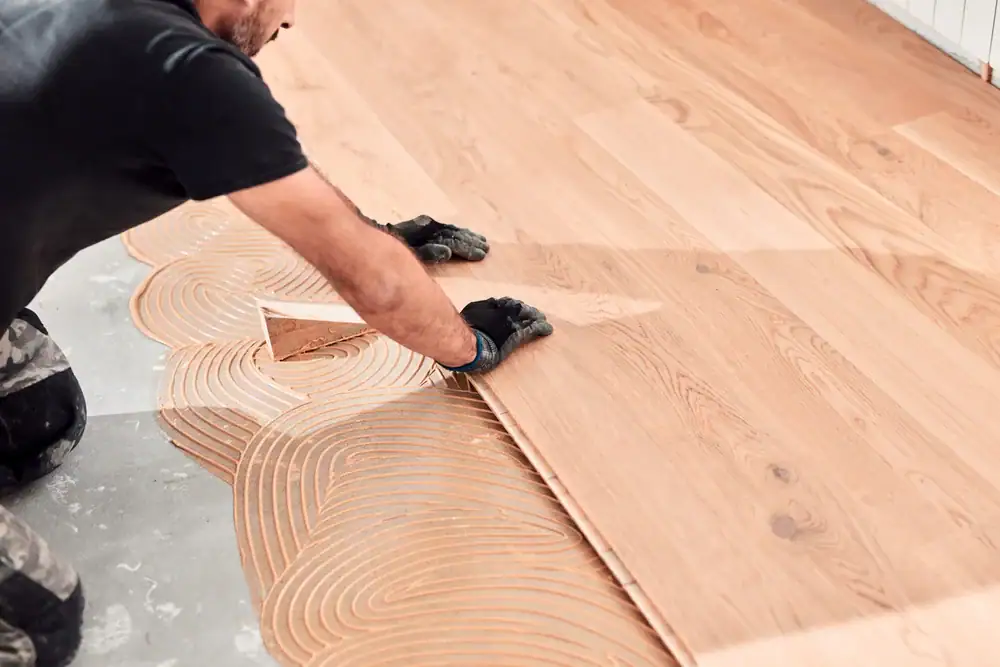
Hardwood Floor Installation Process Canterbury
Every installation starts with an honest look at what you’re working with. Before any wood comes into your Canterbury home, we assess your subfloor for levelness, stability, and moisture content. In Canterbury’s older homes many sitting on crawlspace foundations that have been breathing Virginia humidity for 30 to 50 years this step isn’t optional. It’s where most installation problems get caught and corrected before they become your problem.
Once the subfloor is confirmed or repaired, your new hardwood needs time to acclimate. We bring the wood into your home and let it adjust to your interior conditions typically five to fourteen days depending on the species and the season. If your Canterbury project falls in July or August, when Henrico humidity peaks, we may extend that window. Rushing acclimation is one of the most common shortcuts that leads to cupping and gapping down the road, and it’s one we don’t take.
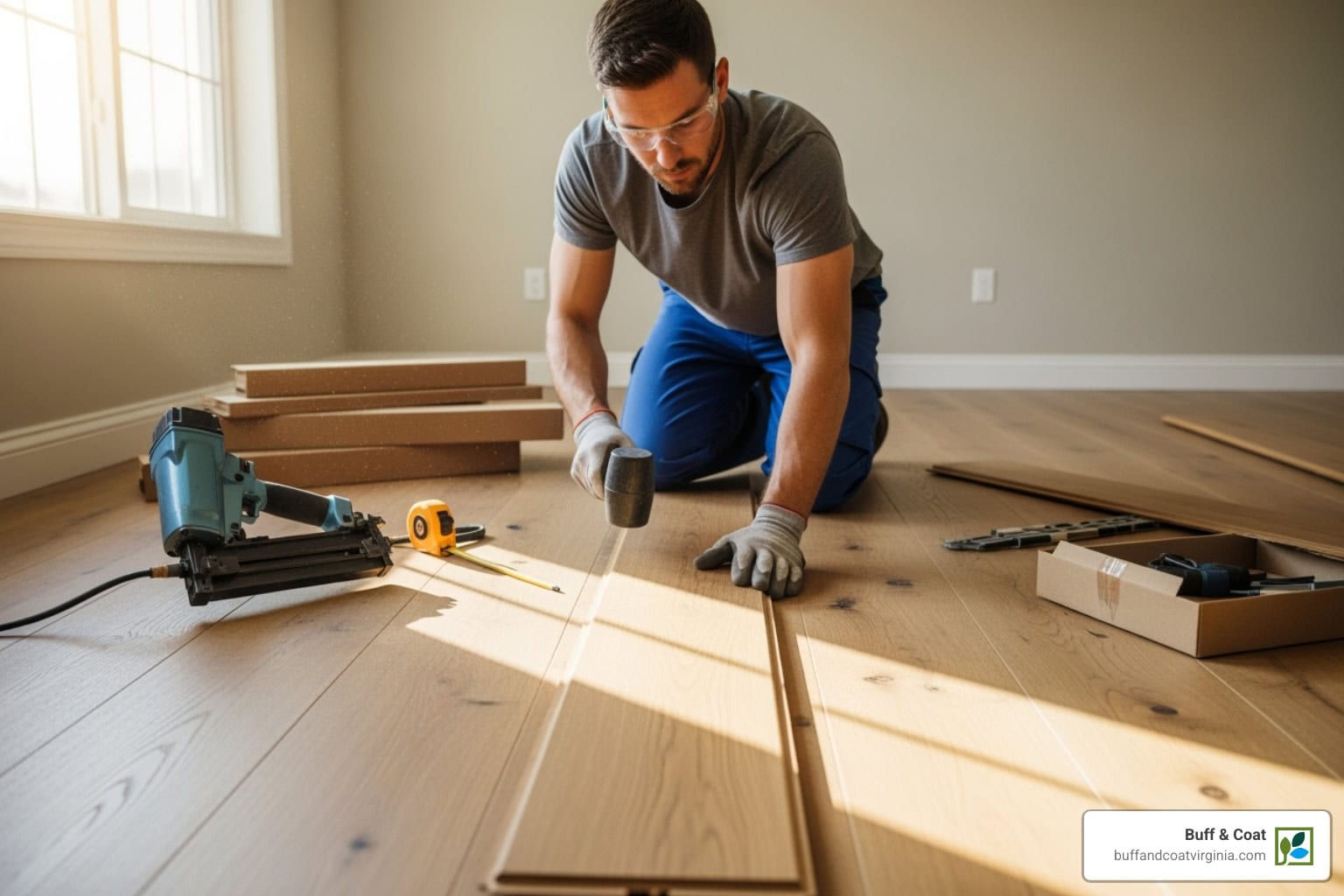
Installation itself is precise and methodical. Expansion gaps are set correctly for your specific wood species and plank width. Fastening patterns are consistent. When the job is done, you’re not left guessing whether it was done right the floor tells you. No squeaks, no movement, no visible gaps where they shouldn’t be. Most Canterbury jobs wrap up within a few days, and we work around your schedule to keep disruption to a minimum.
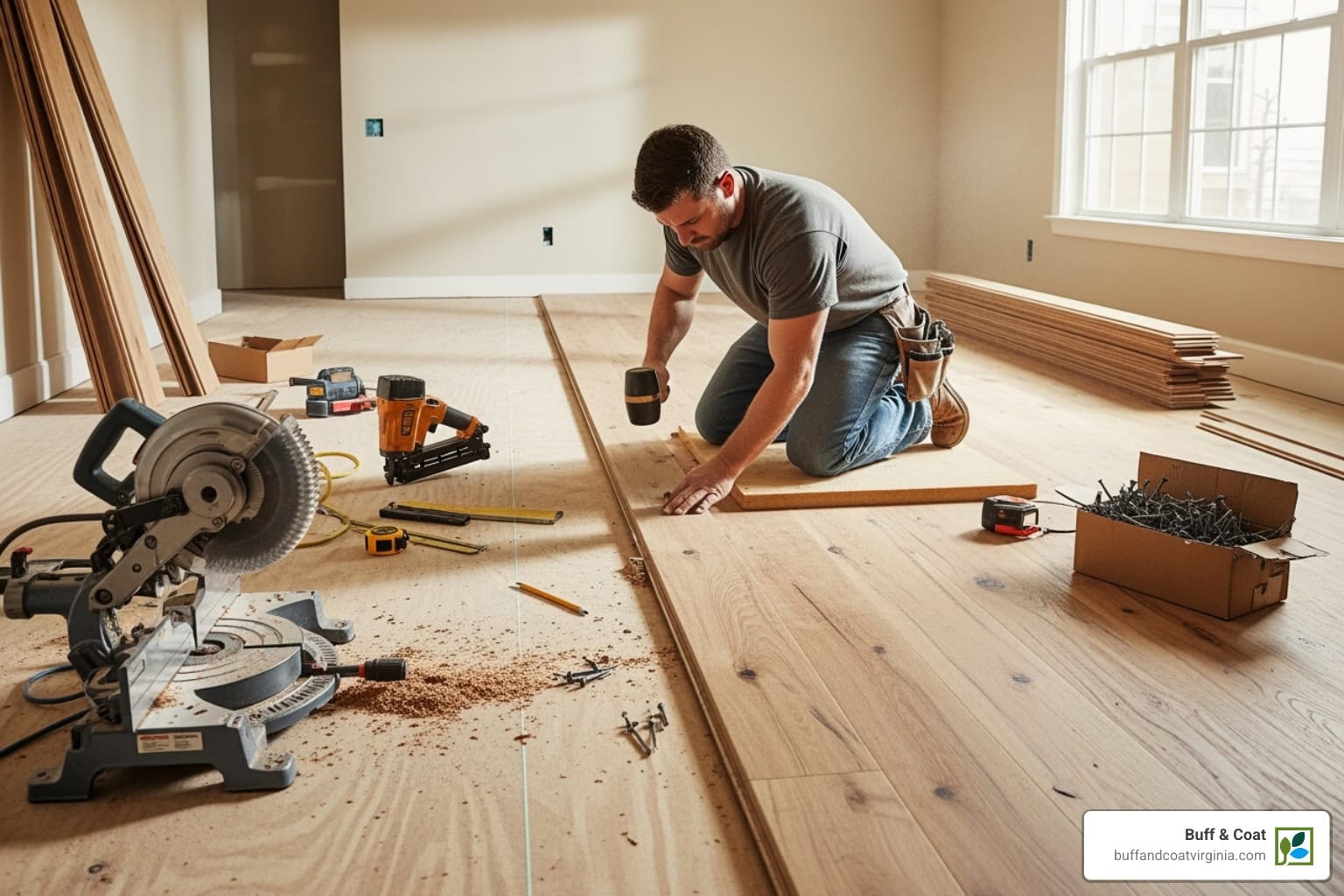
New Wood Floors Canterbury VA
Not every Canterbury home is the right candidate for solid hardwood, and we’ll tell you that upfront. A 1975 ranch on a crawlspace foundation with a history of moisture fluctuation is a different conversation than a 1998 colonial on a slab with a newer HVAC system. Solid hardwood requires no more than a 4 percent moisture variance between the wood and the subfloor and in Henrico’s West End, that threshold gets tested every summer. When engineered hardwood is the smarter choice for your specific Canterbury home, we’ll say so, even if it means recommending a less expensive option.
For Canterbury homeowners doing partial renovations extending hardwood into a remodeled kitchen, replacing a water-damaged section, or adding wood to a room that was previously carpeted matching existing floors is a real skill. Species, grain pattern, stain color, and finish sheen all have to align with what’s already there. It’s one of the things our customers specifically call out in their reviews, and it’s something we take seriously on every job.
On the permit side, most standard floor covering replacements in Henrico County don’t require a building permit. But if your subfloor needs structural repair sistered joists, replaced sheathing that work may cross the threshold for Henrico County’s Department of Building Construction and Inspections. We’re Virginia Board for Contractors licensed and can walk you through what your specific project requires before anything starts.
Does Canterbury's humidity actually affect hardwood floor installation outcomes?
It does, and more than most Canterbury homeowners expect. Richmond sits in a mixed-humid climate zone where summer relative humidity regularly climbs above 70 to 80 percent. Canterbury’s older homes many with crawlspace foundations and mature tree canopy holding moisture close to the structure are particularly exposed to this. Wood is a living material that expands and contracts with changes in moisture, and if it’s installed without proper moisture testing, that movement shows up as cupping in summer and gapping in winter.
The fix isn’t complicated, but it has to happen before installation begins. We test both the subfloor and the wood planks for moisture content, and we verify that your HVAC system has been running consistently for at least five days before we start. The National Wood Flooring Association recommends keeping interior humidity between 30 and 50 percent for hardwood to perform correctly and in Canterbury, hitting that range in July without a properly functioning system is genuinely difficult. Knowing that going in is what keeps your floors stable year after year.
How do I know if my subfloor needs repair before new hardwood is installed?
The honest answer is that you probably won’t know until someone checks it properly. In Canterbury homes built between 1970 and 1999, subfloors have had decades to shift, settle, and absorb moisture from Virginia’s humid summers. Common signs of a subfloor that needs attention include soft spots when you walk across the existing floor, visible dips or high points, squeaking that moves around rather than staying in one place, or a history of water intrusion in the home.
During our pre-installation assessment, we check for levelness, stability, and moisture content before any wood comes into the house. If we find areas that need to be sistered, shimmed, or replaced, we address them before installation begins not after. Subfloor repairs after the fact can run anywhere from $900 to $3,000 depending on the scope, and they require pulling up the floor you just paid to install. Catching it upfront is always the better outcome, and it’s built into our process on every Canterbury job.
What's the difference between solid and engineered hardwood, and which is right for my home?
Solid hardwood is milled from a single piece of wood and can be sanded and refinished multiple times over its lifetime it’s the traditional choice and generally the most durable long-term. Engineered hardwood has a real wood veneer on top bonded to layers of plywood or high-density fiberboard, which makes it more dimensionally stable in environments with significant humidity swings. Both look like real wood because they are the difference is in how they respond to moisture and what subfloor they can go over.
For Canterbury specifically, the choice often comes down to your foundation type and moisture history. A home on a crawlspace with a history of humidity fluctuation is usually a better candidate for engineered hardwood, especially in rooms closer to grade. A home on a slab with a newer, well-functioning HVAC system may be perfectly fine with solid hardwood throughout. We assess your specific conditions and give you a straight answer not a recommendation based on which product has a higher margin. The goal is a floor that performs well in your actual home, not just in ideal conditions.
How long does hardwood floor installation take in a Canterbury home?
The installation itself typically wraps up within two to three days for most Canterbury homes, depending on square footage and whether any subfloor work is needed. But the full timeline from start to finish is a bit longer when you factor in acclimation the period where the wood adjusts to the temperature and humidity inside your home before we install it. That window is generally five to fourteen days, and in Henrico’s peak summer months, we may extend it to make sure the wood has fully stabilized before it goes down.
Scheduling is straightforward. Most customers are booked within a week of their initial contact, and we work around your household’s schedule to minimize disruption. If you have kids in school or pets that need to be out of the work area, we factor that in. The dustless process also means you’re not dealing with airborne particles settling on surfaces throughout your home for days after we leave. From first contact to finished floor, most Canterbury homeowners are looking at a two-to-three week window total when acclimation is included.
Is hardwood floor installation worth it before selling a Canterbury home?
In most cases, yes and Canterbury’s market makes the math fairly straightforward. Tuckahoe-area homes sell in roughly 15 days on market, which means buyers are moving fast and making decisions based on first impressions. Hardwood floors are one of the first things buyers notice when they walk through a home, and worn, stained, or mismatched flooring can pull down perceived value quickly in a neighborhood where buyers have high expectations.
The return on hardwood floor installation before a sale depends on the condition of your existing floors and what the rest of the home looks like, but it’s consistently cited as one of the higher-return pre-sale renovations in the residential market. If your Canterbury home still has original carpet from the 1980s or 1990s, replacing it with hardwood before listing is almost always worth the investment. If you already have hardwood that’s in rough shape, refinishing or replacing the most visible sections can make a significant difference without requiring a whole-home project. We can walk through your specific situation and tell you honestly what makes sense.
Can you match new hardwood floors to the existing wood already in my Canterbury home?
Yes, and it’s one of the things we do most often in established neighborhoods like Canterbury. Most homes here already have hardwood in at least part of the house a living room, hallway, or main floor and the renovation project is about extending it into a newly remodeled kitchen, replacing a section damaged by a water leak, or adding wood to a room that was previously carpeted. Getting that match right requires more than just picking a similar color from a sample board.
Species, grain pattern, plank width, stain color, and finish sheen all have to align with what’s already on your floor. Sometimes the existing wood has aged and taken on a patina that a fresh board won’t naturally replicate in those cases, we talk through the options honestly, including whether a light refinish of the existing floors would help blend the transition. Customers in Henrico’s West End communities specifically mention this capability in their reviews, and it’s something we’ve refined over more than a decade of working in homes just like yours in Canterbury. We’ll tell you what’s achievable before we start, not after.