
Floor Installation in Atlee, VA
Atlee Homes Deserve Floors That Handle What Virginia Throws at Them
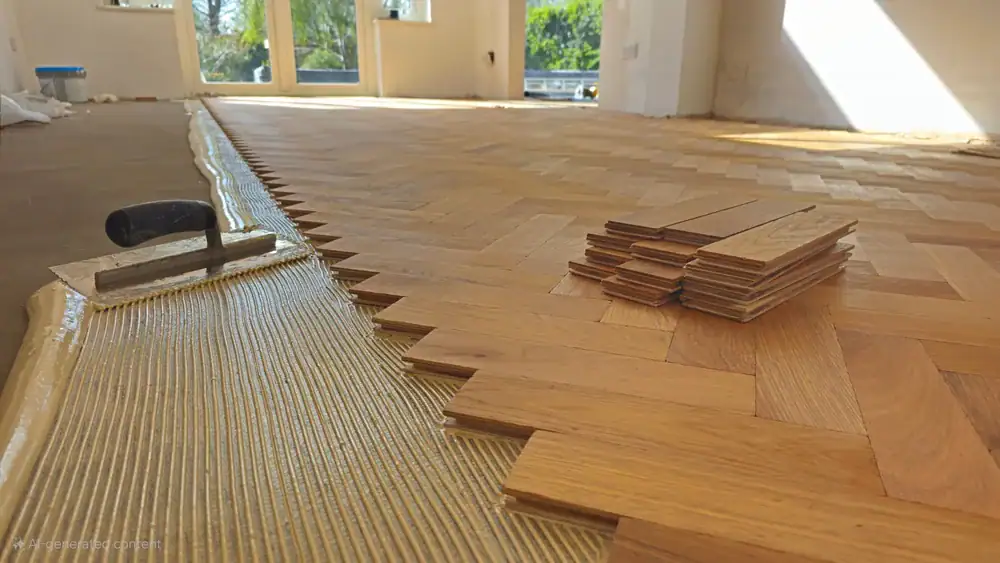
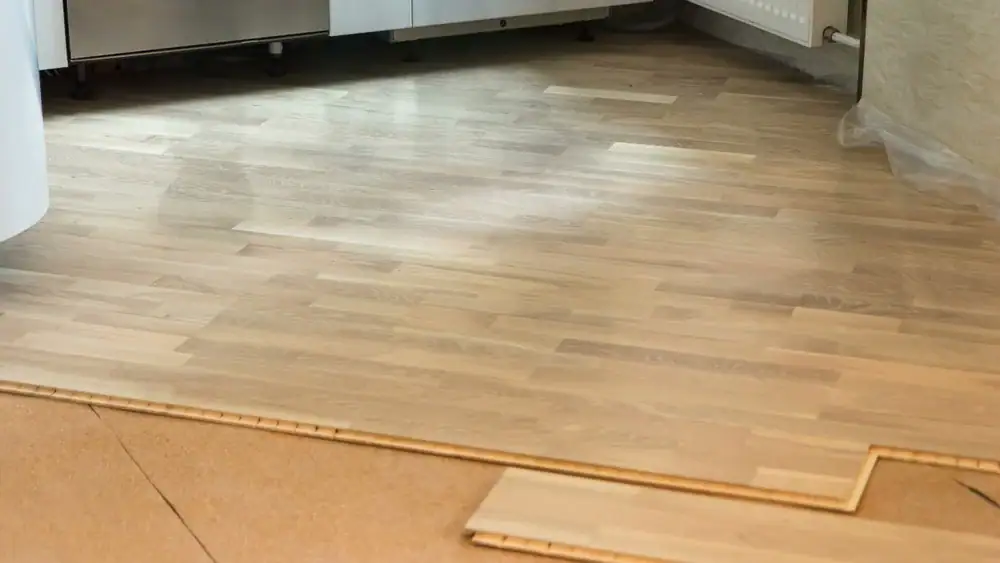
Hardwood Floor Installers Atlee, VA
Most flooring problems don’t show up the week after installation. They show up the following August, when Richmond’s humidity climbs to 77% and the boards an installer never moisture-tested start cupping at the edges. By then, the contractor is long gone. What you’re left with is a floor that looks like it’s been through something because it has.
In Atlee, that risk is real. The Chickahominy River runs through this area, and the clay-rich soils common in central Hanover County hold groundwater in ways that quietly elevate subfloor moisture levels even in homes that look and feel completely dry. Whether you’re in a newer build in Rutland or Honey Meadows, or an established home in Kings Charter, your subfloor has a moisture story and ignoring it is how floors warp, squeak, and gap within a year.
When installation starts with a proper subfloor assessment and moisture testing of both the subfloor and the wood planks, those problems get addressed before they become your problem. You get floors that stay flat through humid summers and dry heated winters, that don’t move underfoot, and that still look the way they did on day one five, ten, twenty years later. That’s what this process is designed to deliver.
Local Floor Installers Serving Hanover County
We’re based in Glen Allen about ten miles south of Atlee on the I-295 corridor and have been working in Richmond-area homes for over two decades. This isn’t a franchise routing your call to a subcontractor. We’re an owner-operated company where David Emmerling is personally accountable for every project that goes out the door.
That matters in a community like Atlee, where homeowners in Kings Charter, Giles, and Atlee Station have invested serious money in their properties and expect the people they hire to treat that investment accordingly. David has spent twenty years working in Virginia homes specifically learning what the seasonal humidity swings do to improperly installed floors, what Hanover County subfloors actually look like, and what it takes to get a result that holds up long-term.
Hundreds of verified five-star reviews from Richmond-area homeowners back that up. When your neighbors ask who did your floors, you’ll have a name worth sharing.
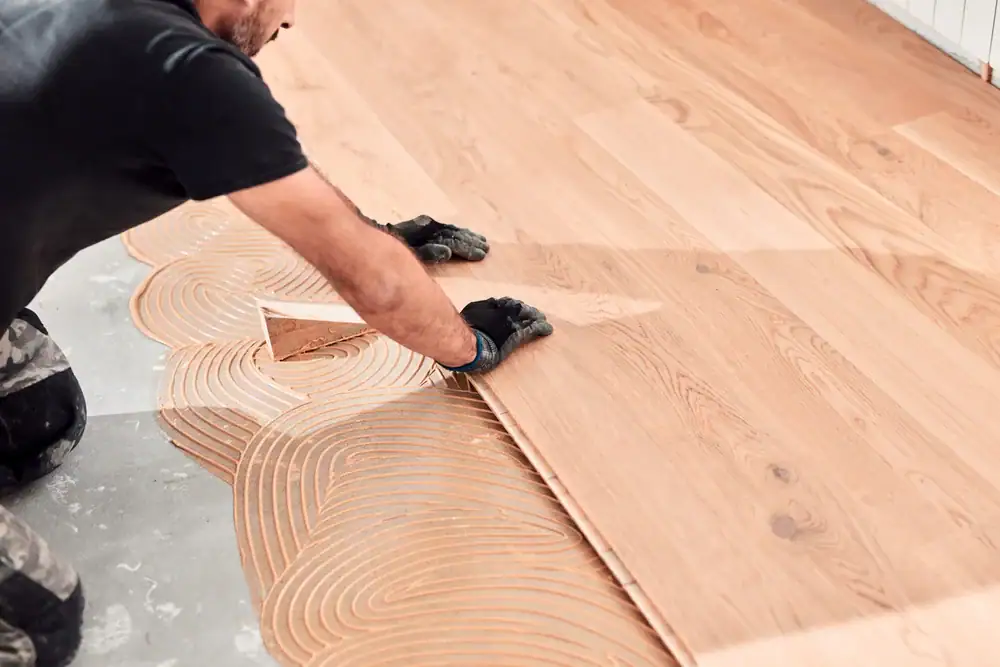
Hardwood Floor Installation Process Atlee, VA
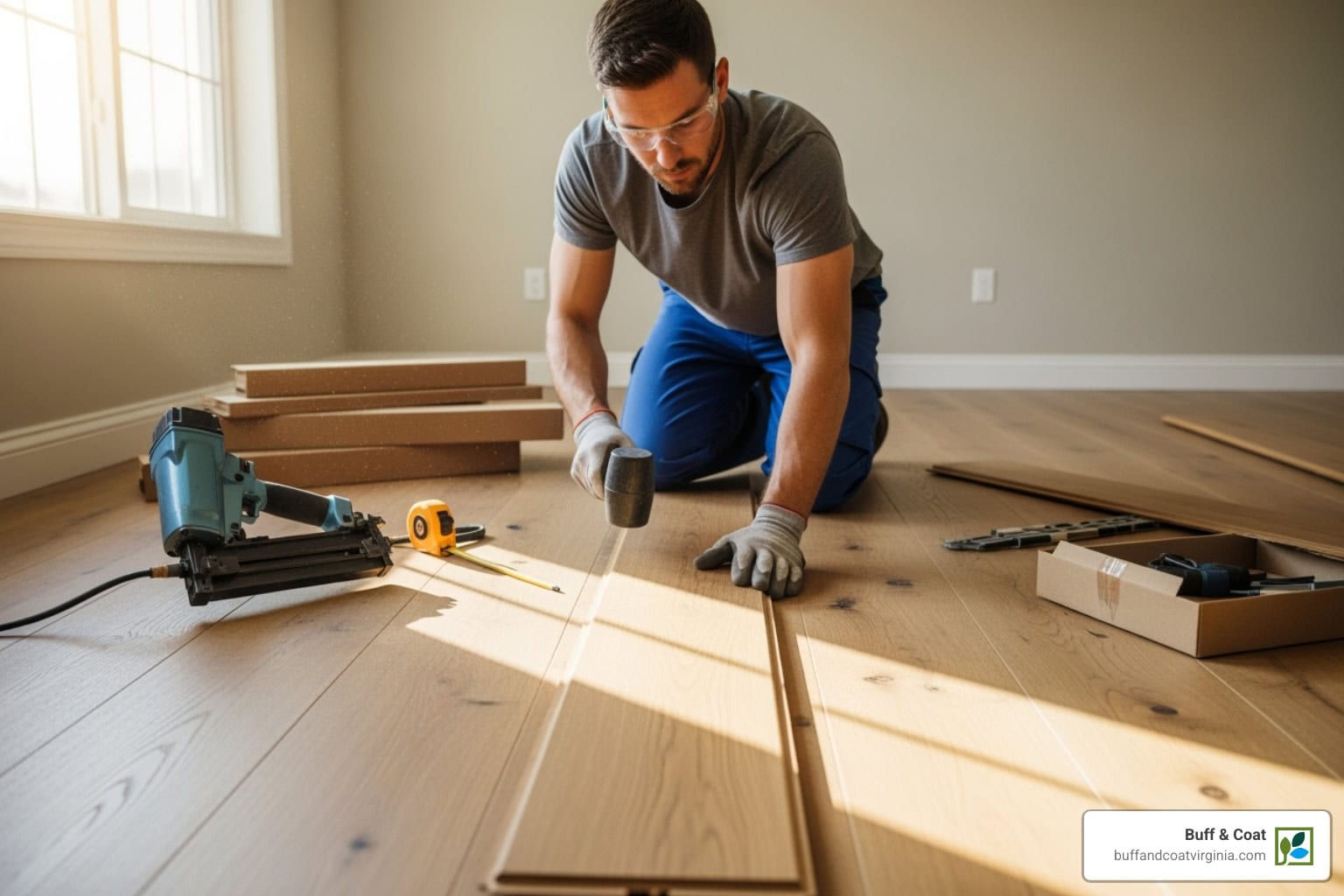
The first thing that happens isn’t installation it’s assessment. Before any wood touches your subfloor, we evaluate the subfloor itself: levelness, structural stability, and moisture content. In Atlee’s mix of crawl-space homes and newer slab-on-grade construction, those readings vary more than most homeowners expect. If the subfloor needs work, we address it here not after your new floors are already nailed down and the problem has nowhere to go but up.
Once the subfloor clears, the wood planks go through their own moisture testing. This step is what prevents the cupping and gapping that show up months later when Virginia’s climate does what it always does. Proper acclimation to your home’s actual interior conditions not just the ambient outdoor humidity is what determines whether your floors stay flat through the seasonal swings. Timing matters here too. Spring and fall are the most forgiving seasons for installation in this area. Summer installs require longer acclimation periods given the humidity peak, and winter installs need careful attention to how your heating system affects interior moisture levels.
After installation, you get a walkthrough. Everything gets checked fit, finish, transitions, and any edge conditions specific to your space. The goal is that you don’t discover anything later that should have been caught on day one.
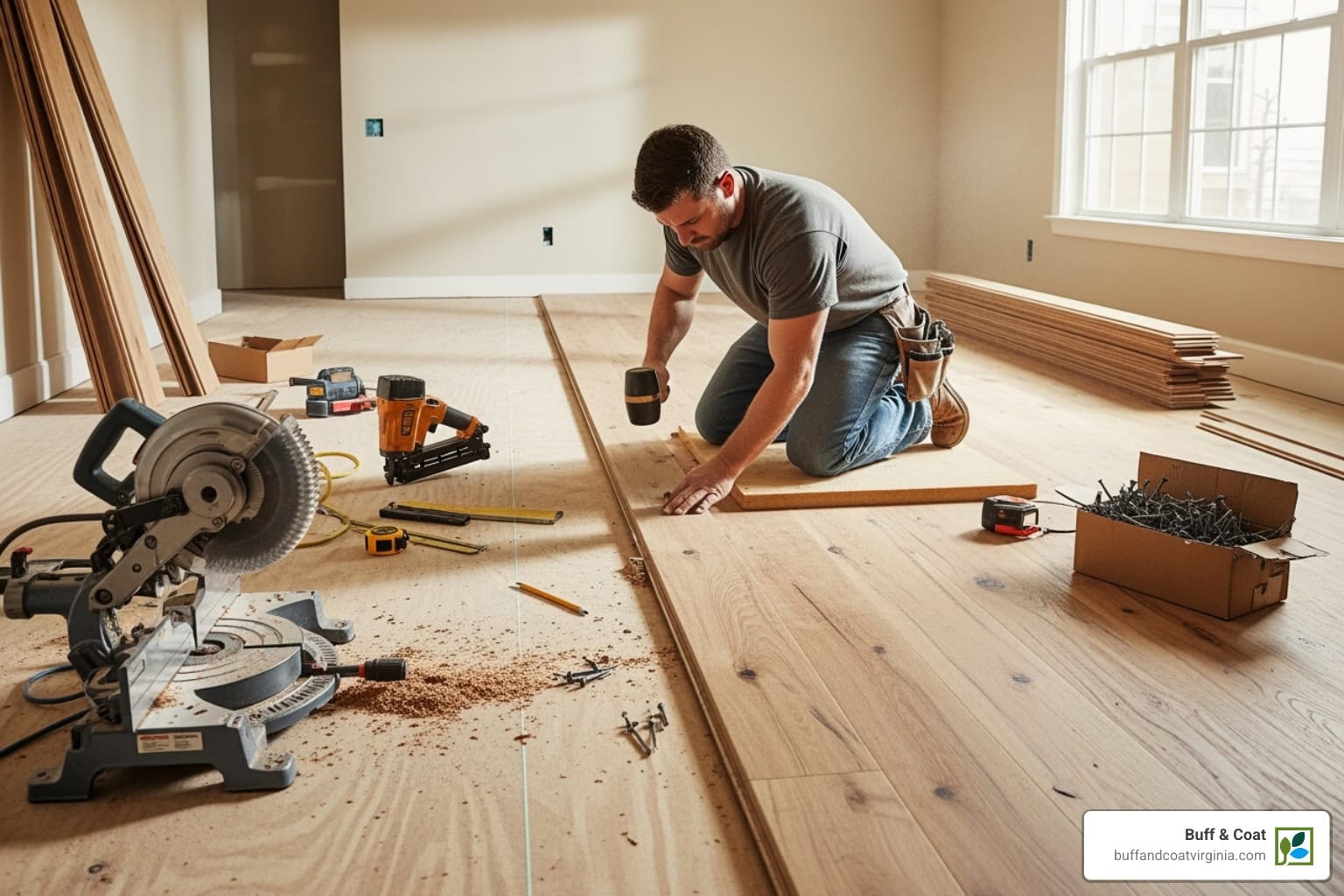
New Wood Floors and Solid Wood Flooring Atlee
Not every Atlee home is the same, and not every floor should be either. Solid hardwood is a beautiful, long-lasting choice but it’s not always the right one depending on your subfloor type. Newer construction in communities like Giles or Honey Meadows sometimes involves concrete slab subfloors where solid hardwood isn’t appropriate. Engineered hardwood, which handles moisture variation better and can be installed over concrete, is often the smarter long-term choice in those situations. Part of what you get from us is honest guidance on which material actually fits your home not a default recommendation based on margin.
For homes in established Atlee neighborhoods where hardwood already exists in some rooms, matching new installation to existing floors is a real consideration. Species, stain tone, and finish sheen all factor in, and getting it wrong is obvious. This is a capability that requires actual experience with Virginia wood species and finish behavior not just a product catalog.
Because Atlee is unincorporated, all permitting and contractor licensing requirements flow through Hanover County and the Commonwealth of Virginia. Any structural subfloor repairs identified during the pre-installation assessment may require a permit through Hanover County’s Department of Building Inspection depending on scope. We hold the appropriate Virginia Board for Contractors license, so that process is handled correctly from the start not something you have to chase down after the fact.
How much does hardwood floor installation typically cost in Atlee, VA?
The honest range for hardwood floor installation materials and labor combined runs roughly $6 to $25 per square foot, which puts most residential projects somewhere between $2,500 and $7,000 depending on the size of the space, the species and grade of wood selected, and the condition of the existing subfloor. In Atlee, where homes typically range from 2,000 to 4,000+ square feet, most full-floor projects land in the $4,000 to $7,000 range for standard hardwood species.
What affects the final number most is what’s underneath the floor you can see. If the subfloor assessment turns up levelness issues or moisture problems which is not uncommon in Hanover County homes, particularly those with crawl spaces near the Chickahominy River corridor addressing those adds to the project cost. That’s not a surprise fee; it’s the difference between a floor that lasts and one that fails. Skipping that step to save money upfront is how homeowners end up replacing floors they just paid for.
What's the difference between solid hardwood and engineered hardwood for my home?
Solid hardwood is exactly what it sounds like a single, solid piece of wood from top to bottom. It’s durable, can be sanded and refinished multiple times over its lifetime, and is the classic choice for above-grade installations over wood subfloors. The tradeoff is that solid wood is more sensitive to moisture and temperature swings, which matters in a climate like Atlee’s where humidity runs high in summer and drops significantly when heating systems run hard in winter.
Engineered hardwood has a real wood veneer on top bonded to a layered core, which makes it more dimensionally stable in fluctuating conditions. It’s the better fit for slab-on-grade subfloors something you’ll encounter in a number of newer Atlee builds in communities like Giles and parts of Rutland and for spaces where moisture exposure is higher. It still looks and feels like real wood because the surface layer is real wood. The choice between the two should be driven by your specific subfloor type, the room’s location in the home, and how your home manages humidity not just personal preference.
How long does hardwood floor installation take from start to finish?
For most residential projects, installation itself runs two to three days once the subfloor prep is complete. The timeline that catches people off guard is the acclimation period before installation begins the time the wood planks spend sitting in your home adjusting to its actual temperature and humidity levels before a single board gets fastened down.
In Atlee, that acclimation period varies by season. During the summer months when outdoor humidity is at its peak and your air conditioning is actively pulling moisture out of the interior air, the gradient between the wood’s initial moisture content and your home’s interior conditions can be significant. Rushing through acclimation in August is one of the most common reasons floors gap or cup within the first year. Spring and fall installs typically have shorter acclimation windows because interior conditions are more stable. If you’re planning a floor project around a real estate listing and Atlee’s 25-day average market time means timing matters building in that acclimation period is something to plan for upfront.
Do I need a permit to install hardwood floors in Hanover County?
For standard hardwood floor installation replacing existing flooring with new hardwood of the same type a building permit is generally not required in Hanover County. Because Atlee is an unincorporated community, all permitting and code enforcement flows through Hanover County’s Department of Building Inspection rather than a city government, so there’s no separate municipal layer to navigate.
Where permits can come into play is if the pre-installation assessment identifies subfloor structural issues that require repair. Depending on the scope of that work, Hanover County may require a permit before structural repairs proceed. A licensed contractor will know how to evaluate whether that threshold is met and handle the filing correctly. What you want to avoid is hiring someone who skips the subfloor assessment entirely not because they determined no work was needed, but because they didn’t want to find anything that would slow the job down or complicate the sale.
Can hardwood floors be installed in a newly built home in Atlee right away?
New construction is actually one of the situations where pre-installation moisture testing matters most, even though the subfloor looks clean and untouched. Concrete pours used in slab foundations release moisture for weeks or months after they’re placed, and homes that sat in an unconditioned state during the construction process can have elevated moisture levels in the subfloor that aren’t obvious to the eye.
In Atlee’s active new construction communities Giles on Atlee Station Road, the newer phases of Rutland, and Honey Meadows many buyers are choosing to replace builder-grade carpet with hardwood immediately after move-in or during the build process. That’s a smart upgrade, but the timing needs to account for whether the home’s HVAC system has been running long enough to stabilize interior conditions. Installing hardwood into a newly conditioned space before moisture levels have normalized is one of the more avoidable ways a new floor fails early. The fix is straightforward test first, install when the numbers are right.
How do I know if my existing hardwood floors need replacement versus refinishing?
This is a question worth asking before you commit to either option, because the answer genuinely depends on what’s happening with the wood itself. Hardwood floors can typically be sanded and refinished multiple times over their lifetime the limiting factor is how much wood is left above the tongue-and-groove. If the boards are structurally sound, the finish is just worn, and there’s no significant cupping, warping, or deep gouging, refinishing is almost always the more cost-effective path and delivers results that are hard to distinguish from new installation.
Replacement makes more sense when the boards themselves are damaged when cupping or warping has distorted the surface beyond what sanding can correct, when there’s been moisture damage that compromised the wood at a structural level, or when the existing floor is a species or width that no longer fits the direction you want to take the space. In Atlee homes where humidity has done real work on an older floor over the years, the line between “refinishable” and “needs replacing” isn’t always obvious without a proper assessment. Getting that evaluation from someone who does both installation and refinishing means you get an honest answer rather than a default recommendation toward the more expensive option.