
For Richmond homeowners, picking one of the many hardwood floor finish options can feel overwhelming. It’s a big decision! The finish you choose is the workhorse that protects your beautiful wood floors from daily life, and it all boils down to one key choice.
You're essentially deciding between a finish that sits on top of the wood (a surface finish) and one that soaks into it (a penetrating finish). Understanding that simple difference is the first step to getting the perfect look and protection for your floors.
Choosing the Right Shield for Your Richmond Floors
When you’re thinking about refinishing, the finish itself is just as critical as the wood you chose in the first place. It dictates how the floor looks, how it stands up to daily life, and what it takes to keep it looking great for years. The right finish adds value and beauty to your home, while the wrong one can lead to premature wear and frustration.
For homeowners in places like Midlothian or Chesterfield, where life can go from quiet evenings to a house full of family in a heartbeat, making the right call is crucial.
The Two Main Categories of Floor Finishes
To keep it simple, think of it this way: are you giving your floor a suit of armor, or are you reinforcing its structure from the inside out?
Surface finishes, like polyurethane, are that “suit of armor.” They create a tough, protective barrier right on top of the wood. This layer is what takes the abuse from scuffs, spills, and foot traffic, shielding the actual wood from getting hurt. They're the most popular choice in modern homes because they're incredibly durable and easy to clean.
Penetrating finishes, like natural oils and hardwaxes, are the “reinforced structure.” Instead of sitting on the surface, they soak deep into the wood fibers and harden. This really brings out the natural grain and texture, giving the floor a more organic, in-the-wood feel. Their main superpower is how easy they are to spot-repair if you get a scratch.
This simple chart helps visualize the two main paths you can take with your floor finish.
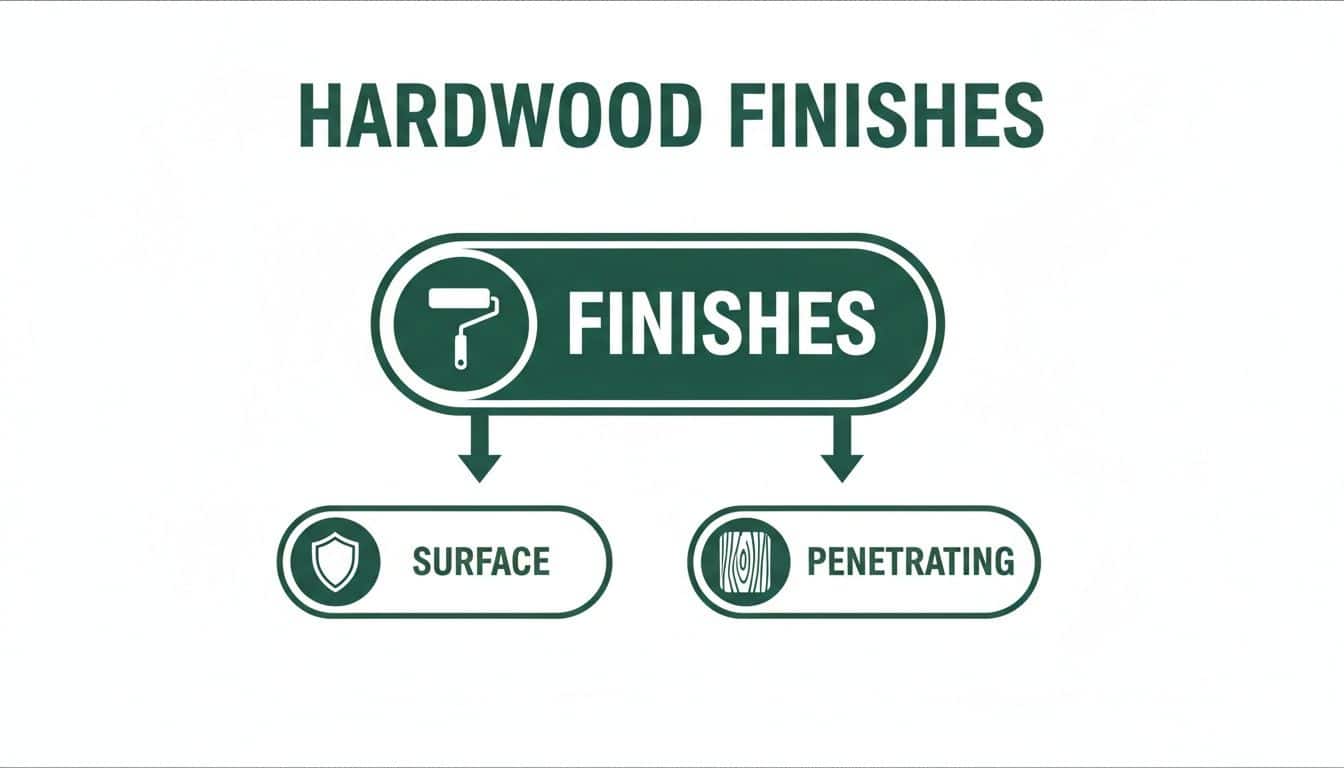
As you can see, every modern finish falls into one of these two camps. It’s the foundational choice that guides everything else.
To make it even clearer, here's a quick side-by-side comparison to help you see the core differences at a glance.
Quick Guide to Hardwood Floor Finishes
| Finish Type | Primary Benefit | Best For |
|---|---|---|
| Surface Finishes | Maximum durability and low maintenance | High-traffic homes with kids, pets, and active lifestyles. |
| Penetrating Finishes | Natural look and easy spot repairs | Homeowners who love a close-to-the-wood feel and don't mind a bit more upkeep. |
This table cuts right to the chase, helping you align your lifestyle with the right type of protection for your investment.
Why This Choice Matters for Your Home
The finish you pick has a direct impact on your floor’s lifespan and how you live on it. A family with big dogs and active kids in a Glen Allen home will probably want the top-tier scratch resistance of a high-quality surface finish.
On the other hand, someone restoring a historic home in The Fan might prefer the authentic, hand-rubbed look you can only get from a penetrating oil.
The best finish isn't just about what looks good right now. It's about matching your floor's durability and maintenance needs with how you actually live in your home. This is a practical decision that affects everything from your cleaning routine to what it costs to restore the floors later.
Of course, beyond the finish, you also have to think about the daily wear and tear from things like furniture. Learning how to protect your floors from your furniture is just as important for keeping them looking their best.
At Buff & Coat, we help Richmond-area homeowners sort through these hardwood floor finish options every day. We’re here to help you find that perfect sweet spot between stunning beauty and real-world practicality.
The Enduring Strength of Polyurethane Finishes
When it comes to protecting hardwood floors in Richmond homes, polyurethane is the undisputed champion. Think of it as a liquid shield that hardens into a durable, plastic-like layer right on top of your wood.
This clear coat is what takes the brunt of daily life—from dragged dining chairs in Mechanicsville to pet claws in Short Pump—sacrificing itself so the beautiful wood underneath stays pristine.
Among the many hardwood floor finish options available today, polyurethane is by far the most common choice, and for good reason. It delivers fantastic durability against scratches and spills, is a breeze to clean, and creates a smooth, consistent surface. For most homeowners, the real decision comes down to two distinct types: oil-based and water-based polyurethane.
Oil-Based Polyurethane: The Classic Choice
For decades, oil-based polyurethane has been the go-to standard in the flooring world. Many people still love it for the distinct look and rock-solid performance it provides.
Its most famous characteristic is the warm, amber glow it gives the wood. This "honey" tone deepens over time, which can beautifully enrich the color of woods like red oak. Keep in mind, though, that it will noticeably yellow lighter woods like maple.
- Appearance: Creates a rich, amber hue that deepens with age, offering a more traditional, classic aesthetic.
- Durability: Oil-based poly is a bit softer and more flexible than its water-based cousins, which can make it more forgiving when it comes to scuffs and everyday scratches.
- Drawbacks: The biggest downsides are the powerful odor during application and the long drying time. It contains higher levels of VOCs (Volatile Organic Compounds), which can affect your indoor air quality, and a full cure can take up to 30 days.
Water-Based Polyurethane: The Modern Standard
Water-based polyurethane has surged in popularity, especially for homeowners who want a more natural look and a healthier, faster application process. It’s a completely clear, non-yellowing finish that lets the wood's true color shine through.
This makes it the perfect choice for modern homes and for light-colored woods like maple or trendy gray-stained floors where you want to avoid that ambering effect. The technology has also come a long way—its durability now rivals its oil-based counterpart.
- Appearance: Dries crystal clear and stays that way, preserving the wood’s natural color. It’s ideal for a clean, contemporary look.
- Durability: High-quality, modern water-based polys (especially two-component, commercial-grade products) offer incredible scratch resistance.
- Benefits: Here’s the best part: it has a very low odor and dries incredibly fast. Our team can often apply multiple coats in a single day, which means far less disruption to your home and family.
The entire flooring market has seen a huge shift toward these modern solutions. In fact, water-based polyurethane is projected to hold over 60% of the U.S. market share by 2026, driven by its low VOC emissions and quick cure times. This trend is a massive benefit for homeowners in places like Henrico and Chesterfield, as our dustless buff and coat service can apply multiple coats in just one day, getting you back on your floors faster.
Key Takeaway: The choice isn't just about color; it's about your timeline and sensitivity to odors. Water-based poly offers a fast, low-odor solution that keeps your wood's color true, while oil-based poly provides a classic, warm look but requires more drying time and ventilation.
How We Approach Polyurethane Finishes
At Buff & Coat, we specialize in applying both types of polyurethane and will always give you our honest, expert advice on which is best for your home. Our signature wood floor recoating service, known as a "buff and coat," is the perfect solution for refreshing a polyurethane finish that's looking dull but isn't deeply damaged.
We use our dustless buffing system to lightly abrade the existing top layer. This creates the perfect texture for the new coats of polyurethane to grab onto, ensuring a strong, lasting bond. The whole process is clean, efficient, and restores that vital protective shield without the cost or time of a full sanding job.
For a deeper dive into all the specifics, check out our detailed guide on the difference between oil-based and water-based polyurethane.
Whether you're in Glen Allen or Midlothian, our team has the expertise to deliver a flawless, durable finish that will protect your investment for years to come.
Ready to restore your floor’s protective shield? Call 804-392-1114 or request a free, no-obligation estimate today.
The Natural Beauty of Penetrating Oil Finishes
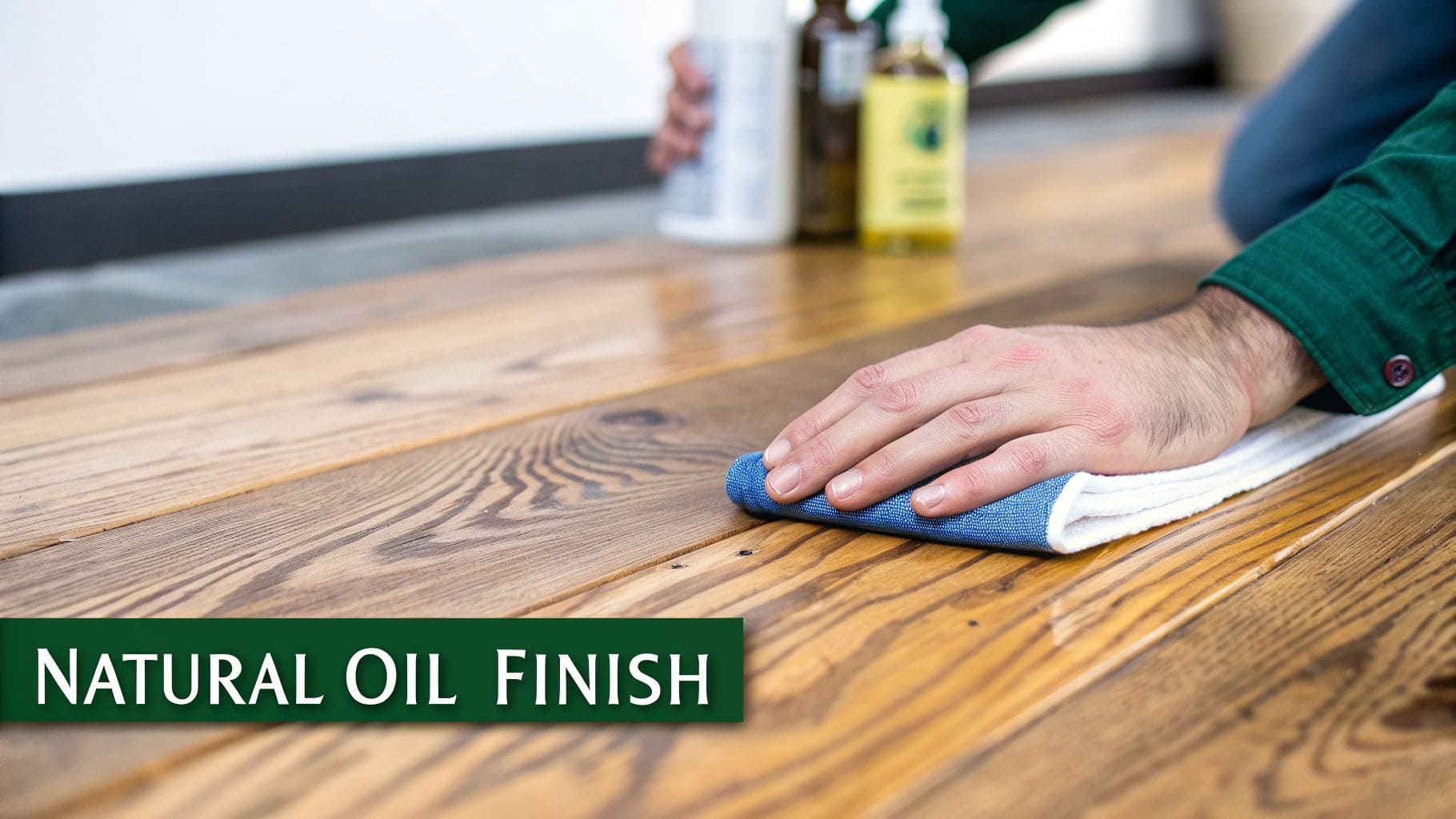
For homeowners who want to get away from that plastic-like topcoat and truly feel the wood grain under their feet, penetrating oils are a game-changer. These aren't your typical hardwood floor finish options. Instead of forming a film on the surface like polyurethane, these finishes soak deep into the wood fibers and harden from within.
Think of it like a deep conditioning treatment for your floors. Instead of wearing a protective suit of armor, the wood itself becomes stronger and more resilient. The result is a rich, hand-rubbed look that feels as natural as it looks, celebrating every bit of character in your flooring.
Why Choose a Penetrating Oil or Hardwax?
The single biggest reason people fall in love with these finishes is their incredible ability to be spot-repaired. If a piece of furniture leaves a deep scratch or the dog's claws make a mark, you don't have to refinish the entire room. We can often blend the damaged spot away with a simple re-application of oil, making it practically disappear.
For active homes in the Richmond area with kids and pets, this is a massive advantage.
- Look and Feel: You get a beautiful matte or satin, low-sheen finish that feels like real wood underfoot—because it is!
- Easy Spot Repairs: Scratches and scuffs can be fixed individually, saving you the headache of sanding the whole floor.
- Enhanced Grain: It makes the wood grain absolutely pop, highlighting the natural texture and beauty of the material.
Penetrating oils are our go-to finish for preserving the authentic character of floors, especially in the historic properties found all over Richmond. They let the wood breathe and age gracefully.
Maintenance and Upkeep
Now, while a polyurethane finish is mostly "set it and forget it" for several years, oil finishes require a slightly different kind of care. This isn't hard work; it's just a different maintenance mindset. Instead of a huge refinishing project every decade, you'll do a simple re-oiling every few years.
The process is quick, easy, and completely avoids the mess and disruption of aggressive sanding. For many homeowners, that trade-off is more than worth it.
Natural oil finishes, with roots tracing back to ancient China, now account for about 25% of refinishing projects because they nourish the wood and can even help micro-scratches self-heal. For homeowners in Greater Richmond, a professional screen and recoat with oil can bring worn floors back to life and offers up to 30% better moisture resistance against our humid Virginia climate. In fact, durability tests show a well-kept oil finish can handle thousands of footfalls before it needs a re-oiling, as noted in recent wood flooring industry reports.
Are Oil Finishes Right for You?
Ultimately, choosing an oil finish comes down to what you value most. If you want a natural aesthetic, love the idea of easy repairs, and can't stand the thought of a thick plastic film on your floors, a hardwax or penetrating oil is an outstanding choice.
It's also a top pick for families focused on indoor air quality. Many of the modern hardwax oils we use have zero or very low VOCs (Volatile Organic Compounds), making them one of the healthiest hardwood floor finish options you can choose. If this is a top priority, you can learn more about all the eco-friendly floor refinishing options in our detailed guide.
At Buff & Coat, we often recommend these finishes for historic homes or for clients who just love the authentic look and feel of real wood. We'll be happy to walk you through the simple maintenance routine and help you decide if it’s a good fit for your lifestyle.
Curious if a natural oil finish is the right fit for your Richmond home? Call Buff & Coat at 804-392-1114 for an honest consultation.
Should You Recoat or Fully Refinish Your Floors?
It’s a question we hear from homeowners all across Richmond, VA: “Do my floors really need to be sanded all the way down, or can you just refresh the top layer?” It’s an excellent question, and getting the right answer can save you a whole lot of time, money, and hassle.
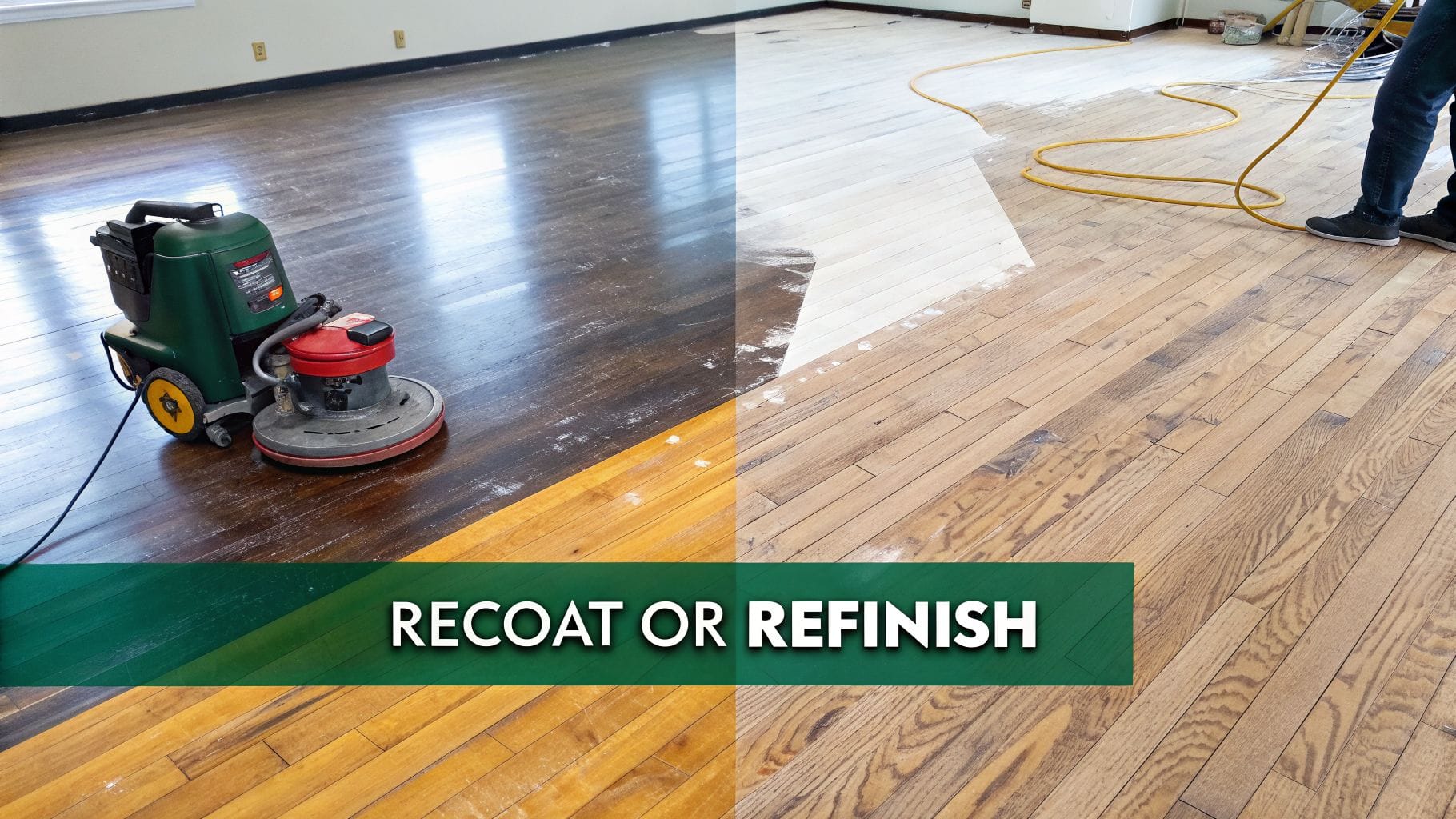
Understanding the difference between a wood floor recoating (what we call our signature Buff & Coat service) and a full-blown refinish is the key. These two services are designed for very different situations, and choosing the right one means you get fantastic results without paying for work you don’t need.
When a Buff and Coat Service Is the Perfect Solution
Think of a buff and coat service as a spa day for your floor’s protective layer. It’s the perfect fix when your floors are looking tired and dull, but the actual wood underneath is still in great shape. We don’t bring out the big sanders for this; instead, we focus entirely on reviving the existing finish.
A recoat is the right call for floors that have:
- Surface-level wear: The finish has just lost its shine and looks hazy or worn out from foot traffic.
- Minor scuffs and light scratches: These are the little marks that are only in the top polyurethane layer, not deep enough to have reached the wood itself.
- An intact finish: The protective topcoat is still there across the whole floor, with no bare patches of wood showing through.
Our buff and coat service is a quick, completely dustless, and affordable way to restore that protective sheen and bring the life back to your floors. It’s essentially like applying a fresh, new topcoat without the major disruption of a full sanding project.
When a Full Refinish Is Necessary
A full sand-and-refinish, on the other hand, is a more intensive restoration. We reserve this for floors that have damage that goes deeper than just the finish and has started to affect the wood.
You’ll know you need a full hardwood floor refinishing if your floors are showing:
- Deep scratches and gouges: These are the kinds of marks you can feel with your fingernail. They’ve clearly broken through the finish and dug into the wood.
- Water damage or stains: Any dark spots, rings, or discoloration in the wood from spills, pet accidents, or leaky planters.
- Graying or oxidized wood: This happens in high-traffic areas where the finish has completely worn away. The raw wood is exposed to air and dirt, causing it to turn a dull, lifeless gray.
- You want to change the stain color: The only way to change the color of your hardwood is to sand it down to bare wood and start fresh with a new stain.
The Water Drop Test: A Simple Way to Check
Not sure if your finish is worn through? Try this. Place a single drop of water on a worn, high-traffic spot. If the drop beads up and sits on the surface, your finish is likely intact, and a recoat might be all you need. If the water soaks in right away and darkens the wood, the finish has failed. You'll need a full refinish to protect the floor from more damage.
This little test gives you a great idea of your floor’s condition. For a complete expert breakdown, see our guide on how to recoat hardwood floors.
At Buff & Coat, we believe in honest assessments. We will never try to sell you a full hardwood floor refinishing if a simpler, more affordable buff and coat service is the right solution for your home.
If you’re unsure whether your hardwood floors need refinishing, Buff & Coat can take a look and give you honest recommendations.
A Look at Specialty and Historic Finishes
While most floors today are protected by polyurethane or penetrating oils, you’ll sometimes run into older, more traditional finishes, especially in Richmond’s beautiful historic homes. Getting to know these coatings—like shellac, wax, and the factory-applied Aluminum Oxide—is key to understanding what's on your floors now and why a modern finish is almost always the better choice for today's busy households.
These older finishes certainly had their day, but they just can't match the durability and low-maintenance lifestyle that modern homeowners need.
Historic Finishes: Shellac and Wax
For decades, shellac and wax were the go-to choices for protecting wood floors. If your home in the Richmond area was built before the 1960s, there’s a good chance its original floors are coated with one of these.
Shellac is a natural resin that gives wood a lovely, warm amber glow, much like an oil-based polyurethane. The problem? It’s extremely sensitive to water and alcohol, which will quickly leave behind ugly white rings and spots. It's also brittle and simply wasn't designed to handle the foot traffic of a modern family.
Paste Wax was often layered over shellac or sometimes used by itself. It creates a soft, low-gloss sheen that looks very natural but offers almost no real protection from scratches and scuffs. The biggest headache with wax is the constant upkeep; it requires frequent buffing and reapplications just to keep it looking decent.
Crucial Compatibility Note: You absolutely cannot apply a modern polyurethane finish over an old wax or shellac finish. The new finish will not bond properly and will peel right off. These historic finishes must be completely sanded away before a modern polyurethane or penetrating oil can be applied.
The Truth About Aluminum Oxide Finishes
If you’ve ever shopped for pre-finished hardwood flooring, you’ve probably come across the term Aluminum Oxide. This isn't a finish you can pick up at the hardware store. It's an incredibly tough, factory-applied coating that's cured instantly with powerful UV lights.
- Unmatched Durability: Hands down, Aluminum Oxide is the toughest residential floor finish you can get, offering incredible resistance to scratches and daily wear. It can easily last for 25 years or more.
- Factory-Applied Only: This finish is added to the flooring planks in a highly controlled factory environment. It is not something a contractor can apply on-site during a hardwood floor refinishing project.
- Refinishing Challenges: While it's unbelievably durable, once an Aluminum Oxide finish finally does wear out, the floor has to be sanded. Because the coating is so hard, this requires some very aggressive sanding techniques and specialized equipment to get the job done right.
While these specialty finishes are an interesting part of flooring history, their practical limits make them a poor fit for most modern homes. The team at Buff & Coat has spent years working on older floors in neighborhoods from The Fan to Church Hill. We can quickly and accurately identify what finish you have and give you an honest recommendation. In nearly every situation, a full, dustless sanding followed by a high-quality modern polyurethane or penetrating oil will give you a far better, more durable, and easier-to-maintain floor for your home.
Have an older Richmond home with mystery floors? Call Buff & Coat at 804-392-1114 for an expert evaluation.
FAQs About Hardwood Floor Finishes
When you’re thinking about refinishing your floors, the number of finish options can feel overwhelming. Here in Richmond, we get a lot of the same questions from homeowners trying to make the right call. We’ve put together some straight-to-the-point answers to help you feel confident about your project.
How Long Does a New Floor Finish Take to Cure?
This is a big one, because there’s a huge difference between being "dry" and being "fully cured." Getting the timeline right is key to protecting your brand-new floors.
A fresh finish is usually ready for light foot traffic (socks only, please!) within 24-48 hours. This goes for both modern water-based polys and the more traditional oil-based ones. But don't be fooled—the finish isn't at full strength yet.
"Fully cured" is when the finish has completely hardened and can stand up to everyday life, from scratches to scuffs.
- Water-Based Finishes: These are the fast ones. They typically hit full hardness in about 7 days.
- Oil-Based Finishes: These take their time, needing anywhere from 14 to 30 days to cure all the way through.
Pro Tip: Whatever you do, don't put your area rugs back down until the finish is 100% cured. Trapping the off-gassing fumes stops the finish from hardening properly, leaving it soft and prone to damage. Plan on waiting at least one week for water-based and a full two weeks for oil-based finishes.
What Is the Best Finish for Homes with Dogs and Kids?
Ah, the ultimate durability test for any busy household. The "best" finish really comes down to a choice: do you want maximum, up-front scratch resistance, or the ability to easily fix damage later?
For pure, top-tier scratch resistance, nothing beats a high-quality, two-component commercial-grade water-based polyurethane. It creates an incredibly tough shell over your floors that holds up best against the daily grind of pet claws, toy trucks, and constant foot traffic. It’s the closest you can get to a "set it and forget it" option.
On the flip side, if your biggest worry is how to handle that inevitable deep gouge that will happen eventually, then a hardwax oil finish is a fantastic choice. While it's not as hard as polyurethane, its superpower is that it’s spot-repairable. We can blend new oil right into a scratch, making it disappear without having to recoat the entire room.
Can You Apply a New Type of Finish Over an Old One?
As a general rule, no. Getting finishes to stick to each other is all about compatibility, and mixing them is a recipe for peeling, bubbling, and total failure.
The most critical rule to remember is you absolutely cannot put a water-based or oil-based polyurethane over an old wax or shellac finish. The poly simply won't bond. That old wax or shellac has to be completely sanded away, right down to the bare wood.
This is also what makes our buff and coat service work so well. The whole point is to refresh an existing polyurethane finish by chemically bonding new coats of the same type of poly on top. It’s a perfect match that restores the floor’s protective layer without a full sanding.
Are Low-VOC Finishes Actually Durable?
There’s a lingering myth that "eco-friendly" or low-odor finishes are weaker than the old-school stuff, but that’s completely outdated thinking. Thanks to modern chemistry, today's water-based polyurethanes are incredibly tough.
In fact, the commercial-grade water-based polyurethanes we use at Buff & Coat often meet or even beat the hardness and scratch resistance of their traditional, high-fume oil-based cousins.
The best part? They deliver this top-notch durability without the harsh smells and high levels of Volatile Organic Compounds (VOCs). This makes them a far healthier choice for your home's air quality and a much more pleasant process for your family. You no longer have to pick between a tough finish and a healthy home—you can finally have both.
Why Richmond Homeowners Choose Buff & Coat
Choosing the perfect hardwood floor finish is a big deal, but that’s really only half the job. The final quality, lifespan, and look of your floors come down to one thing: the skill and care of the team applying that finish. This is where real expertise shines, and it’s why homeowners all over the Richmond area have trusted Buff & Coat for over 15 years.
We get it—you're not just buying a service. You're making a serious investment in your home. That’s why our entire process is designed to be clean, fast, and completely stress-free from the moment we walk in your door.
Here’s why we’ve become the best hardwood floor contractor Richmond residents trust for quality workmanship:
- 15+ Years in Business: We have deep roots in the Richmond community and a long track record of happy customers.
- Advanced Dustless Sanding Systems: We invested in top-of-the-line equipment to keep your home clean and your air healthy throughout the process.
- Local, Owner-Operated: As a small business, our reputation is on the line with every job. The owner is involved in your project to ensure the highest quality.
- High-Quality Finishes: We only use professional-grade, durable finishes that we trust to protect your investment for years.
- Clear Pricing & Honest Advice: You’ll get a detailed, straightforward estimate with no hidden fees, and we’ll never sell you a service you don’t need.
- 5-Star Customer Service: We treat your home with respect and communicate clearly from start to finish.
Ready to restore your hardwood floors? Buff & Coat makes the process fast, clean, and stress-free.
Call 804-392-1114 or request your free estimate at buffandcoatvirginia.com.