
Wood Floors in Elmont, VA
Your Floors Deserve Better Than a Quick Fix
Hardwood Flooring Service in Elmont
You stop avoiding certain rooms. You stop apologizing when people come over. Your home feels like the investment you made in it, not the project you’ve been putting off.
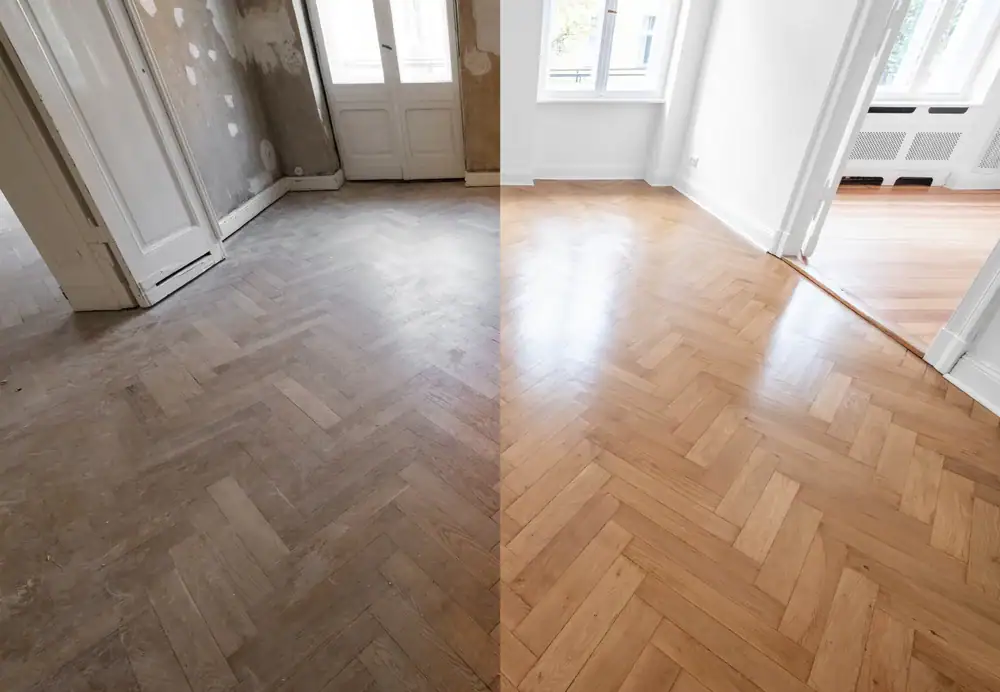
That’s what happens when wood floors get the attention they need. Not a band-aid. Not a cover-up. Real refinishing that brings back the warmth and character you bought the house for in the first place.
Most jobs wrap in a day. You’re not displaced for a week. You’re not dealing with dust settling on every surface for months. The process is faster and cleaner than you think, and the results last years longer than you’d expect from something that costs a fraction of replacement.
Solid hardwood flooring doesn’t need to be ripped out just because it’s scratched or dull. It needs someone who knows how to assess the damage, choose the right approach, and execute without turning your life upside down. That’s the difference between a floor that looks decent and one that actually performs.
Hardwood Flooring Company Serving Elmont
We’ve been working on Virginia wood floors for over 20 years. We’ve seen what holds up in Elmont’s climate and what doesn’t. Humid summers and cold winters put real stress on hardwood flooring, and we factor that into every job.
We’re not the cheapest option in the area. We’re the one that shows up with professional-grade equipment, completes the work in the timeline we promise, and leaves your floors looking like they were installed yesterday. No surprises. No extended timelines. No dust covering your furniture.
You’ll find us transparent about pricing, realistic about what your floors need, and honest when refinishing isn’t the right call. Most of the time it is, but when it’s not, we’ll tell you.
Wood Floor Installation and Refinishing Process
First, we assess your floors in person. Not every floor needs the same treatment, and we’re looking at finish condition, wood depth, existing damage, and how you actually use the space. This takes about 30 minutes and you’ll leave with a clear recommendation.
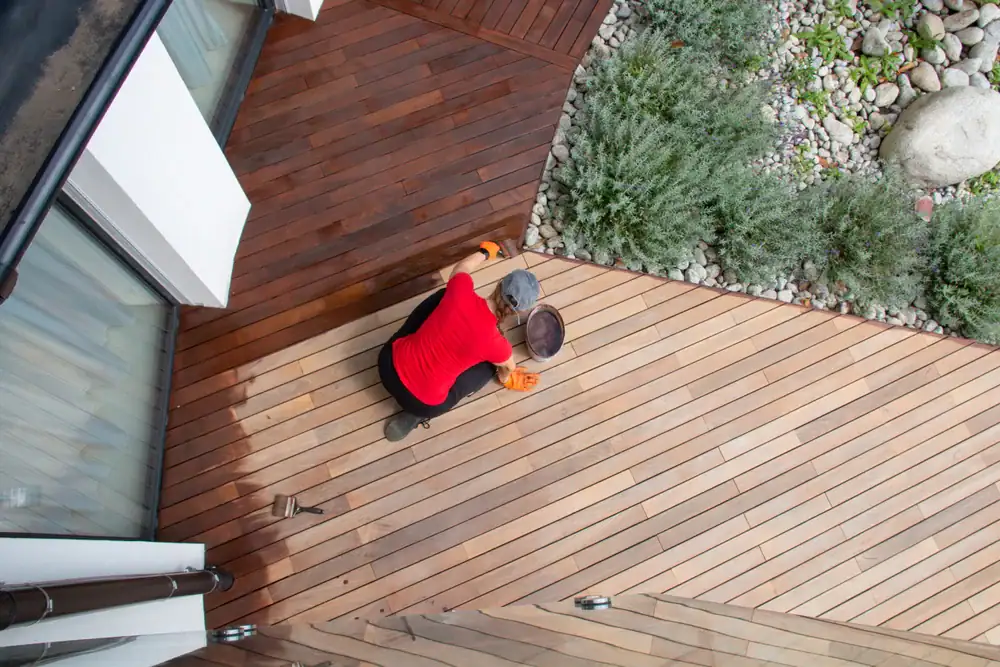
If refinishing makes sense, we schedule a day that works for you. We show up with dustless sanding equipment that captures particles at the source instead of sending them into your air. The sanding process removes the old finish and surface damage, bringing you back to clean wood.
Next comes stain if you want it, then finish coats. We use products that cure properly in Virginia’s humidity and hold up to foot traffic, pets, and the wear that comes with actually living in your home. Most floors are ready to walk on within 24 hours.
The whole process typically wraps in one day for standard refinishing jobs. Larger homes or more complex restoration work might take two. Either way, you’re not looking at a week-long disruption or a house full of dust. You’re looking at a straightforward process that delivers results you can see immediately.
Wood Flooring Service Options in Elmont
You’re getting a full assessment of your current floors before any work starts. We measure moisture levels, check for structural issues, and determine whether your wood has enough depth left for refinishing. Elmont homes, especially older ones, sometimes have floors that have been sanded too many times already. We catch that before it becomes your problem.
The refinishing itself includes dustless sanding with commercial equipment, not a rental unit that barely captures half the particles. You’re getting finish coats that are actually designed for high-traffic areas, not whatever’s on sale. And you’re getting realistic dry times based on Virginia’s humidity levels, not generic estimates that don’t account for local climate.
We also handle repairs before refinishing when needed. Gaps from winter contraction, boards that have cupped from summer moisture, scratches from pet nails—these get addressed as part of the process, not ignored under a new coat of finish. The goal is a floor that looks good and actually functions properly for how you live.
If your floors are beyond refinishing, we’ll tell you that too. Some situations call for replacement, and we handle new solid hardwood flooring installation when that’s the smarter move. But most Elmont homes we see just need proper refinishing, not a full tearout.
How do I know if my wood floors can be refinished or need replacement?
Solid hardwood flooring can typically be refinished 4-6 times over its lifetime, depending on the thickness of the wood. If your floors are 3/4 inch thick (standard for most homes), you’ve got plenty of material to work with unless they’ve been sanded multiple times already.
The real test is whether you have at least 1/8 inch of wood above the tongue-and-groove joint. We measure this during the assessment. If you’re below that threshold, refinishing risks compromising the structural integrity of the boards. You’ll also see issues like exposed nails or splintering edges when there’s not enough wood left.
Engineered wood is different. It has a thin veneer of real hardwood over plywood, and most engineered products can only be refinished once, if at all. If you’re not sure what you have, we can tell you in about five minutes of looking at it. The good news is that most Elmont homes with original hardwood have plenty of life left in those floors.
What's the difference between refinishing and the buff and coat process?
Refinishing means sanding down to bare wood and applying new stain and finish. This is what you need when the wood itself is damaged—deep scratches, stains that have penetrated the finish, uneven color, or worn areas where the finish is completely gone.
Buff and coat (also called screen and recoat) is a lighter process. We rough up the existing finish with a buffer, clean the surface thoroughly, and apply a fresh topcoat. This works when your finish is dull or lightly scratched but the wood underneath is still protected. It’s faster, less expensive, and extends the life of your floors by several years.
Here’s the decision point: if you can see raw wood anywhere on your floor, you need full refinishing. If the finish just looks tired or has surface scratches that haven’t penetrated through, buff and coat will handle it. We’ll recommend the right approach based on what we see, not what costs more.
How long does hardwood floor refinishing actually take in Elmont?
Most residential refinishing jobs in Elmont take one full day from start to finish. We’re talking about a typical 1,000-1,500 square foot area. Larger homes or spaces with multiple rooms might stretch into a second day, but you’re not looking at a week-long project.
The actual work breaks down like this: sanding takes 3-4 hours depending on floor condition, staining (if you’re doing it) takes about an hour plus dry time, and finish coats take a few hours with dry time between coats. We typically apply two coats of finish, and modern products dry faster than the old polyurethanes that took days to cure.
You can walk on the floors in socks after 24 hours. Furniture goes back after 48-72 hours. Rugs wait a week. Full cure takes about 30 days, but that’s just when the finish reaches maximum hardness—you’re living normally in your house well before that. Virginia’s humidity can add a few hours to dry times in summer, but we account for that when we schedule.
Is dustless sanding actually dustless or is that just marketing?
It’s not 100% dustless—nothing is—but it’s about 95% cleaner than traditional sanding. Our equipment has a vacuum system built into the sander that captures dust at the point of creation, before it becomes airborne. You’ll see a small amount of fine dust, but nothing like the coating-every-surface situation you’re imagining.
Traditional sanding sends dust into the air where it settles on walls, in vents, on furniture, and basically everywhere in your home. You’re cleaning for weeks. Dustless systems pull that dust directly into a containment unit, so it never enters your living space. We also seal off the work area and use air scrubbers as an extra precaution.
The difference is significant enough that most of our Elmont clients don’t even move furniture out of adjacent rooms. We recommend covering nearby items with plastic as a precaution, but you’re not looking at a full house cleaning project afterward. The technology has come a long way in the past decade, and it’s standard equipment for us, not an upcharge.
How much does wood floor refinishing cost compared to replacement?
Refinishing typically runs $3-6 per square foot depending on floor condition and finish choices. For an average Elmont home with 1,200 square feet of hardwood, you’re looking at $3,600-$7,200. That includes sanding, stain if you want it, and finish coats.
Replacement costs $8-15 per square foot when you factor in material, labor, and disposal of old flooring. Same 1,200 square foot space runs $9,600-$18,000. You’re spending 2-3 times more for new floors when refinishing would give you the same visual result and decades more life.
The math gets even better when you consider that refinishing maintains your home’s original character. Elmont has plenty of older homes with original oak or maple floors that you can’t replicate with new material at any price. Refinishing preserves that while costing less than half of replacement. The only time replacement makes sense is when the wood is structurally compromised or you’re down to your last possible refinishing.
Will refinishing fix gaps between my floorboards or cupping issues?
Gaps are normal in Virginia homes, especially in winter. Wood contracts when humidity drops, and you’ll see spaces open up between boards. Those gaps usually close back up in summer when humidity returns and the wood expands. If the gaps are seasonal and under 1/8 inch, we typically leave them alone because they’re going to close naturally.
Permanent gaps wider than 1/8 inch get filled as part of the refinishing process. We use wood filler that matches your floor color, fill the gaps, sand smooth, and refinish over top. This prevents dirt accumulation and gives you a cleaner look. Just know that if your home’s humidity swings wildly, you might see small gaps reappear over time.
Cupping is different—that’s when the edges of boards are higher than the center, creating a concave shape. This happens from moisture exposure, usually from below the floor. We need to address the moisture source first (crawl space humidity, plumbing leaks, etc.) before refinishing, or the problem returns. Once the moisture issue is resolved and the wood has time to acclimate, we can sand the floor flat and refinish. Trying to refinish over active cupping just masks the problem temporarily.