
Wood Floor Refinishing in Montrose, VA
Your Floors Restored in One Day, Not Five
Hardwood Floor Refinishing Near Montrose
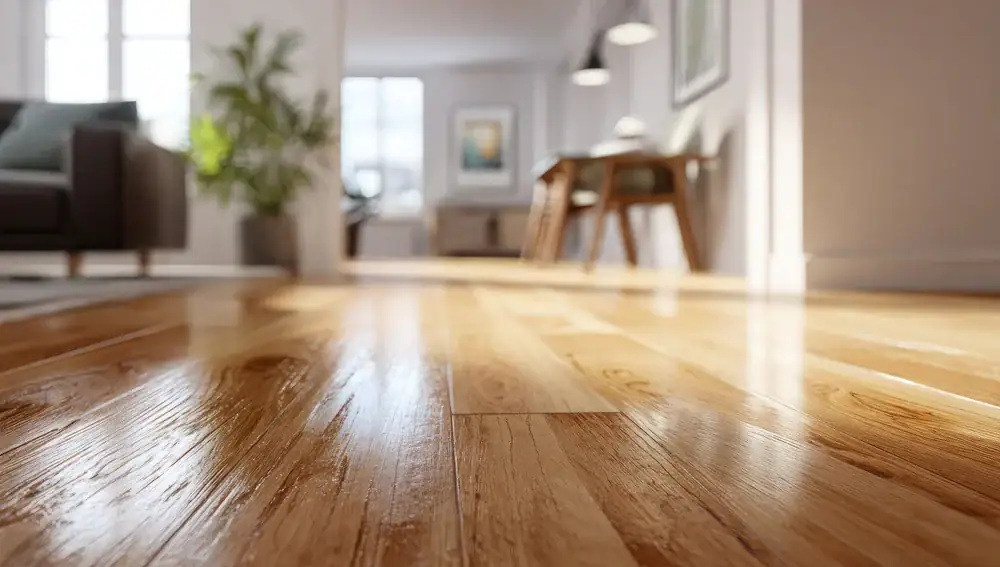
You walk back into a room that feels brand new. The scratches from your dog’s nails are gone. The dull, worn traffic patterns have disappeared. Light bounces off the finish the way it did when you first moved in.
Your floors aren’t just cleaner. They’re protected again. The fresh finish seals the wood against spills, moisture, and daily wear. You’re not tiptoeing around trying to preserve what’s left—you’re actually using your home.
And here’s what you won’t deal with: dust covering every surface in your house. Our equipment captures over 80% of airborne particles during sanding. No plastic sheeting taped to every doorway. No grit in your kitchen cabinets a month later. Most projects wrap up in a single day, so you’re not displaced from your own space all week.
Montrose homes weren’t built to sit empty while contractors work. You’ve got routines, kids, pets, jobs. We work around your life, not the other way around.
Wood Floor Restoration Experts in Montrose
We’ve been doing this since before “dustless sanding” was standard. Over 20 years working on hardwood floors throughout Richmond, Henrico County, and surrounding areas like Montrose. We’ve seen what humidity does to oak floors in July. We know how winter dryness causes gaps between boards.
You’re not getting a crew that learned this trade last year. You’re getting people who’ve refinished thousands of floors and know exactly how Virginia’s climate affects wood. We’re licensed, insured, and maintain an A+ rating with the Better Business Bureau because we show up when we say we will and finish the job right.
Montrose homeowners deal with specific challenges—older homes with original hardwood that needs careful handling, rental properties where turnaround time matters, families who can’t afford to move out during renovations. We’ve worked through all of it.
Our Wood Floor Sanding Process
First, we move furniture out of the way or work around what you can’t move. You don’t need to prep your entire house—we handle the heavy lifting.
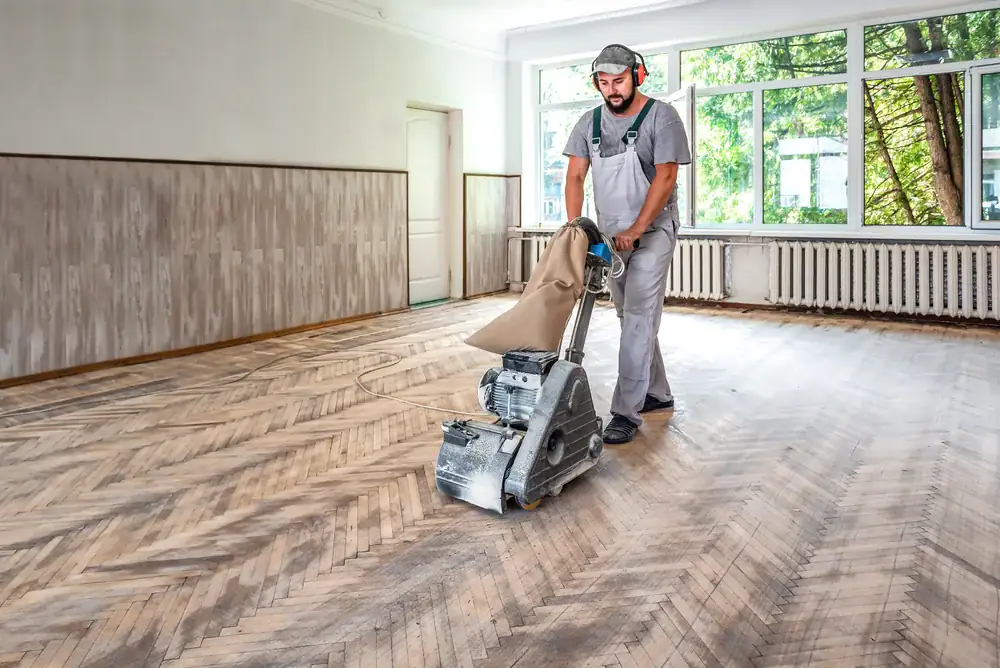
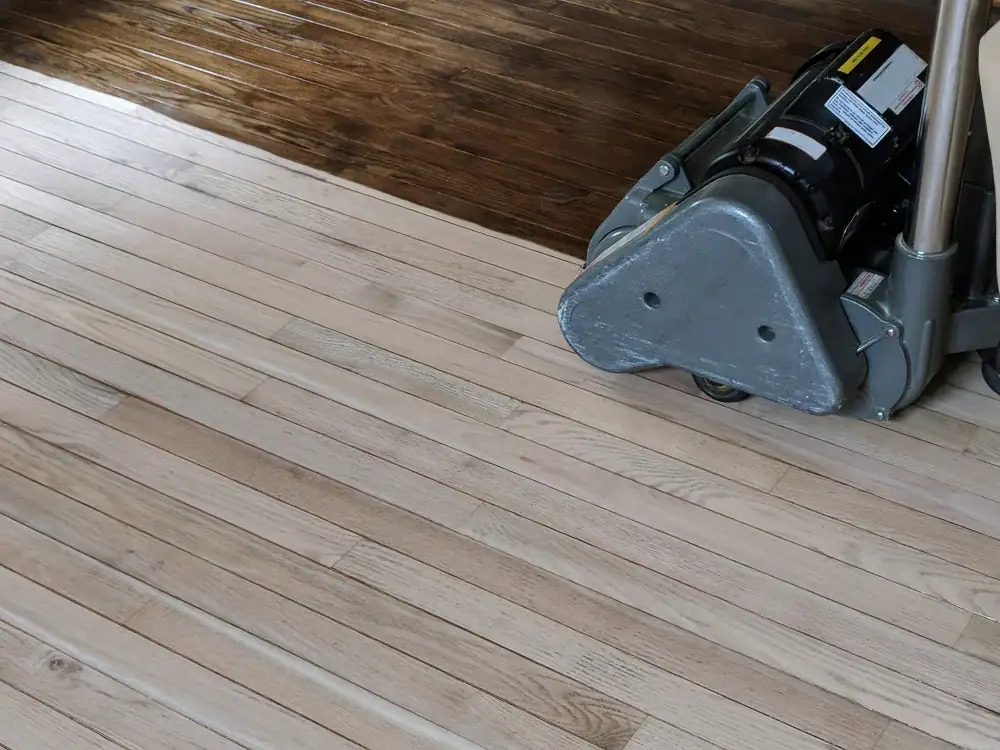
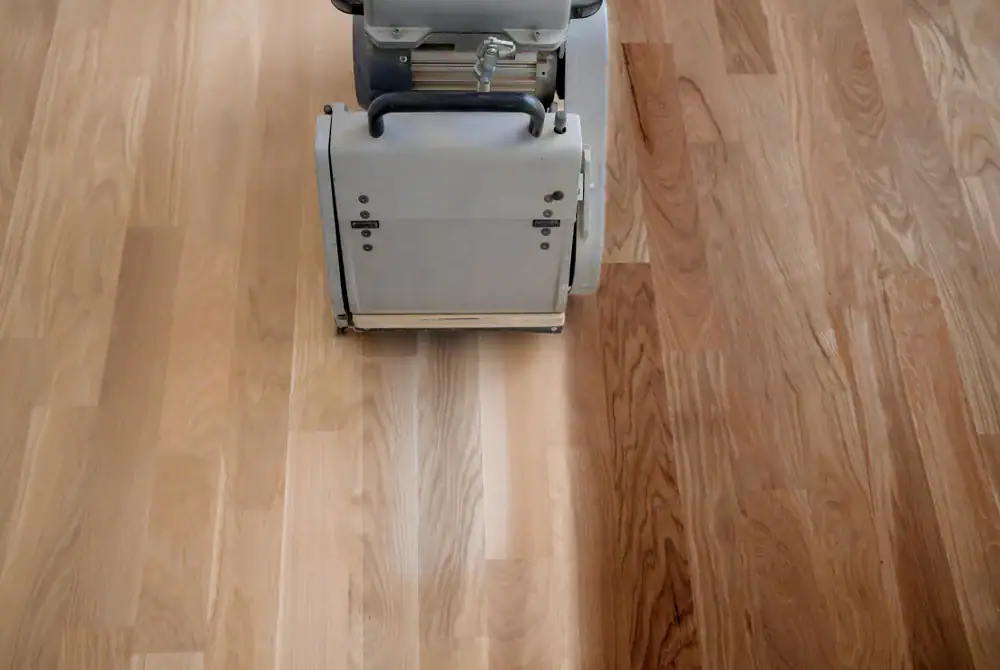
Then comes sanding. We use professional-grade equipment with dust containment systems that capture particles at the source. This isn’t a shop-vac attached to a rental sander. It’s industrial equipment designed specifically for hardwood restoration. We start with coarser grits to remove the old finish and level out surface damage, then progress to finer grits for a smooth base.
After sanding, we apply stain if you want to change the color or refresh the existing tone. Once that dries, we apply a protective finish—your choice of water-based polyurethane for faster drying and low odor, or oil-based for maximum durability. Most Montrose clients go with water-based because you can walk on it sooner and it doesn’t yellow over time.
The finish needs to cure. Light foot traffic is usually fine within 24 hours. Furniture goes back after 48-72 hours. Full cure takes about a week, but you’re living normally in your home by day two.
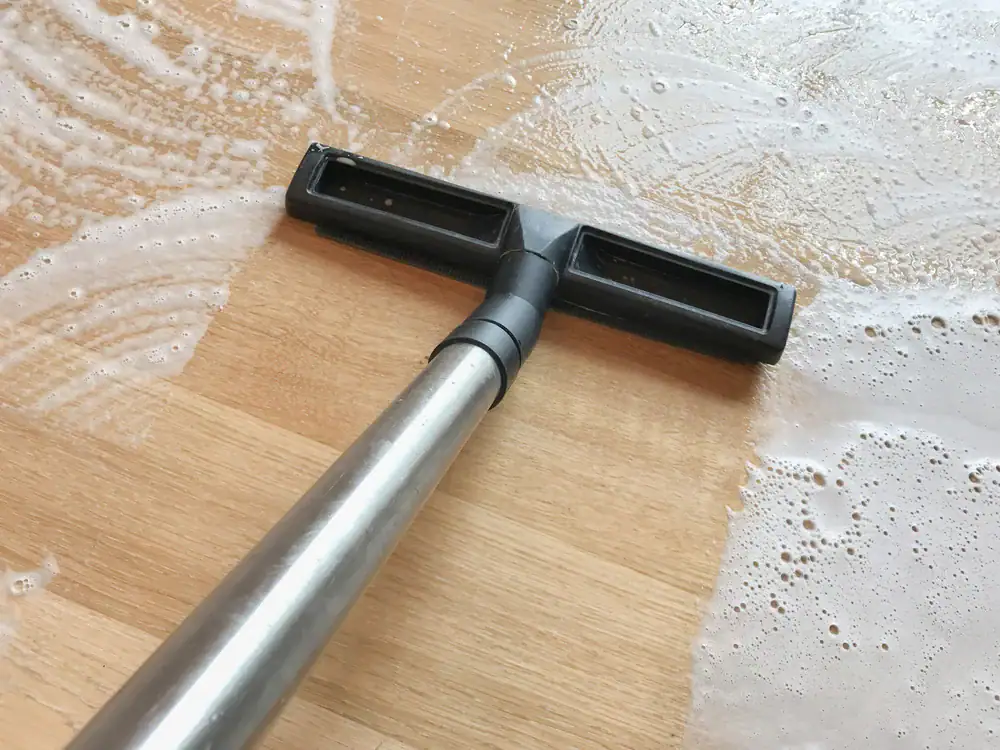
We clean up completely before we leave. No dust piles in corners. No finish drips on baseboards. The job’s not done until your floors look perfect and your house is back in order.
Hardwood Restoration Services in Montrose, VA
You get a full assessment before we start. We check for loose boards, water damage, or structural issues that need addressing before refinishing. If your subfloor has problems, refinishing won’t fix them—we tell you that upfront.
The service includes all sanding, from rough cuts to final smoothing. We’re removing years of finish, scratches, stains, and surface damage. If you’ve got engineered wood instead of solid hardwood, we assess whether there’s enough wear layer left to sand. Not all engineered floors can be refinished, and we won’t take your money if yours can’t handle it.
Staining is optional. Some Montrose homeowners want to go lighter to match current trends. Others prefer the rich, darker tones that were popular when their homes were built. We can match existing stain colors in other rooms or help you choose something new.
The finish coat is where protection happens. We typically apply two to three coats depending on traffic levels. High-traffic areas like entryways and hallways get extra attention. The finish we use is low-VOC, so you’re not breathing harsh fumes for days afterward.
Richmond’s humidity swings are tough on hardwood. Summer moisture makes boards expand. Winter heating systems dry them out and cause gaps. A proper finish helps stabilize the wood and gives you a buffer against these seasonal changes. You’ll still see minor movement—that’s normal—but the finish prevents moisture from penetrating deep into the wood where real damage happens.
How much does wood floor refinishing cost in Montrose compared to replacing floors?
Refinishing costs a fraction of what you’d pay for new hardwood installation. Most Montrose projects run between $3-$5 per square foot for refinishing. New hardwood installation starts around $8-$12 per square foot, and that’s before you factor in removing and disposing of your old floors.
Here’s the math on a typical 500-square-foot area. Refinishing runs about $1,500-$2,500. Replacement would cost $4,000-$6,000 or more. You’re saving thousands by restoring what you already have.
The bigger savings come from keeping floors that are actually better quality than what you’d buy new today. Older homes in Montrose often have solid hardwood that’s three-quarters of an inch thick. Modern installations are frequently engineered wood or thinner solid planks. Your existing floors can be refinished multiple times over their lifespan. Cheaper replacements might give you one refinishing, maybe two, before you’re down to the plywood.
How long does the hardwood floor refinishing process actually take?
Most single-room or open-concept projects finish in one day. Sanding, staining, and first finish coat all happen in that timeframe. Larger homes or multiple separated rooms might take two days.
The finish needs drying time after we leave. Water-based polyurethane dries enough for light foot traffic in about 6-8 hours. You can walk on it in socks that evening. Oil-based finishes take longer—usually 24 hours before you’re walking on them.
Furniture stays off the floors for 48-72 hours regardless of finish type. The surface might feel dry, but the finish is still curing underneath. Put a heavy couch on it too soon and you’ll have permanent impressions. Full cure takes about a week. During that time, avoid area rugs (they can trap moisture and cause clouding), don’t clean with water, and keep high heels and pet claws off the surface if possible.
Compare that to the 3-5 days traditional refinishing takes, plus another week of being careful. Or the weeks-long process of tearing out old floors and installing new ones. You’re back to normal life faster with refinishing.
Will refinishing my floors create dust throughout my entire house?
Not with dustless sanding equipment. Our system captures over 80% of airborne particles right at the sander. The dust gets pulled into a containment unit before it ever reaches your air.
You’ll still want to close doors to bedrooms and other areas we’re not working in. We’re not claiming zero dust—that doesn’t exist with wood sanding. But you won’t have fine powder settling on your kitchen counters or coating your furniture in other rooms.
Traditional sanding creates clouds of dust that infiltrate every gap and crack in your home. It gets into HVAC systems, closets, and cabinets. You’re finding dust weeks later. Homeowners used to have to remove everything from the house or cover it all in plastic sheeting. That’s not necessary anymore with proper dust containment.
After we finish, you might notice a light film in the immediate work area. That wipes up easily. But you’re not dealing with the nightmare cleanup that comes with old-school floor sanding. Most Montrose clients are surprised by how clean the process actually is.
Can engineered hardwood floors be refinished, or only solid wood?
Engineered wood can be refinished, but only if the wear layer is thick enough. The wear layer is the real hardwood veneer on top of the plywood base. It needs to be at least 2-3 millimeters thick to handle sanding.
Cheaper engineered flooring has wear layers under 1 millimeter. Sand that and you’ll hit plywood. The floor is ruined. Higher-quality engineered wood has wear layers of 3-6 millimeters, which gives you one or two refinishing cycles over the floor’s lifetime.
We measure before we commit to the job. If your engineered floors won’t survive refinishing, we tell you that during the assessment. Some surface damage can be addressed with a buff and recoat instead—that removes only the existing finish without sanding into the wood itself. It’s less dramatic than full refinishing but works well for floors with minor scratches and dullness.
Solid hardwood is different. Those floors are three-quarters of an inch of real wood all the way through. You can refinish them five, six, even seven times depending on how much material gets removed each cycle. That’s why older Montrose homes with original solid hardwood are worth restoring rather than replacing.
What's the difference between water-based and oil-based floor finishes?
Water-based polyurethane dries faster, has less odor, and doesn’t yellow over time. You can walk on it within hours and move furniture back in two days. It’s low-VOC, so you’re not breathing harsh chemical fumes. The finish stays clear, which is ideal if you want to keep lighter wood tones or prevent that amber tint that develops with oil-based products.
Oil-based polyurethane is more durable and gives floors a warm, slightly amber glow that deepens over time. It takes longer to dry—24 hours before walking, 72 hours before furniture. The smell is stronger during application and lingers for a few days. But the finish is harder once fully cured, which matters in high-traffic areas.
Most Montrose homeowners choose water-based for the convenience and air quality. Families with kids or pets prefer getting back to normal routines quickly. The durability difference isn’t as significant as it used to be—modern water-based finishes hold up well under typical residential use.
If you’re refinishing a rental property between tenants, water-based makes sense because turnaround time matters. If you’re doing a historic restoration and want that traditional look, oil-based delivers the aesthetic. Both protect your floors. The choice comes down to your priorities: speed and low odor versus classic appearance and maximum hardness.
How often do hardwood floors need to be refinished?
Most residential hardwood floors need refinishing every 7-10 years, depending on traffic and maintenance. High-traffic areas like entryways and hallways might show wear sooner. Bedrooms can go longer.
You’ll know it’s time when the finish starts wearing through in visible paths. The wood looks dull even after cleaning. Scratches don’t buff out anymore because you’re seeing damage in the wood itself, not just the finish. Water doesn’t bead up on the surface—it soaks in, which means the protective layer is gone.
Montrose’s climate accelerates wear in some cases. Humidity in summer and dryness in winter cause wood to expand and contract. That movement stresses the finish. Homes without good humidity control might need refinishing closer to the 7-year mark. Well-maintained floors in climate-controlled homes can push 10 years or more.
You can extend time between refinishing by using area rugs in high-traffic zones, keeping pet nails trimmed, and using furniture pads under chair and table legs. Regular cleaning with hardwood-specific products helps too—avoid wet mopping or harsh chemicals that break down the finish faster. A buff and recoat every few years adds a fresh protective layer without full refinishing, which buys you extra time and saves money.