
Wood Floor Installers in Studley, VA
Hardwood Floors That Actually Last
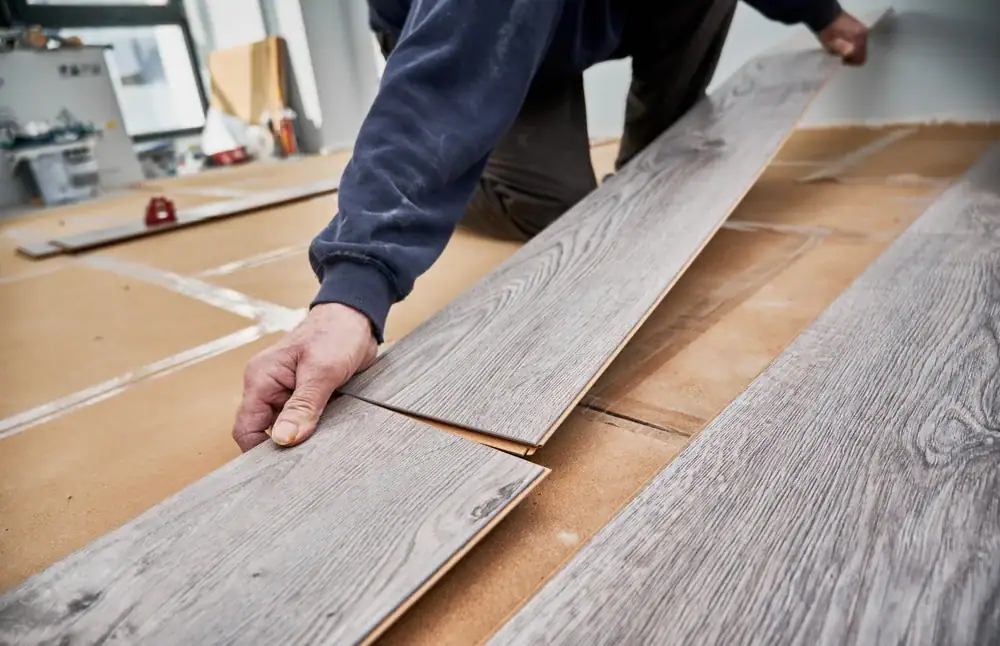
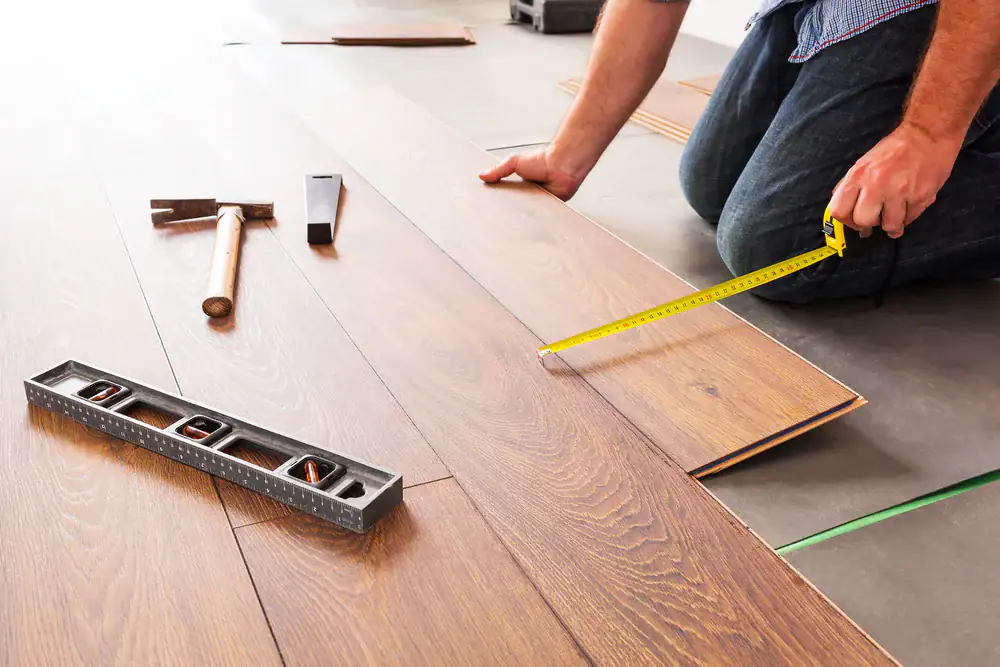
Hardwood Floor Installation Near Studley
Most flooring problems don’t start with the wood. They start with how it was installed.
When your subfloor isn’t prepped correctly, you get squeaks. When moisture isn’t managed, you get warping. When acclimation gets rushed, you get gaps that show up six months later. Roughly 80% of wood flooring issues trace back to moisture alone, which means the installer you choose matters more than the product you pick.
Proper hardwood floor installation means your floors stay flat, quiet, and stable for decades. It means the finish wears evenly. It means your home value goes up instead of becoming a liability during inspection. And it means you’re not calling someone back in two years because boards are lifting or cracking at the seams.
You’re not just paying for labor. You’re paying for floors that perform the way they’re supposed to.
Trusted Wood Flooring Contractor in Studley
We’ve been working in Studley and throughout Hanover County for over 20 years. We’re licensed through Virginia’s Board for Contractors, carry full liability insurance, and hold an A+ rating with the BBB.
Dave Emmerling personally oversees every job. Not because we don’t trust our crew, but because that’s how you keep quality consistent when you’ve built a reputation this long in a county where word travels fast.
We’re not the cheapest option in the area, and we won’t pretend to be. But if you’re looking for someone who shows up on time, does the work right, and doesn’t disappear after the check clears, that’s what we do. Hanover County homeowners have higher-than-average incomes and home values pushing past $400K. You didn’t cut corners buying your house. Don’t cut them on the floors.
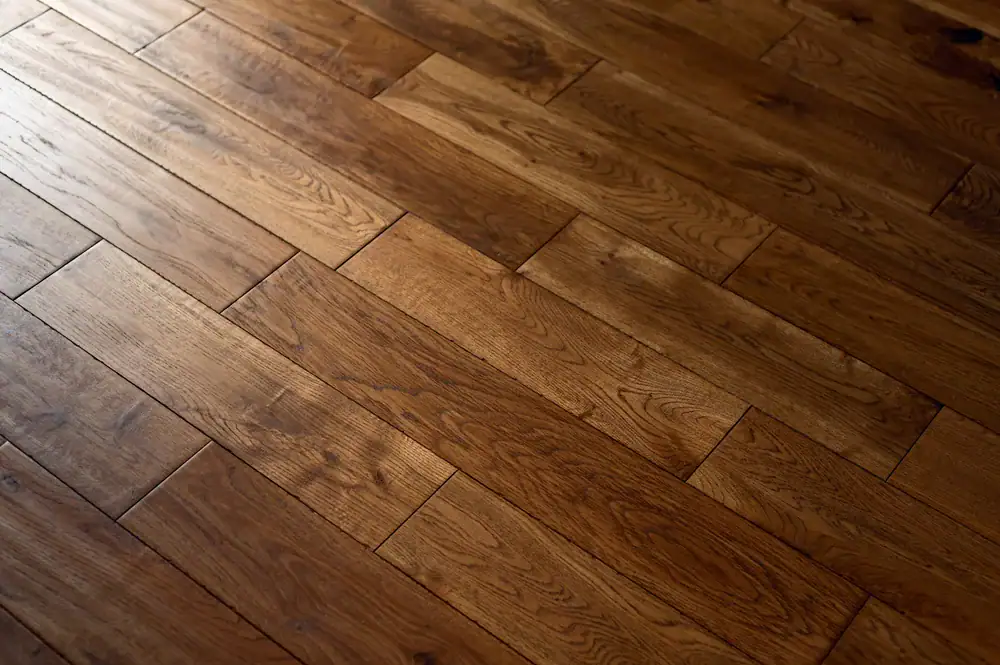
Our Hardwood Floor Installation Process
First, we assess your subfloor. If it’s not level, stable, and dry, nothing else matters. We check moisture levels, fix any soft spots, and make sure the foundation is solid before a single plank goes down.
Next, we acclimate your wood. This isn’t optional. Hardwood needs time to adjust to your home’s humidity and temperature, or it’ll expand and contract after installation. We don’t rush this step even if you’re in a hurry.
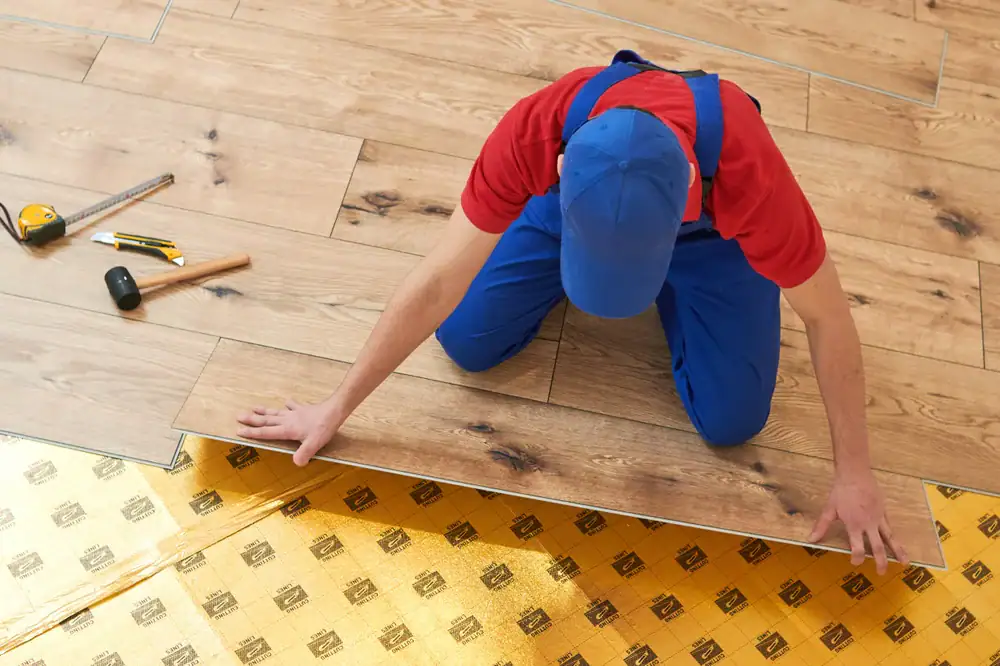
Then we install using the right methods for your floor type—whether that’s nail-down, glue-down, or floating. We use proper spacing, stagger the seams, and ensure every board is seated correctly. No gaps. No lippage. No squeaks.
Finally, we finish and seal. If it’s a sand-and-finish job, we use dustless equipment and low-VOC products so your home isn’t a construction zone for a week. Most projects wrap in a day or two, and you’re walking on them within 24 hours depending on the finish.
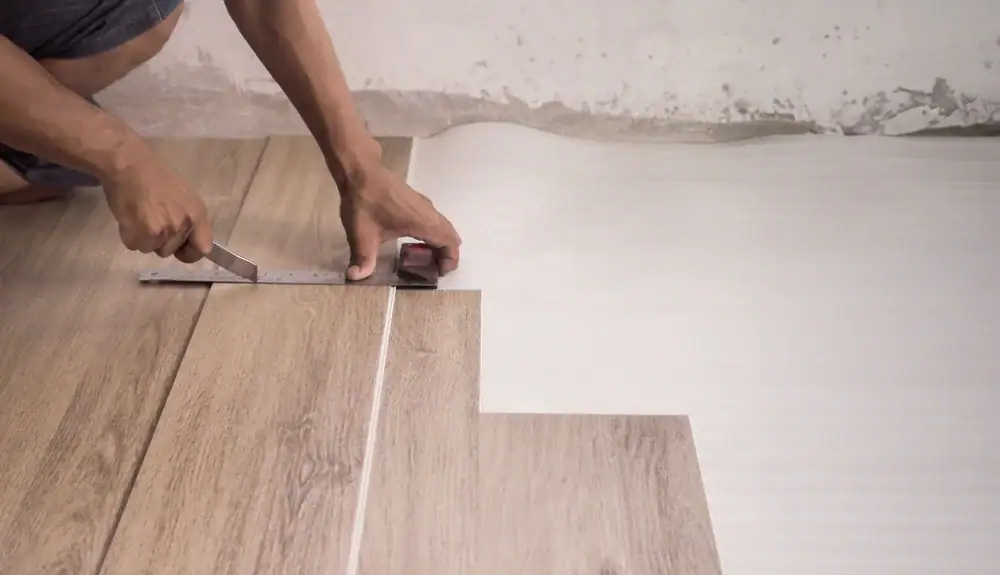
Floor Refinishing Services in Studley, VA
You’re getting more than just someone who knows how to swing a hammer. Every installation includes full subfloor prep, moisture testing, and proper acclimation time based on your home’s conditions.
We handle all the trim work, transitions, and thresholds so your floors tie into the rest of your home cleanly. If you’re replacing old flooring, we remove and dispose of it. If you’re adding hardwood to a room that didn’t have it, we make sure it matches or complements what’s already there.
Virginia’s climate swings between humid summers and dry winters. That’s tough on hardwood, especially in Hanover County where temperatures can shift fast. We account for seasonal movement in every install, leaving the right expansion gaps and using materials that hold up in our specific conditions. Light oak and matte finishes are trending hard right now across Richmond and the surrounding counties, and we can walk you through what’s going to look good in five years, not just today.
You also get a walkthrough at the end. We show you how to maintain your floors, what products to avoid, and when to call us back for a buff and coat to keep them looking new.
How long does hardwood floor installation take in a typical home?
For an average-sized room—say 300 to 500 square feet—installation usually takes one to two days depending on the complexity. That includes subfloor prep, acclimation if the wood’s been on-site long enough, and the actual install.
Whole-home projects take longer. A 1,500-square-foot main level might take four to five days when you factor in removal of old flooring, prep work, installation, and finishing. If we’re sanding and refinishing on top of that, add another day or two for coats to cure.
We don’t rush jobs to squeeze in the next one. You’ll get a realistic timeline up front, and we stick to it unless something unusual comes up—like discovering subfloor damage that needs addressing before we can move forward.
What's the difference between solid and engineered hardwood, and which should I choose?
Solid hardwood is exactly what it sounds like—planks milled from a single piece of wood, usually three-quarters of an inch thick. It can be sanded and refinished multiple times over its life, which makes it a long-term investment. But it’s more sensitive to moisture and humidity changes, so it’s not ideal for basements or areas prone to dampness.
Engineered hardwood has a real wood veneer on top with layers of plywood or composite underneath. It’s more stable in fluctuating conditions, which makes it better for below-grade spaces or homes without perfect climate control. You can still refinish it, just not as many times since the top layer is thinner.
For most Studley homes with standard HVAC and main-level installations, solid hardwood performs great and adds more resale value. If you’re doing a basement, kitchen, or somewhere moisture is a concern, engineered is the smarter play. We’ll walk your space and tell you what makes sense for your situation.
How much does professional hardwood floor installation cost?
Installation costs typically run between $6 and $12 per square foot for labor, depending on the complexity of the job. Add materials—your actual hardwood—and you’re looking at $12 to $20+ per square foot total for most projects.
Solid oak or maple is usually on the lower end. Exotic woods, wide-plank styles, or intricate patterns push the price up. If your subfloor needs significant repair or leveling, that’s extra. Same goes for removing old flooring, moving furniture, or working around tricky layouts.
We don’t do estimates over the phone because every home is different. But we will come out, assess your space, and give you a transparent quote with no surprises. You’re not getting upsold on things you don’t need, and you’re not getting a lowball number that magically inflates once we start. What we quote is what you pay unless you change the scope.
Can you install hardwood over my existing floor, or does it need to be removed?
It depends on what’s underneath and what kind of hardwood you’re installing. You can sometimes install engineered hardwood over existing vinyl, tile, or even old hardwood if the surface is stable, level, and in good shape. Floating floors are more forgiving and can go over most substrates with the right underlayment.
Solid hardwood almost always requires going down to the subfloor. It needs to be nailed or stapled into wood, so carpet, vinyl, tile, and old finishes have to come up first. If your subfloor is concrete, solid hardwood isn’t an option unless we build a wood subfloor on top, which adds cost and height.
We also check for height transitions. If installing over an existing floor makes your new hardwood sit too high compared to adjacent rooms, it creates a tripping hazard and looks unfinished. In those cases, removal is the better move. We’ll measure everything during the estimate and tell you what’s possible before you commit.
How do I know if my subfloor is ready for hardwood installation?
Your subfloor needs to be clean, dry, flat, and structurally sound. We use a moisture meter to check levels—wood subfloors should be below 12% moisture content, and any concrete needs to be under 3 pounds per 1,000 square feet using a calcium chloride test. If moisture is too high, the hardwood will absorb it and buckle.
We also check for level using a straight edge. If there are dips or humps greater than 3/16 of an inch over a 10-foot span, we need to flatten or shim those areas. Squeaks, soft spots, or bounce mean there’s a structural issue underneath that has to be fixed before any hardwood goes down.
A lot of contractors skip this step or do it halfway. Then six months later, you’re dealing with gaps, noise, or boards that won’t stay down. We handle subfloor prep as part of every install because it’s the foundation of everything. If your subfloor isn’t right, your floors won’t be either.
Do you offer dustless sanding, and does it really make a difference?
Yes, we use dustless sanding equipment on every refinishing job, and yes, it makes a massive difference. Traditional sanding creates fine dust that gets into everything—your vents, your furniture, your lungs. Even with tarps and tape, it’s a mess that takes days to fully clean up.
Dustless systems use industrial vacuums built into the sander that capture 99% of the dust at the source. You’re not living in a construction zone. You’re not wiping down surfaces for a week. And if anyone in your house has allergies or asthma, it’s not just more convenient—it’s healthier.
We also use low-VOC finishes that don’t off-gas harsh fumes, so you’re not stuck smelling chemicals for days. Most of our refinishing projects are done in a day, and you can walk on the floors within 24 hours depending on the product. It’s faster, cleaner, and way less disruptive than the old-school method.