
Wood Floor Installers in Smiths Crossroads, VA
Hardwood Floors Installed Right the First Time
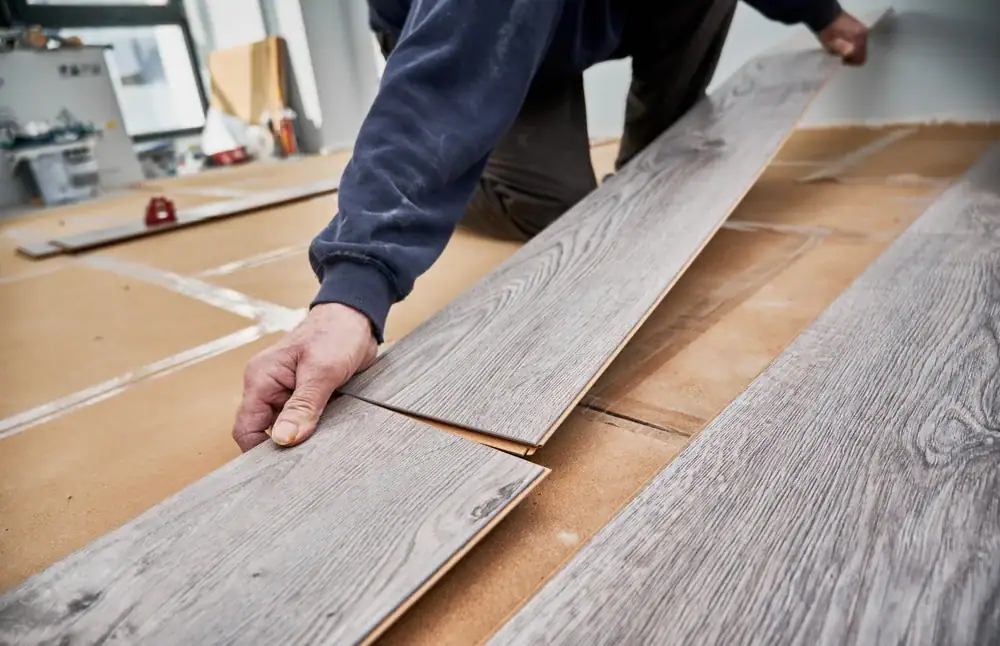
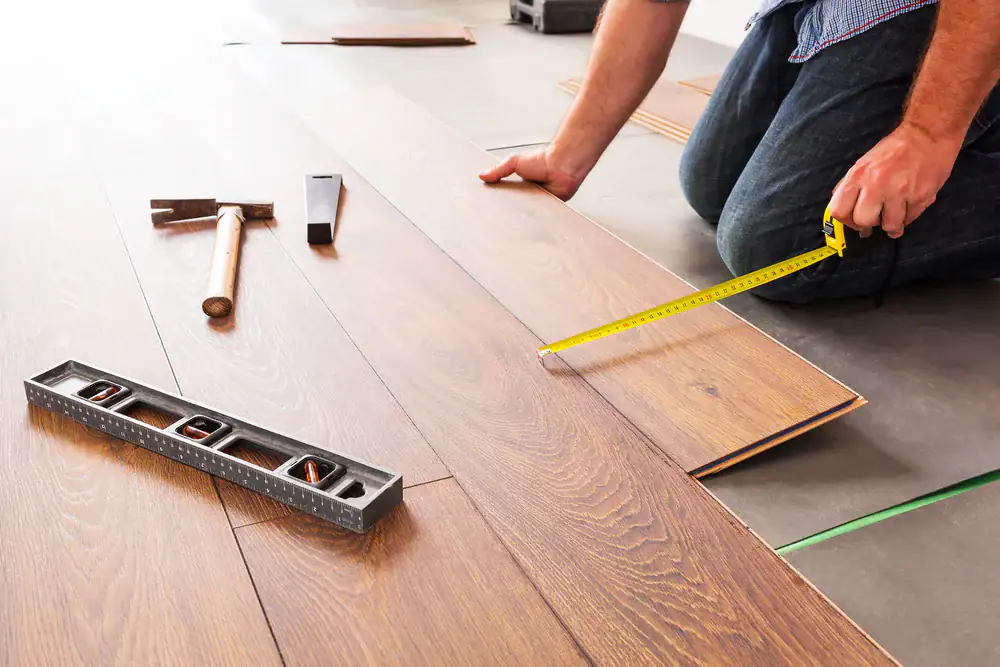
Hardwood Floor Installation in Smiths Crossroads
You walk into rooms that feel bigger, cleaner, and more finished. The floors are level, the seams are tight, and there’s no dust coating your furniture or settling into your vents for weeks.
Your investment shows. Hardwood adds real value to your home—the kind appraisers notice and buyers pay for. But only if it’s installed correctly.
That means proper moisture testing before a single board goes down. It means acclimating the wood to your home’s humidity for three to seven days, not rushing it because the schedule’s tight. It means knowing that Virginia’s climate—humid summers, dry winters—requires installers who understand how wood moves and plan for it.
Most flooring problems trace back to installation errors. Gaps that open up in January. Cupping that starts after the first humid week in June. Boards that creak because the subfloor prep was skipped. You’re hiring us to avoid all of that.
Wood Flooring Contractor Serving Smiths Crossroads
Buff and Coat Floor Refinishing has been working in Virginia for over 20 years. We’ve installed and refinished hardwood floors in hundreds of homes across Richmond, Chesterfield, Midlothian, Glen Allen, and Smiths Crossroads.
We’re not new to how wood behaves in this climate. We know the subfloor issues common in older Virginia homes. We know which species hold up best and which finishes make sense for families with kids or dogs.
Our work is dust-free, which matters more than most people realize until they’ve lived through a floor job without it. Modern containment systems capture 95% of sanding dust. That means you’re not cleaning for weeks after we leave.
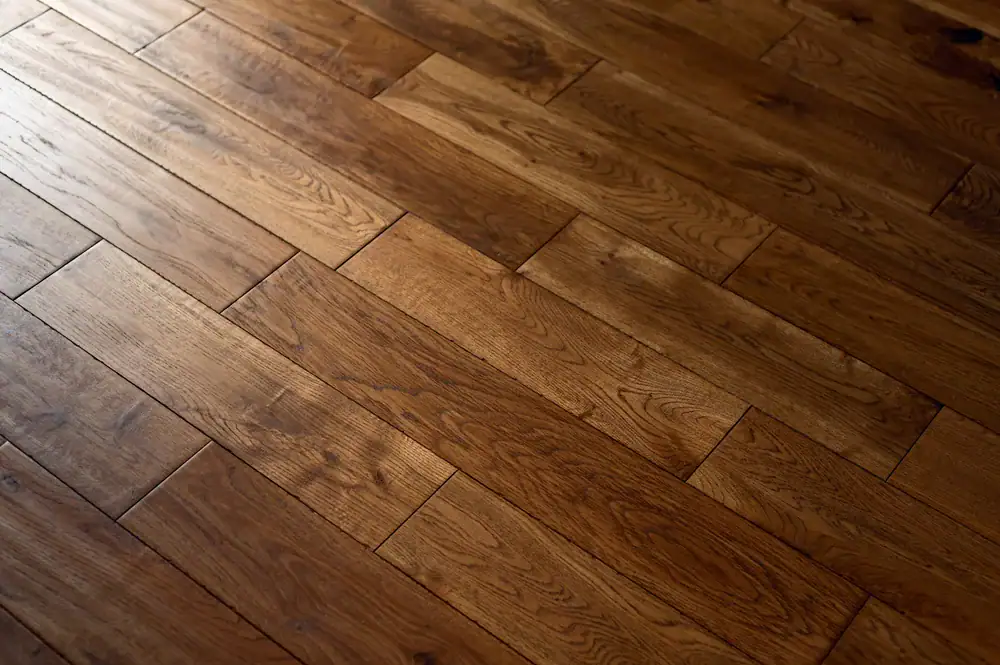
Professional Wood Floor Installation Process
We start with the subfloor. If it’s not flat, level, and dry, nothing else matters. We check for moisture, fix any issues, and make sure the foundation is solid before any wood gets delivered.
Then the wood arrives and sits in your home for three to seven days. This isn’t a delay—it’s the cheapest insurance you’ll ever buy. The wood needs to reach equilibrium with your home’s humidity. Skip this step and you’re gambling with gaps and movement later.
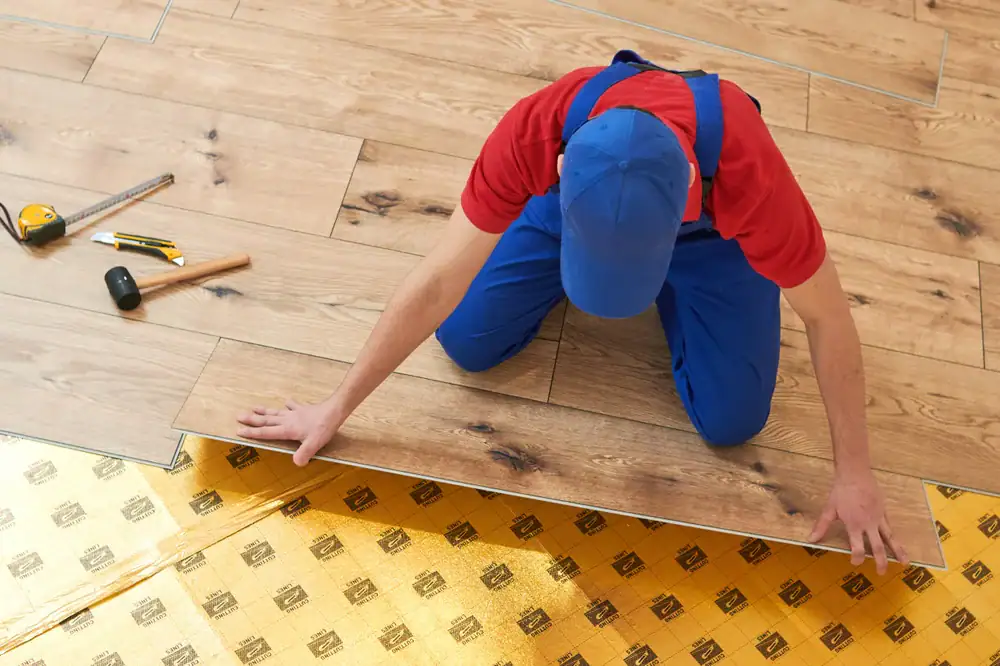
Installation day is methodical. We lay each board with attention to how it fits, how it’s fastened, and how it’ll respond when the seasons change. Corners get hand-finished. Transitions get custom-fit. You won’t see gaps around doorways or baseboards that look like an afterthought.
After installation, we apply your finish—whether that’s the matte look that hides scratches better or something with more sheen. Then we clean up, haul out the old flooring if there was any, and walk you through care instructions that actually make sense.
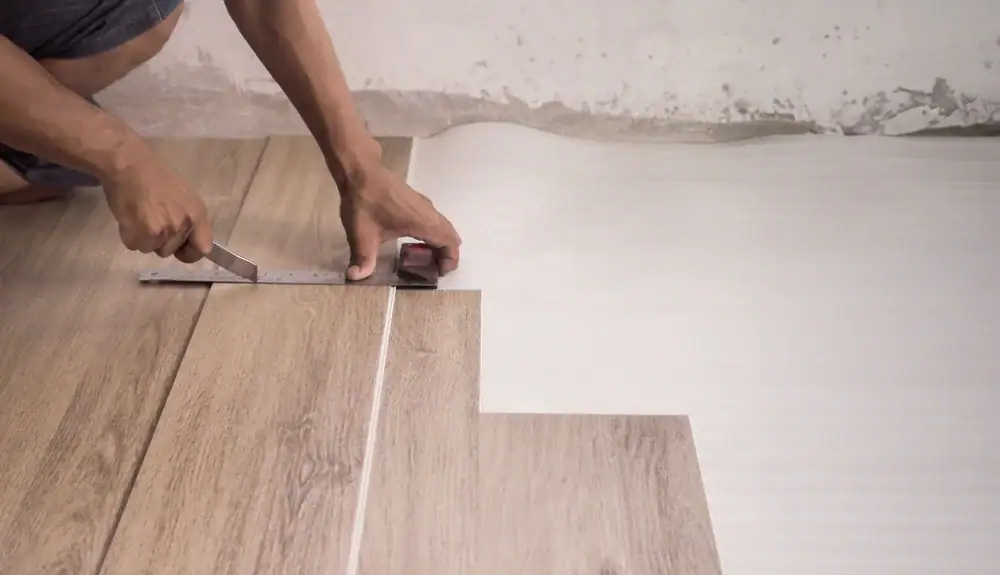
Solid Wood Flooring Installers in Smiths Crossroads
You’re getting a full installation, not just boards nailed down. That includes subfloor inspection and prep, moisture testing, wood acclimation time, professional installation with proper fastening, hand-finished detail work in corners and edges, and your choice of finish applied on-site.
We install solid hardwood, engineered hardwood, and specialty woods. Oak makes up about 40% of what we install because it’s durable and takes stain well. Maple accounts for another 25%—people love the clean, contemporary look. But we’re not limited to those. If you want something specific, we’ll source it and install it correctly.
Smiths Crossroads homes, especially older ones, sometimes have subfloor quirks. We’ve seen it all—unlevel joists, moisture issues from crawl spaces, old adhesive from carpet or vinyl. We fix those problems before they become your problems. Virginia’s humidity swings mean we’re especially careful about expansion gaps and fastener spacing. Wood moves. Our job is to let it move without causing issues.
We also handle the details most installers skip. Transitions between rooms. Thresholds. Stair nosing if you’re doing stairs. Baseboards and quarter-round if you need them. You’re not left figuring out the finishing touches on your own.
How long does it take to install hardwood floors in a typical home?
For an average-sized room—say 300 square feet—expect two to three days from start to finish. That includes subfloor prep, installation, and finish application. Larger projects or whole-home installations take longer, usually a week to ten days depending on square footage and the number of rooms.
The timeline also depends on what we’re starting with. If we’re pulling up old carpet or vinyl, that adds time. If the subfloor needs significant repair or leveling, that adds time. And remember, the wood needs three to seven days to acclimate before we even start installing.
We’ll give you a realistic timeline upfront. We don’t rush jobs to move on to the next one. Hardwood installation isn’t something you can speed through without consequences. The finish alone needs proper drying time between coats—cutting that short means a floor that scratches and wears too easily.
What's the difference between solid hardwood and engineered hardwood for installation?
Solid hardwood is a single piece of wood, usually three-quarters of an inch thick. It’s the traditional choice and the one you can refinish five or more times over its life. It’s what most people picture when they think of hardwood floors. But it needs to be nailed or stapled to a wood subfloor, and it’s more sensitive to moisture and humidity changes.
Engineered hardwood has a real wood top layer bonded to layers of plywood underneath. It’s more stable in humid environments and can be installed over concrete, which solid hardwood can’t. The tradeoff is you can only refinish it once or twice—maybe three times if the wear layer is thick enough.
For Smiths Crossroads homes, either works. The choice usually comes down to your subfloor type and how long you plan to stay in the house. If you’re in a newer home with a concrete slab foundation, engineered makes more sense. If you’ve got an older home with wood subfloors and you want something you can refinish decades from now, solid hardwood is the better investment. We’ll walk you through which option fits your situation during the estimate.
How do you handle moisture issues before installing hardwood floors?
We test for moisture before anything else. Wood subfloors should be below 12% moisture content. Concrete slabs should be below 3 pounds per 1,000 square feet using a calcium chloride test. If the numbers are off, we stop and figure out why before moving forward.
Moisture is the number one cause of hardwood flooring problems. It causes cupping, crowning, gaps, and buckling. Most of those issues show up months after installation, which is why some installers skip testing—they’re gone by the time the problems start. We’re not interested in callbacks or unhappy customers, so we test every time.
If we find moisture issues, we identify the source. Sometimes it’s a crawl space that needs better ventilation or a vapor barrier. Sometimes it’s a plumbing leak that hasn’t been noticed yet. Sometimes it’s just a concrete slab that needs more drying time after construction. We’ll tell you what needs to happen before we can safely install your floors. It’s not the answer anyone wants to hear, but it’s the one that saves you from tearing out a brand-new floor a year later.
Do you really install hardwood floors without creating dust everywhere?
Yes. We use dust containment systems that capture about 95% of airborne particles during sanding and finishing. The equipment isn’t cheap and it adds time to the job, but it’s worth it if you’ve ever lived through a flooring project without it.
Traditional sanding sends fine dust into every corner of your home. It settles on ceiling fans, inside cabinets, in your HVAC system. You’re cleaning it up for weeks. Our system vacuums the dust at the source, traps it in a filtration unit, and keeps it out of your living space.
You’ll still want to keep bedroom and closet doors closed during the work, and there will be some dust—it’s not a completely sterile process. But the difference is dramatic. Most clients are surprised at how little cleanup is needed after we’re done. If you’ve got allergies, asthma, or just don’t want to spend your evenings wiping down every surface in your house, dust-free installation is the way to go.
What type of wood flooring holds up best in Virginia's climate?
Oak is the workhorse. It handles humidity swings well, it’s hard enough to resist denting from furniture and foot traffic, and it takes stain beautifully if you want something darker than the natural color. Red oak and white oak are both solid choices—white oak is slightly harder and has a tighter grain.
Maple is another good option if you want a lighter, more contemporary look. It’s harder than oak, which means it resists scratches and dents even better. The downside is it doesn’t absorb stain as evenly, so if you’re planning to go dark, oak is the better choice.
Hickory is the hardest domestic wood we install, but it has a lot of color variation—some people love the character, others find it too busy. Cherry and walnut are beautiful but softer, so they’ll show wear faster in high-traffic areas. For Smiths Crossroads homes, we usually recommend oak or maple unless you have a specific aesthetic in mind. Both are durable, widely available, and proven to handle Virginia’s climate without issues as long as they’re installed correctly.
How much does professional hardwood floor installation cost in Smiths Crossroads?
Most projects in this area run between $8 and $14 per square foot installed. That includes materials, labor, subfloor prep, and finish. The range depends on the type of wood, the complexity of the layout, and the condition of your existing subfloor.
Solid oak or maple on the lower end of the hardness scale costs less than exotic hardwoods or wide-plank options. Engineered hardwood usually falls in the middle. If we’re tearing out old flooring, fixing subfloor issues, or working around a lot of corners and transitions, that adds to the labor cost.
We’ll give you a detailed estimate after seeing the space. We’re not the cheapest option in Virginia, and that’s intentional. You’re paying for proper moisture testing, wood acclimation time, dust-free installation, and two decades of experience doing this correctly. The cost of tearing out and replacing a poorly installed floor is always more than the cost of hiring someone who knows what they’re doing the first time. We’ve seen too many homeowners learn that lesson the expensive way.
Other Services we provide in Smiths Crossroads