
Wood Floor Installers in Hanovertown, VA
Hardwood Floors That Last Without the Disruption
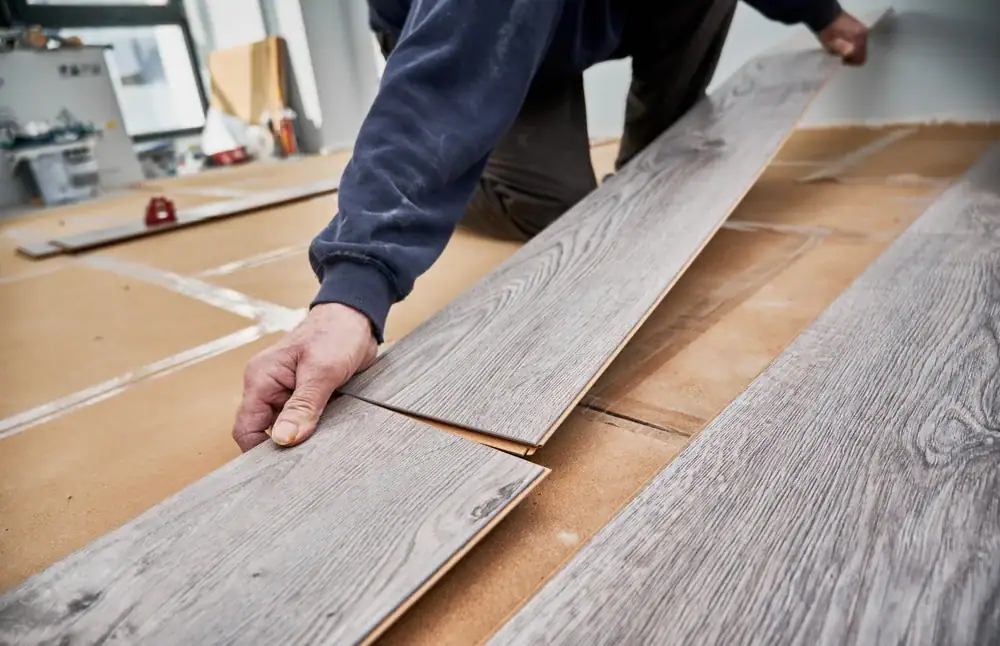
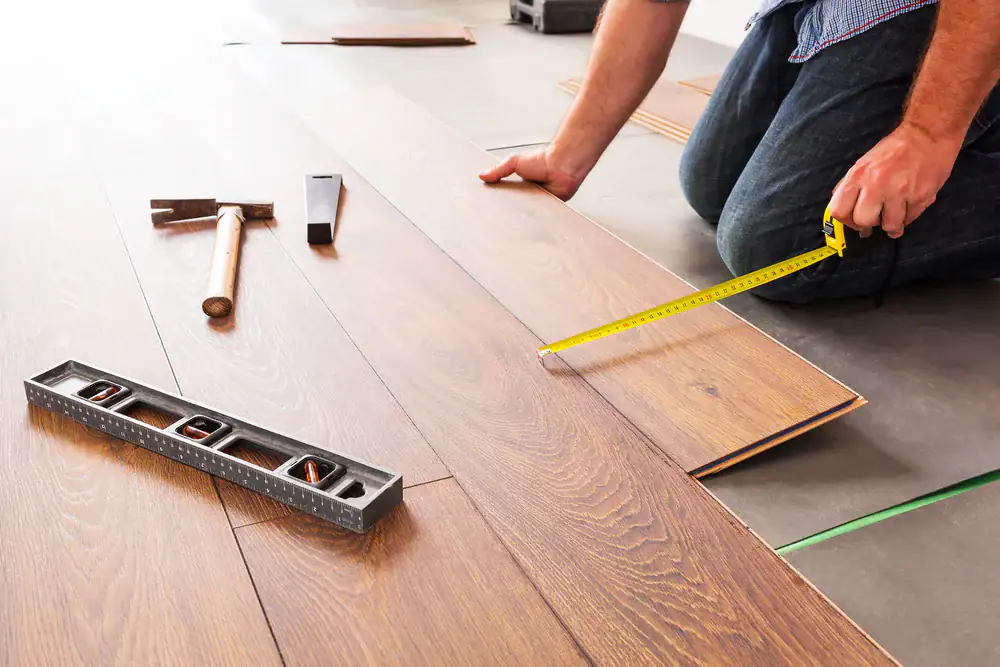
Hardwood Floor Installation in Hanovertown
You’re not just picking a floor. You’re choosing something that affects how your home feels every single day. The wrong installation means gaps, creaking, uneven boards, and a floor that looks worn before it should.
Proper hardwood floor installation means your planks sit flat, your finish holds up to real traffic, and your investment doesn’t turn into a regret. That’s subfloor prep, moisture testing, acclimation, and precision work—not shortcuts.
In Hanovertown and across Hanover County, homes deal with humidity swings and older construction. Your installer needs to account for that. We’ve been doing this for over 20 years, and we know what happens when someone skips the prep or rushes the finish. You end up calling someone else to fix it.
Wood Flooring Contractor Serving Hanovertown
We’ve been working on hardwood floors throughout Virginia since the early 2000s. We serve Hanovertown, Mechanicsville, Richmond, and the surrounding areas with installation, refinishing, and repair services.
David Emmerling runs the company and stays involved with every job. That’s not marketing talk—it’s how we operate. We’re licensed, insured, and BBB A+ rated because we show up, do the work right, and don’t disappear when something needs attention.
Hanovertown homeowners deal with everything from historic homes needing careful restoration to newer builds wanting quality hardwood from the start. We’ve handled both, and everything in between.
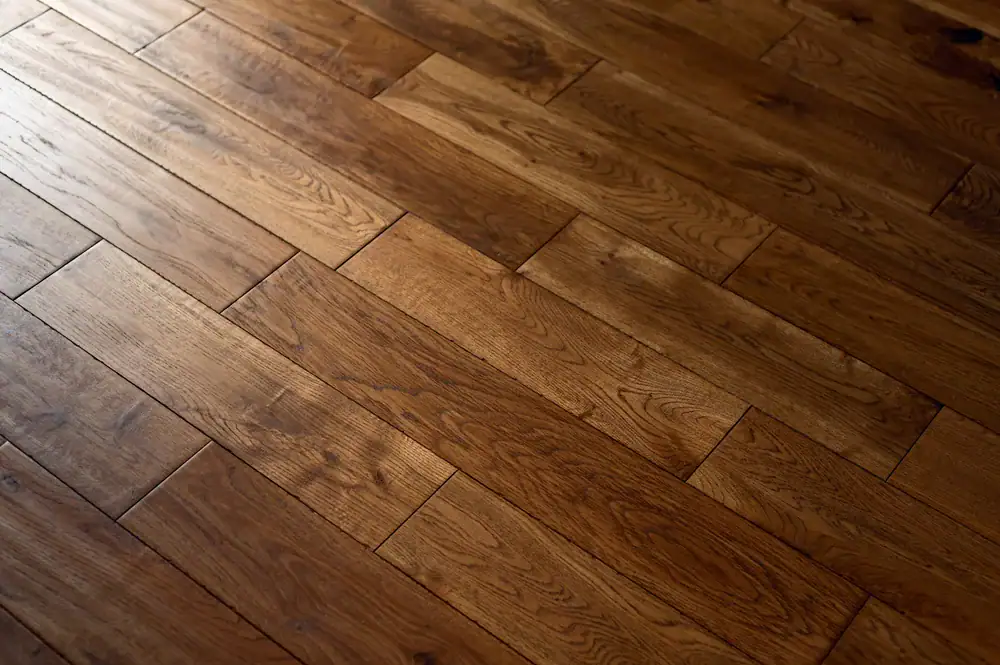
Our Hardwood Floor Installation Process
First, we come out to look at your space. We check the subfloor, measure moisture levels, and talk through what you want. If there’s an issue—uneven joists, moisture problems, old adhesive—we tell you before we start, not after.
Next, we prep the subfloor. That means making sure it’s clean, level, and dry. Hardwood doesn’t forgive a bad foundation. We also let the wood acclimate to your home’s humidity before installation. Skipping that step is how you get gaps and buckling later.
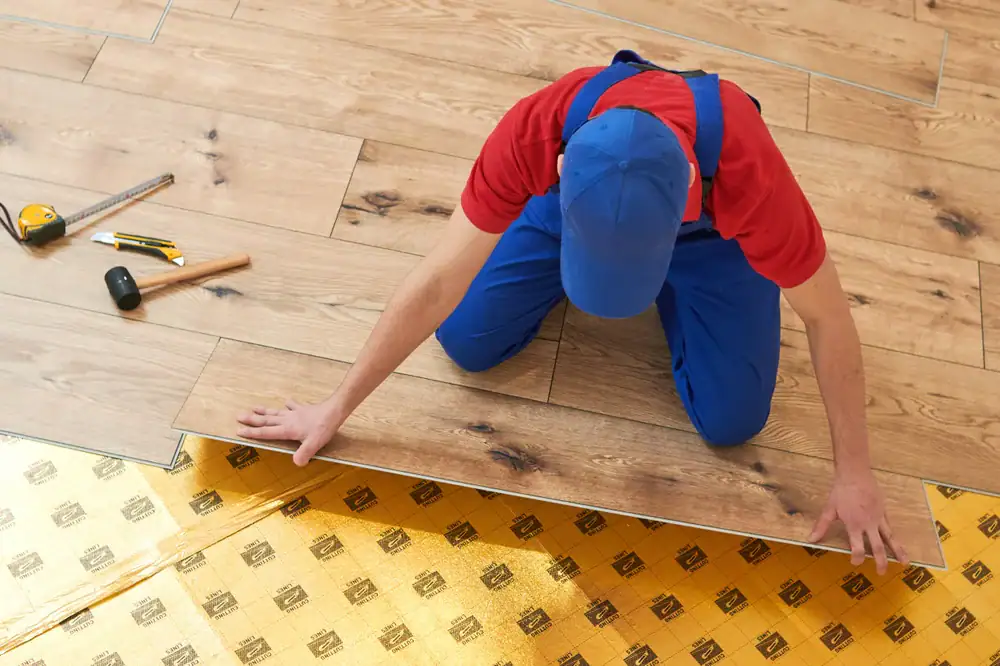
Then we install. Depending on what you’ve chosen—solid hardwood, engineered planks, wide boards—we use the right method. Nail-down, glue-down, or float. Each one matters for how the floor performs long-term.
After installation, we sand and finish (unless you’ve gone with prefinished). We use dustless equipment and low-VOC finishes, so your home isn’t a construction zone for weeks. Most projects wrap in a few days, and you’re walking on your new floors within 24 hours of the final coat.
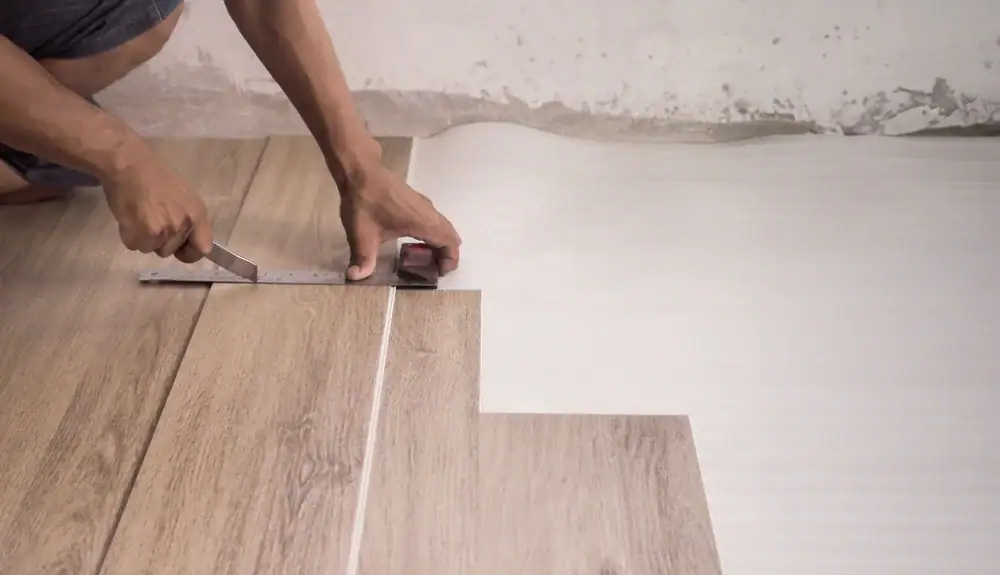
Solid Wood Flooring Installers Near Hanovertown
You get a floor that’s installed to manufacturer specs, which protects your warranty. You get proper expansion gaps, so your floor can move with the seasons without buckling. You get a finish that’s applied in controlled conditions, not rushed or uneven.
In Hanovertown, a lot of homes sit on crawl spaces or older foundations. That means moisture management matters. We test before we install, and if your subfloor needs a vapor barrier or additional prep, we handle it. Ignoring moisture is the fastest way to ruin a hardwood floor.
We also work with the materials you actually want. Wide planks are trending hard right now, and for good reason—they look clean and modern. But they also require more careful installation because they move more than narrow boards. We know how to work with them. Same goes for reclaimed wood, engineered flooring, or traditional solid oak.
You’re also getting our dustless process and eco-friendly finishes. That’s not a luxury add-on. It’s standard. Your home doesn’t need to be covered in dust for a week, and your family doesn’t need to breathe harsh fumes while the finish cures.
How long does it take to install hardwood floors in a typical home?
For most homes, installation takes two to five days depending on square footage and the complexity of the layout. That includes subfloor prep, acclimation time, installation, and finishing.
If we’re working with prefinished hardwood, the timeline is shorter because there’s no sanding or finishing on-site. You can walk on prefinished floors as soon as they’re installed. If we’re installing unfinished hardwood, we sand and apply finish after installation, which adds a day or two. The final coat needs 24 hours to cure before you can move furniture back in.
Larger homes, multiple rooms, or spaces with lots of angles and transitions take longer. We’ll give you a realistic timeline during the estimate. We don’t rush the process to hit an arbitrary deadline, because that’s how mistakes happen.
What's the difference between solid hardwood and engineered wood flooring?
Solid hardwood is a single piece of wood from top to bottom, usually three-quarters of an inch thick. It can be sanded and refinished multiple times over its life, which makes it a long-term investment. It’s best installed over a wood subfloor and works well on main floors and upper levels.
Engineered wood flooring has a real hardwood top layer bonded to layers of plywood underneath. It’s more stable in areas with humidity changes and can be installed over concrete, in basements, or below-grade. The top layer can still be refinished, but fewer times than solid hardwood—usually one to three times depending on the thickness of the wear layer.
Both look like real hardwood because they are real hardwood. The difference is in how they’re constructed and where they perform best. If you’re in Hanovertown and your home has a crawl space or you’re dealing with a concrete slab, engineered is often the smarter choice. If you’ve got a solid wood subfloor and good moisture control, solid hardwood gives you more refinishing options down the road.
Can you install hardwood floors over existing flooring?
Sometimes, but it depends on what’s underneath and what condition it’s in. If you’ve got old hardwood that’s still structurally sound, we can sometimes install engineered flooring over it using a floating method. If the existing floor is vinyl or laminate and it’s flat and stable, that can work too in certain situations.
But if the existing floor is uneven, damaged, or soft, we need to remove it. Installing over a bad surface just transfers those problems to your new floor. You’ll end up with squeaks, movement, and an installation that doesn’t last.
We also have to consider height transitions. Adding a new floor on top of an old one raises the floor level, which affects doorways, transitions to other rooms, and appliances. Sometimes it makes sense. Often, it’s better to remove the old flooring and start fresh. We’ll tell you which route makes sense after we see your space.
How do I know if my subfloor is ready for hardwood installation?
Your subfloor needs to be clean, dry, flat, and structurally sound. We check all of that before we install. Moisture is the biggest issue—if your subfloor is holding too much moisture, the hardwood will absorb it and buckle or cup. We use a moisture meter to test levels and compare them to manufacturer guidelines.
The subfloor also needs to be flat within a certain tolerance, usually within an eighth of an inch over ten feet. If it’s not, we level it with a leveling compound or by sanding down high spots. Hardwood installed over an uneven subfloor will feel bouncy, creak, or develop gaps.
If your subfloor is damaged—soft spots, rot, broken joists—that gets fixed first. You can’t install a quality floor over a compromised structure. In older Hanovertown homes, we sometimes find subfloors that need reinforcement or sections replaced. It’s not fun to hear, but it’s a lot better to handle it before installation than after your new floor starts sagging.
What type of finish should I choose for my hardwood floors?
Most homeowners go with polyurethane because it’s durable, affordable, and available in different sheens. Water-based polyurethane dries fast, has low odor, and keeps the natural color of the wood. Oil-based polyurethane takes longer to cure and has a stronger smell, but it adds a warm amber tone and is slightly more durable.
If you want something more natural, hardwax oils and penetrating oils soak into the wood instead of sitting on top. They’re easier to spot-repair and give the floor a matte, natural look. The tradeoff is they need more maintenance and aren’t as tough against scratches and water.
We use low-VOC finishes as our standard because they’re safer for your indoor air quality and still perform well. The sheen level—matte, satin, or gloss—is mostly personal preference. Satin is the most popular because it hides wear better than gloss and still has a slight shine. We’ll walk you through samples so you can see what each finish looks like on your actual wood before we apply anything.
How soon can I walk on my new hardwood floors after installation?
If we’re installing prefinished hardwood, you can walk on it in socks as soon as we’re done. No waiting. If we’re sanding and finishing on-site, you need to wait 24 hours after the final coat before walking on the floor, and 48 to 72 hours before moving furniture back in.
Full cure time for most finishes is about a week. During that time, the floor is usable but still hardening. We recommend putting felt pads under furniture legs, avoiding dragging anything heavy, and keeping rugs off the floor until it’s fully cured. That gives the finish time to reach maximum hardness.
Water-based finishes cure faster than oil-based. If you need to get back into the space quickly, water-based poly is the way to go. Oil-based takes longer but gives you a slightly tougher finish once it’s fully cured. We’ll give you specific care instructions based on what we apply, so you know exactly when you can move back to normal use.
Other Services we provide in Hanovertown