For Richmond-area landlords and rental property investors, hardwood floors are a major asset that attracts quality tenants and increases property value. But without a clear plan, tenant turnover, daily wear, and Virginia’s humid climate can quickly degrade that beautiful finish, leading to costly repairs. A proactive approach is essential to protect the long-term health and appearance of your floors and your investment.
This is where a dedicated rental property maintenance checklist becomes indispensable. This guide provides a structured, actionable plan to protect your floors, minimize long-term costs, and ensure your investment remains in top condition for years to come. We will cover everything from simple tenant protocols and routine inspections to knowing exactly when to call a professional for a buff and coat service or a full hardwood floor refinishing in Richmond, VA.
By implementing this checklist, you can move from a reactive, expensive repair cycle to a predictable, cost-effective maintenance strategy. You will learn how to document floor conditions, educate tenants on proper care, and schedule professional services at the right time. Let's dive into the ten critical steps for preserving your rental property's most valuable feature.
1. Regular Hardwood Floor Cleaning and Sweeping
The most fundamental task in any rental property maintenance checklist for hardwood floors is consistent cleaning. This foundational step involves the frequent removal of dust, dirt, grit, and other abrasive debris that accumulates from daily foot traffic. Failing to address this buildup allows tiny particles to act like sandpaper, gradually scratching and dulling the floor's protective finish. Over time, this accelerates wear and can lead to costly refinishing jobs.
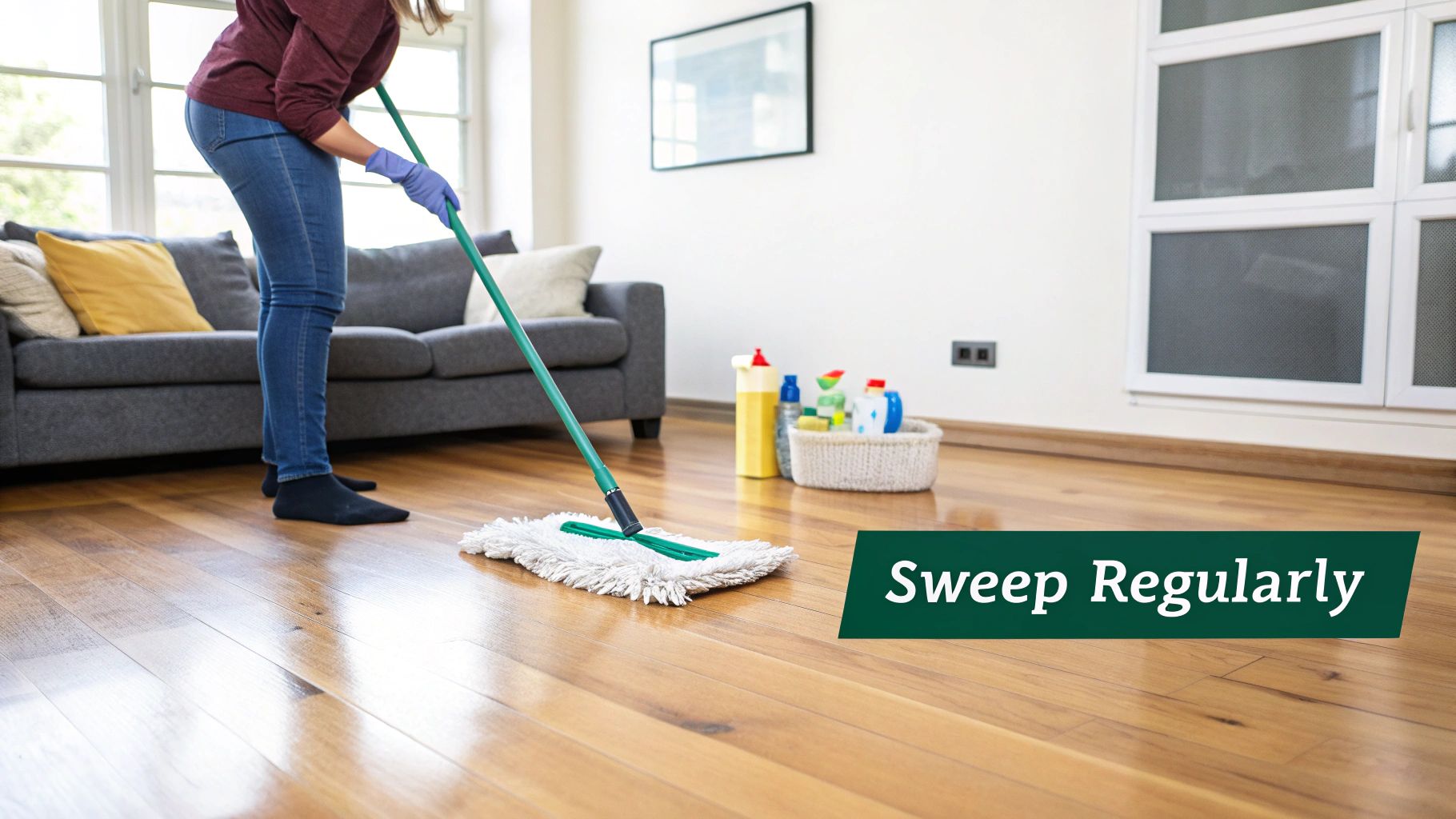
For landlords and property managers, the key is not just performing this task during turnovers but ensuring tenants maintain it consistently. This proactive approach protects your investment and minimizes long-term damage.
Implementation and Best Practices
To ensure proper care, landlords should establish clear protocols. Prohibit damaging practices like wet mopping, which can cause wood to swell and warp, and the use of harsh chemical cleaners that strip the finish. Instead, equip tenants with the right knowledge and tools.
- Lease Addendum: Include a specific clause in your lease agreement outlining floor care requirements. Specify approved cleaning tools (soft-bristle brooms, microfiber mops) and products.
- Provide a Starter Kit: Supply a new tenant with a quality microfiber dust mop and a pH-neutral hardwood floor cleaner. This small investment removes guesswork and sets a standard for care from day one.
- Create a Cleaning Guide: A simple, one-page guide included in the move-in packet can detail a weekly sweeping schedule for high-traffic areas and proper techniques.
- Regular Inspections: During routine quarterly or semi-annual property inspections, specifically check the condition of the floors for compliance and early signs of neglect.
2. Buff & Coat Hardwood Floor Renewal (Screening and Recoating)
A critical component of a proactive rental property maintenance checklist is addressing wear and tear on hardwood floors before it requires a full, costly refinish. The buff and coat service, also known as screening and recoating, is the ideal intermediate solution. This process lightly abrades, or screens, the top layer of the floor’s finish to remove surface-level scratches and scuffs without touching the wood itself. A fresh protective coat of finish is then applied, restoring the floor’s protective barrier and luster.
For landlords and property managers, especially those in the competitive Richmond, VA market, this service is invaluable. It can be completed in as little as one day, drastically reducing vacancy periods between tenants while keeping the property’s most valuable assets in prime condition. This preventative maintenance extends the life of the floors and prevents minor wear from escalating into deep, permanent damage.
Implementation and Best Practices
Scheduling a professional buff and coat service is a strategic investment that preserves property value and enhances tenant appeal. Integrating it into your long-term maintenance plan is straightforward and highly effective.
- Schedule Between Tenants: The optimal time for a screen and recoat is during a tenant turnover. This eliminates disruption for residents and allows the new finish to cure properly before move-in, ensuring a fresh start for the next occupant.
- Budget as Preventative Care: Treat this service as a planned operational expense, not an emergency repair. Proactively budgeting for a buff and coat every 3-5 years is significantly more cost-effective than paying for a full sand-and-refinish job down the line.
- Use as a Marketing Feature: High-quality, well-maintained hardwood floors are a major selling point. When advertising your rental, highlight that the floors have been professionally renewed and protected, signaling to prospective tenants that you are a diligent and caring landlord.
- Combine Maintenance Tasks: To maximize efficiency during a vacancy, schedule the floor renewal alongside other turnover tasks like deep cleaning, painting, and general repairs. This streamlines the process and gets the unit back on the market faster.
If you’re unsure whether your hardwood floors need refinishing, Buff & Coat can take a look and give you honest recommendations. Call 804-392-1114 or request a free estimate today.
3. Full Hardwood Floor Sanding and Refinishing
For hardwood floors with significant wear, deep scratches, stubborn stains, or widespread finish failure, a full sanding and refinishing is the most comprehensive solution in a rental property maintenance checklist. This intensive process involves mechanically sanding off the old, damaged finish and a thin top layer of the wood itself. This exposes a fresh, unblemished surface, ready for new stain and multiple coats of durable, professional-grade sealant. While more involved than a simple buff and coat, it restores the floor to a like-new condition, erasing years of tenant traffic and boosting the property's value.
This major maintenance task is a long-term investment that dramatically improves a rental unit's appeal, allowing landlords to attract higher-quality tenants and justify premium rental rates. It’s particularly effective for properties in competitive markets like Richmond or for units being prepared for resale.
Implementation and Best Practices
Full refinishing is a complex job best left to professionals, but landlords can manage the process effectively to maximize ROI and minimize disruption. Planning is crucial, as the work is best performed during vacancies to avoid displacing tenants and losing rental income.
- Strategic Timing: The ideal time for a full refinishing is during a tenant turnover. Schedule the work immediately after a tenant moves out and before marketing the property to new applicants.
- Budget Accordingly: Unlike routine tasks, this is a significant capital improvement. We recommend budgeting for a full refinishing every 10-15 years, depending on wear and tear.
- Choose the Right Finish: For a rental, durability is key. Select a commercial-grade, water-based polyurethane finish that cures quickly and offers superior resistance to scratches and scuffs from moving furniture and daily life.
- Opt for Dustless Systems: Insist on a contractor that uses a modern dustless sanding system. This is critical in rental properties to prevent fine dust from infiltrating HVAC systems, ductwork, and adjacent units, saving you significant cleaning costs and potential tenant complaints. As the best hardwood floor contractor in Richmond, Buff & Coat uses state-of-the-art dustless equipment on every job.
- Get Detailed Estimates: Request a comprehensive estimate that breaks down each phase of the project: sanding, staining, sealing, and cleanup. This ensures transparency and helps you compare bids accurately.
4. Hardwood Floor Moisture and Water Damage Assessment
A critical, yet often overlooked, task in any rental property maintenance checklist is the regular assessment of hardwood floors for moisture and water damage. Excess moisture is the enemy of wood, causing it to expand, cup, warp, and eventually harbor mold growth. These issues compromise not only the floor's structural integrity and appearance but also the health of the living environment, leading to repairs that are far more expensive than preventative checks.
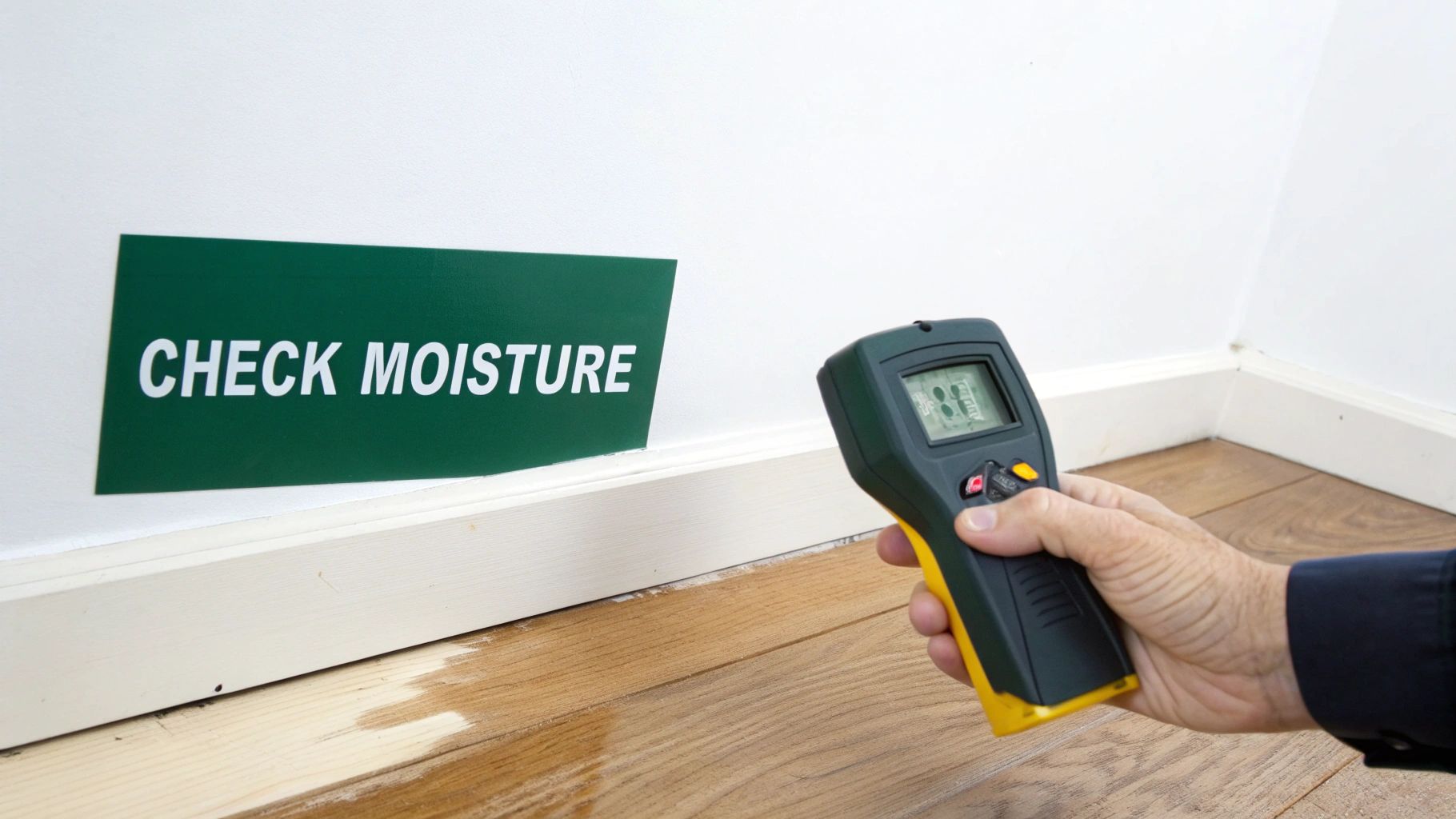
For landlords, especially in climates like Richmond where humidity fluctuates, proactive moisture monitoring is non-negotiable. Early detection of a slow leak under a sink or elevated humidity in a basement can mean the difference between a simple fix and a full-floor replacement. This preventative step protects your investment and ensures a safe, durable surface for your tenants.
Implementation and Best Practices
Establishing a routine for moisture assessment is essential for long-term floor health. This involves both visual inspections and the use of tools to get a clear picture of the conditions your hardwood is exposed to. For properties in humid areas or those with below-grade-level wood floors, these checks become even more critical.
- Conduct Quarterly Inspections: At least four times a year, perform a detailed visual inspection. Focus on high-risk areas like kitchens, bathrooms, laundry rooms, and around exterior doors and windows. Look for discoloration, cupping (raised edges of planks), or crowning (raised center of planks).
- Utilize a Moisture Meter: Invest in a quality pinless moisture meter. During inspections, take readings in multiple areas to establish a baseline. Any sudden spike in a particular spot is a clear indicator of a problem that needs immediate attention.
- Manage Indoor Humidity: Advise tenants to maintain indoor humidity levels between 30-50%. In humid seasons, ensure the HVAC system is functioning correctly or provide a dehumidifier for basement areas. Proper ventilation in kitchens and bathrooms is also key.
- Educate Tenants: Include a clause in your lease addendum requiring tenants to immediately report any spills, leaks, or signs of water intrusion. Understanding the serious nature of hardwood floor water damage can empower them to be the first line of defense.
5. Protective Rug and Furniture Pad Installation
Installing protective rugs and furniture pads is a simple yet highly effective preventative strategy in any rental property maintenance checklist for hardwood floors. This proactive measure shields the floor's finish from the two most common sources of damage: concentrated foot traffic and heavy furniture. Area rugs absorb wear in high-traffic zones like hallways and entryways, while furniture pads prevent the scratches, scuffs, and dents that occur when tenants move chairs, tables, and sofas.
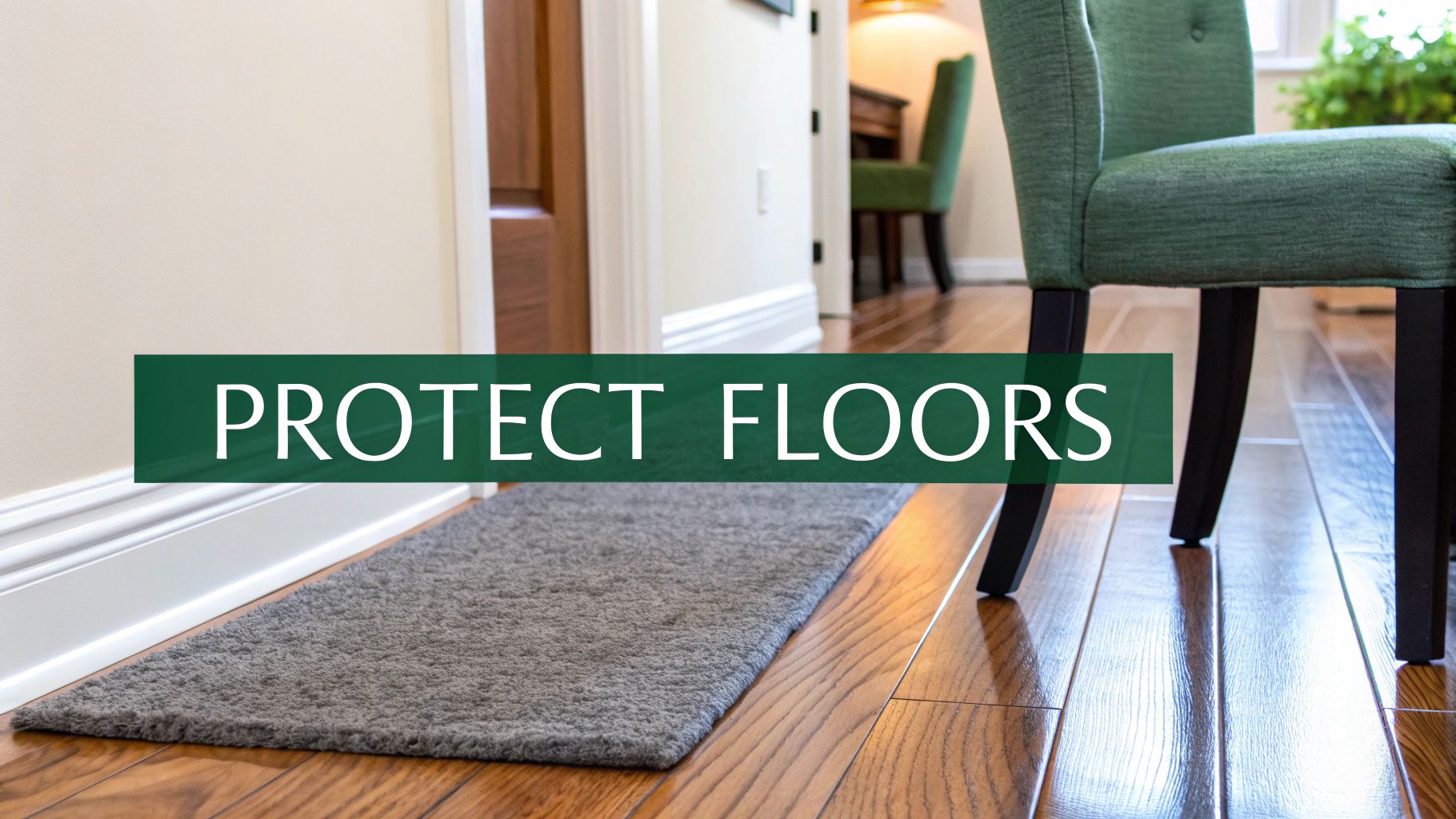
For landlords and property managers, especially those with Richmond rental properties where tenant care cannot be guaranteed, this small investment prevents costly refinishing repairs down the line. It's a foundational step in preserving the long-term value and appearance of your hardwood flooring.
Implementation and Best Practices
To maximize protection, landlords should implement a clear and consistent policy for using protective coverings. This approach minimizes ambiguity and empowers tenants to become active participants in maintaining the property's condition.
- Mandatory Furniture Pads: Include a clause in the lease agreement requiring felt or rubber pads on the legs of all furniture pieces that come into contact with hardwood floors.
- Supply Move-In Essentials: Provide a starter set of high-quality felt furniture pads upon move-in. This gesture encourages immediate compliance and sets a clear standard of care from day one.
- Strategic Rug Placement: Use runner rugs in hallways and durable area rugs in entryways and main living areas. For high-end rentals, strategically placing rugs can also enhance the aesthetic while protecting the floors underneath.
- Routine Inspection Point: Add furniture pad and rug condition to your quarterly maintenance checks. Verify that pads are still in place and haven't worn down, and ensure rugs don't have abrasive backings.
- Educate Tenants: Advise tenants to periodically move rugs and furniture slightly to prevent uneven fading or wear patterns, and recommend they replace worn-out protective pads annually.
6. HVAC System Maintenance and Humidity Control
One of the most overlooked yet critical tasks in a rental property maintenance checklist for hardwood floors is managing the indoor environment. Wood is a natural material that expands with high humidity and contracts when the air is dry. These constant fluctuations can cause boards to cup, warp, gap, or even crack over time. Proper HVAC system maintenance and humidity control are essential to prevent this slow-motion damage and protect your flooring investment.
Maintaining a consistent indoor humidity level between 30% and 50% is the goal. A well-serviced HVAC system is your primary tool for achieving this stability, especially in areas with significant seasonal changes like Richmond, VA. This proactive step creates an ideal environment where hardwood can maintain its structural integrity and finish for years to come.
Implementation and Best Practices
Landlords must go beyond simple filter changes to truly protect their properties. Establishing a comprehensive HVAC and humidity management plan is key. This involves both professional servicing and tenant education to ensure year-round stability.
- Schedule Biannual Professional Servicing: Hire an HVAC professional to service the system before the peak cooling season (spring) and heating season (fall). This preventative measure ensures efficiency and identifies potential issues before they cause damage.
- Implement a Strict Filter Change Policy: High-traffic rental units require more frequent filter changes, often monthly. Include this requirement in the lease and provide tenants with a starter supply of filters to set a clear expectation.
- Install a Smart Thermostat: A programmable or smart thermostat helps maintain a consistent temperature and humidity level, preventing the drastic swings that harm wood floors. This also offers tenants potential energy savings.
- Educate Tenants on Humidity Management: Provide tenants with a simple guide explaining the importance of using exhaust fans in kitchens and bathrooms, avoiding drastic temperature changes, and keeping windows closed when the HVAC is running. For multi-unit properties, a centralized system management plan is even more effective. A comprehensive guide to Air Conditioning Maintenance is paramount for landlords to ensure comfort and protect their investment.
- Monitor with Hygrometers: Place inexpensive digital hygrometers in a few key areas of the rental unit. This allows both you and your tenant to monitor humidity levels easily and take action, such as using a dehumidifier in a basement, if they fall outside the optimal 30-50% range.
7. Scratch and Minor Damage Touch-Up and Repair
Addressing minor scratches, scuffs, and small gouges promptly is a critical component of any rental property maintenance checklist for hardwood floors. This task involves the proactive repair of small blemishes that inevitably occur from moving furniture, dropped items, or general wear and tear. By catching these issues early, landlords can prevent them from accumulating into larger, more noticeable damage that detracts from the property's overall appeal and value.
For property managers, this preventative maintenance is far more cost-effective than a full refinishing. It keeps floors looking well-maintained between tenants, reduces the likelihood of damage deposit disputes, and extends the life of the floor's finish. A quick touch-up during a quarterly inspection or turnover can make a significant difference.
Implementation and Best Practices
To effectively manage minor repairs, landlords should create a standardized process for identifying and fixing damage. This ensures consistency across all rental units and prevents small problems from being overlooked. It's about maintaining a high standard of care that tenants will notice and appreciate.
- Create a Repair Kit: Assemble a dedicated hardwood floor scratch repair kit for your maintenance team. Include various wood fillers, touch-up markers, stain pens in multiple shades to match your properties' flooring, and fine-grit sandpaper.
- Document and Track: During routine inspections, take photos of any new scratches or gouges. Log the location and date of the repair in your maintenance records. This documentation is crucial for tracking wear patterns and for reference during tenant move-outs.
- Know When to Call a Pro: Distinguish between minor cosmetic fixes and significant damage. While a touch-up pen can hide a surface scratch, deeper gouges or widespread wear may require professional hardwood floor repair. Attempting a large-scale repair without the right tools can often make the problem worse.
- Educate Tenants: Provide tenants with felt furniture pads at move-in and include a clause in the lease about responsibility for damages beyond normal wear and tear. This sets clear expectations for floor care.
8. Proper Entry Vestibule Design and Flooring Protection
An often-overlooked yet critical part of a rental property maintenance checklist is proactive entry design. A well-designed entry vestibule acts as the first line of defense, preventing dirt, moisture, and abrasive debris from being tracked into the main living areas. Entryways bear the brunt of foot traffic and outdoor elements, so designing them to capture these contaminants significantly protects more sensitive flooring, like hardwood, from premature wear and damage. This preventative strategy saves landlords from costly repairs and refinishing down the line.
For landlords in Richmond, where weather can bring rain, mud, and humidity, a protective entryway is a non-negotiable asset. It minimizes cleaning needs for tenants and preserves the value of your flooring investment by stopping damage before it starts. For new construction or major renovations, consider a floor installation in your Richmond property that features durable materials like LVT in entryways.
Implementation and Best Practices
Creating an effective entry zone involves more than just a welcome mat. It requires a thoughtful combination of durable materials and practical design to contain outdoor elements. By implementing these features, you establish a clear standard of care and drastically reduce maintenance issues.
- Durable Flooring: Install highly durable and easy-to-clean flooring like porcelain tile, sealed concrete, or luxury vinyl tile (LVT) in the immediate entryway. These materials are resistant to water and scratches.
- High-Quality Matting: Place a heavy-duty, moisture-absorbent mat outside the entry door and a second one inside. The outdoor mat scrapes off larger debris, while the indoor mat traps finer dirt and water.
- Provide Storage: Add a small bench, a boot tray, or an umbrella stand in the vestibule area. This encourages tenants and guests to remove wet or muddy shoes and outerwear upon entering, containing the mess to one manageable zone.
- Regular Cleaning Schedule: In your lease or move-in guide, specify that the entry mats and flooring should be cleaned at least twice a week. For multi-unit properties, ensure your common area cleaning service pays special attention to these high-traffic zones.
9. Quarterly Property Inspection and Damage Documentation
A crucial yet often overlooked part of any rental property maintenance checklist is the systematic quarterly inspection. This proactive measure involves regularly visiting the property to assess its condition, specifically focusing on the hardwood floors. By documenting wear patterns, identifying new damage, and evaluating overall cleanliness, landlords can address issues before they escalate, protecting their significant flooring investment and ensuring tenant accountability.
This process isn't about micromanaging tenants; it's about responsible asset management. Consistent documentation creates a clear history of the property's condition, which is invaluable for resolving security deposit disputes, planning preventative maintenance like a buff and coat service, and providing clear evidence for insurance claims if needed.
Implementation and Best Practices
Establishing a formal inspection and documentation process removes ambiguity and protects both the landlord and the tenant. To efficiently conduct and document quarterly property inspections, leveraging the best property management apps can significantly simplify the process, allowing for digital checklists and photo storage.
- Standardize with a Checklist: Create a detailed inspection checklist specific to your property. Include items like checking for scratches near entryways, looking for water spots under windows or near plants, and verifying that furniture pads are in use.
- Systematic Photography: Take photos from the same angles and in consistent lighting during each inspection. This creates a clear visual timeline that makes it easy to spot new damage or accelerating wear.
- Detailed Documentation: For any new damage found, note its location, size, and likely cause. For example, "Three-inch-long, deep scratch by the sliding glass door, likely from moving furniture."
- Communicate Clearly: Always provide tenants with proper advance notice as required by law. Frame the inspection as a routine part of property upkeep and share positive findings to build a good relationship and encourage continued care.
10. Tenant Education and Move-In/Move-Out Floor Care Protocols
Beyond physical maintenance, one of the most effective tools in your rental property maintenance checklist is proactive tenant management. Establishing clear, formal protocols for floor care education at move-in and detailed inspections at move-out is crucial for protecting your hardwood investment. This strategy shifts the focus from reactive repairs to preventative care, empowering tenants to become partners in preserving the property.
Educated tenants are significantly less likely to cause accidental damage, while formal documentation protects you from disputes over security deposits. Well-designed move-in and move-out procedures create accountability and can reduce damage claims, extending the life of your floor's finish and saving you money.
Implementation and Best Practices
A successful protocol is built on clear communication and thorough documentation from day one. By setting expectations and providing the right information, you can prevent common issues like scratches from furniture, water damage from improper cleaning, and excessive wear in high-traffic areas.
- Create a Floor Care Addendum: Include a specific addendum in your lease agreement that details floor care requirements. Explicitly prohibit damaging practices like wet mopping and the use of harsh, finish-stripping chemicals like vinegar or ammonia-based cleaners.
- Conduct a Detailed Walkthrough: During the move-in walkthrough, walk the property with the tenant specifically to inspect the floors. Use a move-in condition report to note any pre-existing scratches or blemishes and take dated, high-resolution photographs of every room for your records.
- Provide a "Welcome Home" Floor Kit: A small, thoughtful gesture like providing a microfiber mop, a bottle of approved pH-neutral cleaner, and a package of felt furniture pads goes a long way. This removes any guesswork for the tenant and sets a high standard for care.
- Formalize the Move-Out Inspection: Use the original move-in report and photos during the move-out inspection to compare the floor's condition. This documented before-and-after evidence is invaluable for fairly assessing any new damage beyond normal wear and tear and justifying any deductions from the security deposit.
Why Richmond Homeowners Choose Buff & Coat
Navigating the complexities of property management requires a proactive approach. A comprehensive rental property maintenance checklist transforms your strategy from putting out fires to preventing them entirely. Throughout this guide, we've broken down the essential tasks that protect your investment, extend the life of your assets, and ultimately enhance your property's value and appeal.
Mastering this checklist means you're not just maintaining a property; you're cultivating a durable, profitable asset. You're reducing the likelihood of costly emergency repairs and minimizing vacancy periods by presenting a well-cared-for home. When it's time for professional intervention—such as a quick refresh between tenants or a full refinishing after long-term wear—partnering with a reliable expert is critical.
This is where Buff & Coat Hardwood Floor Refinishing steps in. We understand that time is money in the rental business. You need a partner who can assess floor conditions accurately, recommend the most cost-effective solution, and execute the job flawlessly so you can get your property back on the market.
Here’s why property owners across Richmond, Midlothian, and Chesterfield trust us with their rental properties:
- 15+ years in business: We know the common flooring types, home styles, and maintenance challenges specific to Richmond-area rental properties.
- Dustless sanding systems: Our advanced equipment ensures a clean process, which is essential for quick turnovers and maintaining a healthy environment for incoming tenants.
- Local, owner-operated: You get direct accountability and communication. We work with you to meet your timelines and deliver consistent, high-quality results.
- High-quality finishes: We use commercial-grade products designed to withstand the rigors of rental foot traffic, protecting your floors for years to come.
- Clear pricing and honest advice: No hidden fees or unnecessary upselling. We provide straightforward assessments, helping you decide between a cost-effective recoating or a full refinishing.
- 5-star customer service: We pride ourselves on being a reliable, professional partner that makes the floor maintenance part of your job simple and stress-free.
Ready to restore your hardwood floors? Buff & Coat makes the process fast, clean, and stress-free. Call 804-392-1114 or request your free estimate at Buff & Coat Hardwood Floor Refinishing.
Frequently Asked Questions (FAQ)
How often should hardwood floors in a rental property be refinished?
A full hardwood floor refinishing is typically needed every 10-15 years, depending on tenant traffic and care. However, a wood floor recoating (or buff and coat) is a more cost-effective option every 3-5 years to refresh the top protective layer and address minor wear, extending the life of the full finish.
What is the difference between a buff & coat and a full refinish?
A buff and coat service lightly scuffs (or screens) the existing top layer of finish to remove surface scratches and then applies a new protective coat. It's quick, affordable, and doesn't remove any wood. A full refinish involves sanding the floor down to the bare wood, removing all old finish and imperfections, before applying new stain and several coats of finish. It's a more intensive process for floors with deep damage.
Is dustless sanding really dust-free?
While no process is 100% dust-free, modern dustless sanding systems are highly effective. At Buff & Coat, we use powerful vacuums connected directly to our sanding equipment to capture the vast majority of airborne dust particles. This makes the process much cleaner, faster, and healthier, which is essential for rental turnovers.
How much does floor refinishing cost in Richmond, VA?
The refinishing cost varies based on the floor's square footage, its current condition, the type of finish you choose, and whether you need repairs. A buff and coat is significantly less expensive than a full sanding and refinishing. We provide free, detailed estimates so you know the exact cost upfront.
How long does the refinishing timeline take?
A buff and coat can often be completed in a single day, with the floor ready for light traffic in 24 hours. A full refinishing is a multi-day process, typically taking 3-5 days for sanding, staining, and applying multiple coats of finish. Curing time is also a factor, but we use high-quality, fast-curing finishes to minimize downtime for your rental unit.