For most homeowners in Richmond, picking from the different colors of hardwood floors is the most exciting part of a remodel. This choice does more than just change a surface; the right color completely transforms your home’s personality, affecting everything from how light moves through a room to the mood it sets. Choosing a new floor color is your chance to refresh your entire space, but it can feel overwhelming without a clear guide.
How to Choose the Right Hardwood Floor Color
Trying to pick the perfect hardwood floor color can feel like a huge task, but it really comes down to three things: the wood’s natural color, the stain you apply, and the sheen of the topcoat. Once you understand how these three elements work together, you’re on your way to finding the ideal look for your space, whether that’s a classic rowhouse in the Fan or a new build out in Short Pump.
It’s less about finding one “perfect” color and more about finding the right combination for your home’s unique character. The amount of sunlight you get, your wall colors, your furniture—even which direction your windows face—all have a say in the final look.
Key Factors That Influence Floor Color
Before you dive into a pile of samples, let’s break down the core components that will guide your decision.
- Wood Species: Think of the wood itself as your canvas. Red Oak, for instance, has a natural pinkish hue that brings a lot of warmth. White Oak, on the other hand, is more of a neutral, grayish-tan that’s perfect for cooler, more modern styles. The species determines the starting point and how it will take a stain.
- Stain and Pigment: This is where you really define the color. You can go with a clear, natural finish to let the wood’s true character come through, use a semi-transparent stain for just a touch of color, or go bold with a dark, opaque stain for a major statement.
- Protective Finish: The final coat isn’t just for protection; it’s a critical part of the color equation. An oil-based polyurethane, for example, will give the floor a warm, amber glow that gets richer over time. A water-based finish stays crystal clear, keeping the color of the wood and stain pure and unchanged.
A huge mistake we see homeowners make is choosing a color based on a tiny sample under harsh showroom lights. We always recommend testing stain samples on a small, sanded patch of your actual floor. This is the only way to see how the color truly looks with your home’s specific lighting at different times of the day.
To make sure your new floors work beautifully with the rest of your decor, it helps to understand the basics of how to choose color schemes for your home. Thinking about the bigger picture ensures your floors, walls, and furniture all feel connected. Here at Buff & Coat, we guide Richmond homeowners through these choices every day to create a look that’s both beautiful and perfectly cohesive.
Exploring the Main Hardwood Floor Color Families
When you’re trying to pick from all the different colors of hardwood floors, it helps to start simple. Think in terms of three big categories: light, medium, and dark. Each family brings a totally different vibe to a room and comes with its own practical pros and cons. Your choice will anchor the entire design, influencing everything from how big the space feels to the mood it sets.
The final look of your floor isn’t just about the stain you pick out of a can. It’s really a blend of three key ingredients: the natural color of the wood itself, the pigment in the stain, and the sheen of the protective finish.
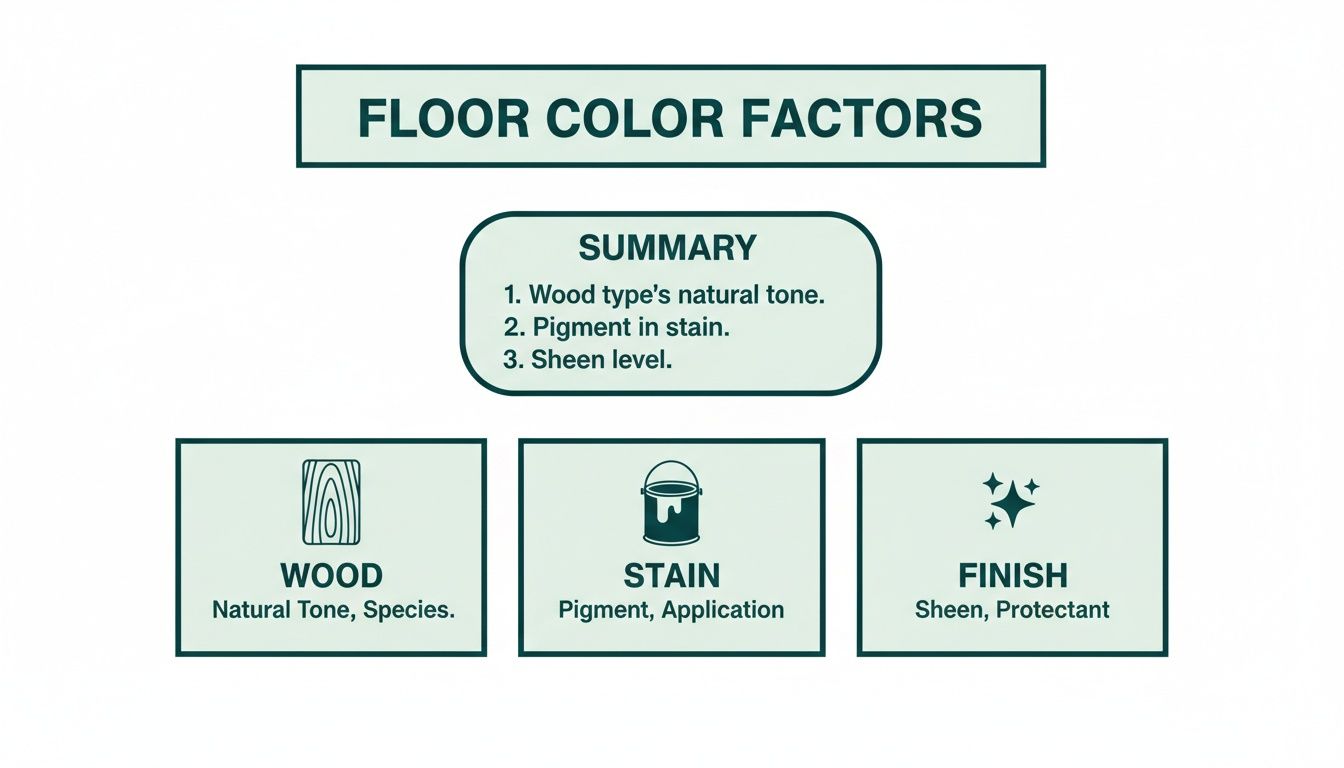
This shows that getting the perfect color is a careful balancing act, combining the wood’s inherent character with the products you put on top of it.
Light and Natural Hardwood Floors
Light-colored floors—from natural blonde and white-washed looks to soft, pale grays—are incredibly popular in Richmond homes right now, and for good reason. They create an airy, open, and clean feeling that can make smaller rooms feel much larger than they are.
By reflecting more natural light, these floors brighten up any space, which is a huge bonus during Virginia’s gray winter days. They’re a perfect match for minimalist, Scandinavian, and coastal design styles.
The data backs this up. Light-colored oak floors have seen a huge surge in popularity, making up about 28% of U.S. residential installations by 2023. This isn’t just a fleeting trend; it reflects a bigger design movement toward calm, nature-inspired interiors. You can dig deeper into the hardwood flooring market and color trends to see the numbers.
Key things to know about light floors:
- Hides Scratches Well: This is a big one. Light-colored floors are fantastic at concealing minor scratches, dust, and pet hair, making them a super practical choice for busy households in Chesterfield and Henrico.
- Wood Species Matters: White Oak is the ideal canvas for light finishes thanks to its neutral, tan-gray undertones. Maple is another excellent choice, giving you a creamy, consistent look. You can use Red Oak, but it needs special stain formulas to cancel out its natural pinkish hue.
- The Finish is Crucial: A water-based polyurethane finish is a must for light floors. Unlike old-school oil-based finishes that turn yellow (or “amber”) over time, water-based options dry crystal clear, protecting the true color of the wood and stain you fell in love with.
Medium and Warm Hardwood Floors
Medium-toned floors are the timeless chameleons of the hardwood world. Think classic colors like honey, gunstock, and special walnut. They strike a perfect balance, offering warmth and richness without making a room feel heavy or dark.
This versatility is exactly why they’re a staple in so many classic Richmond-area homes, from historic properties in the Fan to suburban family homes in Midlothian. They are incredibly forgiving and play well with just about any decor style you can imagine, from traditional to modern and everything in between.
Medium tones are also fantastic for highlighting the beautiful, natural grain patterns in woods like oak, adding wonderful texture and character. They just create a cozy, inviting atmosphere that feels both classic and grounded.
For homeowners who want a look that will never go out of style, a medium-brown floor is often the safest and most satisfying choice. It offers a warm, welcoming foundation that adapts as your design tastes evolve over the years.
Dark and Dramatic Hardwood Floors
Dark hardwood floors—we’re talking deep ebony, rich jacobean, or dark walnut—bring a serious dose of sophistication and drama. They create a strong visual anchor in a room, making furniture, rugs, and decor pop with high contrast.
This bold choice is perfect for creating a luxurious, modern, or formal vibe. In a room with plenty of light and light-colored walls, dark floors feel incredibly elegant and high-end.
But before you commit, there are some important practical things you need to consider.
- Shows Everything: Dark, glossy floors are notorious for highlighting every speck of dust, footprint, and strand of pet hair. A matte or satin finish can help tone this down, but they will always require more sweeping and cleaning than their lighter cousins.
- Can Shrink a Space: In rooms with limited natural light or low ceilings, a very dark floor can make the space feel smaller and a bit cave-like.
- Requires Expert Application: This is critical. Getting a deep, even dark stain without blotches and swirls requires real skill. The sanding has to be absolutely flawless, because the dark pigment will magnify every tiny imperfection. This is where the dustless sanding and refinishing expertise of a pro team like Buff & Coat becomes essential.
To help you weigh your options, here’s a quick comparison of the three main color families.
Hardwood Floor Color Family Comparison
| Color Family | Vibe & Style | Best For | Maintenance Considerations |
|---|---|---|---|
| Light | Airy, open, clean, modern. Pairs with Scandinavian, coastal, and minimalist decor. | Making small rooms feel larger, brightening up dark spaces, and busy homes with pets or kids. | Excellent at hiding dust, pet hair, and minor scratches. Requires a non-yellowing water-based finish. |
| Medium | Timeless, warm, versatile, cozy. Works with nearly all decor styles, from classic to contemporary. | Homeowners seeking a safe, long-lasting look that won’t go out of style. Great for showing wood grain. | Very forgiving. Hides dirt and wear well, making it a low-stress option for most households. |
| Dark | Dramatic, sophisticated, luxurious, formal. Creates high contrast and a bold statement. | Large, open rooms with plenty of natural light. Ideal for creating a formal or modern aesthetic. | Shows every speck of dust, footprint, and scratch. Requires more frequent cleaning. |
Ultimately, the best color is the one that fits your home, your lifestyle, and your personal taste.
If you’re unsure which floor color is right for your home, Buff & Coat can help. We create custom stain samples directly on your floor so you can see exactly how different colors will look in your unique space.
Call 804-392-1114 or request a free estimate today.
How Wood Species and Grain Determine the Final Color
Before you even think about picking out stain colors, you have to get to know the wood you’re working with. Think of the wood species as the canvas for your floor’s final look. The same stain can look wildly different on two types of wood because each has its own unique natural color, undertones, and grain pattern.
Getting this right from the start is the secret to avoiding unpleasant surprises. We see it all the time with homeowners in Richmond and Chesterfield—they fall in love with a dark walnut color online, only to find it turns out much redder on their existing oak floors. This happens because the wood’s inherent personality is always part of the final color equation.
The Natural Undertones of Common Wood Species
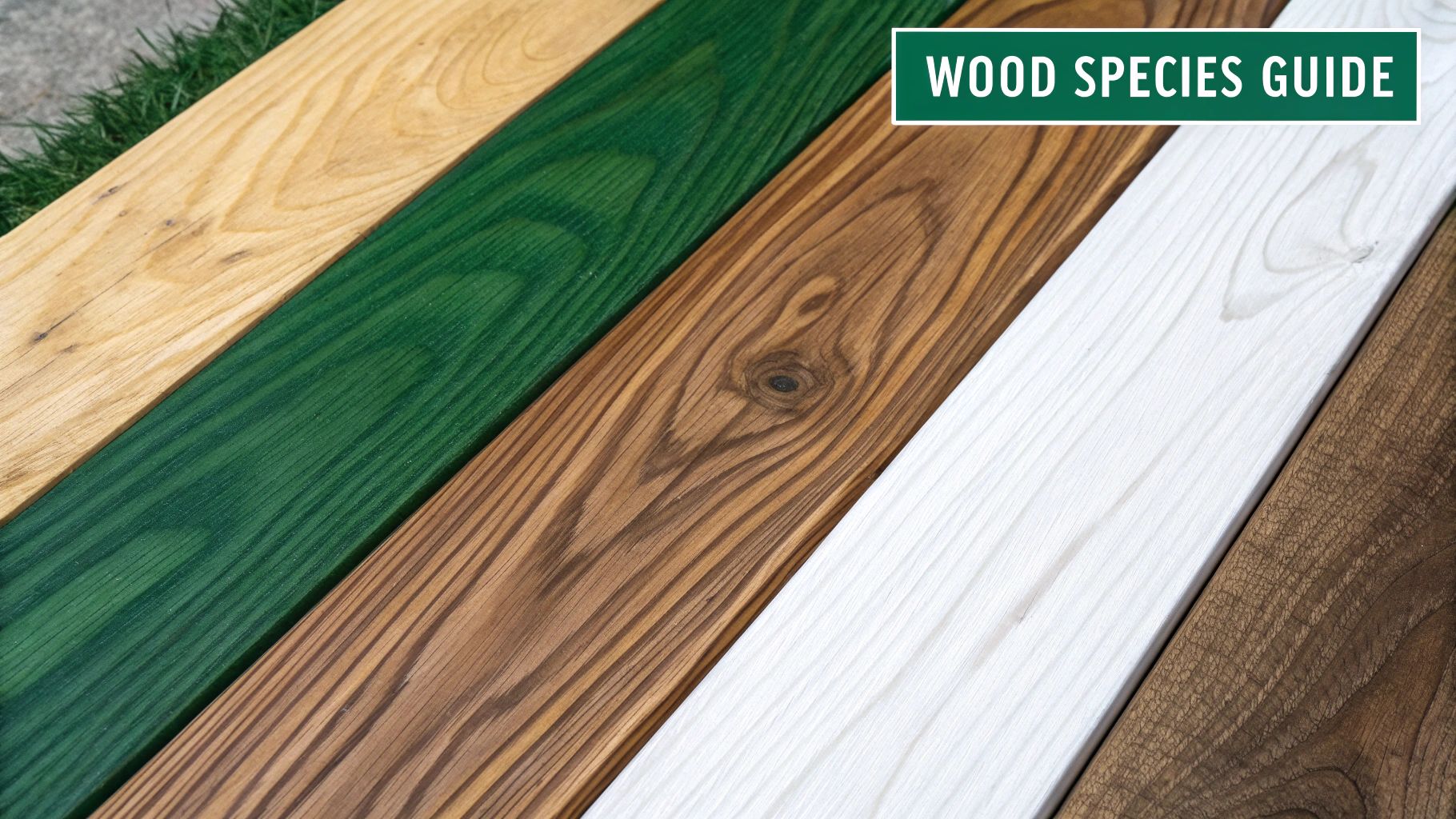
Every single piece of wood has a base color that’s going to influence any stain you put on it. Here in the Richmond area, we mostly work with a few key species, and each one has a distinct personality.
- Red Oak: This is, by far, the most common hardwood in Virginia homes. Red Oak has natural pink and reddish undertones. When you apply a simple brown stain, it often pulls those red tones forward, giving you a warmer, sometimes orangey, finish. To get a true, neutral brown, you often need a stain with green undertones to cancel out the red.
- White Oak: This species has exploded in popularity for good reason. It has a neutral, grayish-tan base that makes it the perfect blank slate for achieving those light, natural, gray, or cool-toned contemporary looks. It just doesn’t have the strong red or yellow undertones that other woods do.
- Maple: Known for its creamy, light color and super minimal grain, Maple gives you a very clean and consistent look. The catch? It’s a dense, closed-grain wood, which can make it tough to stain evenly. Dark stains can sometimes look blotchy if the floor isn’t prepped and stained by an experienced pro.
- Walnut: Prized for its naturally deep, rich brown color and subtle purple undertones, Walnut often doesn’t need much stain at all. Most of the time, a simple clear finish is all it takes to bring out its luxurious, high-end appearance.
The biggest mistake homeowners make is choosing a stain from a tiny sample chip they saw at a big-box store. That chip is almost certainly a different species than what’s on your floor. We always test stain colors directly on a sanded patch of your actual floor to guarantee you see exactly what the final color will be.
How Grain Pattern Affects Color Saturation
It’s not just about the base color. The wood’s grain pattern plays a huge part in how it soaks up stain, which directly impacts the final color’s depth and texture.
The grain is simply the visible fibers and patterns in the wood. Some woods have a more porous, “open” grain, while others are dense with a “closed” or tight grain.
- Open-Grained Woods (like Oak): Oak has a very prominent, porous grain. Those deep pores drink up more stain pigment than the surrounding wood, creating a beautiful contrast that really makes the grain pop. This is what gives stained oak its classic, textured character.
- Closed-Grained Woods (like Maple): Maple has a very tight, smooth grain. Since it doesn’t have those deep pores to absorb pigment, it can be pretty resistant to staining. That’s why it’s so often left natural or requires a special process for darker colors to avoid a splotchy, uneven finish.
Understanding these fundamentals is also important when you’re looking at different types of flooring. While we’re focused on solid hardwood here, many of these principles apply to engineered options, too. If you’re exploring different materials, learning about the best engineered hardwood flooring brands can give you even more context.
Ultimately, the species of wood in your home is the starting point for your entire color journey. When you respect its natural characteristics, you can work with the wood—not against it—to get a beautiful, lasting finish you’ll love for years.
Customizing Your Look With Stain and Finish
Once you’ve gotten to know your wood’s natural personality, it’s time for the fun part: choosing the stain and finish. This is where you get to put your own stamp on the floors, turning them from a simple surface into a major design feature. The right combination can either show off the wood’s natural beauty or create a completely different color profile altogether.
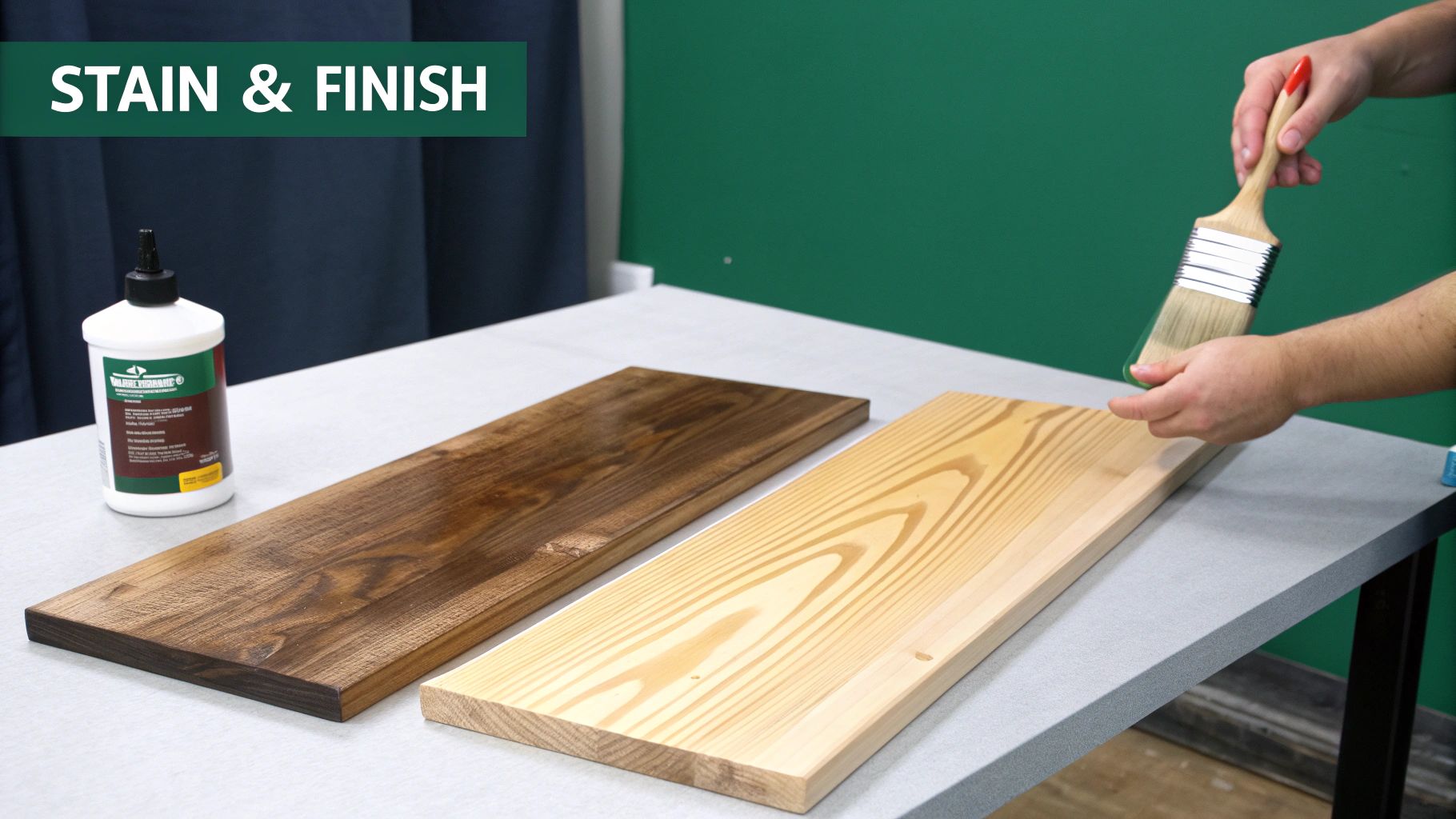
It’s a process that’s equal parts art and science. For homeowners here in the Richmond area looking to give their space an update, getting these final layers right is what makes or breaks the final look.
The Role of Stain in Creating Color
Think of stain as the pigment that gives your floors their primary color. It works by soaking into the wood’s pores, and it comes in a few different “strengths” that create very different effects.
- Transparent Stains: Often called a “natural” stain, this is basically a clear coat with little to no color. It’s all about protecting the wood while letting its raw, original beauty be the star. This is a go-to choice for gorgeous woods like white oak or walnut where you want that grain to pop.
- Semi-Transparent Stains: This is what most people think of when they picture wood stain, and it’s the most common type we use. It adds a definite color—like a warm honey, a deep brown, or a cool gray—but it’s sheer enough to let the wood’s unique grain and character peek through.
- Opaque/Solid Stains: While pretty rare for entire floors, solid stains are more like paint, completely hiding the wood grain. You might see this used to create a specific look, like a painted white floor in a modern farmhouse design.
The journey of hardwood floor sanding and staining is a detailed one, and our crew makes sure the prep work is flawless for an even, beautiful result every time.
How a Protective Finish Influences the Final Look
That topcoat, or finish, does a lot more than just protect your floors from scratches and spills. It actually has a huge impact on the final color and appearance. The two main types we use at Buff & Coat couldn’t be more different visually.
Oil-Based Polyurethane: For decades, this was the industry standard. It gives wood a warm, amber glow that gets a little deeper and darker as it ages. On medium and dark stains, this can add a beautiful richness. But—and this is a big but—that ambering effect will make light-colored floors look yellow. It’s why we almost never recommend it for natural, white, or gray floors.
Water-Based Polyurethane: This is the modern champion for most projects today. It dries completely clear and stays that way for its entire lifespan. This is essential for preserving the true color of light, gray, or natural floors because it won’t yellow or mess with the stain color you chose. As a bonus, it has a much lower odor, which makes the whole refinishing process a lot more pleasant for Richmond homeowners.
Your choice of finish is as important as your stain color. A water-based finish is the only way to lock in the pure color of a light or gray stain, while an oil-based finish can add a layer of traditional warmth to classic brown tones.
Understanding Sheen Levels and Their Impact
The last piece of the puzzle is the sheen, which is just a fancy word for how shiny the finish is. This choice affects both the look and the practicality of your floors.
- Matte: This has almost no shine at all. It gives you the most natural, raw-wood look and does an amazing job of hiding small imperfections, dust, and footprints.
- Satin: This is by far the most popular choice today. It has a soft, low-lustre glow that feels modern and elegant without being too reflective. It’s the perfect middle-ground that looks great and is easy to live with.
- Semi-Gloss: You get a noticeable shine here, and it reflects a good bit of light. It’s a more traditional look that can make colors seem a bit richer, but it will also highlight dust and scratches more than the lower sheens.
- High-Gloss: This delivers that mirror-like, wet-floor look. It’s a very bold, formal style that demands a perfectly flat subfloor and constant upkeep, because it shows everything.
By carefully layering your choices of stain, finish type, and sheen level, you have total control over how your floors turn out, making sure they’re the perfect fit for your home.
Understanding When to Refinish Versus Recoat
It’s a question we get all the time from homeowners in Midlothian and Glen Allen: “Do I really need to do a full refinish just to change my floor’s color?” The short answer is, it all comes down to what you’re trying to achieve.
Figuring out the difference between our two main services—a full refinishing and a Buff & Coat—is the key to making the right call for your floors, your vision, and your budget.
A dramatic color change, say from a light natural oak to a deep, dark jacobean, isn’t just a surface-level job. It’s a total transformation, and you can’t get there by simply putting a new layer on top.
When Full Dustless Sanding Is Essential
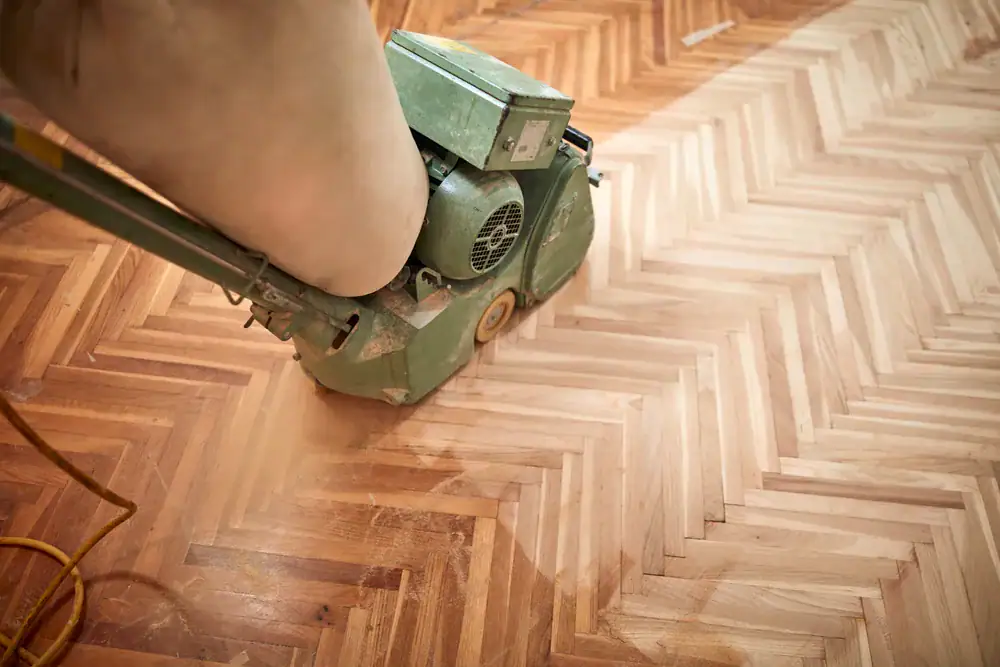
A full hardwood floor refinishing is the only way to completely change the color of your floors. This is an intensive restoration process where we bring in our advanced dustless sanding systems to carefully strip away the old finish, the existing stain, and a paper-thin layer of the wood itself.
This process takes your floors right down to their raw, unfinished state. Think of it as creating a perfectly clean canvas. From there, we can apply any of the different colors of hardwood floors you have in mind, making sure the new stain penetrates evenly for a rich, flawless look.
You absolutely need a full refinishing if you want to:
- Completely change the stain color of your hardwood.
- Repair deep scratches, ugly gouges, or water stains that have soaked into the wood.
- Correct fading from years of sun exposure or heavy wear in high-traffic zones.
- Restore heavily damaged floors that have seen better days.
This is the ultimate reset button for turning tired, worn-out floors into a stunning new foundation for your home.
The Role of a Buff and Coat Service
On the other hand, our Buff and Coat service (you might also hear it called screening and recoating) is all about maintenance, not makeovers. This service is designed for floors that are still in pretty good shape but have lost their shine due to minor surface-level scuffs and scratches.
A Buff and Coat is like a deep clean and a fresh protective seal for your floors. It adds a durable new top layer of finish to restore that beautiful sheen and protection, but it does not change the underlying stain color.
This is a fantastic, budget-friendly option for homeowners who love their current floor color but just want to bring back that “like-new” glow and protect their investment. It’s faster and more affordable than a full refinish.
If you want to dive deeper into this maintenance process, you can learn more about how a screen and recoat for hardwood floors works in our detailed guide.
Choosing the right service saves you time, money, and hassle. For a complete color overhaul, refinishing is the only way to go. For preserving and refreshing the color you already have, a Buff & Coat is the smart, efficient choice.
If you’re unsure whether your hardwood floors need refinishing, Buff & Coat can take a look and give you honest recommendations.
Call 804-392-1114 or request a free estimate for a clear recommendation.
Why Richmond Homeowners Choose Buff & Coat
Picking the right contractor is every bit as important as choosing the perfect new color for your hardwood floors. It’s a decision that comes down to trust, skill, and knowing the final result will be something you love. For over 15 years, homeowners all across the Richmond area, from Mechanicsville to Chesterfield, have relied on Buff & Coat to bring their floors back to life.
Our entire approach is built around your home and your goals. It always starts with a free, no-pressure estimate where we actually listen to what you want to achieve. We’ll give you an honest take on your floors and walk you through the options, whether it’s a full refinishing to explore different colors of hardwood floors or a simple Buff & Coat service to refresh what you already have.
We believe restoring your floors should be a smooth and straightforward process. From the moment you call to the final walk-through, our focus is on clear communication, professional work, and delivering a beautiful result you’ll be proud of for years to come.
Our Commitment to Quality and Service
Our reputation in the Richmond community isn’t an accident. It’s built on a solid foundation of expert craftsmanship and a genuine commitment to taking care of our customers. We aren’t a big, impersonal franchise; we are a local, owner-operated business, and we’re invested in every single project we take on.
Here’s why your neighbors consistently choose us for their hardwood floor needs:
- Over 15 Years of Local Experience: We know Richmond-area homes. We understand their unique hardwood floors and have mastered the best techniques to make them look incredible again.
- Advanced Dustless Sanding Systems: Our state-of-the-art equipment captures dust right at the source. This keeps your home clean and your family safe while we work.
- Local and Owner-Operated: You’ll work directly with experts who are personally invested in your project’s success. That means real accountability and top-notch quality from start to finish.
- Premium, Low-Odor Finishes: We only use high-quality, durable products that create a beautiful, lasting finish without the harsh smells common with traditional methods.
- Clear Pricing and Honest Advice: You’ll get a straightforward estimate with zero sales pressure—just expert recommendations tailored to your specific floors and budget.
- 5-Star Customer Service: Your satisfaction is everything to us. We’re not happy until you absolutely love your newly refinished floors.
FAQ: Your Hardwood Floor Color Questions, Answered
Picking a color for your hardwood floors is a big decision, and it’s natural to have a few questions. We hear a lot of the same ones from homeowners across Richmond, so we’ve gathered the answers to help you feel more confident.
What hardwood floor colors are currently popular in Richmond?
Right now, we’re seeing a huge shift toward lighter, more natural-looking floors with matte finishes. Think natural white oak or floors with a subtle gray wash—they’re incredibly popular because they make a room feel airy and bright. That said, you can never go wrong with the classics. Medium browns and rich, dark stains like Jacobean are still staples, especially in the beautiful traditional homes you see all over our area. Ultimately, the right color is the one that works for your home’s architecture and your personal style.
Do dark hardwood floors make a room feel smaller?
That’s a common worry, but the answer really depends on the space. Dark floors can feel a bit heavy in a room that has low ceilings or doesn’t get a lot of natural light. But in a room with tall ceilings, plenty of sunlight, and lighter walls, dark floors can be absolutely stunning. They create a sophisticated, grounded look and make your furniture and decor really pop. The best way to know for sure is to test large samples in the room and see how they look at different times of the day.
Can you match a new stain to my existing hardwood floors?
Yes, absolutely. Getting a perfect color match is part art, part science, and it’s a skill that comes with experience. The process starts with identifying the wood species, the original stain color, and even the old topcoat, as it can yellow and change the color over time. From there, we create custom stain blends and test them in a discreet spot—like inside a closet—until we nail the match. This is essential when you’re lacing in new hardwood next to old floors or just repairing one damaged area.
How long does it take to refinish floors with a new color?
The timeline for a full dustless sanding and refinishing project really comes down to the size and complexity of the job. For a typical project in the Richmond area, say around 500-800 sq. ft., you can expect the process to take about 3-5 days. That timeline covers everything—the sanding, applying multiple coats of stain and finish, and giving each coat the proper time to dry and cure. We always provide a clear, day-by-day schedule with our estimates so you know exactly what to expect.
Ready to restore your hardwood floors? Buff & Coat makes the process fast, clean, and stress-free.
Call 804-392-1114 or request your free estimate at buffandcoatvirginia.com.