For business owners in Richmond, the right flooring is more than just a surface to walk on. It’s a critical component of your brand identity, a key factor in customer experience, and a direct influence on operational efficiency. Selecting from the best commercial flooring options can feel daunting, with crucial factors like foot traffic, maintenance requirements, safety compliance, and budget all demanding careful consideration. A high-traffic retail space in Short Pump has vastly different needs than a quiet office in Chesterfield or a busy restaurant kitchen in the Fan. Making the wrong choice can lead to premature wear, high upkeep costs, and a space that fails to reflect your professional standards.
This guide simplifies that decision. We’ll break down the top commercial flooring solutions, from the industrial resilience of polished concrete to the versatile appeal of Luxury Vinyl Tile (LVT). For each option, we’ll provide a clear, actionable overview covering:
- Material Description & Key Benefits: What it is and why it’s a popular choice.
- Pros and Cons: A balanced look at its strengths and weaknesses.
- Lifespan & Cost: Realistic expectations for longevity and pricing.
- Maintenance Needs: What it takes to keep it looking its best.
- Best-Use Scenarios: Where each material truly excels.
As a local flooring company in Richmond, VA with over 15 years of experience in both residential and commercial projects, we understand how to match the right material to the unique demands of your business. Our goal is to equip you with the expert insights needed to make a confident investment that supports your business’s success for years to come.
1. Polished Concrete
Polished concrete transforms an existing concrete slab into a stunning, highly durable floor through a multi-step grinding, densifying, and polishing process. Unlike a coating that sits on top, this mechanical process refines the concrete itself, creating a smooth, high-gloss surface that is exceptionally resistant to wear and tear. This industrial-chic aesthetic has made it one of the best commercial flooring options for modern spaces, from tech offices to contemporary art galleries and high-end retail stores.
The primary benefit is its incredible lifespan and low maintenance profile. Since the flooring is the structural slab, there is nothing to peel, bubble, or replace. It resists damage from heavy foot traffic, equipment, and even tire marks, making it ideal for warehouses and showrooms. For a deeper dive into the specific benefits and applications of this durable and attractive option, consider exploring dedicated resources on commercial polished concrete solutions.
Implementation and Maintenance Tips
To maximize performance and safety, consider these practical steps:
- Apply Anti-Slip Sealers: In areas prone to moisture, such as entryways or kitchens, a penetrating sealer with an anti-slip additive is crucial for ADA compliance and safety.
- Schedule Regular Cleaning: A simple monthly cleaning with a microfiber mop and a neutral pH cleaner is all that’s needed to maintain its sheen.
- Reapply Protective Coating: To protect against stains and etching, a new top-coat or guard should be applied every 2-3 years in high-traffic commercial environments.
- Consider Radiant Heating: To combat the material’s natural coolness, installing a radiant heating system underneath the slab is an excellent solution for enhancing employee and customer comfort.
While its origins are industrial, polished concrete is now a versatile choice seen everywhere. For those exploring similar durable flooring in residential settings, you can learn more about its residential applications on buffandcoatvirginia.com.
2. Luxury Vinyl Plank (LVP) / Luxury Vinyl Tile (LVT)
Luxury vinyl flooring is a synthetic product engineered to replicate the appearance of natural materials like wood, stone, or tile while offering superior durability and water resistance. Composed of multiple layers, including a protective wear layer, a high-definition print layer, and a rigid core, it has become one of the most popular and best commercial flooring options due to its versatility, affordability, and simple maintenance. It delivers high-end aesthetics in corporate offices, medical facilities, and retail showrooms without the high cost or demanding upkeep of natural materials.
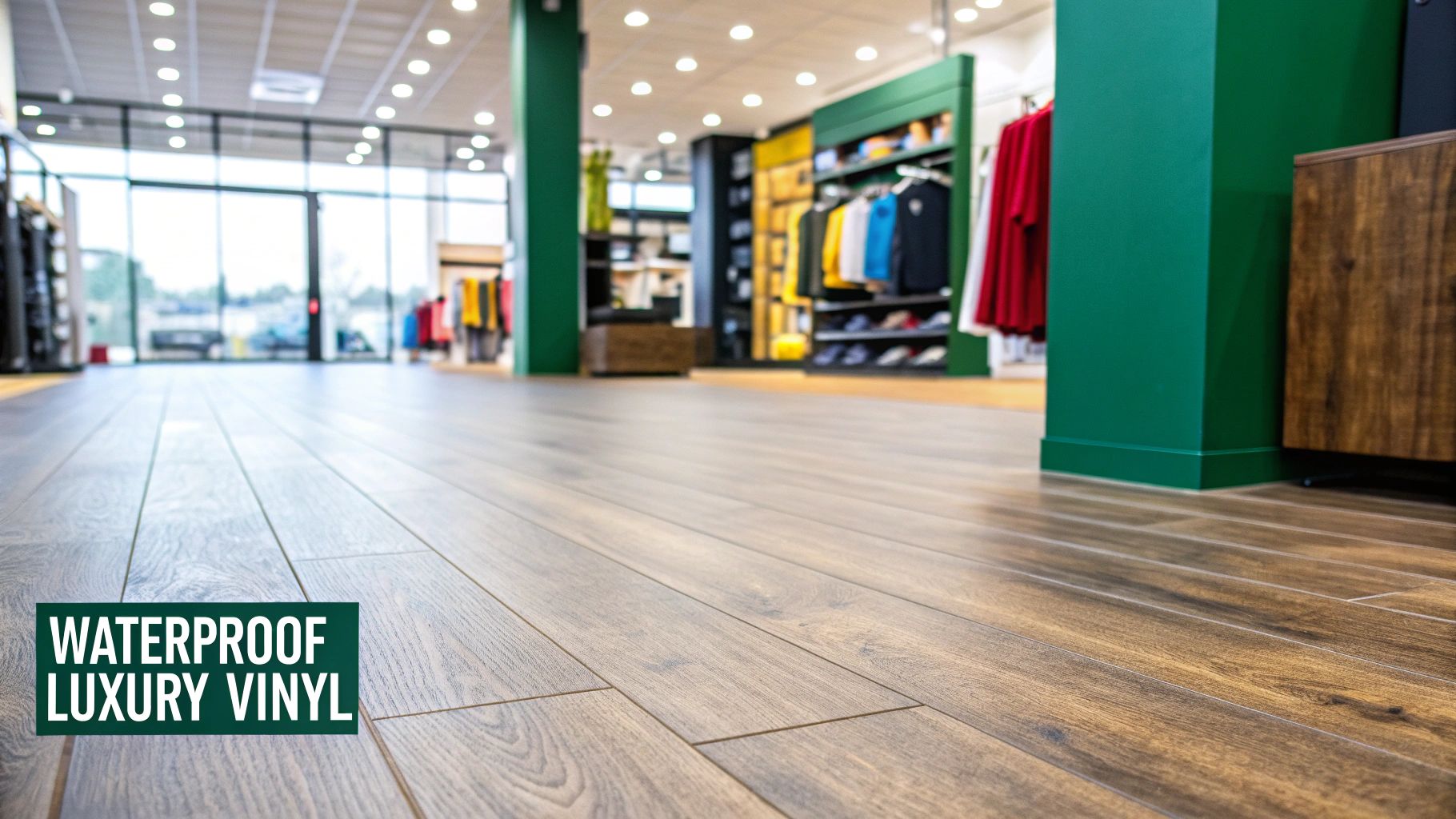
The primary advantage of LVP/LVT is its exceptional balance of performance and design flexibility. It stands up to heavy foot traffic, spills, and scuffs, making it ideal for busy commercial spaces like hotels, schools, and healthcare clinics. Because the installation process is often faster and less disruptive than traditional flooring, it minimizes business downtime. Buff & Coat is a trusted expert in LVP and LVT installation in Richmond, VA, helping businesses get a high-performance floor with minimal disruption.
Implementation and Maintenance Tips
To ensure the longevity and performance of your commercial vinyl flooring, follow these guidelines:
- Choose the Right Wear Layer: For commercial use, select a product with a wear layer of at least 6-12 mils. Higher traffic areas like main corridors or entryways may benefit from 20 mils or more for maximum durability.
- Ensure Proper Subfloor Preparation: A smooth, level, and clean subfloor is non-negotiable for a successful installation. Any imperfections can telegraph through the vinyl over time, leading to premature wear.
- Use Furniture Protectors: Place felt pads under the legs of all furniture, including desks, chairs, and display racks, to prevent scratches, scuffs, and permanent indentations.
- Select Low-VOC Products: Prioritize indoor air quality by choosing products with FloorScore certification, which guarantees low volatile organic compound (VOC) emissions for a healthier environment.
- Maintain with pH-Neutral Cleaners: Avoid harsh chemicals or abrasive cleaners that can damage the protective wear layer. Regular sweeping and mopping with a pH-neutral solution is all that is required.
3. Epoxy Flooring
Epoxy flooring is a resinous coating system applied in multiple layers over a concrete subfloor, creating a seamless, hard-wearing, and high-performance surface. This thermosetting polymer cures to form a strong, rigid plastic material that bonds exceptionally well with its substrate, providing a durable and protective finish. Its versatility in both function and aesthetics has made it one of the best commercial flooring options for environments demanding hygiene, chemical resistance, and durability, such as pharmaceutical labs, automotive service centers, and food processing plants.
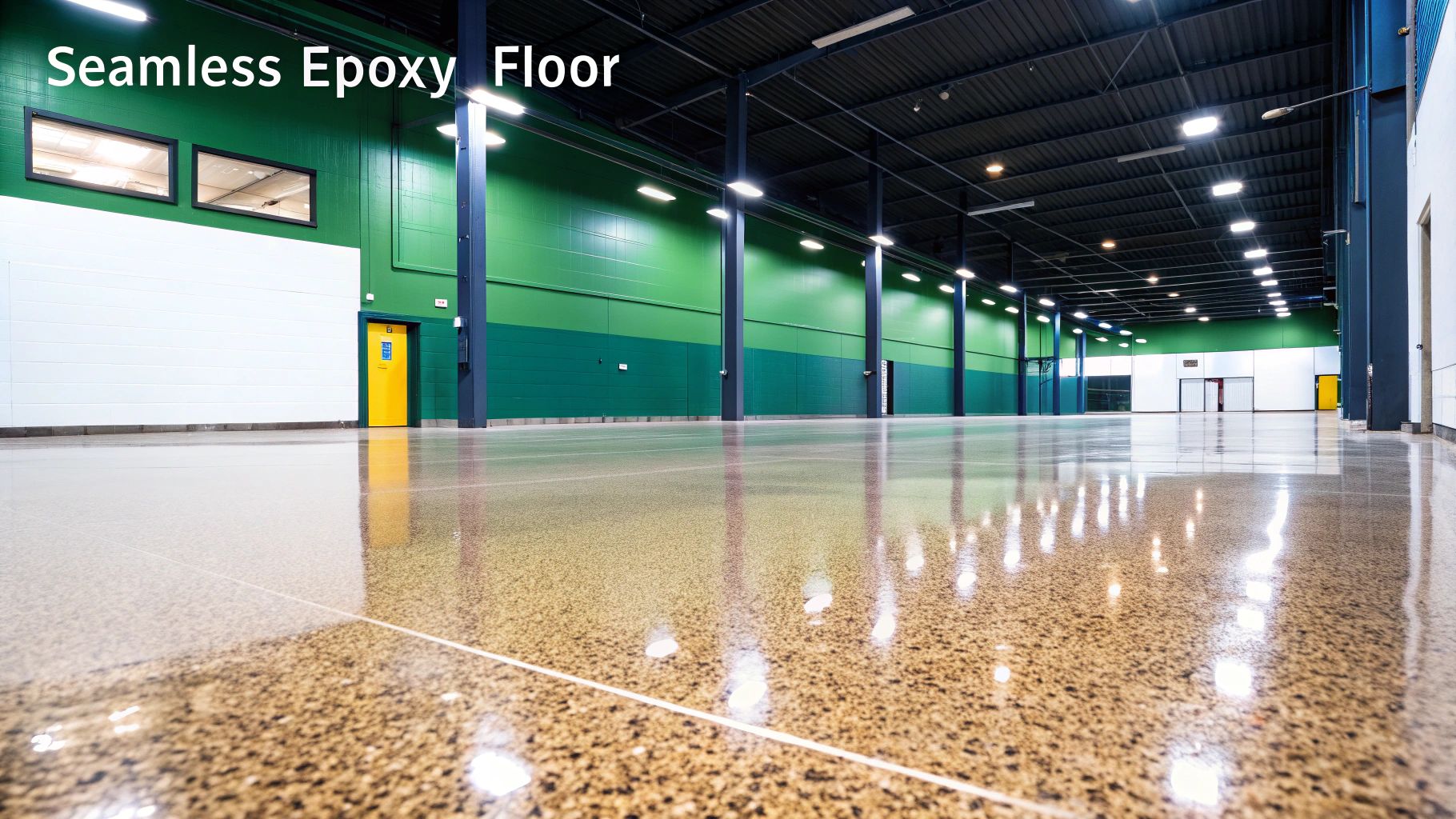
The key advantage of epoxy is its non-porous and seamless nature. This creates a waterproof barrier that resists stains, chemicals, and bacteria, making it incredibly easy to clean and sanitize. Available in a vast array of colors, metallic finishes, and even custom designs, epoxy can be tailored to match brand aesthetics or delineate specific work zones. To see how this application transforms a space, you can review detailed project examples and coating options on platforms like Premier 1 Coatings.
Implementation and Maintenance Tips
To ensure a long-lasting and safe installation, adhere to these professional practices:
- Prepare the Concrete Surface: The substrate must be thoroughly cleaned, degreased, and profiled (usually by diamond grinding) to ensure a strong mechanical bond.
- Incorporate Anti-Slip Aggregates: For safety in wet or oily environments, broadcast quartz sand or other aggregates into the wet epoxy and seal with a topcoat.
- Control the Environment: Maintain ambient temperature and humidity within the manufacturer’s specified range (typically 50-85°F) during application and curing for optimal results.
- Use UV-Stable Topcoats: In areas exposed to sunlight, an aliphatic polyurethane or polyurea topcoat is essential to prevent the epoxy from yellowing over time.
For a visual guide on the application process, the video below provides an excellent overview:
4. Ceramic and Porcelain Tile
Ceramic and porcelain tiles are classic, hard-fired clay products that create an exceptionally durable and elegant flooring surface. While both are similar, porcelain is fired at higher temperatures and made from a more refined clay, making it denser, less porous, and stronger than standard ceramic. This distinction makes porcelain the superior choice for the best commercial flooring options, especially in demanding environments like hospital corridors, busy restaurant kitchens, and high-traffic airport terminals where water resistance and durability are paramount.
The primary advantage of porcelain tile is its incredible resilience and design flexibility. It resists water, stains, scratches, and heavy loads, ensuring a long lifespan with minimal upkeep. This combination of robust performance and sophisticated appearance makes it a go-to for retail showrooms, medical facilities, and transit hubs that require both style and substance.
Implementation and Maintenance Tips
To ensure longevity and safety in a commercial setting, consider these key steps:
- Prioritize High-Grade Porcelain: For any commercial application, always choose porcelain tile over ceramic for its superior density and low water absorption rate (less than 0.5%).
- Select Slip-Resistant Tiles: Look for tiles with a DCOF (Dynamic Coefficient of Friction) rating of 0.42 or higher to meet ADA standards and prevent slips in public spaces.
- Use Performance Grout: Opt for epoxy or urethane grout instead of traditional cement-based grout. It offers superior resistance to stains, chemicals, and moisture, which is crucial in food service or healthcare environments.
- Minimize Grout Lines: Installing large-format tiles (e.g., 24×24 or larger) reduces the number of grout lines, simplifying cleaning and creating a more seamless, modern look.
5. Commercial-Grade Carpet Tiles
Commercial-grade carpet tiles offer a modular and highly adaptable flooring solution that combines the comfort of carpet with the practicality required for demanding business environments. These individual squares of carpeting, often called modular tiles, are installed piece by piece rather than as a single roll. This design allows for unparalleled creative freedom in patterns and colorways, while also making it one of the best commercial flooring options for spaces prioritizing acoustics and underfoot comfort.
The key advantage is their reparability and low-waste installation. If a section becomes stained, worn, or damaged, you can simply replace the affected tiles instead of the entire floor, saving significant time and money. This makes them a go-to choice for high-traffic corporate offices, hotel corridors, and educational institutions where spills and heavy use are inevitable.
Implementation and Maintenance Tips
To ensure longevity and maintain a professional appearance, follow these practical steps:
- Choose Solution-Dyed Nylon: For maximum stain and fade resistance in high-traffic areas, select tiles made from solution-dyed nylon fibers, where the color is part of the fiber itself.
- Install Anti-Static Underlayment: In tech-heavy environments like data centers or call centers, using an anti-static backing or underlayment is crucial to protect sensitive electronic equipment.
- Establish a Regular Vacuuming Schedule: Vacuuming 2-3 times per week with a commercial-grade vacuum is essential to remove abrasive dirt and debris that can wear down carpet fibers over time.
- Keep Replacement Tiles on Hand: Always order extra tiles with your initial purchase and store them onsite. This guarantees you have a perfect dye-lot match for quick, seamless repairs down the line.
6. Laminate Flooring
Laminate flooring is a multi-layer synthetic product engineered to deliver the visual appeal of natural materials like hardwood or stone at a more accessible price point. It consists of a high-density fiberboard core, a high-resolution photographic image layer, and a protective transparent wear layer. This construction makes commercial-grade laminate one of the best commercial flooring options for businesses seeking style and durability without the high cost of natural materials. It is a popular choice for retail store showrooms, corporate offices, and medical waiting rooms where aesthetics and performance are equally important.
The primary advantage of laminate is its ability to provide a high-end look with impressive resistance to scratches, stains, and fading. The click-and-lock installation system also allows for a fast, “floating” installation over most existing subfloors, minimizing business disruption and labor costs. For a deeper look at managing this flooring type, you can find helpful information on replacing individual laminate wood planks on buffandcoatvirginia.com.
Implementation and Maintenance Tips
To ensure longevity and maintain its appearance in a commercial setting, follow these key practices:
- Choose the Right AC Rating: For high-traffic areas, select laminate with an Abrasion Class (AC) rating of AC4 or AC5, which is specifically designed for commercial use.
- Install a Moisture Barrier: Always install a proper moisture barrier and waterproof underlayment, especially in ground-level spaces or areas with potential for moisture.
- Leave an Expansion Gap: Maintain a 1/4″ expansion gap around the perimeter of the room to allow the floor to expand and contract with temperature changes, preventing buckling.
- Use Dry Cleaning Methods: Clean the floor with a microfiber dust mop or a vacuum (with the beater bar turned off). For deeper cleaning, use a barely damp mop with a manufacturer-approved cleaner to prevent moisture damage.
7. Rubber Flooring
Rubber flooring, crafted from natural tree rubber or recycled materials, is a premier choice for commercial spaces that demand exceptional resilience and safety. This material is engineered for superior shock absorption, acoustic dampening, and slip resistance, making it one of the best commercial flooring options available. Its unique properties provide comfort underfoot while standing up to extreme wear, which is why it’s a staple in high-impact environments like fitness centers, healthcare facilities, and industrial settings.
The primary advantage of rubber is its combination of durability and safety. It can withstand heavy dropped weights in a gym, provide a cushioned surface to reduce fatigue for healthcare workers, and offer a non-slip floor in wet areas like locker rooms. Because of its longevity and protective qualities, it is a smart long-term investment for businesses focused on both employee well-being and floor performance.
Implementation and Maintenance Tips
To ensure your rubber flooring delivers maximum value and safety, follow these key practices:
- Ensure Proper Ventilation: Rubber flooring can off-gas, particularly after installation. It is critical to ensure the space is well-ventilated during and for a few days after installation to maintain good indoor air quality.
- Select Textured Surfaces: For areas with a high risk of slips and falls, such as ramps or locker rooms, choosing a textured rubber surface will significantly enhance grip and safety.
- Use Neutral pH Cleaners: Harsh chemicals can degrade rubber over time. Regular cleaning with a simple microfiber mop and a pH-neutral cleaning solution is sufficient to keep it sanitary and in excellent condition.
- Check Seam Integrity: In wet environments or healthcare settings where hygiene is paramount, ensure all seams are properly sealed during installation to prevent moisture and bacteria from getting underneath the flooring.
8. Polished Aggregate (Terrazzo)
Polished aggregate, most famously known as terrazzo, is a premium composite material crafted from marble, quartz, granite, or glass chips set in a cementitious or epoxy resin binder. The mixture is poured, cured, and then ground and polished to a perfectly smooth, lustrous surface. This process reveals the beauty of the embedded aggregates, creating a floor with infinite design possibilities. Its elegant, durable, and sophisticated appearance has cemented its place as one of the best commercial flooring options for high-profile spaces.
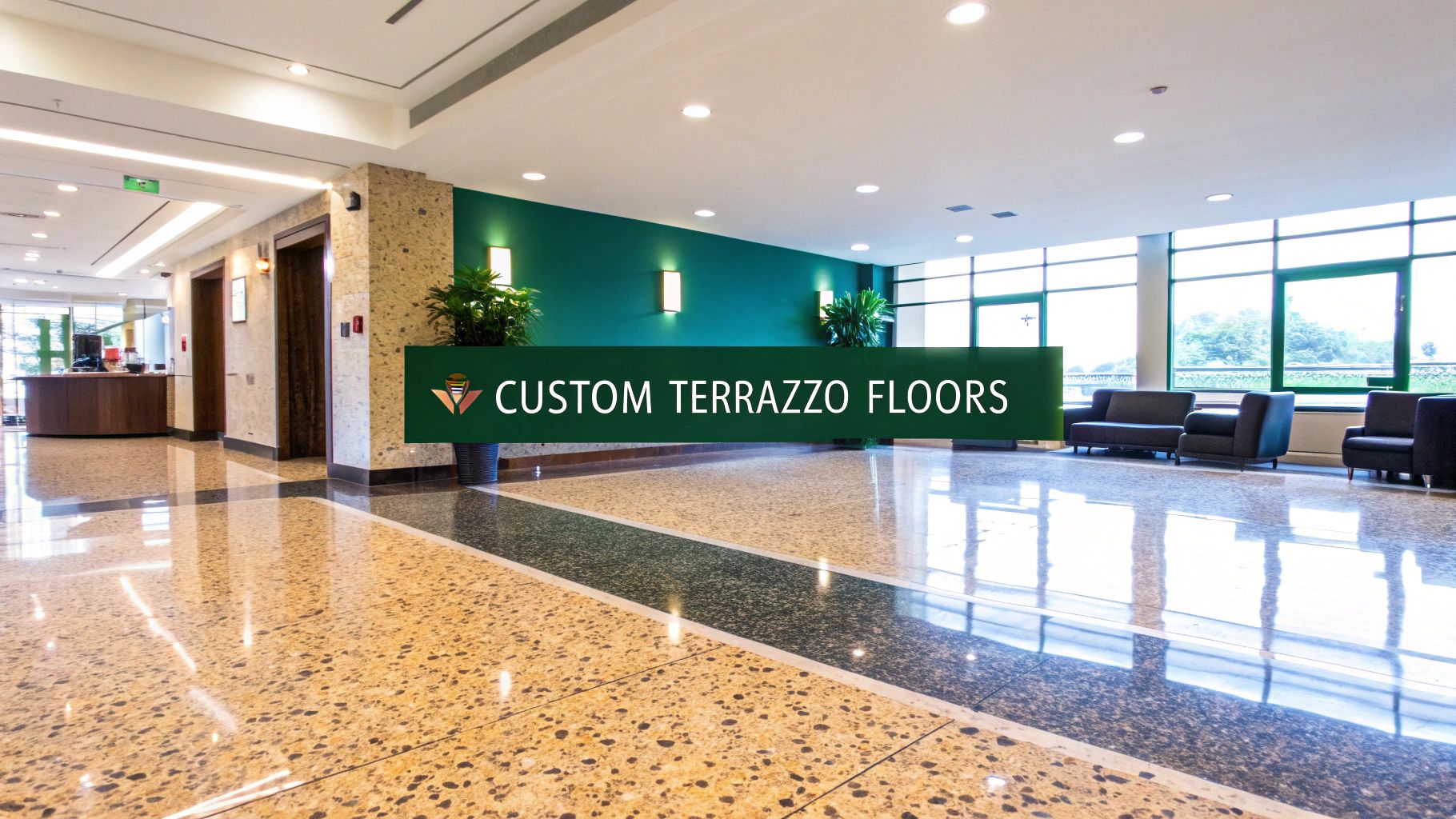
The primary advantage of terrazzo is its extraordinary lifespan and design versatility. Once installed, it can last for the entire life of the building with proper care, making it an incredibly sustainable and cost-effective choice over the long term. This durability makes it ideal for the heaviest commercial traffic, such as in airport terminals, luxury retail stores, and corporate headquarters. For more information on its modern applications and benefits, industry leaders like the National Terrazzo & Mosaic Association (NTMA) provide extensive resources on standards and design.
Implementation and Maintenance Tips
To ensure the longevity and beauty of a terrazzo installation, adhere to these key practices:
- Work with Specialists: Terrazzo installation is a highly specialized craft. Always engage experienced artisans and contractors to ensure a flawless and durable finish.
- Select Epoxy-Based Terrazzo: For areas requiring superior stain resistance and a broader color palette, such as healthcare facilities or restaurants, an epoxy-based binder is the ideal choice.
- Schedule Proper Curing Time: The floor must be allowed to cure completely before it is ground, polished, and opened to foot traffic. Rushing this critical step can compromise the floor’s integrity.
- Use a pH-Neutral Cleaner: Regular cleaning with a pH-neutral solution is essential. Avoid acidic or alkaline cleaners that can etch the surface and dull its polished finish.
9. Sheet Vinyl Flooring
Sheet vinyl flooring is a resilient, waterproof flooring solution manufactured in large, continuous rolls, typically 6 to 12 feet wide. Made from durable PVC or similar polymers, its wide format is designed to minimize or eliminate seams on the floor, creating a monolithic, water-impermeable surface. This seamless quality has made it one of the best commercial flooring options for environments where hygiene and moisture control are non-negotiable, such as hospital operating rooms, commercial kitchens, and scientific laboratories.
The primary advantage of sheet vinyl is its exceptional water resistance and ease of sanitation. When seams are professionally heat-welded, the floor becomes a single, continuous barrier that prevents liquids from seeping into the subfloor, which could cause mold growth and structural damage. This performance, combined with its affordability and comfort underfoot, makes it a practical choice for healthcare, education, and food service environments where both safety and budget are key considerations. For more insights into vinyl options suitable for high-traffic zones, Mannington Commercial offers a comprehensive guide on their performance vinyl sheet products.
Implementation and Maintenance Tips
To ensure longevity and optimal performance, consider these practical steps:
- Specify a High-Quality Wear Layer: For commercial use, insist on a wear layer of at least 20 mil. This protective top surface is crucial for resisting scratches, scuffs, and stains from heavy foot traffic and rolling loads.
- Prioritize Subfloor Preparation: Sheet vinyl will telegraph any imperfections in the subfloor. Ensure the surface is perfectly smooth, level, and clean before installation to prevent lumps and premature wear.
- Insist on Heat-Welded Seams: In any commercial application, especially those requiring strict sanitation, all seams must be professionally heat-welded. This process fuses the sheets together with a vinyl rod, creating a truly seamless and waterproof floor.
- Follow a Strict Cleaning Protocol: Use only neutral pH cleaners as recommended by the manufacturer. Harsh chemicals or abrasive pads can strip the protective finish, dull the appearance, and void the warranty.
10. Bamboo Flooring (Engineered)
Engineered bamboo flooring offers a compelling, sustainable alternative to traditional hardwood by combining a bamboo veneer with a highly stable plywood or HDF core. This cross-grain construction gives it superior dimensional stability compared to solid bamboo, making it less susceptible to expansion and contraction from temperature and humidity changes. This resilience makes it one of the best commercial flooring options for businesses prioritizing green building materials without sacrificing performance, finding a home in eco-conscious corporate offices, modern hospitality spaces, and retail showrooms focused on sustainability.
The primary advantage of engineered bamboo is its blend of eco-friendliness and toughness. Bamboo is a rapidly renewable grass, and high-quality strand-woven versions can exceed the hardness of many traditional hardwoods, offering excellent resistance to dents and scratches in moderate-traffic commercial settings. Its engineered core also allows for versatile installation methods, including floating, glue-down, or nailing. For more information on how strand-woven materials stand up to commercial demands, manufacturers like Cali Bamboo provide detailed product specifications.
Implementation and Maintenance Tips
To ensure longevity and maintain its appearance in a commercial environment, follow these key steps:
- Choose Strand-Woven Bamboo: For commercial applications, always select strand-woven bamboo over horizontal or vertical grain types, as its Janka hardness rating is significantly higher and better suited for foot traffic.
- Acclimate Meticulously: Allow the flooring planks to acclimate in the installation space for at least 48-72 hours. This step is critical to prevent future gapping or buckling.
- Control Building Humidity: Maintain a consistent indoor humidity level between 45-55% using commercial-grade HVAC systems to ensure the flooring remains stable.
- Use Protective Underlayment: Install a quality underlayment to provide acoustic insulation and a moisture barrier, which is especially important for floating floor installations over concrete subfloors.
Top 10 Commercial Flooring Options Comparison
| Flooring Type | Implementation Complexity ???? | Resources & Cost ⚡ | Expected Outcomes ⭐ | Ideal Use Cases ???? | Key Advantages / Tips ???? |
|---|---|---|---|---|---|
| Polished Concrete | High — heavy grinding, pro equipment and skilled crew | Moderate initial ($3–12/sqft), labor‑intensive | Extremely durable, high gloss/reflective; 20+ year life | Offices, galleries, retail, warehouses | Low maintenance & sustainable; use anti‑slip sealer, reseal every 2–3 yrs |
| Luxury Vinyl Plank/Tile (LVP/LVT) | Low — click or glue install; DIY possible | Low‑medium ($2–8/sqft), minimal install time | Waterproof appearance of wood/stone; 10–20 year life | Offices, retail, healthcare, hospitality | Affordable, versatile designs; pick 6–12 mil wear layer, low‑VOC product |
| Epoxy Flooring | Medium‑High — extensive surface prep, professional application | Medium ($3–15/sqft), resin materials and prep costs | Extremely durable, chemical/abrasion resistant; 15–20+ years | Garages, labs, food processing, industrial showrooms | Seamless and customizable; add anti‑slip aggregate and control moisture during install |
| Ceramic & Porcelain Tile | High — precision layout, grouting, skilled installers | Medium‑high ($4–20+/sqft), tile + grout + labor | Very durable and waterproof (porcelain); 25–50+ years | Hospitals, kitchens, airports, retail entrances | Hygienic and design‑flexible; choose porcelain for commercial use and seal grout |
| Commercial Carpet Tiles | Low‑Medium — modular install, easy tile replacement | Low‑medium ($3–8/sqft), simple tools and adhesive | Comfortable, sound‑dampening; 7–10 year life | Offices, call centers, education, conference spaces | Easy repairs and patterning; use solution‑dyed nylon and schedule regular vacuuming |
| Laminate Flooring | Low — click‑lock install, diy friendly with moisture prep | Low ($2–6/sqft), underlayment recommended | Wood‑look affordability, scratch resistant; 10–15 years | Retail, offices, classrooms (moderate traffic) | Choose AC4/AC5 for commercial; avoid wet areas and use moisture barrier |
| Rubber Flooring | Medium — heavy material, rolls or tiles may need pros | Medium ($4–12/sqft), heavier material and adhesives | Durable, slip‑resistant and anti‑fatigue; 15–20+ years | Gyms, healthcare, industrial, wet areas | Excellent safety and acoustics; ventilate during install and select textured surfaces |
| Polished Aggregate (Terrazzo) | Very High — specialist installation, long grind/cure process | High ($8–25+/sqft), skilled labor and materials | Ultra‑durable, high‑end aesthetic; 30–40+ years | Hotel lobbies, airports, museums, luxury retail | Customizable branding and long life; use epoxy terrazzo for stain resistance, apply non‑slip sealer |
| Sheet Vinyl Flooring | Medium — wide‑roll heat‑weld seams require skill | Low‑medium ($2–8/sqft), seam welding and prep costs | Seamless, waterproof and hygienic; 10–20 years | Healthcare, commercial kitchens, labs, restrooms | Good for infection control; specify ≥20 mil wear layer and use professional heat‑welding |
| Bamboo (Engineered) | Medium — install like hardwood, requires acclimation | Medium ($5–12/sqft), premium material cost | Sustainable, stable and warm aesthetic; limited refinishing | Eco‑focused offices, showrooms, hospitality | Strand‑woven for durability; acclimate 48–72 hrs and control humidity (45–55%) |
Why Richmond Businesses Choose Buff & Coat
Choosing the right flooring is a major investment. For local business owners in Richmond, Midlothian, and Henrico, partnering with a contractor who understands both the materials and the local environment is key. Buff & Coat Hardwood Floor Refinishing offers expert LVP/LVT and hardwood floor installation in Richmond, VA, backed by a commitment to quality and customer satisfaction.
Here’s why Richmond businesses trust us:
- 15+ Years of Experience: We have the expertise to handle projects of all sizes, from boutique retail spaces to corporate offices.
- Local, Owner-Operated: We’re your neighbors. You get direct communication and accountability from a team that cares about our community.
- Focus on Quality: We use high-quality materials and proven techniques to ensure your floor performs beautifully for years to come.
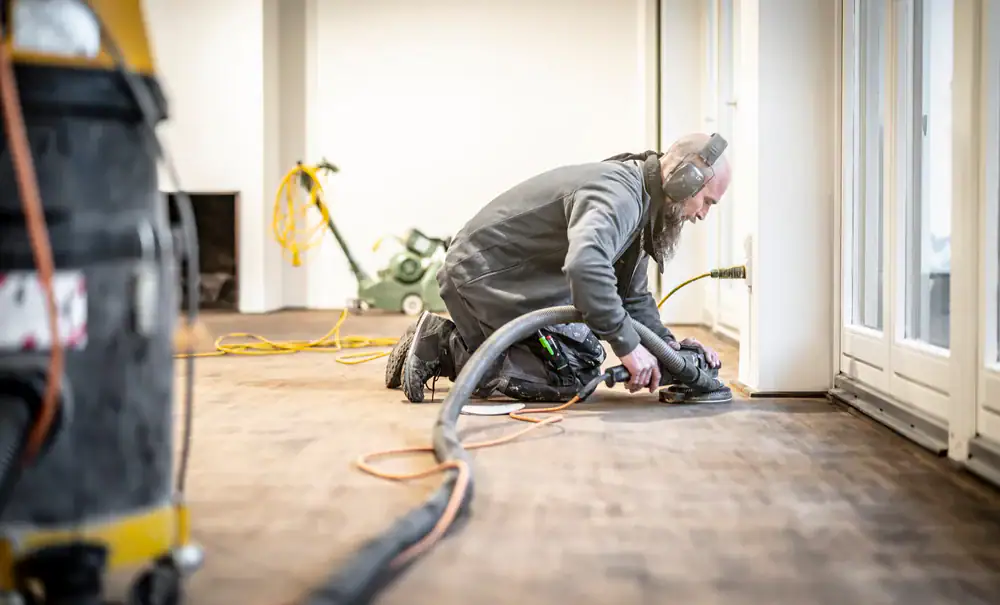
- Dustless Systems: For our hardwood refinishing projects, we use advanced dustless sanding technology to keep your commercial space clean and minimize disruption.
- Clear, Honest Advice: We provide straightforward recommendations to help you choose the best flooring solution for your needs and budget, without any sales pressure.
The Critical Role of Professional Installation
Choosing the right material is only half the battle. The performance and longevity of any of the best commercial flooring options are directly tied to the quality of the installation. An improperly prepared subfloor, poor adhesive application, or incorrect cutting techniques can lead to premature failure, turning a significant investment into a costly liability. This is where partnering with a seasoned professional becomes invaluable.
An experienced flooring contractor does more than just install the floor. They act as a consultant, helping you verify that your chosen material is appropriate for the site conditions. For commercial spaces in Richmond, this includes understanding the nuances of both modern construction and historic buildings, which may present unique subfloor challenges. They can identify potential issues before they become expensive problems and ensure the final product not only looks great but also meets all necessary performance and safety standards. Whether you’re installing a new LVP floor or seeking a hardwood floor contractor in Richmond to bring a classic floor back to life, professional expertise is the ultimate insurance for your investment.
Frequently Asked Questions (FAQ)
1. What is the most durable type of commercial flooring?
For overall toughness, polished concrete and epoxy flooring are among the most durable, resisting heavy traffic, abrasion, and chemicals. High-quality porcelain tile is also exceptionally durable and long-lasting.
2. How much does commercial flooring cost in the Richmond, VA area?
Costs vary widely by material. LVP and commercial laminate are often the most budget-friendly ($2-$8/sqft), while high-end options like terrazzo can be $25+/sqft. Labor, subfloor prep, and removal of old flooring will also affect the final price. We provide free, detailed estimates for projects in Richmond, Chesterfield, and surrounding areas.
3. What is the best flooring for a high-traffic retail store?
Luxury Vinyl Plank (LVP/LVT) is an excellent choice for retail due to its high wear resistance, design versatility, and ease of maintenance. Polished concrete is another great option for a modern, industrial aesthetic.
4. Can hardwood floors be used in a commercial space?
Yes, but they are best suited for moderate-traffic environments like executive offices, law firms, boutique shops, or galleries. They add warmth and value but require more maintenance than options like vinyl or concrete. A buff and coat service is a great way to maintain their appearance with minimal downtime.
5. How long does a commercial floor installation take?
The timeline depends on the material and the size of the space. LVP and carpet tile installations are relatively quick, often taking just a few days. Epoxy and terrazzo require multiple steps and longer curing times. At Buff & Coat, we create a clear project schedule to minimize disruption to your business operations.
Ready to discuss your commercial flooring project? Contact Buff & Coat Hardwood Floor Refinishing for a free, no-obligation estimate and expert advice. Call us today at 804-392-1114.