That nagging squeak isn’t just a minor annoyance—it’s your floor telling you that something is moving when it shouldn’t be. For Richmond homeowners, from historic Fan District rowhouses to newer builds in Short Pump, figuring out the cause is the first step to a quiet home. Most of the time, it’s simple friction between boards or a tiny gap over the subfloor, but the right solution can range from a quick DIY fix to professional hardwood floor repair.
Why Your Richmond Floors Won’t Stop Squeaking
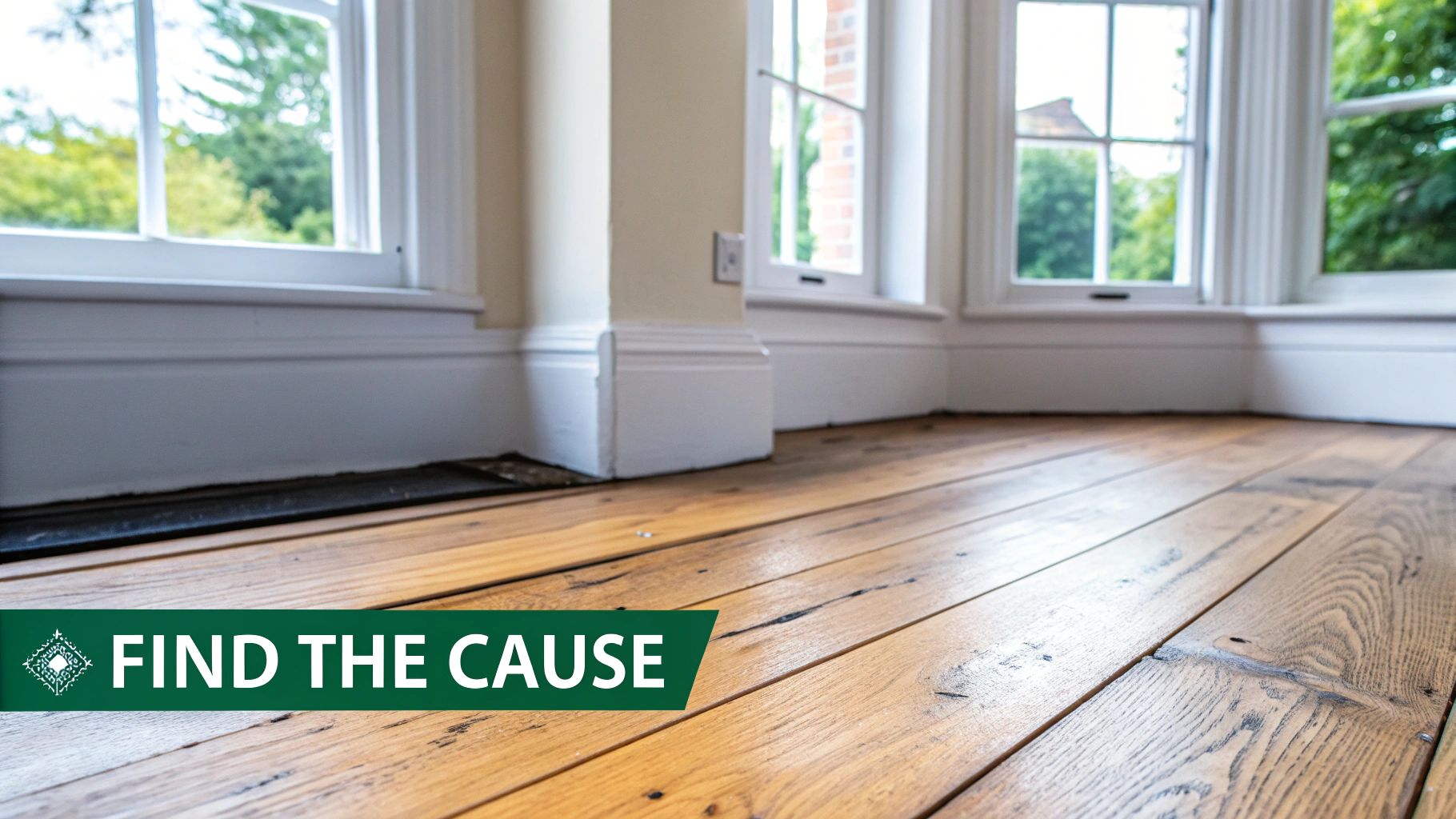
A squeaky floor is practically a rite of passage for homeowners in the Richmond area. That sound is a dead giveaway that there’s movement where there shouldn’t be. Two surfaces are rubbing together that are supposed to be locked tight. Figuring out why they’re moving is the key to silencing them for good.
The Role of Virginia’s Climate
Here in Central Virginia, our four distinct seasons have a bigger impact on your floors than you might think. Wood is a natural material that expands and contracts with changes in humidity.
The thick, humid air of a Virginia summer causes wood to swell as it soaks up moisture. Come winter, the dry air from your furnace makes it shrink.
This endless cycle of expanding and contracting can work nails loose over time, create microscopic gaps between floorboards, and cause friction. It’s why a squeak that drives you crazy in July might vanish in January, only to reappear like clockwork next summer. This is a common issue we see in hardwood floor repair in Richmond VA.
Common Culprits Behind the Creaks
Beyond the weather, a few other usual suspects are often to blame for noisy floors. Once you identify the specific issue, you’ll know exactly how to fix squeaky hardwood floors in your home.
- Loose Subflooring: This is a big one. Over the years, the subfloor can pull away slightly from the floor joists underneath. When you step on that spot, the whole section deflects, rubbing against a nail or another board and causing that tell-tale squeak.
- Improper Fasteners: Sometimes the problem dates all the way back to installation. If the wrong type or length of nail or cleat was used, the floorboards were never held securely enough to the subfloor to begin with.
- Aging Homes: In many of Richmond’s older homes, the natural settling of the foundation can create slight unevenness in the floor system. This puts new stress on the floorboards and can make new noises pop up out of nowhere.
Learning how to properly maintain hardwood floors can definitely help prevent some of these issues, but movement in the home’s structure often needs a more direct fix. The good news? Most squeaks are not a sign of a serious structural problem. They’re just an indicator that a few components need to be tightened up.
Decoding the Creaks: What Causes Squeaky Floors?
Before you can fix that annoying squeaky floor, you have to play detective. That specific creak, groan, or squeak is your biggest clue—it tells you exactly what’s happening just out of sight. It’s almost never just one thing; most squeaks are the result of tiny movements adding up to a big annoyance.
Think of your floor as a system. You’ve got the hardwood planks on top, the subfloor beneath them, and the joists holding it all up. When everything is locked tight, you get silence. But over the years, things shift.
The Anatomy of a Squeak
At its core, a squeak is just the sound of friction. Two things are rubbing together under pressure, and that’s usually wood-on-wood or wood-on-metal.
Here in the Richmond area, we see a few common scenarios over and over:
- Board-on-Board Friction: As the wood expands and contracts with Virginia’s humidity, the tongue and groove of adjoining planks can start rubbing. This usually causes a high-pitched, very specific squeak.
- Loose Fasteners: The original nails or cleats holding the planks to the subfloor can work themselves loose. When you step on that board, it presses down and rubs against the nail shank, creating that classic creak.
- Subfloor Gaps: This is a major cause. The subfloor itself can separate slightly from the floor joists below. When you walk over that spot, the whole section of flooring flexes, causing a deep groan that seems to travel.
The root cause is almost always the same: boards are moving when they shouldn’t be. Whether it’s wood shrinkage around old nails or a loose subfloor, that movement creates noise.
Diagnosing the Source
Pinpointing the origin is easier than you might think. Have someone walk around while you listen.
A squeak that happens in one tiny spot points to a single loose board or nail. But a long, drawn-out creak that follows you down a hallway? That’s a tell-tale sign of a loose subfloor.
Keep in mind that sometimes, a persistent squeak can signal a more serious problem like hidden moisture. It’s always smart to recognize the critical signs of water damage, including warped floors, because that squeak could be a symptom of a much larger issue needing immediate attention.
Understanding what’s causing the noise is the most important step. It keeps you from wasting time and money on a fix that doesn’t match the problem. Once you know if you’re dealing with surface friction or a subfloor gap, you can choose the right tool for the job.
Practical DIY Fixes for Minor Floor Squeaks
Not every squeak means you need to call the pros. For many Richmond homeowners, a few simple, targeted fixes can bring back the peace and quiet without turning your home into a construction zone. Before you grab your toolbox, remember the golden rule of home repair: always test the simplest solution first.
Sometimes, the answer is as easy as lubricating the spot where two floorboards are rubbing together. A small amount of powdered graphite or even talcum powder can work wonders here. Just sprinkle a light dusting over the squeaky seam and work it into the joint with a soft brush. Walk over the area a few times to help the powder settle in deep, then just wipe away any extra. You’d be surprised how often this works for those high-pitched, localized squeaks.
This simple diagram helps visualize what’s likely happening under your feet.
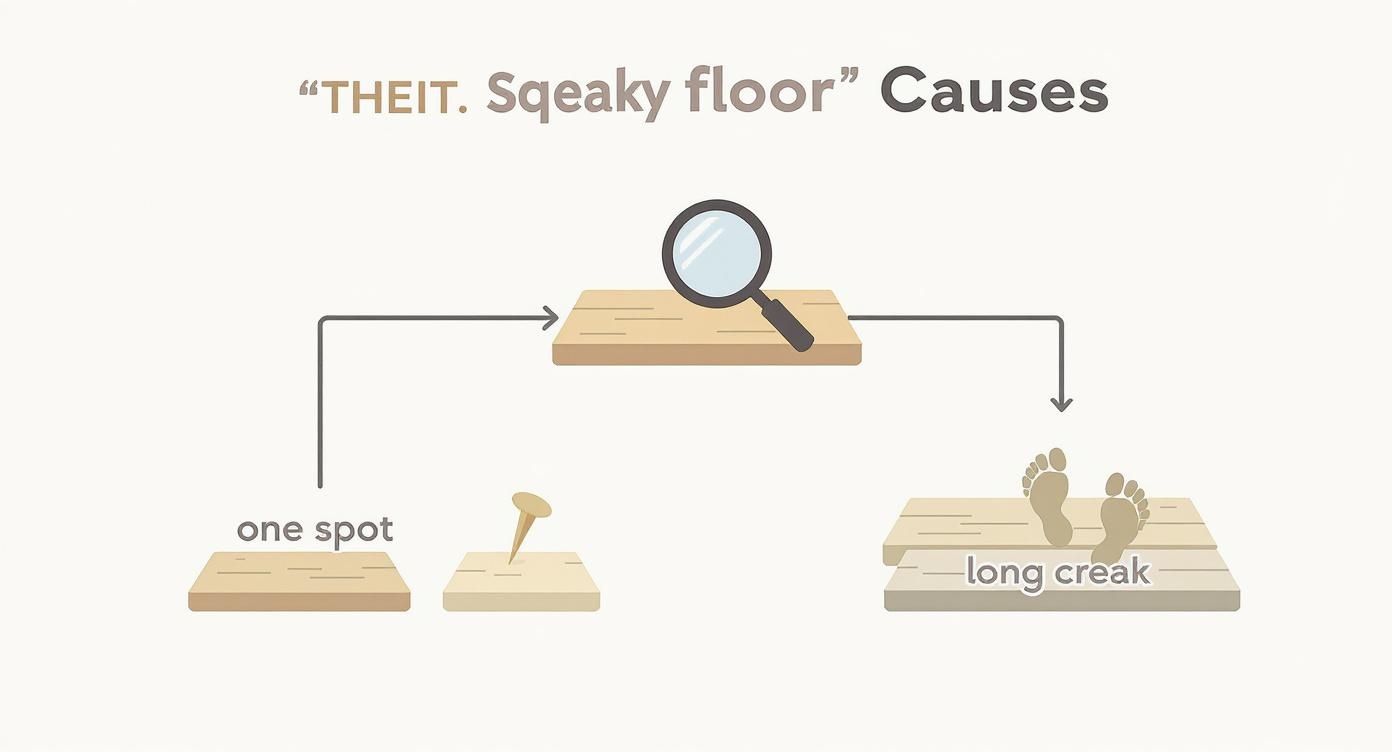
As you can see, a squeak in a single spot often points to board-on-board friction. If you’re hearing a long, drawn-out creak as you walk across an area, it’s more likely a sign of a deeper subfloor issue.
DIY Squeaky Floor Solutions at a Glance
To help you decide where to start, here’s a quick comparison of the most common DIY fixes. This table breaks down what each method is best for, how difficult it is, and what could go wrong.
| Method | Best For | Difficulty | Potential Risks |
|---|---|---|---|
| Powdered Lubricant | High-pitched squeaks between two boards. | Easy | Can be messy; may not solve deeper issues. |
| Wood Shims | Gaps between subfloor and joists (requires access from below). | Easy | Overtightening can create a hump in the floor above. |
| Construction Adhesive | Filling small gaps between subfloor and joists. | Easy | Can be messy; needs access from below to apply. |
| Squeak-Ender Bracket | Securing the subfloor to the joist from below. | Moderate | Requires drilling and precise placement. |
| Specialized Screws | Securing loose floorboards from above when you can’t get underneath. | Moderate | Can damage the floor’s finish if not done carefully. |
These quick fixes are fantastic for tackling those minor, annoying sounds that pop up over time. They’re your first line of defense before you need to consider more involved repairs.
When You Have Basement or Crawlspace Access
If you can get underneath the floor—a common setup in many Richmond-area homes—you have a serious advantage. This is where you can directly address squeaks caused by a gap between the subfloor and the floor joists.
Your mission is to find that tiny space causing all the noise. Have a helper walk on the squeaky spot above while you’re below with a good flashlight. As they step, look for any movement or a visible gap between the top of the joist (the big wooden support beam) and the underside of the subfloor. Once you spot it, apply a bead of construction adhesive into the gap and gently tap in a thin wood shim to fill the space.
Pro Tip: Don’t get carried away with the hammer. You only want to fill the gap, not create a new bulge in the floor. The goal is to stop the movement, not lift the floorboard.
What to Avoid with DIY Fixes
While it’s tempting to try anything to silence that squeak, some common “fixes” can actually cause more harm than good.
- Avoid Liquid Lubricants: Steer clear of products like WD-40. Sure, they might quiet a squeak for a little while, but they also attract dust and grime. Worse, they can seep into the wood and leave a permanent stain, creating a much bigger problem down the road.
- Don’t Use Long Nails: Driving a long finish nail from above seems like a quick solution, but you risk splitting the delicate tongue of the floorboard. If that nail ever works its way loose, it becomes a hazard that can snag socks or bare feet. Knowing the right tongue and groove repair techniques is crucial to preventing this kind of damage.
- Be Cautious with Screws from Above: There are specialized screw kits designed for this, but using the wrong type of screw or drilling in the wrong spot can permanently mar your floor’s finish. It’s a fix that’s very hard to hide if it goes wrong.
These DIY methods are perfect for minor annoyances. However, if the squeaking is widespread, the floor feels spongy, or these simple fixes don’t make a dent, it’s a clear sign that a deeper issue is at play.
Advanced Repairs When DIY Methods Fall Short
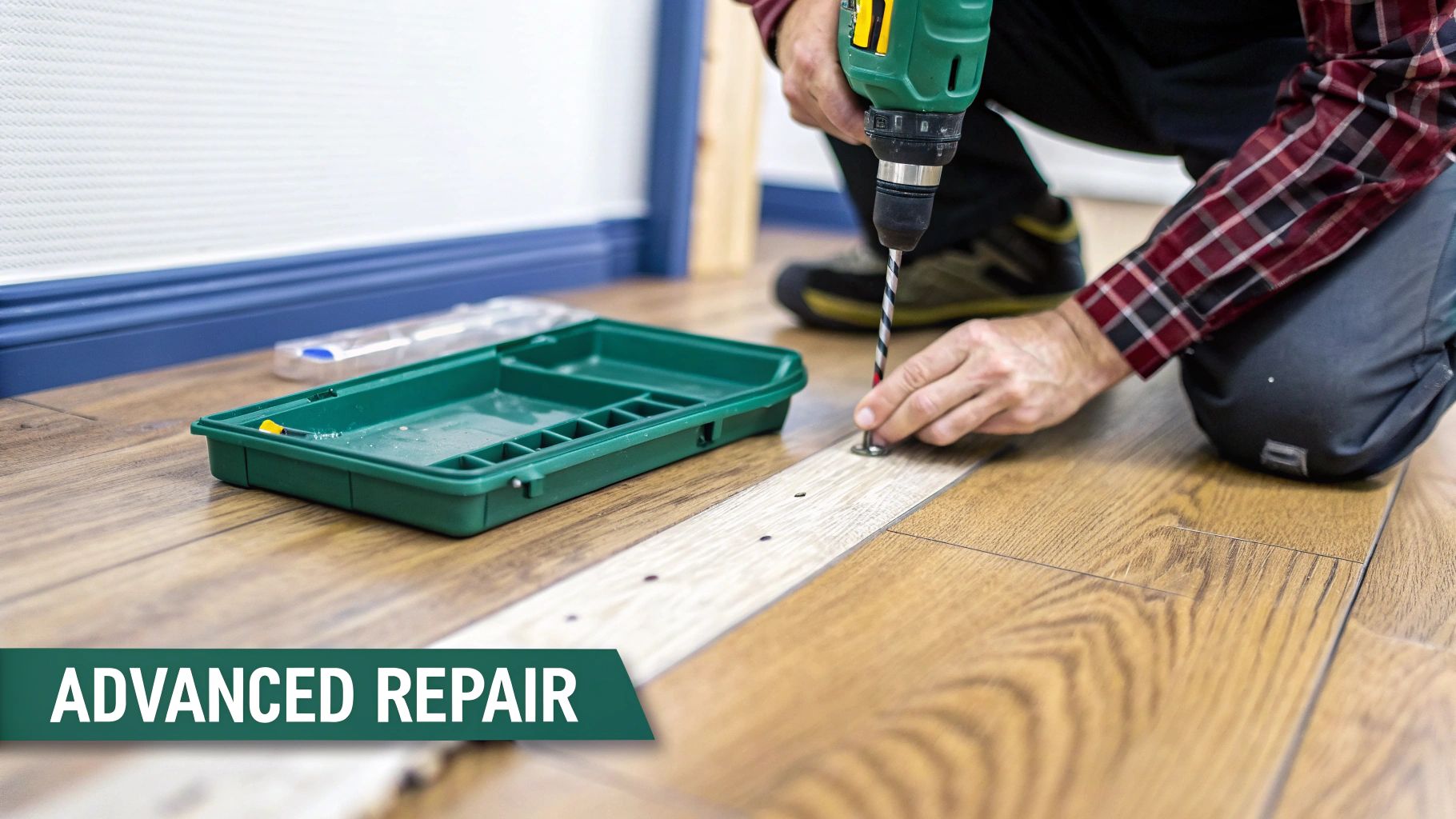
When powdered lubricants and shims just aren’t cutting it, you know the problem runs deeper than surface friction. A squeak that refuses to go away is almost always a sign of loose floorboards or movement in the subfloor itself. This is where we move beyond quick fixes and into more permanent hardwood floor repair.
These methods are more involved, but they’re the only way to silence those stubborn, deep-rooted creaks for good. It’s time to tackle the problem at its source.
Securing Floorboards from Above
No basement or crawlspace? No problem. You can still tighten up loose floorboards from the top, but it takes more finesse than the easier DIY fixes. The secret is using specialized hardware that’s designed to be practically invisible once the job is done.
Your best bet here is a counter-sunk, snap-off screw system. It sounds complicated, but the kit comes with a special jig that helps you drill a tiny pilot hole through the squeaky board and into the joist below. You then drive in a scored screw just far enough to pull the plank tight, and snap the head off right below the surface. All that’s left is a minuscule hole you can easily fill with a bit of wood putty.
This approach is incredibly effective, but it requires a steady hand. If you drill too deep, you can mar the floor’s finish. Miss the joist, and the screw is useless. It’s a technique that sits right on the line between a serious DIY project and a professional hardwood floor restoration.
The Best Fix: Access from Below
For homeowners in Richmond with an accessible basement or crawlspace, this is the holy grail of squeak repair. Working from underneath gives you direct access to the floor’s structure without ever having to touch the beautiful finish on top.
It’s a simple two-person job:
- Find the Movement: One person walks on the squeaky spot upstairs while another is below with a flashlight. You’re watching for any tiny movement or gap opening up between the subfloor and the floor joists.
- Secure the Subfloor: Once you’ve pinpointed the spot, drive a short screw up through the subfloor and into the belly of the hardwood plank above. This anchors everything together, completely eliminating the movement that was causing all that noise.
This method is the gold standard for how to fix squeaky hardwood floors in Richmond VA. It’s totally hidden, strong, and will stand up to years of foot traffic without another peep.
When Squeaks Signal a Bigger Problem
Sometimes, a persistent squeak is your floor’s way of telling you something more serious is going on. Industry data shows that cracks and gaps are surprisingly common, making up about 60% of all wood flooring repair requests. This just goes to show how often a seemingly small issue can point to an underlying structural problem. You can explore the full market research on flooring repairs to see the trends for yourself.
If driving screws doesn’t solve the problem or if the floor feels spongy underfoot, it might be time to call in the pros. A board could be warped or damaged beyond a simple fix and may need to be replaced. If the squeaks are happening all over the house, it could mean the entire floor system needs a closer look during a buff and coat service or refinishing project, where we can address these foundational issues before applying a fresh new finish.
Unsure if your floor needs a simple fix or a professional repair? Buff & Coat can provide an honest assessment. Call 804-392-1114 for a free estimate.
Knowing When to Call a Hardwood Floor Pro
The urge to tackle a home repair yourself is strong, and many minor floor squeaks are perfect weekend projects. But knowing your limits is key to protecting your home’s value and avoiding a much bigger—and more expensive—problem down the road.
So, how do you know when it’s time to hang up the tool belt and call a flooring expert? There are a few tell-tale signs that a squeak is a symptom of something more serious than a simple loose board.
Key Signs You Need an Expert
If you’re seeing (or feeling) any of these, it’s a clear signal that the issue goes beyond a quick DIY fix.
- Widespread Squeaking: Is it not just one annoying spot, but an entire room or hallway that groans with every step? This often points to a bigger problem with the subfloor or the joists themselves, and that requires a professional diagnosis.
- A Spongy or Bouncy Floor: This is a big one. If the floor feels soft, bouncy, or gives way significantly when you walk on it, stop what you’re doing. This can be a sign of a serious underlying structural issue that needs immediate attention from an experienced contractor.
- Visible Warping or Cupping: When your floorboards are visibly warped, cupped, or just plain uneven, it’s usually a red flag for moisture damage or a shoddy installation job. A pro needs to figure out how bad the damage really is.
- Your DIY Fixes Don’t Last: Did you try a shim or some powder between the boards, only for the squeak to come back a week later? That means you only treated a symptom, not the root cause. The real problem is deeper.
The global flooring repair services market is projected to hit $15.8 billion by 2032, and a big reason for that growth is the difference between cosmetic and structural repairs. Squeaks often fall into that structural category—problems that compromise your floor’s integrity—making a professional diagnosis essential.
The Value of a Professional Diagnosis
When our Buff & Coat team arrives at a home in Richmond—whether it’s in Chesterfield or Glen Allen—we bring more than just tools. We bring over 15 years of experience diagnosing the real source of the problem.
We can tell if the issue is with the hardwood itself, the subfloor, or the home’s structure. That’s how we deliver a permanent, safe solution. It also helps to understand what a handyman does versus a flooring specialist; while great for general tasks, deep structural floor issues require focused expertise.
For a deeper dive into the specific repair techniques we use and when they’re appropriate, check out our complete guide to squeaky floor repair for more expert advice.
If you’re in the Richmond area and are tired of that squeak, request a free estimate today. Buff & Coat will give you an honest recommendation.
Why Richmond Homeowners Choose Buff & Coat
When you invite a contractor into your home, you’re placing a lot of trust in them. We understand that. For over 15 years, we’ve earned that trust from homeowners all across the Richmond area, from Midlothian to Mechanicsville, by treating every floor like it was our own.
We’re not a big, faceless franchise. Buff & Coat is a local, owner-operated business, which means the person you talk to is the person who cares about the final result. That direct accountability is everything. Our reputation as the best hardwood floor contractor in Richmond is built right here in RVA, one beautiful floor at a time.
We’re in the business of providing real, lasting solutions—not just a quick patch-up. That means combining our years of hands-on experience with the right tools for the job, like our advanced dustless sanding systems that keep your home clean and breathable while we work.
- 15+ Years in Business: We have the local experience to diagnose and fix floor issues common in Richmond homes.
- Dustless Sanding Systems: Our modern equipment keeps your home clean and your family safe during the refinishing process.
- Local, Owner-Operated: You get the personal attention and accountability of a small business that cares.
- High-Quality, Low-Odor Finishes: We use durable, professional-grade products that protect your floors and your indoor air quality.
- Clear Pricing & Honest Advice: We provide detailed, no-surprise estimates and recommend only the work you actually need.
- 5-Star Customer Service: Our goal is to make the process easy and stress-free, from your first call to the final walkthrough.
Frequently Asked Questions About Squeaky Floors
As a Richmond-based floor pro, I get asked about squeaky floors all the time. It’s one of those little annoyances that can drive a homeowner crazy. Here are some of the most common questions we hear, with straight-up, honest answers.
Does refinishing my hardwood floors fix squeaks?
This is a big one we get asked a lot. In short, no. A standard hardwood floor refinishing, like our buff and coat service, is all about the surface. It’s fantastic for getting rid of scratches and bringing back that beautiful sheen, but it doesn’t address the root cause of a squeak—which is movement.
That said, we never just sand over a problem. Our team always conducts a thorough inspection as part of any hardwood floor repair project. If we find loose boards, we make sure to secure them properly before we even think about refinishing. You need a solid, quiet foundation for a beautiful finish to last.
What’s the real cost to fix a squeaky floor in Richmond?
There’s no one-size-fits-all answer here, because the cost is tied directly to the cause. If it’s just one or two annoying spots, a few well-placed shims or some specialized screws might be a quick, minor fix that won’t break the bank.
But if the squeaking is widespread and points to a bigger subfloor issue, that’s a more involved repair. We’re big believers in being upfront. That’s why we offer free, no-pressure estimates for Richmond homeowners. We’ll come out, diagnose the problem, and give you an exact price so there are no surprises.
Will I be able to see the repairs on my floor?
Our goal is always to make repairs disappear. We’re pros at this, and we use methods that are designed to be as invisible as possible.
When we can, we prefer to work from underneath—out of sight in a basement or crawlspace. If we have to work from the top, we use clever techniques like counter-sinking specialized snap-off screws that leave behind a tiny, easily concealable hole. We want you to notice the silence, not the repair work.
The best repairs are the ones you can’t see. By securing the floor from underneath or using specialized fasteners, we solve the problem without leaving a trace on your floor’s surface.
Is a squeaky floor a sign of a major structural problem?
Usually, no. 9 times out of 10, a squeak is just an annoyance. It’s caused by the normal expansion and contraction of wood, which leads to friction between boards or against the subfloor. It’s more of a nuisance than a red flag.
However, pay close attention to how the floor feels. If it’s not just noisy but also feels soft, bouncy, or spongy underfoot, that’s different. Those are warning signs that could point to a more significant issue with your subfloor or joists, and it’s definitely time to get a professional inspection.
Ready to restore your hardwood floors? Buff & Coat makes the process fast, clean, and stress-free.
Call 804-392-1114 or request a free estimate online today.