
Why Your Hardwood Floors Need the Right Buffer
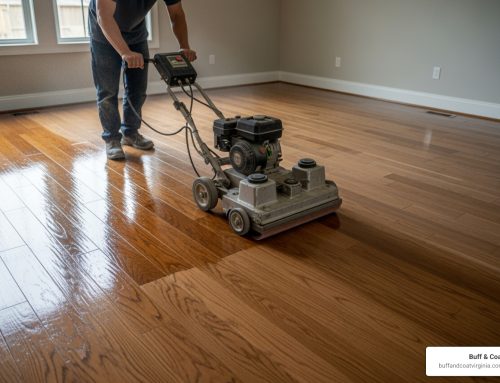
A hardwood floor buffer is a specialized machine that restores shine to dull, scuffed hardwood floors by polishing the surface with rotating pads. These machines remove light scratches, restore luster, and smooth the floor's protective coating by spinning pads at 175-350 RPM. This creates a uniform, glossy finish in just a few hours.
Key benefits of buffing include:
- It's much less expensive than full refinishing.
- It extends the life of your existing floor finish.
- It's a perfect project for DIY home improvement.
More homeowners are choosing DIY maintenance over costly professional services. Whether your floors have lost their shine from daily wear or need touch-ups, the right buffer can transform tired-looking hardwood. For floors that need more than buffing, our hardwood floor buff and coat service offers a comprehensive solution to restore shine without the cost of full sanding.
I'm David Emmerling, President of Buff & Coat Hardwood Floor Refinishing. With over 20 years of experience helping Richmond-area homeowners, I have unique insight into which tools deliver the best results for different situations.
Understanding and Choosing Your Hardwood Floor Buffer
The world of floor care equipment can be overwhelming, but understanding your options is simple. A hardwood floor buffer is designed to restore shine and polish floors using rotating pads. These machines create controlled friction, typically at speeds around 175 RPM, to work polish into the wood and remove light surface imperfections.
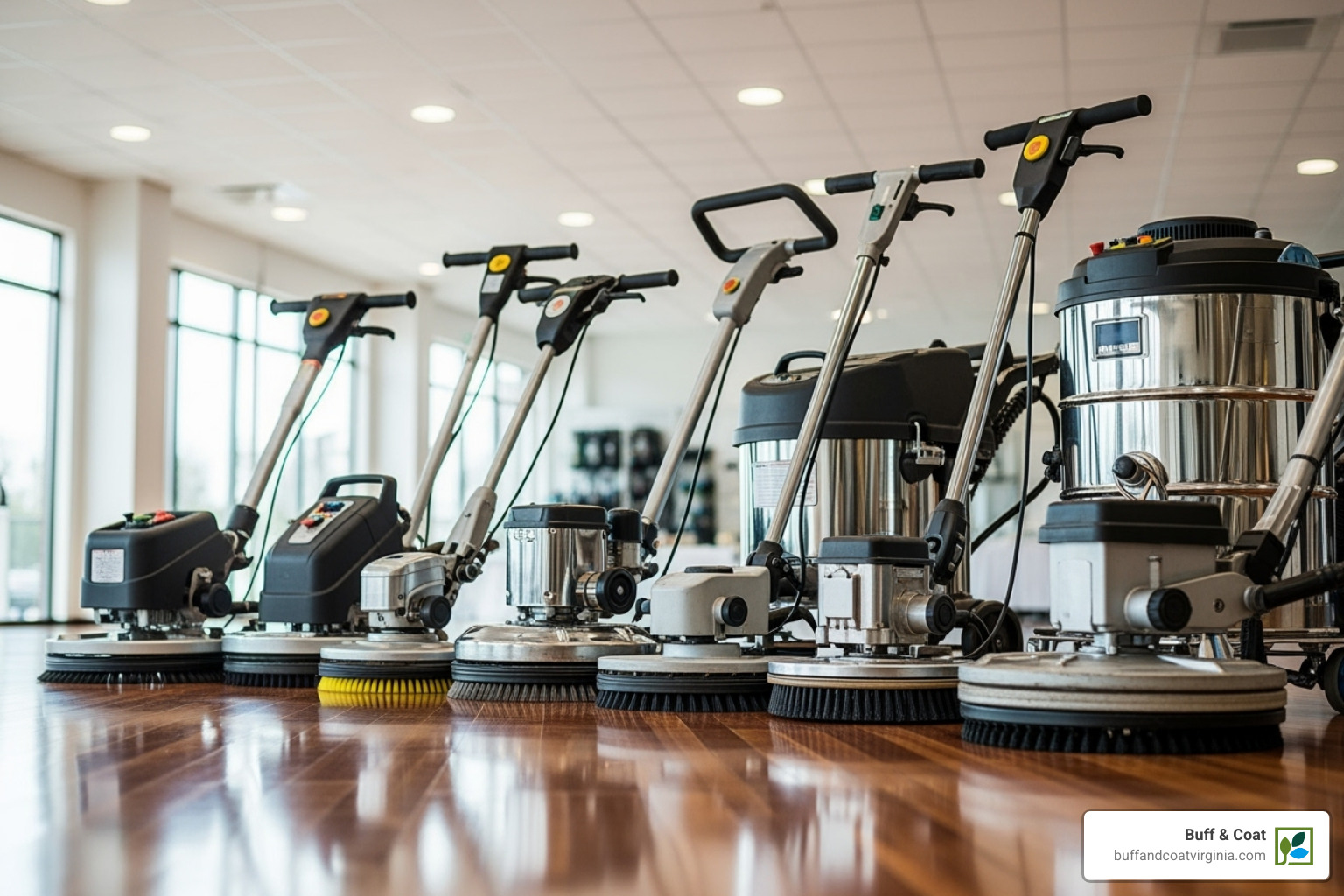
It's important to know the difference between machines. A floor buffer or polisher focuses on maintaining shine with waxes and finishes. In contrast, floor scrubbers are heavy-duty cleaners that dispense solution, scrub with brushes, and vacuum up dirty water.
When shopping, you'll find two main types. Rotary buffers use a single pad spinning in a circle, perfect for general buffing. Orbital buffers move pads in random patterns, preventing swirl marks and making them more forgiving for beginners.
Speed also matters. Low-speed buffers (175-350 RPM) handle most home tasks, while high-speed burnishers (1500-2000 RPM) create a high-gloss finish on already clean floors. At Buff & Coat, we use professional-grade equipment in our restoration process, combining the right tools with expert technique for stunning results.
Commercial models are built for daily use with powerful motors and heavy construction. Residential models are lighter and prioritize ease of use for occasional home projects.
Key Features to Compare
Choosing the right hardwood floor buffer means matching the machine to your needs.
- Power: Motor horsepower (HP) determines performance. A 1.5 HP commercial motor handles tough jobs, while a smaller residential motor is fine for weekend projects.
- Pad Size and RPM: Larger pads (up to 23 inches) cover ground quickly, while smaller pads (12-15 inches) offer better control. Most home buffing happens at 175 RPM, which City Floor Supply explains is the standard for effective, safe floor care.
- Weight and Maneuverability: Heavier machines provide consistent pressure but require more muscle. Lighter models are easier to handle but may need extra passes.
- Corded vs. Cordless: Corded buffers offer consistent power for large areas. Cordless models provide freedom of movement for quick touch-ups but have shorter run times.
- Accessories: Look for machines with different pad types and built-in solution tanks for applying polish or cleaner as you work.
Can a Floor Buffer Be Used on Other Flooring?
Your hardwood floor buffer is versatile. With the right pad, it works beautifully on other hard surfaces:
- Tile and Marble: Buffing restores shine to tile and grout. On marble, a gentle polishing pad can restore luster without harsh chemicals.
- Concrete: Buffing can apply sealants and create a popular polished look on sealed concrete floors.
- Vinyl: Regular buffing maintains the protective finish on VCT and luxury vinyl planks, removing scuff marks.
Some multi-purpose machines even handle carpet shampooing with special attachments. A quality hardwood floor buffer is a valuable investment for homes with mixed flooring.
How to Buff and Polish Hardwood Floors: A Step-by-Step Guide
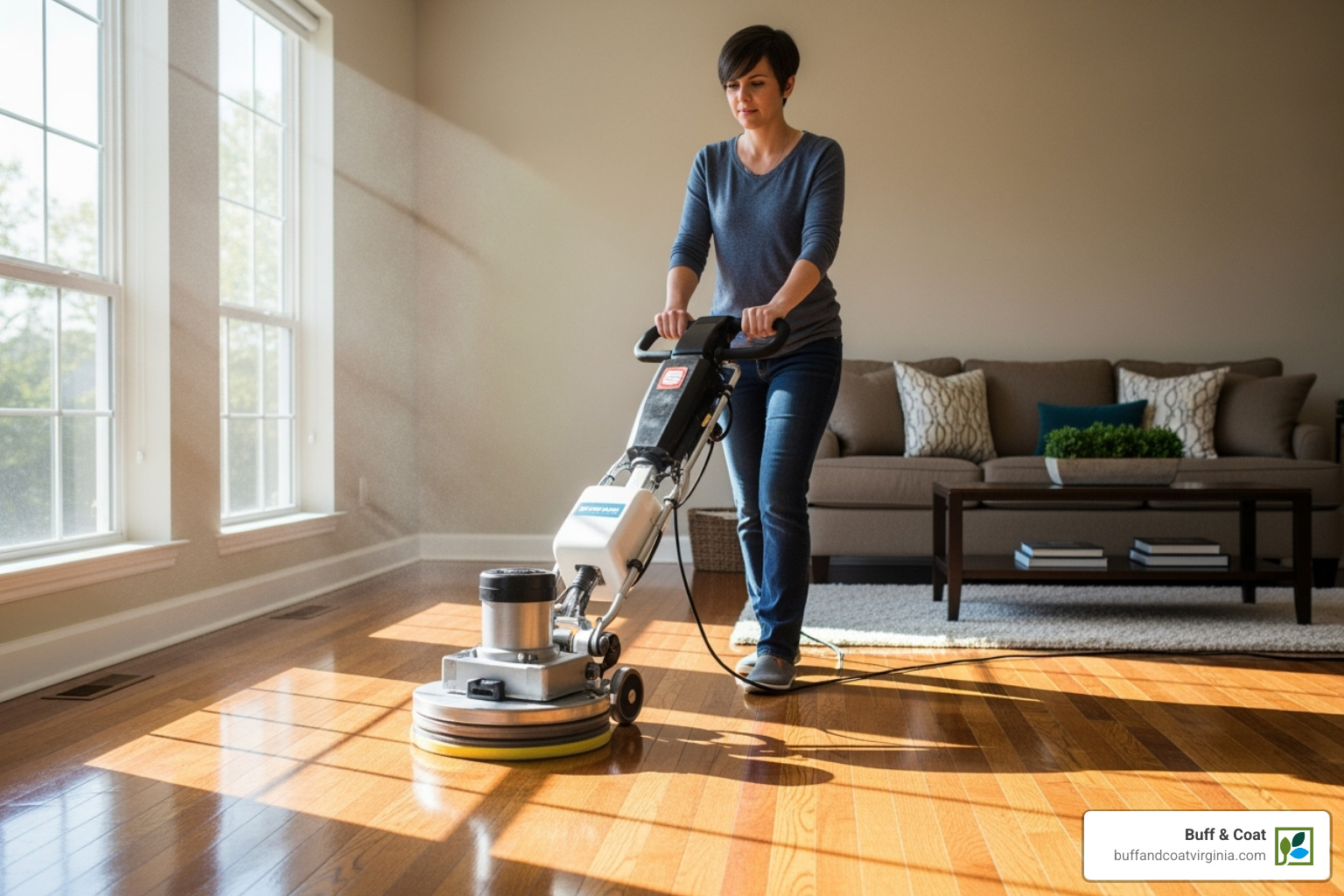
Using a hardwood floor buffer can seem intimidating, but with the right approach, you can achieve professional results. Success lies in preparation, patience, and proper technique. Rushing the process can lead to streaky, uneven floors.
Preparation is critical:
- Clear the Room: Remove all furniture, rugs, and decorations.
- Vacuum Thoroughly: Use a powerful setting to remove all dirt, pet hair, and debris. Any particles left behind can be ground into the finish.
- Clean the Floor: Use a quality hardwood floor cleaner and let the surface dry completely. Buffing a dirty floor will only spread the grime.
- Prioritize Safety: Always read your buffer's manual. Wear protective gloves and safety glasses, and ensure proper ventilation. Plan your path to keep the power cord out of the way.
Choosing the right buffing pad is key. Wool pads are great for paste waxes, microfiber pads offer gentle polishing, white or tan pads create a high-gloss finish, and red pads handle light cleaning. Always inspect pads for damage before use. For more guidance, see this post on buffing timber floors.
The Proper Technique for Using a Hardwood Floor Buffer
- Apply Polish: If using a liquid product, apply it to a small section. For paste wax, apply it lightly with a lint-free cloth. Never apply wax over a urethane finish unless specified by the manufacturer.
- Start Smart: Begin in the corner farthest from your exit.
- Control the Machine: Hold the buffer with both hands at waist height. It will naturally pull in one direction.
- Use Gentle Motions: Move slowly and steadily from side to side. Do not fight the machine's natural movement. Never linger in one spot, as this can create burn marks.
- Overlap Passes: Overlap each pass by about one-third of the pad's width to ensure even coverage and prevent lines.
- Detail by Hand: Use a soft cloth to buff edges and corners the machine can't reach.
This careful approach is part of how we go about restoring shine to dull floors for our clients.
How Often Should You Buff Your Floors?
The frequency depends on foot traffic. High-traffic areas like kitchens and hallways may need buffing every 6 to 12 months. Low-traffic areas like bedrooms might only need it every 1-2 years. As a general rule, buff when your floors look dull, hazy, or show light surface scratches. Regular buffing extends the time between major refinishing projects. For more on floor care, explore our resources on floor restoration.
If your floors have deep scratches or water damage, buffing alone won't be enough; you'll need professional restoration.
Top Hardwood Floor Buffer Models for Homeowners
Shopping for the perfect hardwood floor buffer doesn't have to be a maze. A quality residential buffer typically costs between $200-$700, while rentals are under $50 per day. You can find them at retailers like The Home Depot, Amazon, and specialty suppliers like Zoro.
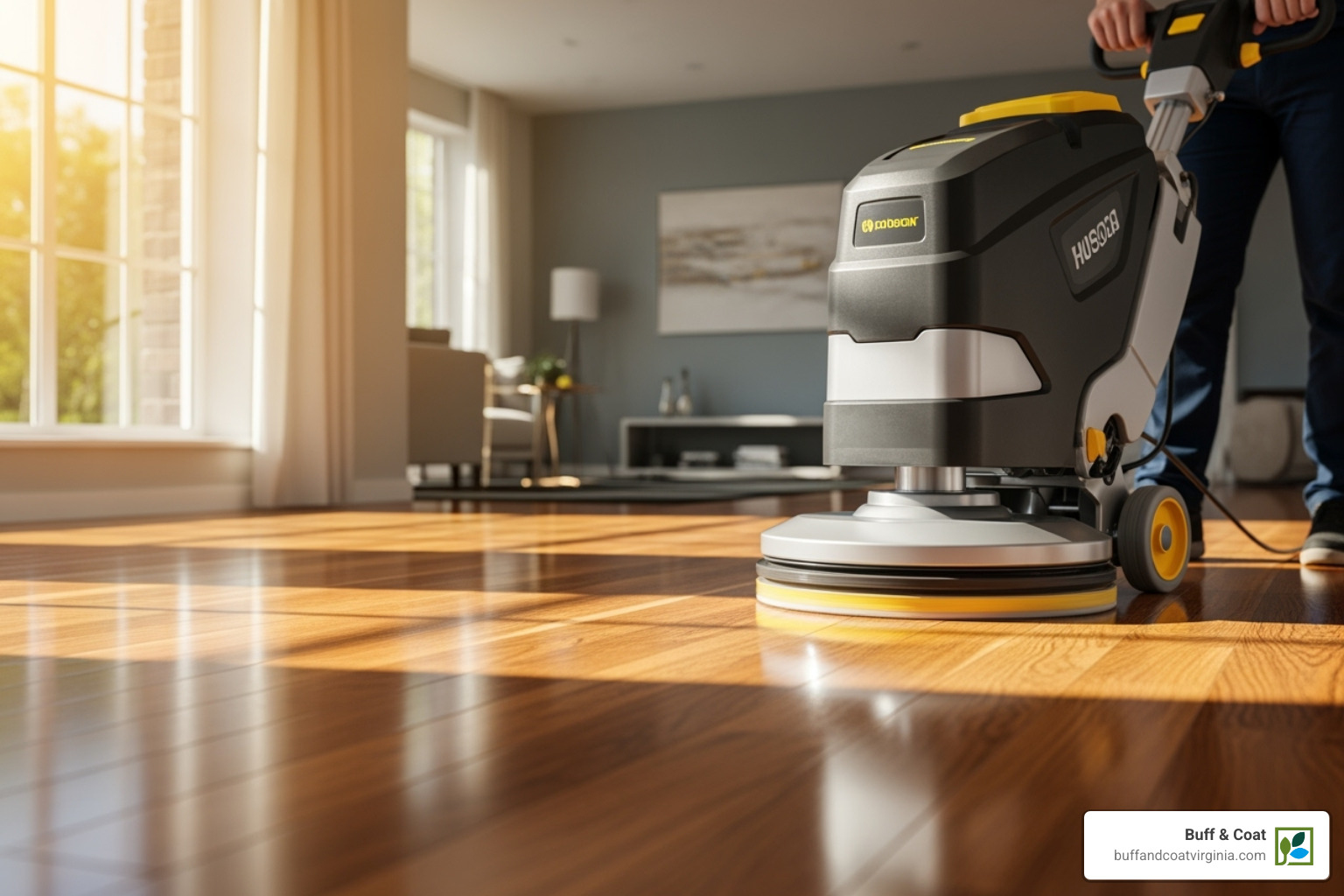
Here's how the top contenders stack up for different homeowner needs:
| Model | Key Features | Price Range | Best Use Case |
|---|---|---|---|
| Oreck Orbiter Multi-Purpose Floor Machine | Random orbital motion, versatile for various tasks, easy to use | $300 – $500 | All-around DIY, gentle polishing, light cleaning |
| Prolux Core Heavy Duty Commercial Polisher | Powerful motor, commercial grade, durable, various pad sizes | $500 – $1,000 | Large homes, frequent use, light commercial |
| Ewbank Floor Polisher and Scrubber | Lightweight, compact, good for polishing and scrubbing, comes with brushes | $100 – $200 | Small spaces, quick touch-ups, light-duty polishing |
Best for All-Around DIY: Oreck Orbiter Multi-Purpose Floor Machine
The Oreck Orbiter is known as the "friendly" hardwood floor buffer, making it ideal for beginners. Its random orbital motion is forgiving and unlikely to damage floors. It excels at multi-purpose tasks like dry polishing and light scrubbing. The 1/2 HP motor is powerful enough for most homes without being overwhelming. However, its user-friendliness means less aggressive power, so it's better for regular maintenance than heavy restoration. You can find similar machines at The Home Depot to compare.
Best Budget Option: Prolux Core Heavy Duty Commercial Polisher
The Prolux Core series offers commercial-grade durability at a residential price, making it a great value for larger homes. With powerful motors up to 1.5 HP, these buffers tackle tough jobs that lighter machines can't handle. The trade-off is weight; these heavy-duty machines require more effort to maneuver. However, for periodic deep cleaning of large spaces, the thorough results are often worth it. They often come with multiple pads, providing everything you need to get started.
Best Lightweight/Cordless: Ewbank Floor Polisher and Scrubber
For convenience and easy storage, the Ewbank is a great "grab and go" option. Though corded, its lightweight, compact design makes it perfect for quick touch-ups and smaller spaces where a full-size buffer is overkill. The dual contra-rotating heads provide effective cleaning action. The downside is reduced power, making it a tool for maintenance rather than major renovation. It's an excellent choice for apartments or homes with various hard floor surfaces that need regular light buffing.
Maintenance and Troubleshooting
Taking care of your hardwood floor buffer is like maintaining any trustworthy tool in your garage – a little attention goes a long way. Proper maintenance is straightforward and helps you avoid common issues.
Machine Maintenance
- Clean Pads Regularly: After each use, remove and wash buffing pads according to the manufacturer's instructions. This is crucial for a streak-free finish.
- Inspect for Wear: Replace pads when they become thin, torn, or ineffective. A worn-out pad can scratch your floors.
- Wipe Down the Machine: Clean off dust and polish residue after each use.
- Check the Power Cord: Before and after every session, inspect the cord for frays or damage.
- Store Properly: Keep your buffer in a clean, dry spot, preferably upright to prevent warping pads or brushes.
Common Problems and How to Resolve Them
Even with the best intentions, things don't always go smoothly. Here are the issues I see most often, along with practical solutions:
- Streaks or Swirl Marks: This is often caused by dirty pads, too much polish, or moving too slowly. Use clean pads, apply polish sparingly, and keep the buffer in constant, smooth motion.
- Uneven Shine or Dull Spots: This usually points to improper prep or missed areas. Ensure the floor is completely clean before starting and use overlapping passes for full coverage.
- Buffer is Difficult to Control: If the machine "runs away," adjust your grip. Hold it firmly with both hands and use gentle pressure on the handle to steer. Practice in a small area first.
- Slippery Floors After Buffing: You've likely used too much product. Go over the area again with a clean, dry polishing pad to work in the excess.
Sometimes, a hardwood floor buffer isn't enough. Deep gouges, water damage, or worn finishes require professional attention. Our expertise with hardwood floors in Richmond, VA can help determine if your floors need more intensive restoration.
Frequently Asked Questions about Floor Buffers
After years of helping Richmond homeowners restore their floors, we've heard just about every question you can imagine about hardwood floor buffers. Let's explore the most common ones that come up during our consultations.
What's the difference between buffing and sanding a hardwood floor?
This is probably the most important question we get. Buffing (or "screening") is a surface-level treatment. We use a hardwood floor buffer with a fine-grit screen to lightly abrade the existing finish, removing scuffs and preparing it for a fresh protective coat. The wood itself remains untouched. It's ideal for floors that are dull or have light surface scratches.
Sanding is a more intensive process that removes the top layer of wood to expose a fresh surface. It's necessary for fixing deep damage, removing old stains, or completely changing the floor's color.
Will a hardwood floor buffer remove deep scratches?
A hardwood floor buffer is fantastic for surface-level problems, but it's not a miracle worker. It can easily fix light scuff marks, haziness, and minor abrasions—the kind of wear from daily life. If you can run your fingernail across a scratch and it doesn't catch, buffing can likely remove it.
However, for deep scratches that catch your nail, gouges that go through the finish into the wood, or pet stains that have soaked in, you will need professional repair.
Can I use a car buffer on my hardwood floors?
We get this question more often than you'd think. Unfortunately, it's one of those ideas that can lead to expensive mistakes. Car buffers spin much faster (over 1000 RPM) than floor buffers (around 175 RPM). This high speed generates intense heat that can permanently "burn" or damage your floor's finish, leaving dull spots.
A dedicated floor buffer is designed to apply even pressure at the correct speed. The risk of damage from automotive equipment is too high. Renting the proper tool is a small investment that protects your floors.
Conclusion: Achieve a Professional Shine at Home
There's something deeply satisfying about looking across a room and seeing your hardwood floors gleaming. A hardwood floor buffer makes this achievable for any homeowner. By understanding the different types of machines and mastering the proper technique, you can transform dull, scuffed floors back to their original beauty. Regular buffing is a smart maintenance strategy that extends your floor's lifespan and delivers professional-looking results at a fraction of the cost of full refinishing.
Whether you choose a user-friendly model for occasional touch-ups or a heavy-duty machine for larger spaces, you're taking control of your home's maintenance. However, some floors need more than a DIY buff. Deep scratches, water damage, or a worn-out protective coating require professional expertise.
That's where our team at Buff & Coat steps in. If you're unsure whether your floors need a simple buff or more comprehensive restoration, we're here to help. Get a free estimate for your project and let us schedule a free inspection to assess exactly what your floors need.