

Home Blog Tile Floor Refinishing: A Richmond Homeowner’s Guide
Tile Floor Refinishing: A Richmond Homeowner’s Guide

Richmond homeowners run into this all the time. You look down at a bathroom or kitchen tile floor and see dingy grout, a tired color, or a finish that never looks clean no matter how much you scrub. Full replacement sounds expensive, messy, and disruptive, so you start wondering if tile floor refinishing is the smarter middle path.
That's a fair question, especially in older homes in the Fan, Midlothian, and Henrico where the tile itself may still be solid even if the surface looks dated. The right answer depends on the tile, the prep, and your expectations for how long the result needs to last.
Your Guide to Tile Floor Refinishing in Richmond
A lot of people start in the same place. They've got a floor that isn't falling apart, but it also isn't something they enjoy seeing every day. Maybe the grout lines are dark and uneven. Maybe the tile color screams early-2000s builder grade. Maybe the shine is gone and the room feels older than it should.
That's where tile floor refinishing enters the conversation. It's not magic, and it's not right for every floor. But in the right situation, it can freshen up a room without the demolition, disposal, and full rebuild that come with tearing everything out.

What Richmond homeowners usually notice first
Some signs are cosmetic. Others point to a bigger issue.
- Dull finish that still looks cloudy after cleaning
- Stained or crumbling grout that makes the whole floor feel dirty
- Outdated color that clashes with newer paint, cabinets, or counters
- Minor chips and wear that stand out in strong daylight
- Loose confidence in replacement quotes because the project feels bigger than the budget
A floor can be structurally sound and still be a poor fit for the room visually. That's often when refinishing becomes worth exploring.
In Richmond, that decision also ties into how people live. Busy kitchens, mud-tracked entry points, rental turnovers, and family bathrooms all create different wear patterns. A guest bath with old ceramic tile is one thing. A heavily used kitchen with movement in the substrate is another.
If you're researching flooring in Richmond VA, it helps to think less about the product name and more about the goal. Do you want a cleaner-looking floor for a few years, or do you want a long-term reset? That one question usually separates a good refinishing candidate from a floor that really needs replacement.
Understanding Tile Refinishing vs Full Replacement
Say you walk into your bathroom and hate what you see, but the floor still feels solid underfoot. That is the fork in the road. Do you improve what is there, or tear it out and start over?
Tile refinishing keeps the existing tile and updates the surface. Full replacement removes the old floor, checks what is happening underneath, and installs a new tile system if needed. The practical difference is simple. Refinishing deals with appearance and surface wear. Replacement solves deeper problems too.
Cost is usually the first question, and it should not be the only one. HomeAdvisor's tile flooring cost guide shows that installing a new tile floor often runs much higher than a surface-level update because demolition, disposal, prep work, and setting new tile all add labor and material costs. That gap is why refinishing appeals to homeowners who want a cleaner look without opening up a full renovation.
Still, lower upfront cost does not automatically make refinishing the smarter buy.
A good tile floor is like a house with solid framing and dated paint. If the structure is sound, surface work can make sense. If the framing is shifting, fresh paint just hides trouble for a while. Tile works the same way. A stable floor with an outdated color, worn glaze, or ugly grout can be a good refinishing candidate. A floor with movement, cracked tiles that keep returning, or moisture problems usually is not.
Here is the cleanest way to sort it out:
| Condition | Refinishing | Full replacement |
|---|---|---|
| Dated color or finish | Often a strong fit | Works too, but costs more |
| Light surface wear or staining | Often a strong fit | Usually more work than needed |
| Repeated cracking | Usually a poor fit | Often the smarter fix |
| Loose tile in multiple areas | Limited value | Usually the better path |
| Uneven subfloor or moisture issues | Does not solve the cause | Lets you repair the cause |
There is also a long-term waste question. Researchers at IVL Swedish Environmental Research Institute found in this study on refinishing and replacement impacts that refinishing can cut greenhouse gas emissions significantly compared with replacing flooring, mainly because it keeps existing material in place and reduces new manufacturing and transport.
That said, I would rather tell a Richmond homeowner to replace a failing floor than sell them a short-lived cosmetic fix. If the substrate is moving, if water has been getting below the tile, or if the room needs a different layout, replacement usually gives better value over time. In those cases, you are not paying for a prettier version of the same problem. You are paying to correct the problem.
For homeowners considering a bigger change in the room, this guide to replacing tile with hardwood can help you compare whether a different flooring material would serve the space better. And if your project is more about resurfacing fixtures and finishes during a bathroom update, this article on updating your Melbourne bathroom affordably offers a useful outside example of how resurfacing fits into renovation planning.
The short version is this. Refinish a tile floor when the bones are good and the problem is mostly visual. Replace it when the floor is telling you something deeper is wrong, or when you want a result that is built for the next couple of decades, not the next few years.
A Guide to Common Tile Refinishing Methods
Not every refinishing job uses the same playbook. That's one reason homeowners get confused. Someone says “refinish,” but they might mean a deep clean and new sealer, a color-changing glaze, or a heavier resurfacing system.
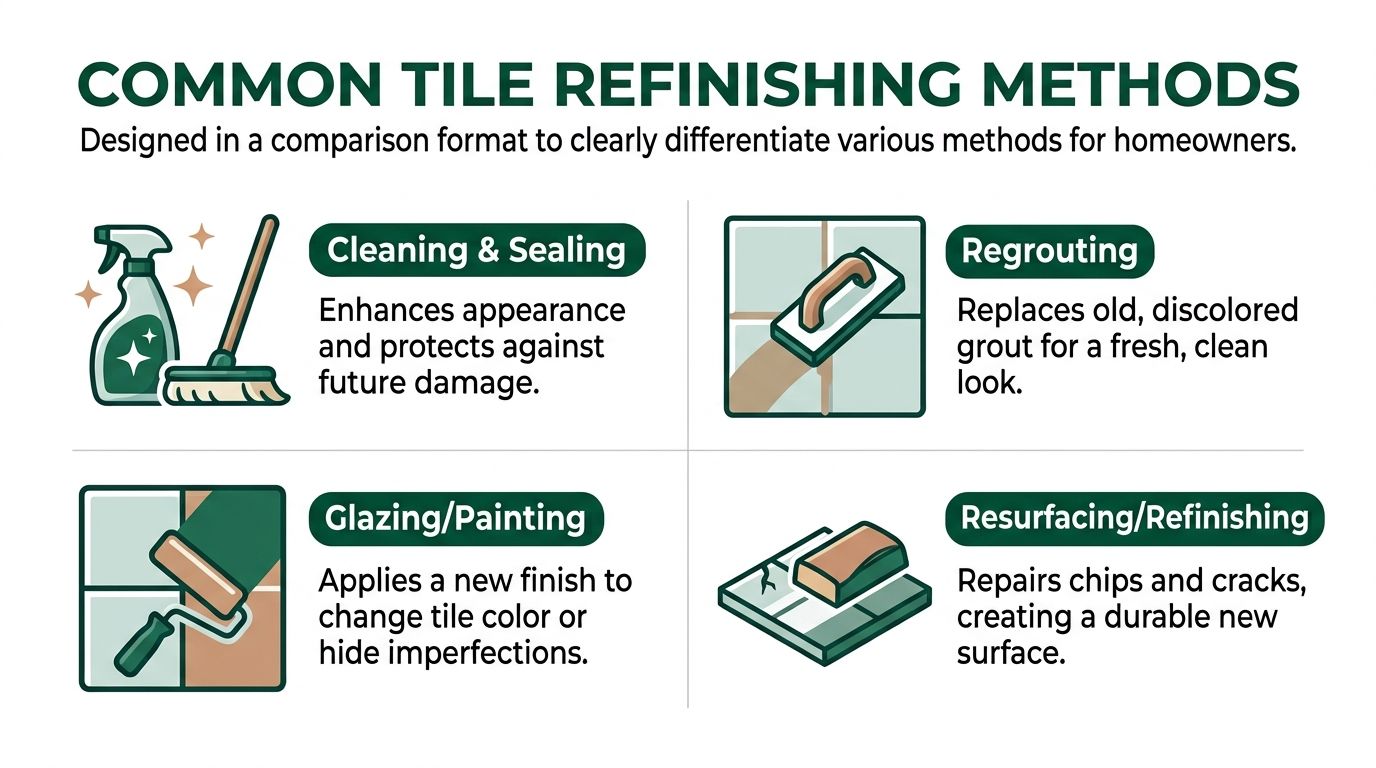
Cleaning and sealing
This is the lightest-touch option. Think of it as maintenance with visible payoff, not a full makeover.
It works best when the tile itself looks acceptable but the grout is stained, the surface is grimy, or the floor absorbs spills too easily. The contractor deep-cleans the tile and grout, addresses problem areas, and applies a sealer to help protect the surface.
Good fit:
- Tile in decent shape with no major cosmetic damage
- Grout-driven ugliness where the floor looks worse than it really is
- Homeowners who want protection, not a total color change
For a homeowner trying to understand the sealing side of the equation, J.G. Carpet Cleaning LLC's sealing insights are a useful companion read.
Regrouting or grout repair
Sometimes the tile isn't the problem. The grout is.
Old grout can make a whole room look worn out. Regrouting removes failing grout or repairs damaged sections, then replaces it with a cleaner, more uniform look. It's a practical fix when the tile color still works but the joints are dragging the room down.
A simple way to think about it is this. If tile is the picture frame, grout is the mat around the photo. When the mat is stained and crooked, everything looks rough.
Here's a visual overview of the most common methods homeowners compare:
Glazing or recoating
This is the method typically envisioned when tile floor refinishing is mentioned. A new coating is applied over the prepared tile surface to update color and create a more uniform appearance.
This option can be attractive when the tile is ugly but still intact. It can hide minor visual imperfections and make a dated floor feel cleaner and more current. The catch is that the prep has to be right, especially on harder, less porous surfaces.
Pros
- Changes the look without demolition
- Gives a tired room a cleaner visual reset
- Works as a hold-you-over solution in some homes
Cons
- Surface prep is everything
- Not every tile accepts coatings equally well
- Long-term durability varies a lot by product and installer skill
Resurfacing with heavier coating systems
This is the more involved option. It may include repairing chips, addressing localized damage, and applying a more durable finish system.
If cleaning and sealing is like polishing old shoes, resurfacing is closer to rebuilding the outer layer. It's chosen when the floor needs more than a cosmetic wash-up but still doesn't justify full removal.
The method should match the floor's condition. A light solution on a troubled floor won't last, and an aggressive solution on a simple maintenance issue can be overkill.
DIY Dangers vs Professional Results in Richmond
DIY tile floor refinishing looks tempting because the floor is already there and the room seems manageable. On the surface, it feels like a paint project. In reality, the risk usually lives in the prep and the floor geometry, not in rolling on a product.
Large-format tile has strict flatness requirements. According to this tile specification guide, tiles at 400 mm × 400 mm or larger require FF50, which equates to no more than 3 mm deviation with a 3,000 mm straightedge. Smaller tiles need FF25 to FF35, or about 5 mm deviation. If the floor exceeds those tolerances, you can end up with lipping, stress on the grout, and brittle tile failure under load.
Why DIY jobs often fail
A homeowner usually sees color and wear. A pro should also be checking adhesion, substrate condition, tile type, movement, and how the coating system is meant to bond.
Common trouble spots include:
- Porcelain and glazed ceramic that don't give coatings much to grab
- Insufficient abrasion before coating
- Hidden contamination from cleaners, sealers, waxes, or residue
- Uneven floors that keep stressing the finish after the job is done
The hard truth is that many failed jobs looked fine at first. Peeling and chipping often show up later, after normal use exposes weak prep.
The part most guides skip
Long-term durability is where a lot of refinishing advice gets fuzzy. This tile refinishing durability discussion points out a major gap in consumer guidance: many DIY or improperly handled jobs end in coating failure, and refinishing can be a temporary 2 to 3 year facelift rather than a permanent solution if the preparation isn't meticulous. The same source also notes that for more complex projects, checking manufacturer certification for the specific product system is a smart screening step.
If you want a floor to look better for a short stretch, DIY may satisfy you. If you want predictable adhesion and fewer surprises, professional prep matters much more than the topcoat label.
That's especially true in Richmond VA homes where older substrates, additions, and mixed renovation history can make one room very different from the next.
What to Expect From a Professional Refinishing Service
A good refinishing visit should feel organized from the start. You shouldn't be guessing what happens first, what the crew is checking, or why certain prep steps matter.
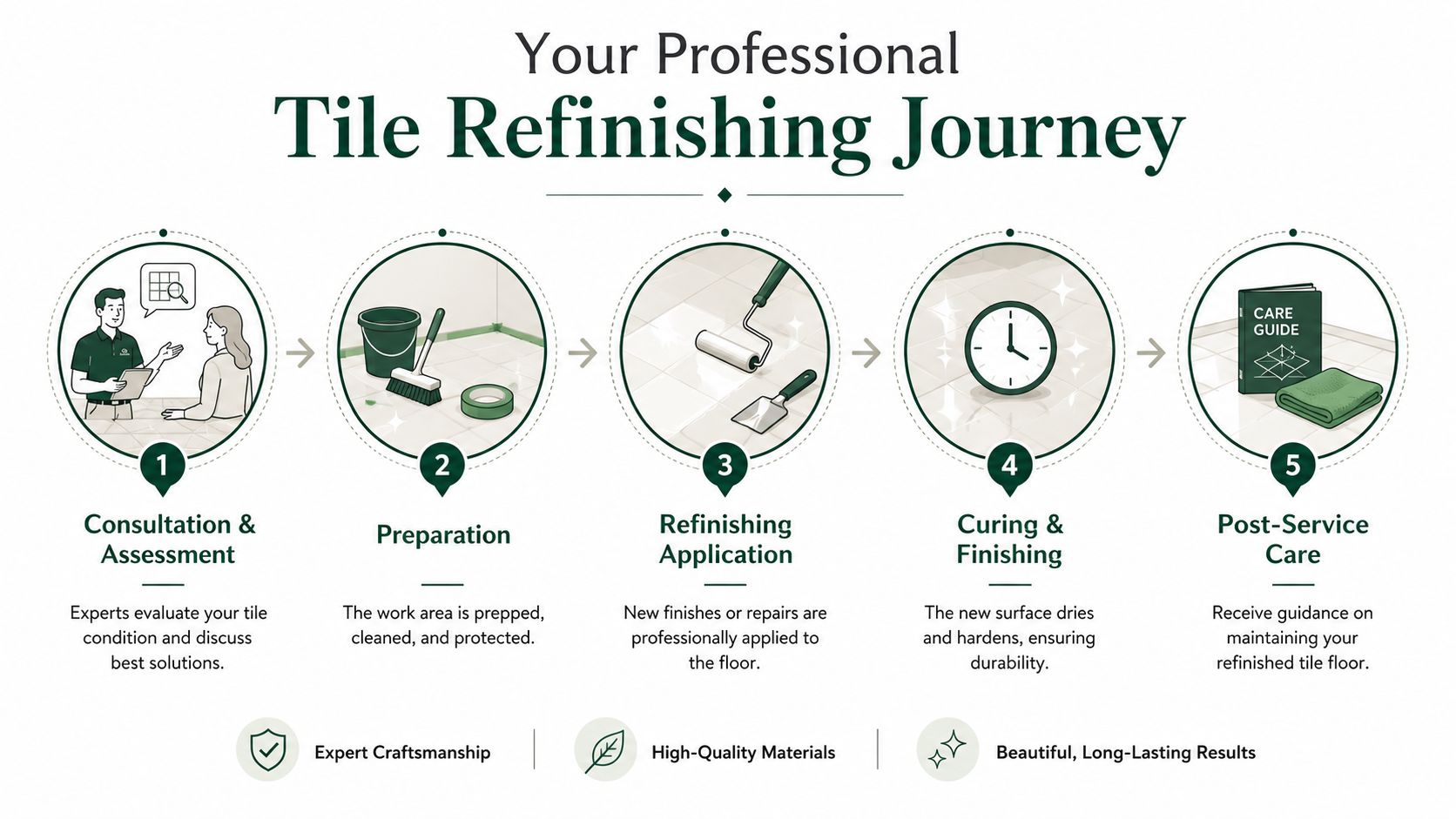
The first visit and assessment
The contractor should inspect the tile condition, look for loose spots, evaluate grout, and ask how the room is used. These steps help set realistic expectations. A good pro will tell you if your floor is a strong candidate, a borderline one, or a poor one.
Low-odor or low-VOC finish options may also come up here, especially if you're living in the home during the project.
Surface prep and application
Prep is the heart of the job. According to this surface profiling reference used in flooring specification training, effective tile prep demands a Concrete Surface Profile of 2 to 3, achieved through methods like diamond grinding or shot blasting. The same source notes that improper profiling is tied to 60 to 70% of coating failures.
That's why a professional process usually includes:
- Protection of surrounding areas with masking and careful staging
- Cleaning and contaminant removal so residue doesn't interfere with bonding
- Mechanical abrasion with the right tool and profile target
- Product application according to the specific system being used
- Cure time and final walkthrough with care instructions
A reputable contractor should be able to explain not just what they do, but why they do it in that order.
What homeowners should ask
Ask what prep method they use. Ask whether the tile type changes the recommendation. Ask what kind of maintenance the new surface needs. Those answers usually tell you more than a glossy before-and-after gallery.
Tile Floor Refinishing Costs and Timelines
You walk into the kitchen on Friday and want the floor looking better by Monday. That is a fair goal. The catch is that tile refinishing and tile replacement follow very different clocks, and the cheaper option is not always the better long-term value.
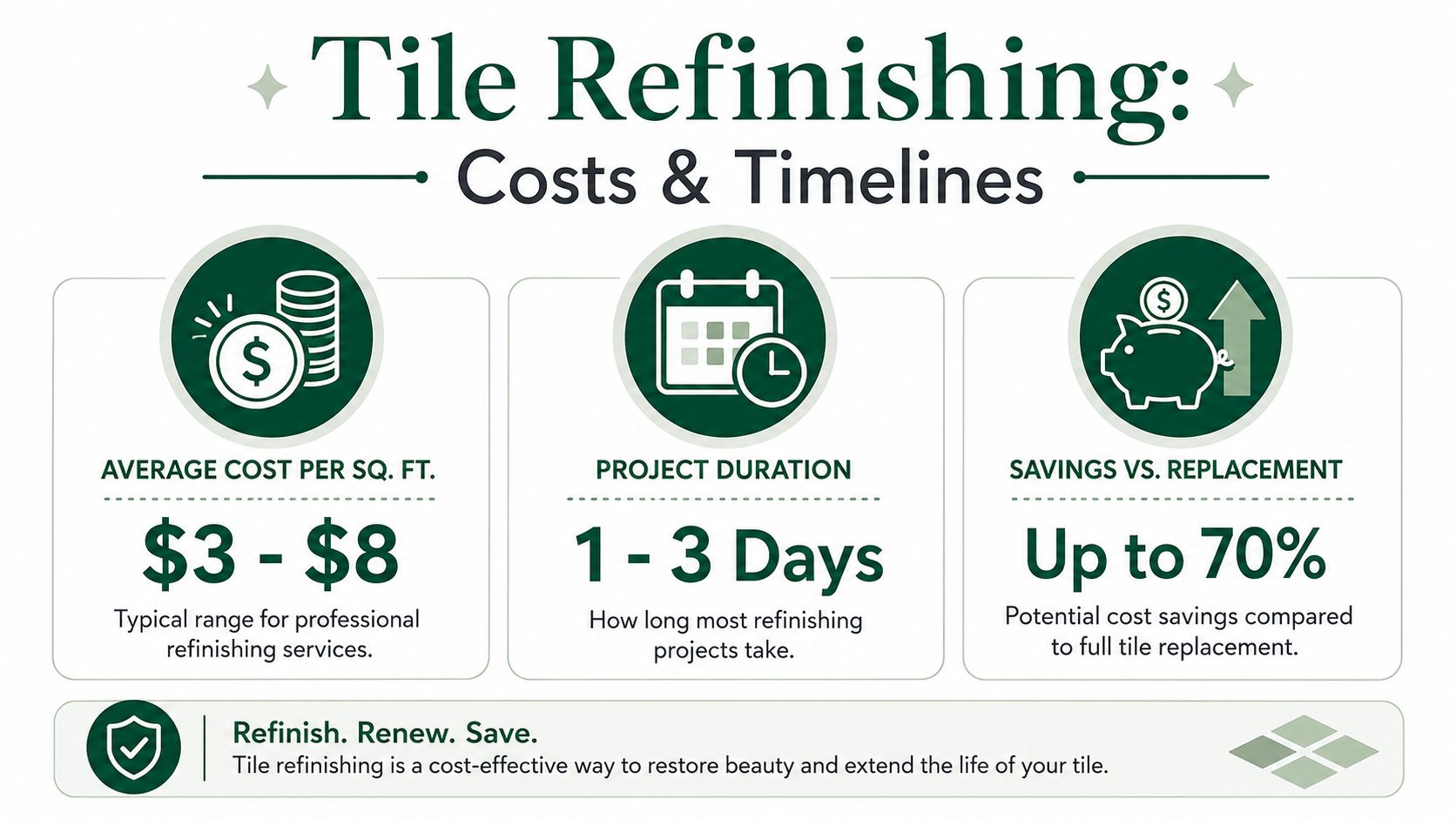
Refinishing usually costs less up front because you are keeping the existing tile and changing the surface, not tearing the room apart. But price can swing quite a bit based on the floor you already have. A solid, well-bonded tile floor with light wear is a much better refinishing candidate than one with loose tiles, deep cracks, moisture problems, or failing grout. In those cases, replacement may cost more now but save you from paying twice.
What changes the price
A refinishing quote is a lot like a paint quote for an old house. The visible finish matters, but prep usually decides the final number.
Here are the biggest cost drivers:
- Square footage, because larger rooms use more labor and material
- Tile and grout condition, especially if there are chips, stains, missing grout, or old coatings that need to be removed
- Refinishing method, since a simple refresh is different from a full coating system
- Layout and access, because tight bathrooms, toilets, cabinets, and transitions slow the job down
- Dry time and return visits, if the product system needs multiple stages
For homeowners weighing refinishing against a brand-new floor, this explainer on how long tile takes to set helps show why replacement often stretches into more steps, more trades, and more downtime.
How long the work takes
A straightforward refinishing job can move fairly quickly if the floor is clean, stable, and ready for prep. A problem floor does not. Repairs, heavy cleaning, drying time, and cure time can turn a short project into a longer one.
Ask two questions before you compare bids. First, how long will the crew be working in the house? Second, how long until normal foot traffic, pets, and furniture are safe on the floor? Those are not the same thing, and homeowners get frustrated when a contractor treats them like they are.
Fast promises deserve a closer look. If someone says they can refinish a worn tile floor unusually quickly, ask what they are skipping. In my experience, shortcuts usually show up in prep or cure time, and that is where early failure often starts.
Price should never be the only filter. A contractor who explains when refinishing makes sense, and when replacement is the smarter call, is usually giving you better value than one who promises the lowest number. If you want a broader way to compare resurfacing companies, this guide for metro Atlanta homeowners offers useful screening questions that also apply here.
Protecting Your Investment and Choosing Your Contractor
A refinished tile floor can look great on day one and disappoint a year later. The difference usually comes down to two things. How the floor is treated after the work, and how carefully the contractor judged the floor before touching it.
That second part matters more than many homeowners realize. A good refinishing job is a lot like painting over solid drywall. It can hold up well if the surface underneath is sound. If the tile is loose, the grout is failing, or moisture is coming up from below, a fresh coating may only hide the problem for a short time.
Start with protection at home. Use a cleaner made for finished hard surfaces, not anything harsh or acidic that can wear the coating down. Keep grit under control with mats at doors and regular sweeping, because fine dirt scratches the finish the same way sandpaper would. Put felt pads under chairs and small furniture. Lift heavy items instead of sliding them.
Small damage is easier to manage than spread-out damage. If you notice a chip, peeling edge, or a spot that stays dull no matter how much you clean it, ask about it early. Waiting usually gives water and dirt more time to work into the weak area.
Choosing the right contractor is less about finding the lowest bid and more about testing how they think. Here are smart questions to ask any company before you sign:
- Ask what would make them reject the job and recommend replacement instead.
- Ask how they check for loose tile, hollow spots, grout failure, or moisture issues.
- Ask which refinishing method they plan to use on your specific tile surface.
- Ask what prep work is included, especially cleaning, repairs, and masking nearby areas.
- Ask how long the floor needs before foot traffic, pets, and furniture can return.
- Ask what the warranty covers, and what it does not cover.
- Ask for local references from projects that have had time to age, not just brand-new jobs.
- Ask for proof of insurance.
Listen closely to the answers. If a contractor speaks in general promises but gets vague when you ask about prep, failure points, or when replacement makes more sense, that is a warning sign. Honest contractors are usually comfortable saying, "This floor is a poor candidate for refinishing."
It also helps to compare refinishing companies with the same framework you would use for other resurfacing work. This guide for metro Atlanta homeowners gives useful screening questions about process, communication, and expectations. If your floor may be past the point of refinishing, reviewing local tile installation companies in Richmond can help you compare repair, refinishing, and full replacement with a clearer head.
The goal is simple. Protect the floor you have if it still has good bones. Replace it when the structure underneath the finish says that is the smarter long-term move.
Why Richmond Homeowners Choose Buff & Coat
- 15 years in business
- Dustless sanding systems
- Local, owner-operated
- High-quality finishes
- Clear pricing and honest advice
- 5-star customer service
Homeowners in Richmond, Midlothian, Chesterfield, Henrico, Glen Allen, Short Pump, and Mechanicsville often start by asking about one floor and end up needing guidance on the whole house. That's where experience matters. Buff & Coat Hardwood Floor Refinishing serves Richmond VA and nearby communities with hardwood floor refinishing, buff and coat service, dustless sanding, hardwood floor repair, floor installation in Richmond, LVP and LVT installs, and repair work. The company also handles occasional jobs in Charlottesville, Fredericksburg, and Virginia Beach.
If you're comparing options for floor refinishing in Richmond VA, it helps to work with someone who can explain the difference between a cosmetic refresh, a full refinish, and replacement without talking over your head. That's true whether you're researching wood floor recoating, hardwood floor restoration, engineered hardwood refinishing, or trying to find the best hardwood floor contractor Richmond homeowners can trust.
If you're unsure whether your floors need refinishing, recoating, repair, or full replacement, Buff & Coat Hardwood Floor Refinishing can give you straightforward guidance. Ready to restore your hardwood floors? Buff & Coat makes the process fast, clean, and stress-free. Call 804-392-1114 or request your free estimate at buffandcoatvirginia.com.
FAQ
Can all tile floors be refinished?
No. A floor with loose tile, major movement, or deeper structural issues may not be a good candidate. Refinishing is usually best when the tile is stable and the main problems are cosmetic.
Is tile floor refinishing a permanent fix?
Not always. Some refinishing systems work well as a practical refresh, but they shouldn't always be treated as a forever solution. The prep quality, tile type, and product system all affect durability.
Is professional prep really that important?
Yes. Adhesion problems usually start with poor prep, not with the idea of refinishing itself. If the surface isn't cleaned, profiled, and evaluated correctly, the new coating can fail early.
How does this compare to hardwood floor refinishing?
They're very different processes. Hardwood floor refinishing removes worn finish and restores wood through sanding or screening and recoating. Tile floor refinishing depends much more on coating adhesion to an existing hard surface.
Do dustless sanding systems apply to tile refinishing?
Dustless sanding is most commonly discussed with hardwood floor refinishing and wood floor recoating. It's one reason many Richmond VA homeowners prefer working with contractors who already have strong dust-control habits and professional containment practices across flooring projects.
How do I know whether I need refinishing or replacement?
Start with the condition of the floor. If the issue is mostly appearance, refinishing may make sense. If the issue is movement, failure, or a long-term redesign, replacement is often the better investment.
Do you only work in Richmond?
Buff & Coat serves Richmond, Midlothian, Chesterfield, Henrico, Glen Allen, Short Pump, Mechanicsville, and sometimes Charlottesville, Fredericksburg, and Virginia Beach. If you're looking for floor refinishing in Richmond VA, dustless sanding, hardwood floor scratch repair, or floor installation in Richmond, they can help you sort out the best next step.


