

Home Blog A Guide to European White Oak Flooring in 2026
A Guide to European White Oak Flooring in 2026

A lot of Richmond homeowners end up in the same spot. You see beautiful European White Oak flooring online, love the light color and clean look, then realize nobody's telling you what it's like to buy, install, and live with in a real Virginia house.
That's where a little straight talk helps. If you're comparing options for hardwood floor refinishing, new installation, or trying to avoid an expensive mistake, European White Oak can be an excellent choice, but only if you understand the trade-offs before you buy.
What Is European White Oak and Why Is It So Popular
European White Oak flooring has become the go-to look for homeowners who want a house to feel brighter, calmer, and less busy. It fits modern homes, renovated colonials, newer builds in Midlothian, and older Richmond homes that need a fresh update without looking trendy for one season and dated the next.
What people usually respond to first is the visual tone. European White Oak is known for a light, neutral color with warm undertones and a refined, straight grain pattern, which gives rooms an open, high-end feel without the yellow cast some homeowners want to avoid. That combination is a big reason it shows up so often in design photos and remodeling projects.
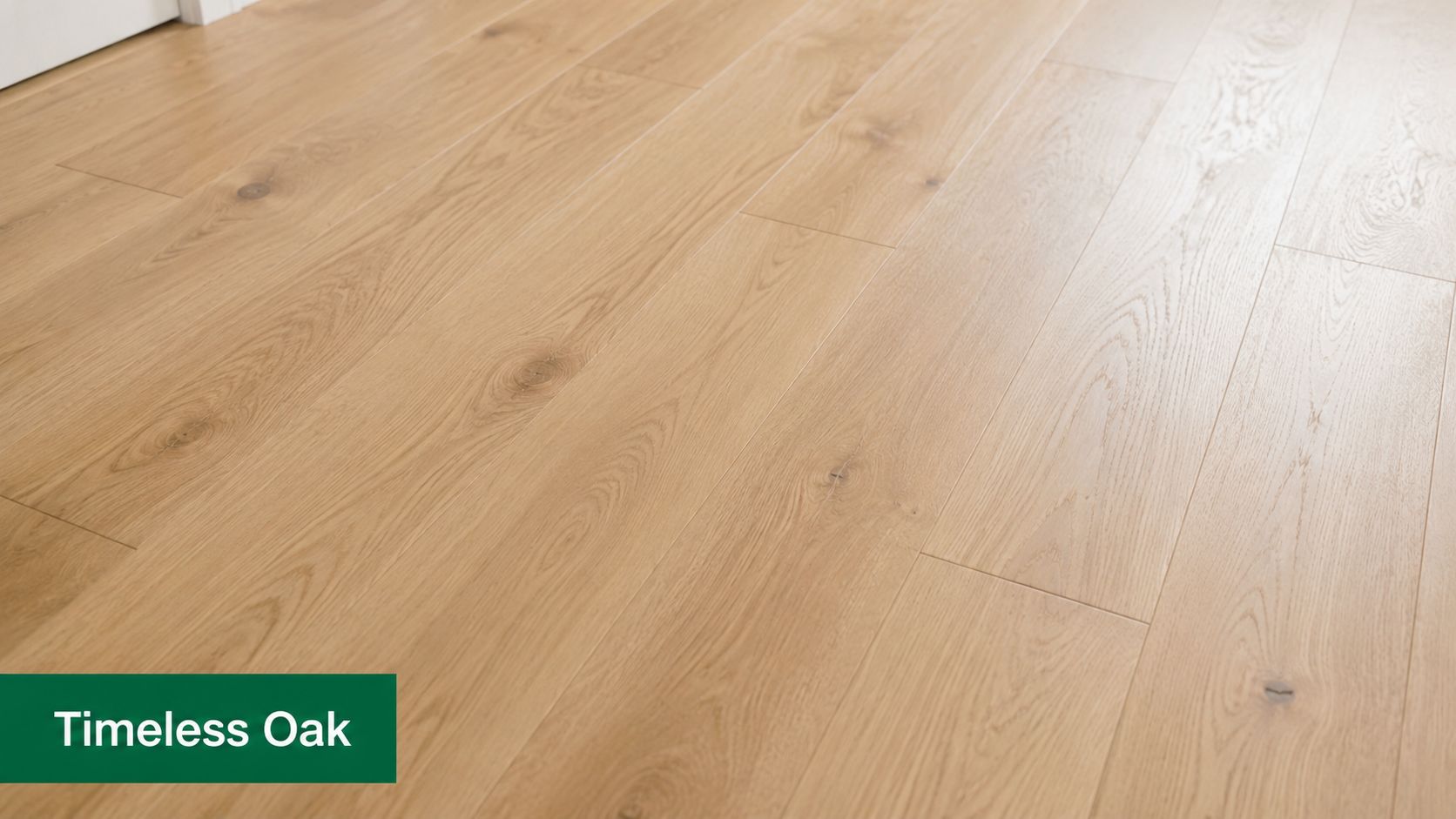
The look homeowners are usually after
Some wood floors demand attention. European White Oak usually doesn't. It gives you a quieter backdrop that works with painted cabinets, natural stone, black hardware, traditional trim, and open-concept layouts.
That's also why it works across very different styles:
- Modern interiors get a clean, low-contrast floor that doesn't fight the rest of the room.
- Farmhouse and rustic-chic spaces benefit from natural knots and variation that keep the floor from looking flat.
- Older Richmond homes often look more balanced with a floor that feels updated but still natural.
If you like floors with visible character, this guide on why character-rich hardwood floors with natural knots are trending this year is worth a read before you choose a grade.
Where it comes from and why that matters
European White Oak comes from across Europe, including English oak species. In practical terms, that means you're buying an imported product with its own grading habits, plank sizes, and appearance standards. It also tends to have a more naturally expressive face than the cleaner, more uniform look many homeowners associate with American White Oak.
Practical rule: Don't shop European White Oak by color photo alone. Shop it by sample boards, grade, and finish schedule.
That's the mistake I see most often in floor installation projects in Richmond VA. A homeowner falls in love with a single staged photo, then gets surprised when actual material has more knots, swirls, checking, or natural movement than expected. Sometimes that's exactly what they wanted. Sometimes it isn't.
The popularity is deserved. But the right European White Oak flooring purchase starts with knowing that “beautiful” and “predictable” are not always the same thing.
If you're comparing flooring options in Richmond VA and want help sorting through style versus practicality, get a clear recommendation before you order material.
Understanding Key Technical Specs for Durability
A lot of Richmond homeowners buy European White Oak for the look, then realize the floor has to survive dogs, chair legs, dropped pans, wet shoes, and humidity swings. The specs matter because they tell you how the floor will behave after the photos stop impressing you.
Start with hardness. European White Oak is in the same general durability class as American White Oak, so it handles normal household traffic well and gives you a solid middle ground between softer species that dent easily and harder species that can feel colder or more rigid underfoot. In plain terms, it is a smart choice for living rooms, kitchens, hallways, and most bedrooms.
A hard floor still dents.
That is the part people miss. Janka ratings help you compare species, but they do not predict whether your finish will show scratches, whether your dog's nails will leave marks, or whether a heavy object dropped on the same spot will bruise the wood. In older Richmond homes with active families, I tell people to treat hardness as one part of the decision, not the whole decision.
Here is the practical version:
| Factor | What it means for you |
|---|---|
| Daily foot traffic | Strong choice for busy households |
| Dropped items | Better resistance than softer hardwoods, but dents can still happen |
| Pet wear | Wood holds up well, but the finish usually shows wear first |
| Long-term aging | Usually looks better with age if you maintain it well |
Bathrooms are still a poor place to force hardwood into the plan. If you are comparing wood-look options for wet areas, this guide on choosing waterproof bathroom floors is useful.
Grade affects durability too
Grade is not just an appearance issue. It changes how the floor lives in your house.
Boards with more knots, filled cracks, color variation, and grain movement usually hide day-to-day wear better than very clean, uniform boards. That is one reason European White Oak works so well in real family homes around Richmond. A floor with natural variation tends to age more gracefully because small scratches and dents do not jump out at you the way they do on a flatter, cleaner visual.
Cleaner grades still have their place. They look sharper and more refined. They also show every little mistake.
If you want a floor that stays visually forgiving, choose grade and finish before you obsess over species marketing.
The specs I want homeowners to ask about
Before you place an order, ask for answers in writing. Do not settle for a showroom sample and a vague promise that the full shipment will be similar.
Ask these questions:
- What is the exact grade
- What is the average board length
- Will short boards be mixed throughout
- Is the top layer thick enough for future refinishing if I am buying engineered
- What finish sheen will hide wear best in my house
That last one matters more than people expect. A low-sheen finish usually looks better longer in Richmond homes with kids, pets, or a lot of backyard traffic.
If you need help comparing construction details, this guide to solid vs engineered hardwood flooring will help you sort out what belongs in your house and what does not.
My advice is simple. Buy the floor that matches how you live, not the one that looks perfect in a staged photo. That is how you end up happy with it five years from now, not just on installation day.
Engineered vs Solid Which Is Right for Your Home
You fall in love with a wide European White Oak sample in a showroom. Then it goes into a Richmond house with summer humidity, winter dry heat, a crawlspace that is less than perfect, or a new addition on concrete. That is when construction matters more than the sample board.
For most homes I see around Richmond, engineered is the smarter buy. Solid still has a place, but I would not call it the default.
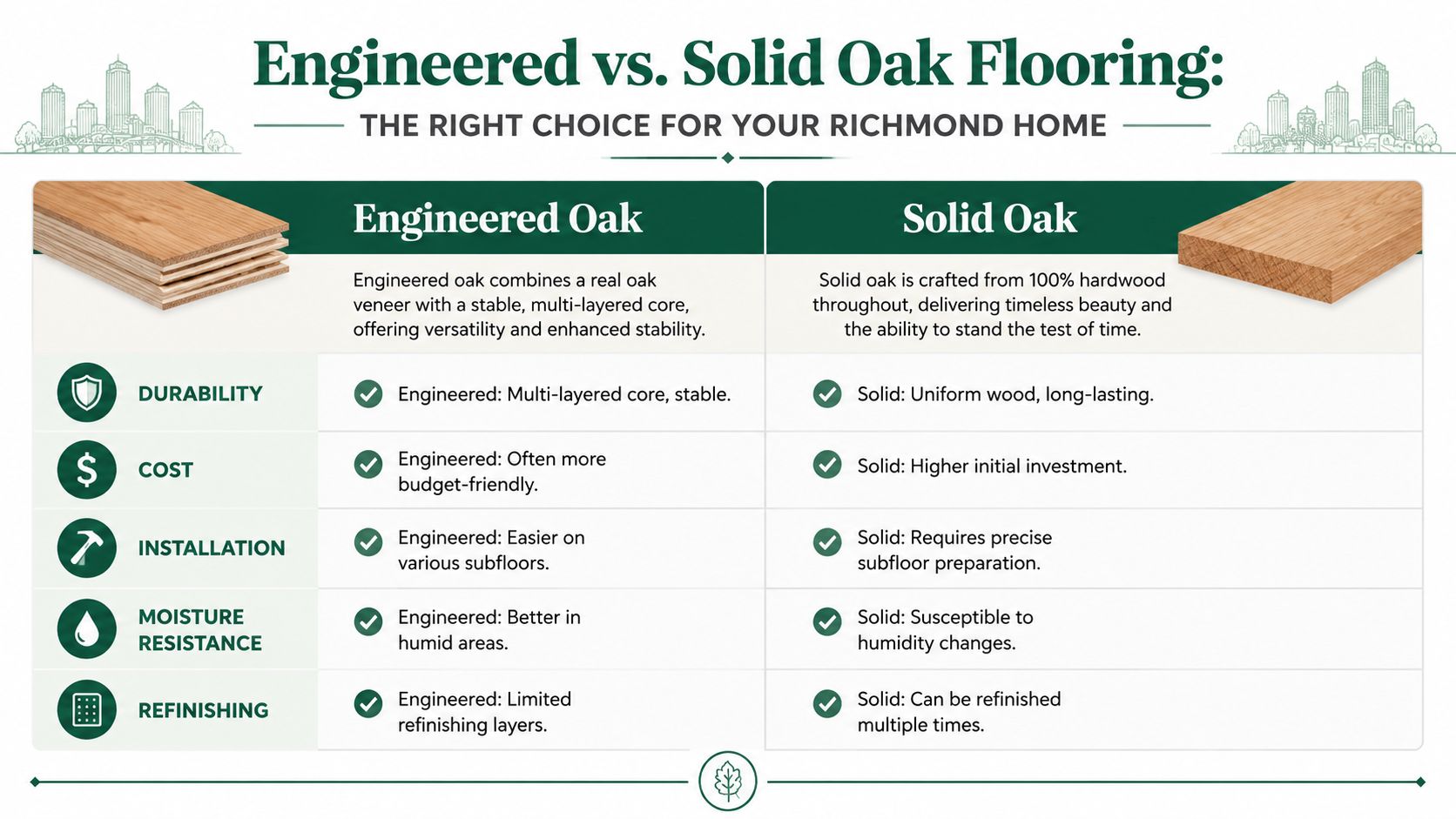
Why engineered usually wins in Richmond homes
Richmond houses deal with real moisture swings. Older homes can have crawlspace humidity problems. Renovations often include slab areas. Kitchens get spills, pet water, and heavy traffic. Engineered flooring handles those conditions better because its layered construction is more stable than a single solid board.
That stability matters most with wider planks, which is exactly what many homeowners want with European White Oak. If you are installing over concrete or in a house that does not stay consistently conditioned year-round, engineered is the safer call.
Solid European White Oak still works well on wood subfloors in stable, above-grade spaces. If the house is well controlled, the subfloor is right, and you want the most sanding life possible over decades, solid can be a good fit. You just need the right setting for it.
The practical difference
| Flooring type | Best fit | Watch-outs |
|---|---|---|
| Engineered | Slab homes, kitchens, lower levels, wider planks, homes with seasonal humidity swings | Quality varies a lot. Wear layer thickness affects future refinishing |
| Solid | Main floors with wood subfloors and steady indoor conditions | More expansion and contraction. Less forgiving in tricky moisture conditions |
If you want a clearer breakdown of how the two perform in real houses, read our guide to solid vs engineered hardwood flooring.
My recommendation, room by room
For kitchens, additions over concrete, and many newer layouts in Richmond, choose engineered.
For a traditional main level with plywood subfloor, good humidity control, and homeowners who plan to keep the house a long time, solid is still worth considering.
For basements or any area with questionable moisture, I would be careful even with engineered hardwood. Better products help, but no wood floor likes a damp environment.
One more point homeowners miss. Some engineered European White Oak can be refinished more than once, and some barely gives you that option at all. The difference comes down to the thickness of the oak top layer and the condition of the floor years from now. Ask that question before you buy, not after the first round of wear shows up.
Design matters too. European White Oak usually works with a wide range of wall colors, and Newline Painting's colour ideas can help if you are trying to coordinate the floor with the rest of the room.
My contractor answer is simple. Buy the construction that fits your house, your subfloor, and your maintenance expectations. Do not pay for solid hardwood just to say you bought solid hardwood.
Finishes Color Options and Customization
A lot of Richmond homeowners pick European White Oak because they saw a beautiful photo online. Then the key decisions begin. The floor itself is only half the look. Finish, stain, sheen, and texture will decide whether it feels calm and expensive, too yellow, too gray, too busy, or dated in five years.
That flexibility is one of European White Oak's biggest strengths. It can stay light and natural, take on a warmer tone, or go deeper and moodier without losing the grain character that made you like it in the first place.
The finish matters as much as the species
I've seen the same white oak product look clean and understated in one Richmond house, then heavy and flat in another, just because the finish choice was wrong for the light and the way the family used the space.
Here are the finish directions homeowners usually compare:
- Matte finishes hide small scratches, dust, and everyday wear better. They fit older Fan and Museum District homes, and they also work well in newer renovations that want a quieter, more natural look.
- Satin finishes give you a little more light reflection without looking shiny. This is a safe middle-ground choice for many homes.
- Traditional polyurethane systems make sense when easy cleaning and stronger surface protection are the top priorities.
- Hardwax oil looks keep the floor closer to raw wood in appearance and feel, but they ask more from the homeowner in upkeep.
My advice is simple. Match the finish to your household, not to a sample board you liked for thirty seconds. Busy kitchens, dogs, kids, and daily traffic call for a different finish plan than a low-traffic formal room.
Why custom color works so well on European White Oak
European White Oak gives finishers a lot of room to work. It responds well to smoked, reactive, wire-brushed, and custom-stained looks, which is one reason designers keep coming back to it. You can get soft natural tones, warmer browns, muted taupes, and some gray-leaning finishes without making the floor look fake or painted over.
That said, custom does not always mean better.
In Richmond homes, I usually tell people to stay restrained. Heavy gray stains are already dating some interiors. Strong amber tones can fight with white cabinets and cooler wall colors. The best results usually come from letting the oak show through instead of trying to force it into a color trend.
For wall coordination, Newline Painting's colour ideas can help homeowners think through what works with timber floors before they lock in paint.
If you are comparing samples now, this guide on how to choose hardwood floor stain color will help you narrow the field before you commit.
My recommendation on color selection
Do not make this decision from a tiny stain chip or under bright showroom lights.
Get larger samples. Put them in the actual room. Check them in morning light, late afternoon, and at night with the lamps on. Richmond houses can shift a color fast, especially in rooms with tree cover, older windows, deep porches, or additions that pull light from one side.
If you want the classic European White Oak look, keep it honest. A light natural finish, a muted brown, or a low-sheen custom tone usually ages better than an aggressive stain job. The wood already gives you plenty to work with.
Installing Flooring in Your Richmond Home The Process
A good installation doesn't start with the first plank. It starts with the stuff most homeowners never see. Moisture checks, subfloor prep, layout planning, transitions, and deciding whether the job needs nail-down, glue-down, or a floating system.
That's where a floor gets made or ruined.
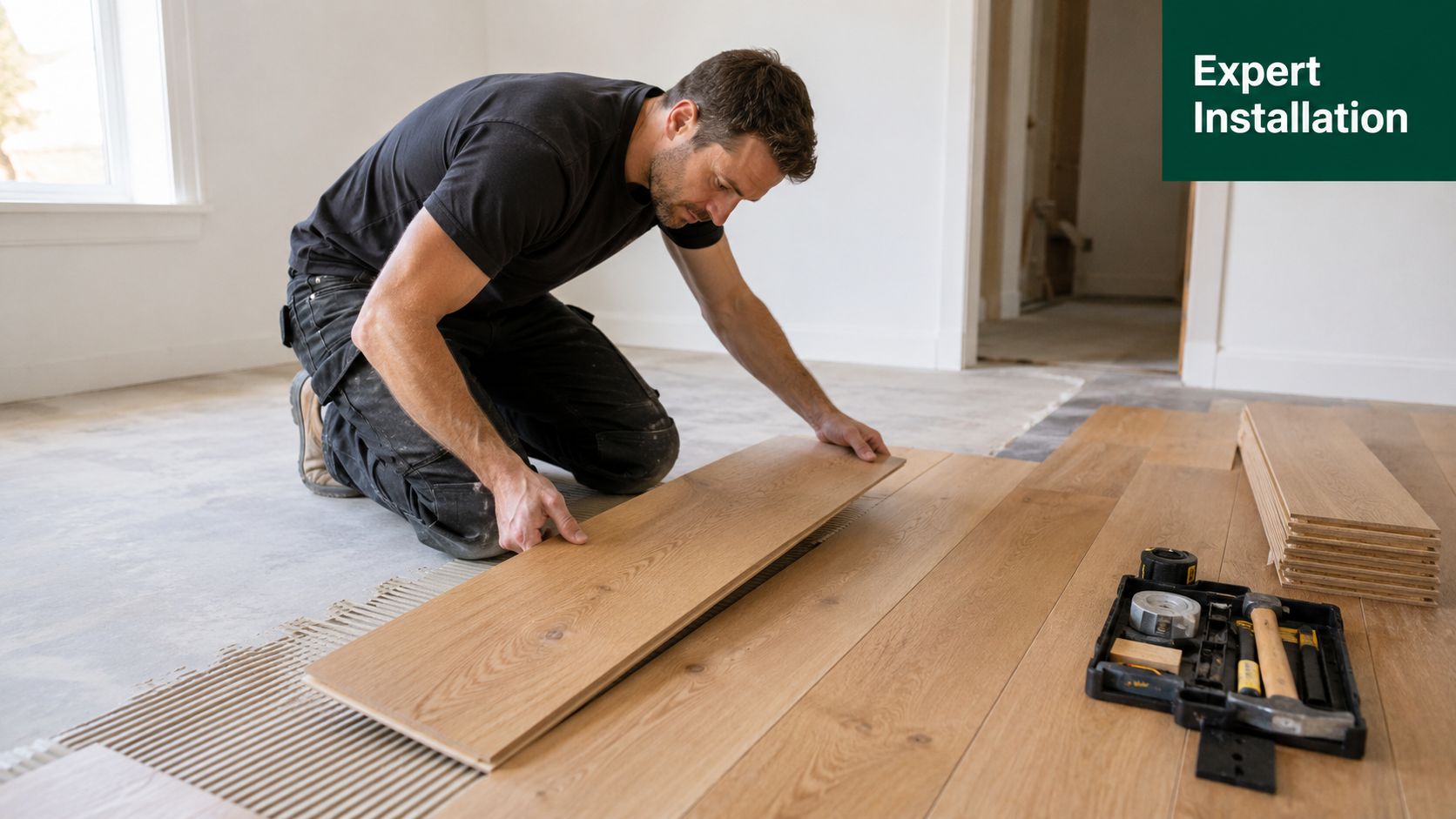
What a proper installation actually includes
In a typical Richmond-area job, the process usually goes like this:
Site evaluation
The installer checks the room conditions, subfloor type, and any problem areas like uneven spots, old adhesive, soft sections, or height transitions.Subfloor preparation
This is essential. If the subfloor isn't flat, clean, and dry, you can end up with squeaks, hollow spots, poor board fit, or visible movement.Layout planning
Board direction, starting line, seam staggering, and how the floor meets adjacent rooms all need to be thought through before installation starts.Installation method
Some projects call for nail-down. Others need glue-down or floating construction based on the product and the base underneath.
What homeowners usually underestimate
The room doesn't have to be dramatic to be difficult. A hallway that runs out of square, an older home with uneven framing, or a patched subfloor can create more trouble than a large open room.
On most jobs, subfloor prep decides whether the finished floor feels solid underfoot or annoys you every day.
That's especially true for floor installation Richmond projects in older neighborhoods where floors have settled over time.
Where dustless sanding fits into the process
If the project includes tying new wood into existing hardwood, or refinishing adjacent areas so everything matches, dust control matters. Traditional sanding makes a mess. Homeowners know that. They've heard the horror stories.
Dustless hardwood floor sanding removes up to 99% of the dust created during refinishing by using advanced sanding equipment connected to high-powered vacuum systems that capture dust before it spreads, which sharply reduces the fine wood particles that coat surfaces with older sanding methods, according to this explanation of dustless hardwood floor sanding.
That doesn't mean zero dust. It means a cleaner, more controlled project and a more breathable house during the work.
Here's a quick visual on the kind of installation process homeowners should expect:
What to expect in Richmond VA homes
Homes in Richmond VA vary a lot. Fan homes, ranchers, colonials, split-levels, and newer builds all have different subfloor and moisture realities. That's why no honest contractor should give you a serious plan without looking at the space.
If you're researching the best hardwood floor contractor Richmond has to offer, ask less about sales language and more about prep, containment, and how they handle real-world site conditions.
If you're unsure whether your project needs installation, hardwood floor repair, or refinishing, get someone to inspect it before materials are ordered. That's the cleanest way to avoid bad assumptions.
Long-Term Maintenance and Refinishing Guidance
A European White Oak floor can age beautifully, but only if you treat maintenance like part of the investment. I'm not talking about babying it. I'm talking about basic habits that keep you from turning a simple refresh into a full restoration job sooner than necessary.
Routine care matters more than many realize.
What to do regularly
You don't need a complicated system. You need consistency.
- Dry debris first by sweeping or vacuuming with a floor-safe attachment so grit doesn't get ground into the finish.
- Use a hardwood-safe cleaner instead of soaking the floor with water or using harsh products that dull the topcoat.
- Protect high-contact areas with felt pads, entry mats, and common-sense furniture handling.
- Clean spills promptly so moisture doesn't sit on the surface longer than it should.
These habits help preserve the finish, which is what takes the abuse first.
Buff and coat versus full refinishing
Homeowners often get confused, especially when they're searching terms like buff and coat service, wood floor recoating, or how long does refinishing take.
A buff and coat is the right move when the floor has light wear, minor surface scratching, and a finish that looks tired but not destroyed. The existing finish gets prepared, then a fresh coat is applied to renew the surface.
A full sand-and-refinish is for deeper wear, visible damage, color changes, or floors that need the old finish removed so the wood can be properly restored.
Here's the important part. Sandless refinishing is not true refinishing. It's basically a deep cleaning of the existing finish followed by a new coating, and it can't effectively address scratches, gouges, or deep surface damage that requires finish removal, as discussed in this homeowner explanation of sandless process vs sanding.
If the damage goes through the finish and into the wood, cleaning and recoating won't fix it.
When each service makes sense
| Floor condition | Best fit |
|---|---|
| Dull finish, light scuffs | Buff and coat |
| Color change desired | Full sanding and refinishing |
| Deep scratches or gouges | Full refinishing |
| Localized problem boards | Hardwood floor repair, then refinish or recoat as needed |
This is why honest evaluation matters. Some homeowners are told they need a full refinish when a recoat would do. Others are sold a quick recoat when the floor clearly needs more work. Neither helps your budget.
For many homes in Richmond VA, the smartest plan is simple. Maintain the finish well, recoat before wear gets too deep, and reserve full sanding for when the floor really needs restoration. That approach protects the wood and usually lowers long-term hassle.
If you're not sure which service fits your floor, ask for a plain-English assessment. No jargon. No upsell. Just the right fix for the condition you've got.
Budgeting for Your Project and Choosing an Installer
Budgeting for European White Oak flooring gets easier once you stop looking for one magic number. The final price depends on grade, construction, room layout, subfloor condition, and whether the job includes transitions, repairs, or finishing work.
The part that matters most is not choosing the cheapest bid. It's understanding what the bid leaves out.

What to ask before you hire anyone
Use this checklist and you'll avoid most of the common problems homeowners run into:
Experience with the product
Ask how much hands-on experience they have with European White Oak specifically, not just hardwood in general.Subfloor plan
Ask what happens if the subfloor needs leveling, repair, or moisture correction.Dust containment
If sanding or blending is involved, ask exactly how they contain dust during the project.Finish guidance
Ask which finish systems they recommend for your household, especially if you have pets, children, or heavy traffic.Insurance and accountability
Confirm they're licensed and insured, and ask who's actually doing the work in your home.
A few opinionated hiring tips
Don't hire based on the sample board alone. Hire based on the install plan.
Don't let vague phrases like “standard prep” slide. Get specifics. If you're comparing floor refinishing Richmond VA companies or installers for a new wood floor, you want to know how they handle moisture, flatness, transitions, and cleanup.
And if a contractor gives you a suspiciously fast answer on refinishing cost or refinishing timeline without inspecting the floor, I'd be cautious. Good flooring work is detail work. It should start with questions.
In Richmond VA, homeowners usually do best when they choose the installer who explains the process clearly, gives honest trade-offs, and doesn't pretend every house is the same.
Frequently Asked Questions About European White Oak
Is European White Oak better than American White Oak
European White Oak is better if you want the look many Richmond homeowners ask for right now: longer boards, softer grain, lighter tones, and more natural variation. American White Oak is often the better pick if you want a more familiar domestic product line, easier sourcing, or a cleaner overall visual.
I tell homeowners to choose based on the house, not the trend. In a Fan row house, a newer West End renovation, and a busy family home in Chesterfield, the right answer can be different.
Is it a good choice for homes with kids and pets
Yes, if you buy the right floor and finish it the right way.
The species holds up well, but day-to-day performance comes down to the wear layer, board quality, finish choice, and how your family lives on it. Big dogs, grit from a backyard, rolling chairs, and water at the back door will show up on any wood floor. European White Oak is durable, but it is not magic.
Why do some European White Oak floors look much more rustic than others
Grade is the big reason. Some lines are selected for a cleaner, calmer look. Others include more knots, filled checks, color swing, sapwood, and grain movement.
That difference matters more in person than it does on a sample board or Pinterest photo. A lot of Richmond homeowners say they want "natural" until the full floor arrives and the variation feels busier than expected. If you want a quieter floor, ask to see installed projects or several full-length boards from the actual grade, not just one perfect sample.
Is cheaper European White Oak a smart buy
Cheap European White Oak can be a good value. It can also be the floor you end up regretting.
Lower pricing often means more character, shorter lengths, thinner wear layers, less consistent milling, or a finish that will not age as well. If you like a rustic floor, that may be completely fine. If you want clean lines and a more refined look, spend more up front and avoid the disappointment.
Can older European White Oak floors be restored
Often, yes.
The first question is whether the problem is in the finish or in the wood itself. Surface wear, dull traffic lanes, and light scratches are usually manageable. Deep stains, board movement, pet damage, or previous aggressive sanding need a closer look. In older Richmond homes, I also check for flatness, patchwork repairs, and how the floor has handled seasonal humidity over time before recommending refinishing.
If you want honest advice from a local crew that works on floors every day, Buff & Coat Hardwood Floor Refinishing is a solid place to start. They're a Richmond-based floor refinishing and installation company with 15+ years of experience, serving Richmond, Midlothian, Chesterfield, Henrico, Glen Allen, Short Pump, Mechanicsville, and occasional jobs in Charlottesville, Fredericksburg, and Virginia Beach.
Richmond homeowners choose them because they offer:
- 15 years in business
- Dustless sanding systems
- Local, owner-operated service
- High-quality finishes
- Clear pricing and honest advice
- 5-star customer service
They handle dustless sanding, buffing and coating, hardwood floor installations, LVP and LVT installs, and repair work. If you're sorting out hardwood floor restoration, hardwood floor scratch repair, or trying to decide between recoating and replacement in Richmond VA, they can look at the floor and tell you what makes sense.
Ready to restore your hardwood floors? Buff & Coat makes the process fast, clean, and stress-free.
Call 804-392-1114 or request your free estimate at buffandcoatvirginia.com.


